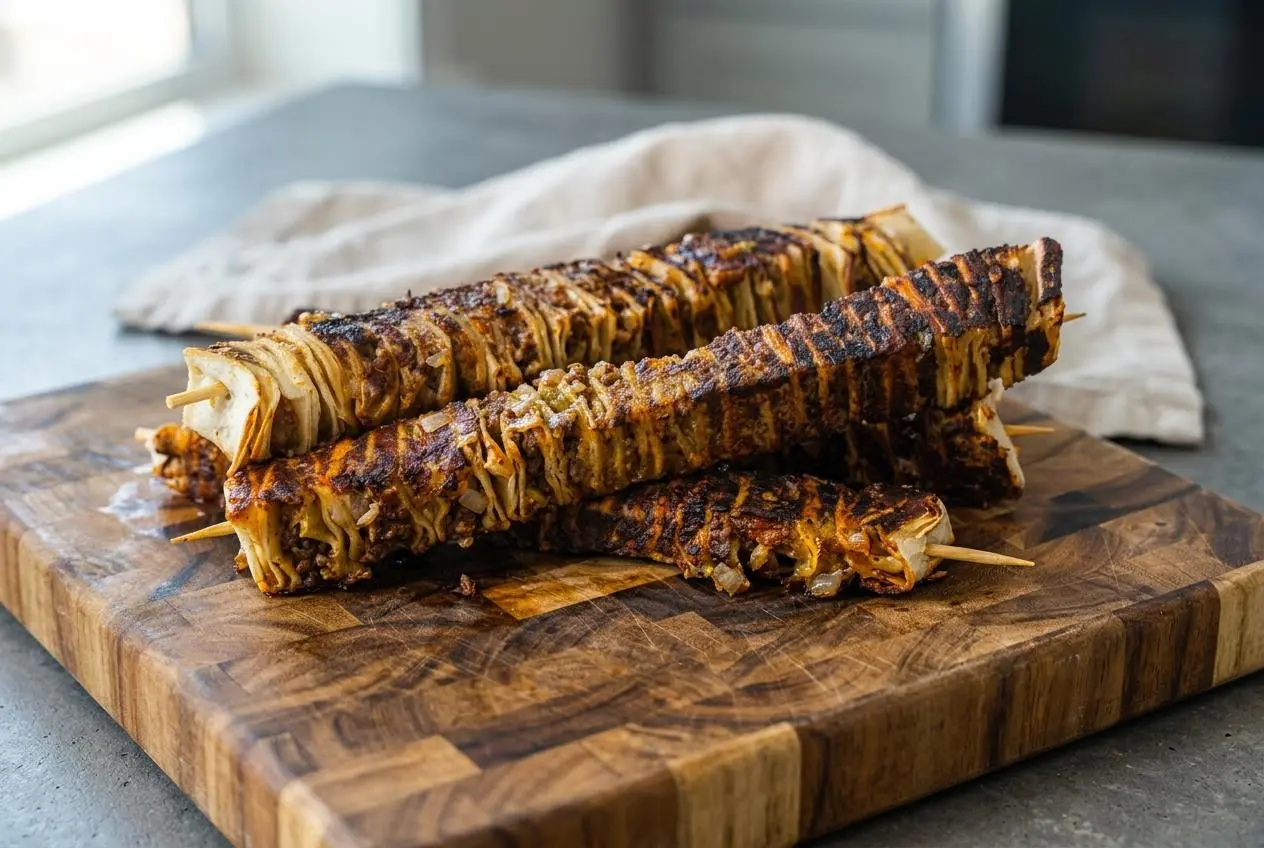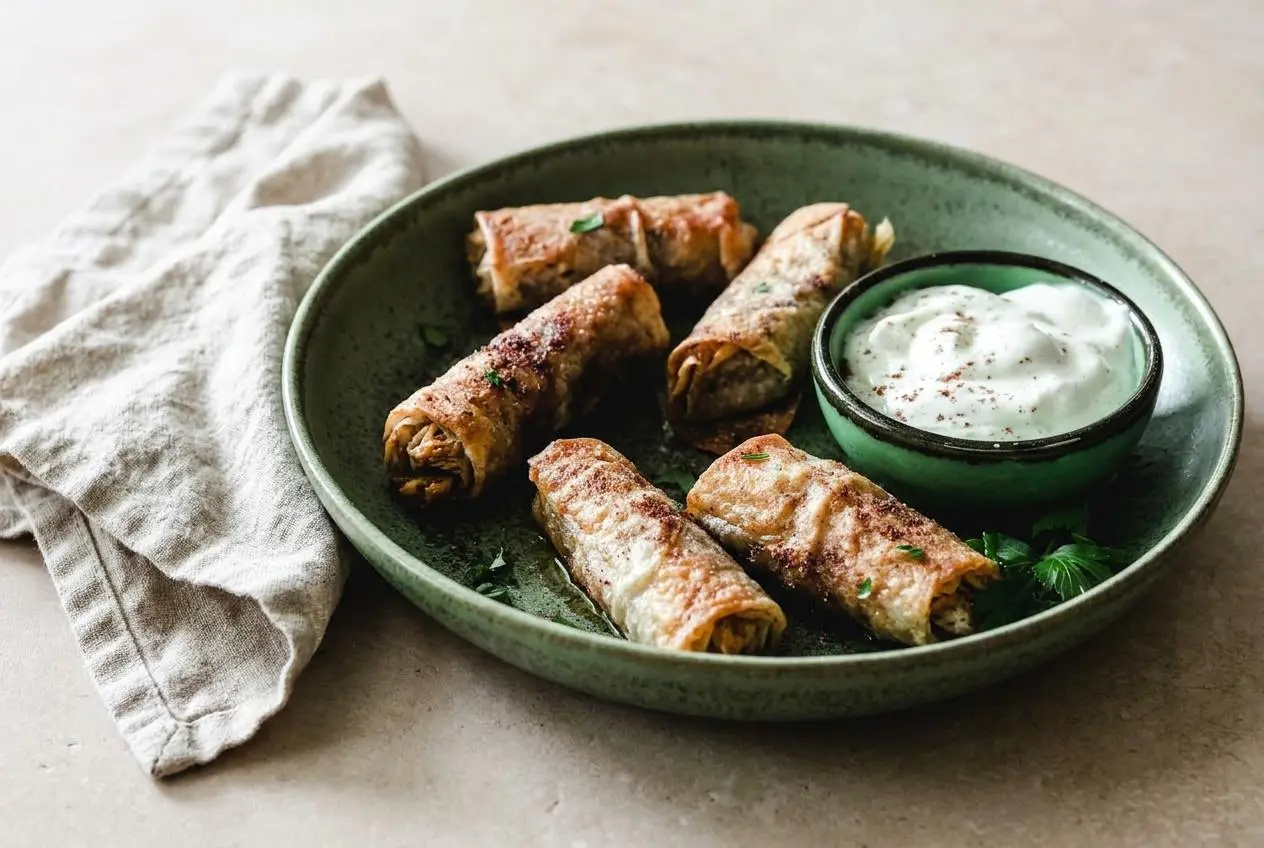
Chicken musakhan rolls are a handheld Palestinian dish made with shredded chicken, sweet softened onions, tangy sumac, olive oil, and toasted almonds wrapped in thin flatbread. Baking gives them a golden, crisp shell around a moist, warmly spiced filling.
The first bite brings crackling bread, soft onion ribbons, and a bright citrusy tang from sumac. These rolls carry the flavors of traditional musakhan in a format that works as an appetizer or the center of dinner.
Poaching bone-in legs gives you juicy chicken and fragrant broth, while slowly cooking the onions builds sweetness without sugar. The filling does most of the work. The real trick is keeping the bread crisp.
Keep the onion heat gentle: you want soft, lightly golden ribbons, not browned, crunchy edges.
What Are Chicken Musakhan Rolls?
Musakhan is a Palestinian dish closely associated with the olive harvest and fresh olive oil. Its Arabic name means “heated” or “reheated.” Traditional musakhan features chicken and sumac onions served over taboon bread, which absorbs the flavorful oil and juices.
The rolled version wraps shredded chicken and onions in thin bread, then bakes it until crisp. Four flavors define the filling: tart sumac, fruity extra virgin olive oil, sweet onions, and savory chicken scented with warm spices. Toasted almonds add a contrasting crunch.
Ingredients You Need and Why Each One Matters
Chicken provides moisture and savory depth, whole spices perfume the broth, and onions bring sweetness. Olive oil carries the sumac and ground spices, almonds add crunch, and thin bread holds everything together while baking into a crisp shell.
For the chicken
- 3 full chicken legs, skin on and bone in
- 2 yellow onions
- 3 bay leaves
- 1 cinnamon stick
- 6 cardamom pods
- 6 whole allspice berries
For the rolls
- 4 large Markouk bread, substitute with Lebanese pita or tortillas
- 6 red onions
- 1 cup olive oil, extra virgin
- 4 tablespoons sumac, plus more for garnish
- 1 teaspoon allspice
- 1 teaspoon cinnamon
- 2 teaspoons salt
- 1 cup slivered almonds
For the Spiced Chicken and Broth
Full chicken legs include the thigh and drumstick. Their dark meat stays succulent through poaching and baking, while the bones and skin enrich the broth. Yellow onions, bay leaves, a cinnamon stick, cardamom pods, and whole allspice berries give that broth its aromatic character.
These whole spices belong in the poaching pot; the ground cinnamon and allspice season the filling later. Reserve the broth for soup or an optional moisture adjustment if the shredded meat needs it.
For the Caramelized Sumac Onions and Rolls
Red onions form the body of the filling. Cook them until soft and lightly golden rather than deeply browned. Extra virgin olive oil brings fruitiness and helps distribute the tart sumac and warm ground spices throughout the chicken.
Look for purple-red sumac with a fresh tart aroma and clean, citrusy taste. Dull color can suggest age, but color alone doesn’t establish freshness. Slivered almonds provide toasted crunch against the soft onion filling.
I like to smell and taste a pinch of sumac before measuring it; its tartness should be lively, not dusty or flat.
Best Breads for Musakhan Rolls and Easy Substitutes
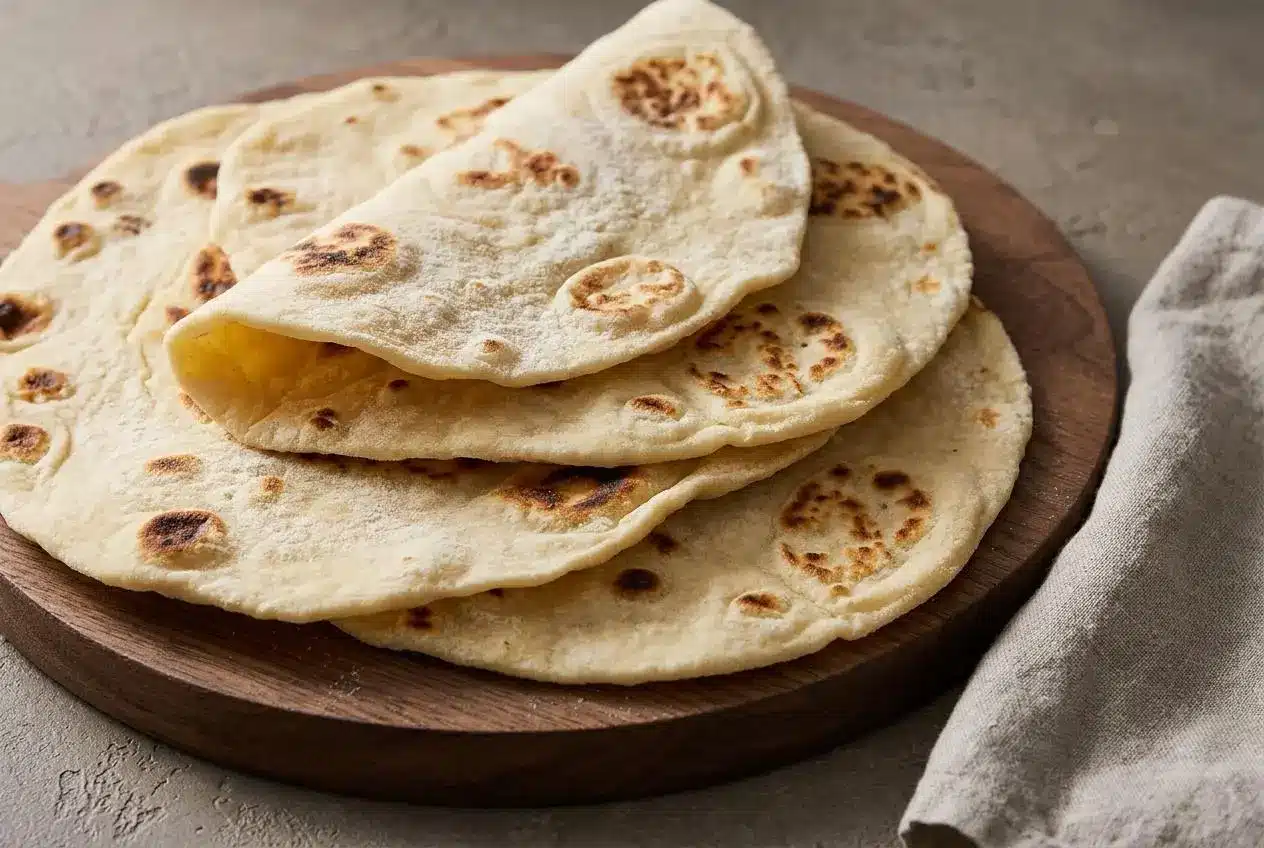
Choose bread thin enough to roll without building a thick, chewy shell. Middle Eastern markets often stock suitable flatbreads in their bread section or freezer aisle.
- Markouk or shrak: Markouk is the first choice here. Shrak is a related thin-flatbread option; both suit light, crisp rolls.
- Thin flour tortillas: A convenient alternative, though thickness varies and the finished rolls may feel more substantial.
- Lebanese pita: Open the pocket and gently peel the two layers apart, working around the circumference rather than pulling straight across.
Long strips produce relatively even-width rolls. Round wraps can optionally be quartered into wedges, which taper toward the tip and create thinner edges. Thick taboon or unsplit pocket pita tends to become chewy in this format. Bread size and thickness also affect yield.
How to Make Chicken Musakhan Rolls Step by Step
Make the chicken first, then cook the onion filling and assemble the rolls. The stated yield is 27 rolls, though different breads may produce a different count.
To Make the Chicken
- Arrange the chicken legs, yellow onions, bay leaves, cinnamon stick, cardamom pods, and allspice berries in a pot, then add water to cover.
The chicken should sit beneath the water with the aromatics distributed around it. - Heat the pot until the water boils, removing surface foam and replenishing water as needed.
Skimming clears away the residue that collects on top. - Reduce the heat to a simmer and cook for at least 45 minutes, or extend the simmer to 2 to 3 hours.
The meat should become tender enough to separate readily from the bones. - Lift the legs out of the broth, remove the meat from the bones, and pull it into shreds for the filling.
A fork should separate the tender meat into soft strands.
To Make the Musakhan Rolls
- Set the oven to 400°F.
A fully heated oven helps the thin bread develop a crisp exterior. - Cut the red onions into slices, using a knife or a food processor fitted with a slicing attachment.
The slices need not be paper-thin. - Combine the olive oil, sliced onions, and 1 teaspoon salt in a large sauté pan.
Turn the onions through the oil so their surfaces become coated. - Maintain medium-low heat for 20 to 30 minutes, stirring every few minutes.
Look for slumped, translucent onions with lightly golden edges rather than dark browning. - While the onions cook, stir the almonds in a separate skillet over low heat with 1 tablespoon olive oil, then set them aside once lightly toasted.
The almonds should take on a pale golden color without dark spots. - Fold the shredded chicken, sumac, ground allspice, ground cinnamon, and remaining teaspoon salt into the softened onions.
The warm mixture will release a fragrant, tangy spice aroma. - Keep the filling moving over the heat for another 5 to 7 minutes, then take the pan off the burner and fold in the almonds.
The chicken should look evenly coated with onions and seasoning. - Divide the markouk into long strips, add about 1 to 2 tablespoons filling to each, and roll gently, folding in the ends if desired.
The bread should enclose the filling without stretching or tearing. - Transfer the assembled rolls to an oiled 9×13 inch casserole dish.
Keep the filling enclosed as you move each roll. - Bake for 25 minutes at 400°F, then broil for 5 minutes while watching closely.
The bread should finish golden and crisp, without scorched edges.
Serve the hot rolls with plain yogurt.
Simmer and Shred the Aromatic Chicken
Keep enough water in the pot to cover the legs as they simmer. Skimming removes surface residue, while the whole spices perfume the broth. Those aromatics can soften the perception of a strong poultry aroma, but they don’t correct spoiled chicken. Don’t wash raw chicken as an odor remedy.
Check doneness with a thermometer as well as tenderness; use the poultry temperature target in the storage and reheating guidance below. If using cooked leftover chicken, skip the poaching group.
Slowly Caramelize the Onions and Toast the Almonds
Regular stirring brings onions from the edges of the pan into the center and discourages scorching. If they darken before they slump and soften, lower the heat. The goal is sweet, yielding onions, not crisp fried strands.
Toast the almonds separately so you can control their color. Once the chicken and ground spices join the onions, the filling should smell warm and fragrant. Folding in the almonds off the heat preserves their toasted character.
Cut the Bread, Roll, and Bake Until Crispy
Spread filling across the starting end of each strip rather than making a tall mound. Roll snugly enough to hold together, but leave the delicate bread relaxed. Folded ends are optional.
Watch throughout the broiling stage. Thin bread can move from golden to scorched quickly, so stop before burning if it browns faster than expected.
Essential Tips and Troubleshooting for Crispy Rolls
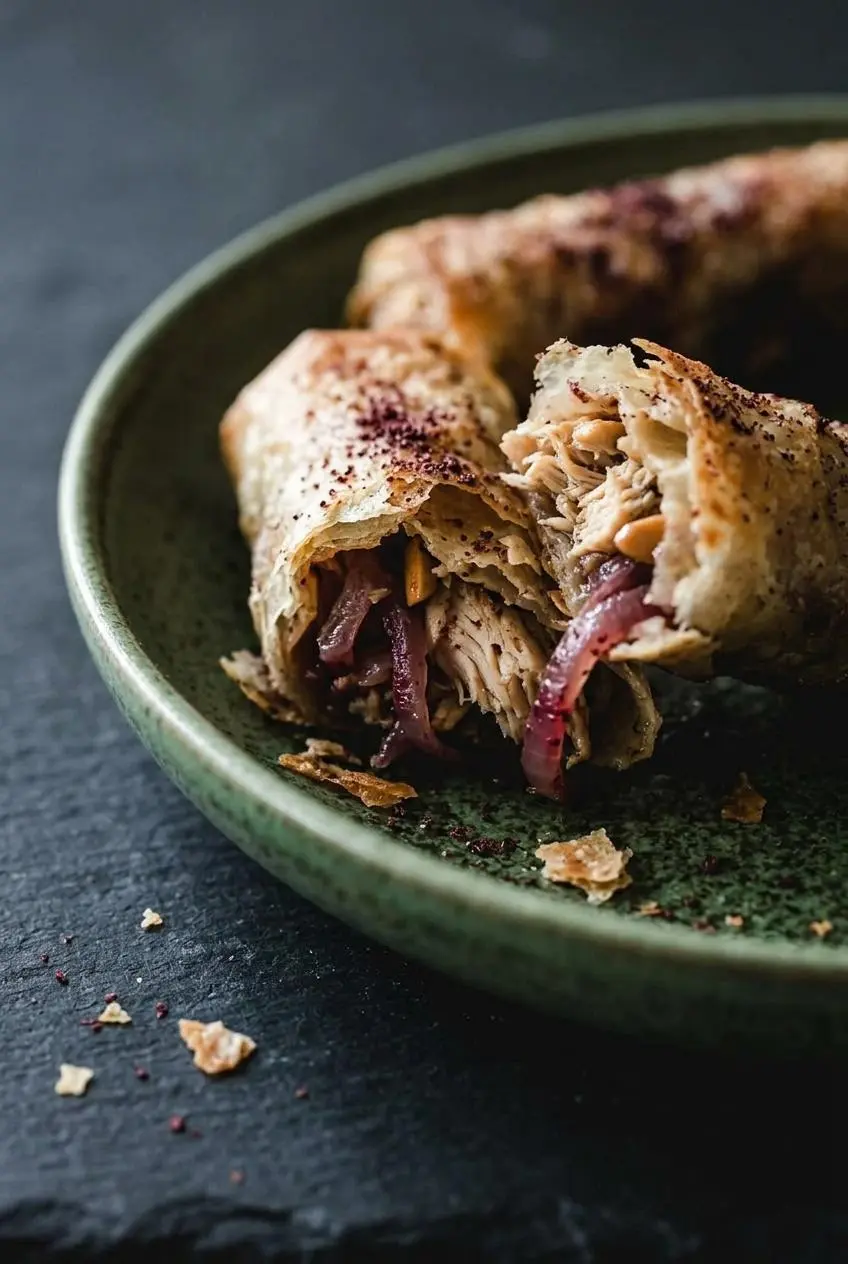
Most texture problems come from excess free oil, dry meat, or bread that’s too thick. These optional adjustments help without changing the filling’s character.
- Soggy bottoms: Tilt the filling pan and let pooled oil collect away from the portion you’re scooping. Keep the oil coating the onions; don’t squeeze the filling dry. A little collected oil can brush the bread, and seam-side-down placement can help rolls stay closed.
- Tearing bread: Reduce the filling mound and loosen your rolling tension. If markouk has a thick outer rim, trim that rim before cutting strips.
- Dry chicken: Add a small splash of reserved broth only if needed. Stop when the meat feels moist, before liquid pools in the pan. Lean breast meat and reheated chicken may need more attention than dark meat.
- Overly tart or flat filling: Check the measured sumac and salt, then assess the sumac’s freshness. Don’t keep adding spice blindly; taste the fully mixed cooked filling first.
- Uneven browning: Thick bread edges and uneven filling create patches that brown at different rates. Keep the filling level and watch the broiler closely.
Shortcut Variations and Flavor Options
Use these optional changes when you need a shortcut or want a different accent, keeping them separate from the ingredient groups above.
Shortcut Rotisserie Chicken Method
Rotisserie or leftover roasted chicken can replace the poached meat. Fold the cooked shreds into the softened onions at the chicken-addition stage, then continue with the spices and almonds.
Start with moist, tender shredded chicken rather than dry chunks. Add an optional splash of broth if needed. No measured cooked-chicken replacement quantity is specified here, so avoid assuming a cup-for-cup conversion from the bone-in legs.
Nut Swaps and Tangy Flavor Boosts
- Toasted pine nuts: Use them instead of almonds for a softer, buttery crunch.
- Omit the nuts: The filling will lose its toasted crunch; check all ingredients and handling if cooking for someone with an allergy.
- Lemon and Aleppo pepper paste: Add optional lemon juice and a little paste for extra brightness and fruity heat.
- Seven-spice: This can bring a different warm-spice profile, but blends vary, so no fixed replacement ratio applies.
For another optional approach, loosen the onion pan with a small splash of reserved spiced broth and fresh lemon juice before folding in the chicken. Keep the filling moist, not loose enough to soak the bread.
Can These Rolls Be Air-Fried?
An air fryer is an alternate appliance, but the oven method above provides the established settings for these rolls. Basket size, bread thickness, and roll size affect browning, so there’s no verified air-fryer baking temperature and time pair to substitute here.
What to Serve with Musakhan Rolls
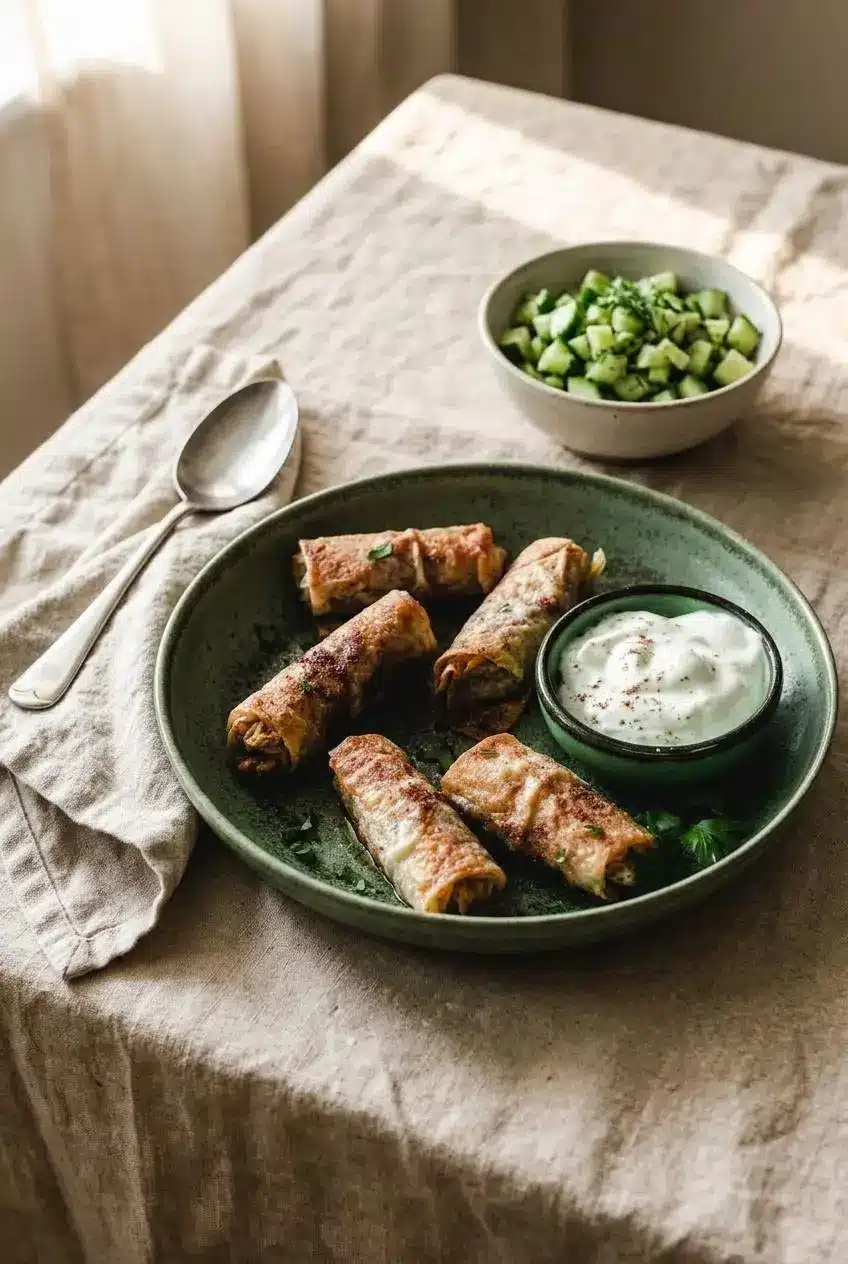
Start with plain yogurt: its cool tang balances the rich onion filling and warm spices.
- For dipping: Offer labneh or cucumber-mint yogurt dip. Whipped sumac-garlic labneh also suits the optional broth-and-lemon filling variation.
- For dinner: Add red lentil soup and a crisp cucumber or Arabic chopped salad for freshness alongside the rolls.
- For Ramadan iftar: Serve the rolls hot with soup, yogurt, and salad so the crisp bread contrasts with the softer accompaniments.
Make-Ahead, Freezing, and Reheating Guide
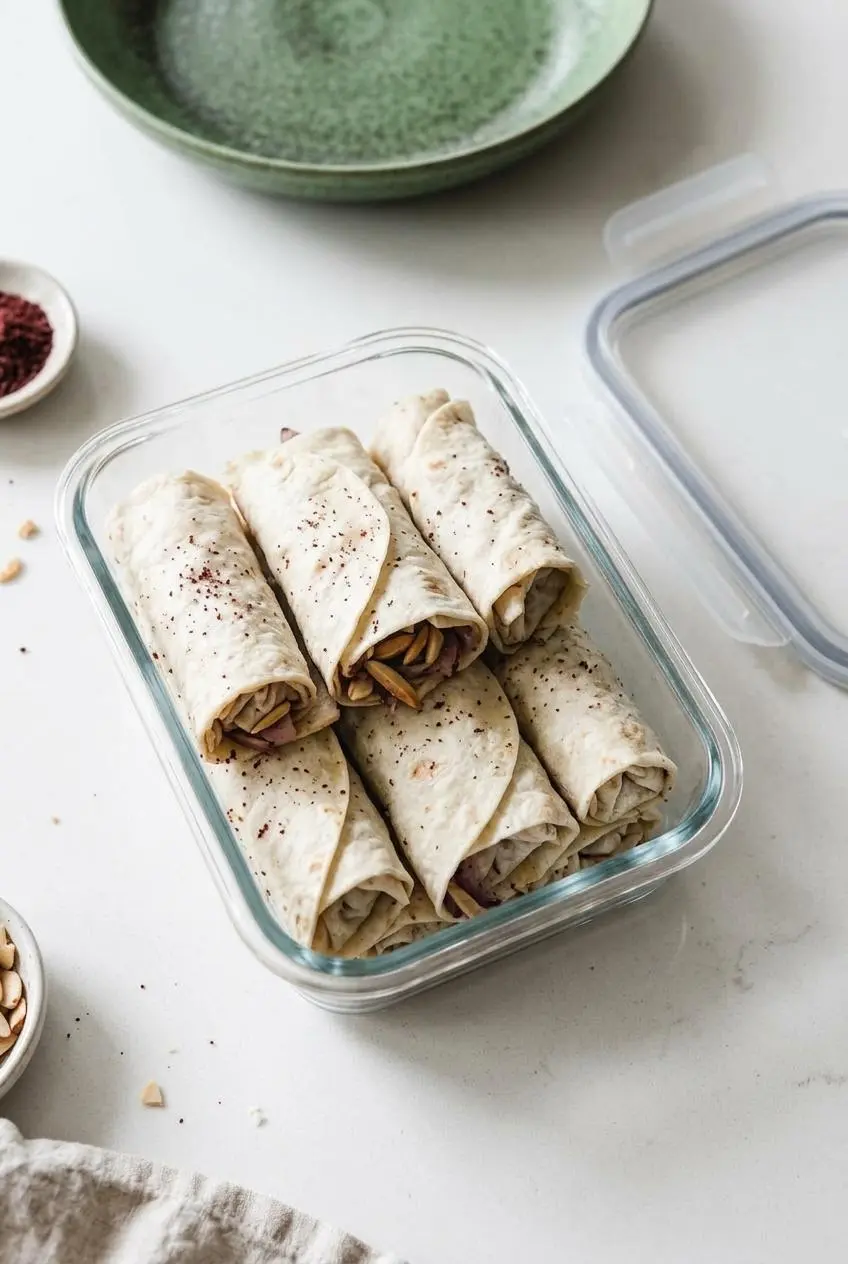
Preparing the filling separately protects the bread from prolonged contact with moisture. Cool it promptly in shallow containers, refrigerate it covered, and assemble when you’re ready to bake.
Cook poultry and reheat leftovers to 165°F, refrigerate leftovers within 2 hours, and keep cooked chicken dishes refrigerated for 3 to 4 days. Cooked filling can be frozen for 3 to 4 months for quality under proper storage. These cooking and leftover-storage limits apply from the chicken’s original cooking, not from the day you turn it into rolls.
Freeze the Filling or the Unbaked Rolls?
Freezing cooked filling separately avoids extended moisture contact with delicate bread. Assembled unbaked rolls save assembly work later, though markouk brands may differ in how well their texture holds.
For assembled rolls, use chilled filling without pooled oil and pack them in an airtight freezer container. Bake directly from frozen in a 400°F oven, allowing longer than the fresh-roll method as needed. No fixed frozen baking time applies; check the center with a thermometer and watch the bread’s color.
Reheat Without Losing the Crunch
An oven, toaster oven, or air fryer helps dry and crisp the exterior more effectively than a microwave. Appliance differences make a fixed reheating time unreliable.
Check the filling against the temperature target above rather than judging only by the shell. A browned exterior doesn’t prove the center is hot enough.
Conclusion
Good musakhan rolls balance crisp bread with juicy chicken, sweet onions, and bright sumac. Give the onions gentle heat and let their softness guide you.
Avoid pooled oil and overfilled wraps, then watch closely under the broiler. Bring yogurt to the table and enjoy the rolls while their edges still crackle.
Frequently Asked Questions
What Is a Musakhan Roll and Why Is It Called Musakhan?
It’s a crisp, handheld Palestinian roll filled with sumac chicken and softened onions. Musakhan means “heated” or “reheated” in Arabic, linking the rolls to the traditional warm bread-and-chicken dish.
What Bread Is Used in Musakhan Rolls and What Can I Substitute?
Thin markouk or shrak works well. Thin flour tortillas and Lebanese pita separated into individual layers are alternatives; thick, unsplit bread makes a chewier roll.
Can I Prep and Freeze Chicken Musakhan Rolls Ahead of Time?
Yes. Freeze the cooked filling separately or assemble rolls with chilled filling and store them airtight. Follow the storage guidance above, and bake frozen rolls until the center reaches the stated reheating target without scorching the bread.
Can I Use Rotisserie Chicken Instead of Boiling Chicken from Scratch?
Yes. Skip poaching and add shredded rotisserie or leftover roasted chicken to the softened onions with the spices. An optional splash of broth helps if the meat feels dry.
What Does Chicken Musakhan Taste Like?
It tastes savory, tangy, and gently sweet. Sumac supplies citrusy tartness, onions bring sweetness, olive oil adds fruitiness, and cinnamon and allspice give warmth. Toasted almonds and crisp bread provide the crunch.
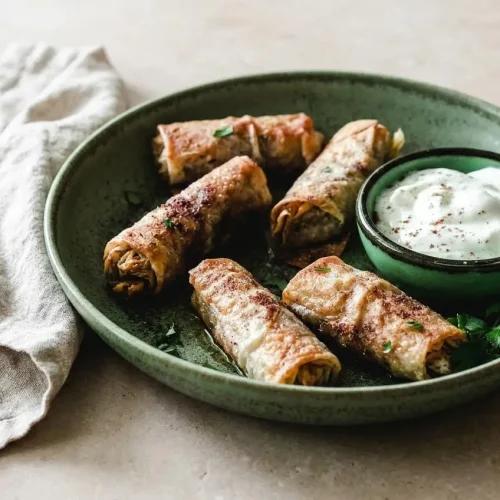
Chicken Musakhan Rolls

Equipment
- Pot
- Food processor
- large sauté pan
- Skillet
- 9×13 inch casserole dish
Ingredients
For the chicken
- 3 full chicken legs skin on and bone in
- 2 yellow onions
- 3 bay leaves
- 1 cinnamon stick
- 6 cardamom pods
- 6 whole allspice berries
For the rolls
- 4 large Markouk bread substitute with Lebanese pita or tortillas
- 6 red onions
- 1 cup olive oil extra virgin
- 4 tablespoons sumac plus more for garnish
- 1 teaspoon allspice
- 1 teaspoon cinnamon
- 2 teaspoons salt
- 1 cup slivered almonds
Instructions
To Make the Chicken
- Arrange the chicken legs, yellow onions, bay leaves, cinnamon stick, cardamom pods, and allspice berries in a pot, then add water to cover. The chicken should sit beneath the water with the aromatics distributed around it.
- Heat the pot until the water boils, removing surface foam and replenishing water as needed. Skimming clears away the residue that collects on top.
- Reduce the heat to a simmer and cook for at least 45 minutes, or extend the simmer to 2 to 3 hours. The meat should become tender enough to separate readily from the bones.
- Lift the legs out of the broth, remove the meat from the bones, and pull it into shreds for the filling. A fork should separate the tender meat into soft strands.
To Make the Musakhan Rolls
- Set the oven to 400°F. A fully heated oven helps the thin bread develop a crisp exterior.
- Cut the red onions into slices, using a knife or a food processor fitted with a slicing attachment. The slices need not be paper-thin.
- Combine the olive oil, sliced onions, and 1 teaspoon salt in a large sauté pan. Turn the onions through the oil so their surfaces become coated.
- Maintain medium-low heat for 20 to 30 minutes, stirring every few minutes. Look for slumped, translucent onions with lightly golden edges rather than dark browning.
- While the onions cook, stir the almonds in a separate skillet over low heat with 1 tablespoon olive oil, then set them aside once lightly toasted. The almonds should take on a pale golden color without dark spots.
- Fold the shredded chicken, sumac, ground allspice, ground cinnamon, and remaining teaspoon salt into the softened onions. The warm mixture will release a fragrant, tangy spice aroma.
- Keep the filling moving over the heat for another 5 to 7 minutes, then take the pan off the burner and fold in the almonds. The chicken should look evenly coated with onions and seasoning.
- Divide the markouk into long strips, add about 1 to 2 tablespoons filling to each, and roll gently, folding in the ends if desired. The bread should enclose the filling without stretching or tearing.
- Transfer the assembled rolls to an oiled 9×13 inch casserole dish. Keep the filling enclosed as you move each roll.
- Bake for 25 minutes at 400°F, then broil for 5 minutes while watching closely. The bread should finish golden and crisp, without scorched edges.