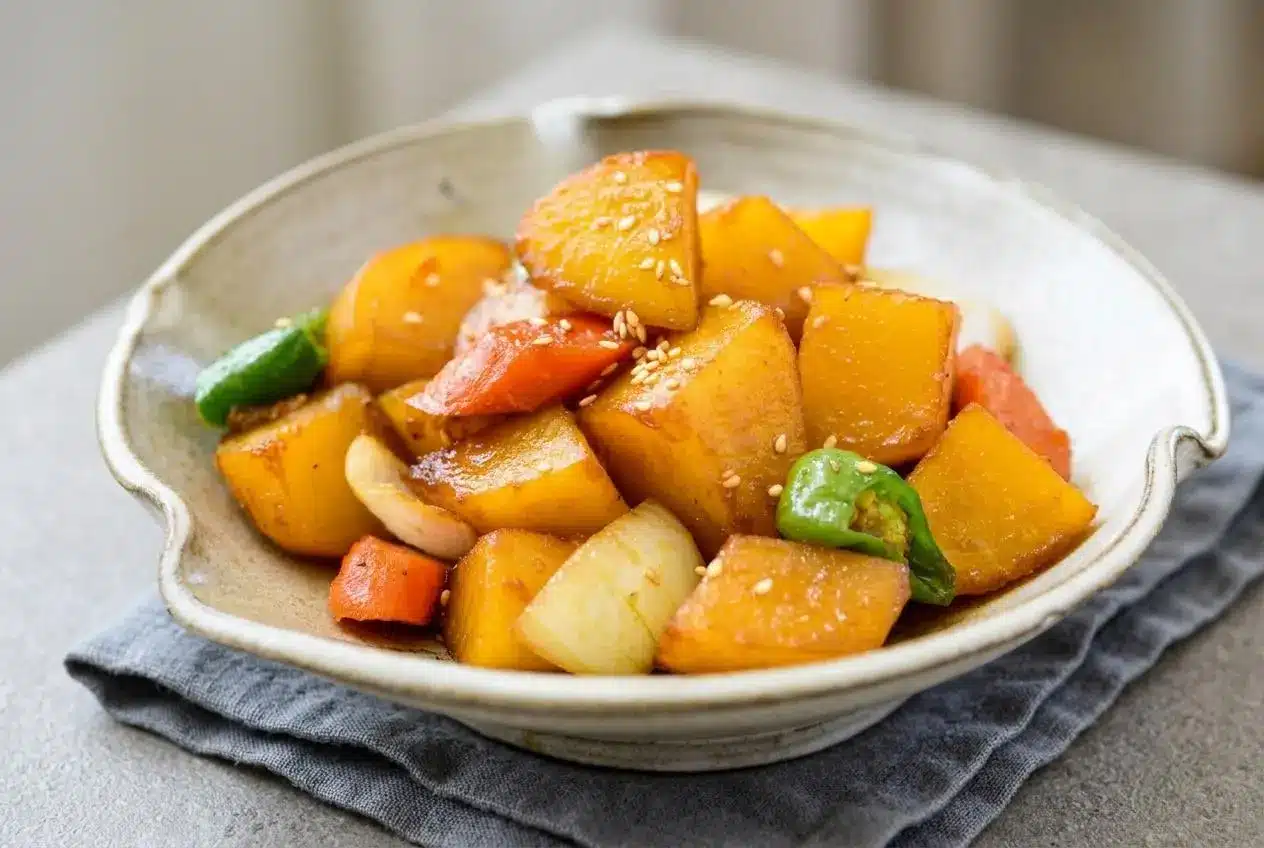
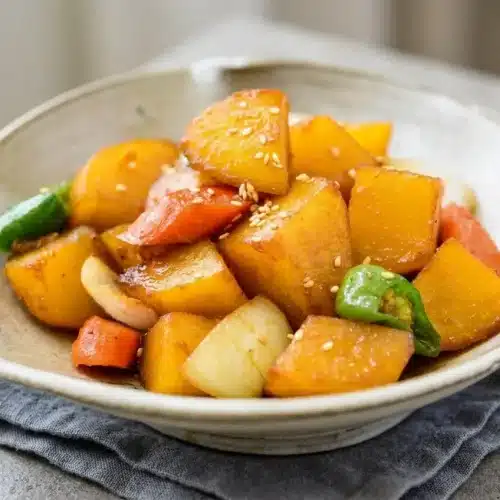
Korean braised potatoes, or gamja jorim, are a sweet-savory Korean side dish made by simmering potato cubes in a soy-based sauce. The potatoes become tender while holding their shape, and the reduced glaze gives them a glossy coating and nutty sesame finish.
As banchan, the side dishes served alongside Korean meals, these potatoes bring a mellow, savory sweetness to the table. Carrots add color, while chunky peppers and onions provide a little bite against the tender potatoes.
The trick is to finish cooking the cubes without letting them fall apart while the sauce reduces. You don’t need a dark sear or a pan cooked dry. Watch for that glossy coating.
Keep the potato cubes close to the same size so the smallest pieces don’t crumble before the largest ones soften.
Ingredients and Smart Substitutions
Potatoes provide the tender structure, vegetables add color and bite, and the braising liquid balances savory flavor with sweetness. Garlic supplies aroma, syrup gives the glaze body, and sesame oil and seeds bring a nutty finish.
- 1.5 pounds potatoes (about 3 medium size)
- 1 carrot (about 3 ounces)
- 2 to 3 green chili peppers (or 1/2 green bell pepper)
- 1/4 medium onion
- 1 tablespoon cooking oil
Braising liquid
- 3 tablespoons soy sauce (or 2 T soy sauce and 1 T gochujang)
- 1 tablespoon sugar
- 1 tablespoon rice wine (or mirin) (You can omit it if unavailable)
- 1 tablespoon corn syrup (or oilgodang) (Or use 1 tablespoon more sugar)
- 1 teaspoon minced garlic
- pinch black pepper
- 3/4 cup water
- 1 teaspoon sesame oil
- 1/2 teaspoon roasted sesame seeds
The potato variety affects how neatly the cubes hold together, while the sweetener affects the glaze’s finish. Carrots cook with the potatoes; peppers and onions enter later to keep some texture rather than softening throughout the braise.
I prefer potatoes with smooth, firm flesh here because clean-edged cubes make it easier to judge tenderness as they cook.
Choosing the Best Potatoes
Choose waxy or moderately starchy potatoes when you want distinct cubes rather than a soft, floury texture.
- Yukon Gold: A useful middle ground, with creamy flesh that generally holds its shape well during braising.
- Red potatoes: Their firm, waxy texture suits this dish, especially when you want tidy edges.
- Fingerlings: Another shape-holding option, provided you cut them into comparable pieces.
- Russets: Their starchier flesh needs gentler handling and closer attention near the end of covered cooking.
If using Russets, optionally rinse and briefly soak the cut cubes in cold water, then drain thoroughly before cooking. This removes excess surface starch, but it won’t prevent overcooking. Keep the approximately 1-inch cut regardless of variety.
Have red potatoes left over? Roasted red potatoes offer another way to enjoy their firm texture.
Sweet Soy Braising Glaze Ingredients
Soy sauce supplies the savory backbone, sugar balances its saltiness, and garlic adds aroma. Corn syrup or oligodang gives the liquid more body and a glossy finish. The “oilgodang” spelling in the ingredient list refers to the syrup often called oligodang.
The permitted extra tablespoon of sugar supplies sweetness if you skip the syrup, though the coating may look less syrupy. Rice wine or mirin adds another layer of flavor, but you can omit it if unavailable.
Keep sesame oil and sesame seeds out of the initial sauce mixture. They belong at the finish, when their nutty aroma won’t have to compete with the boiling stage.
How to Make the Korean Braised Potatoes Step by Step
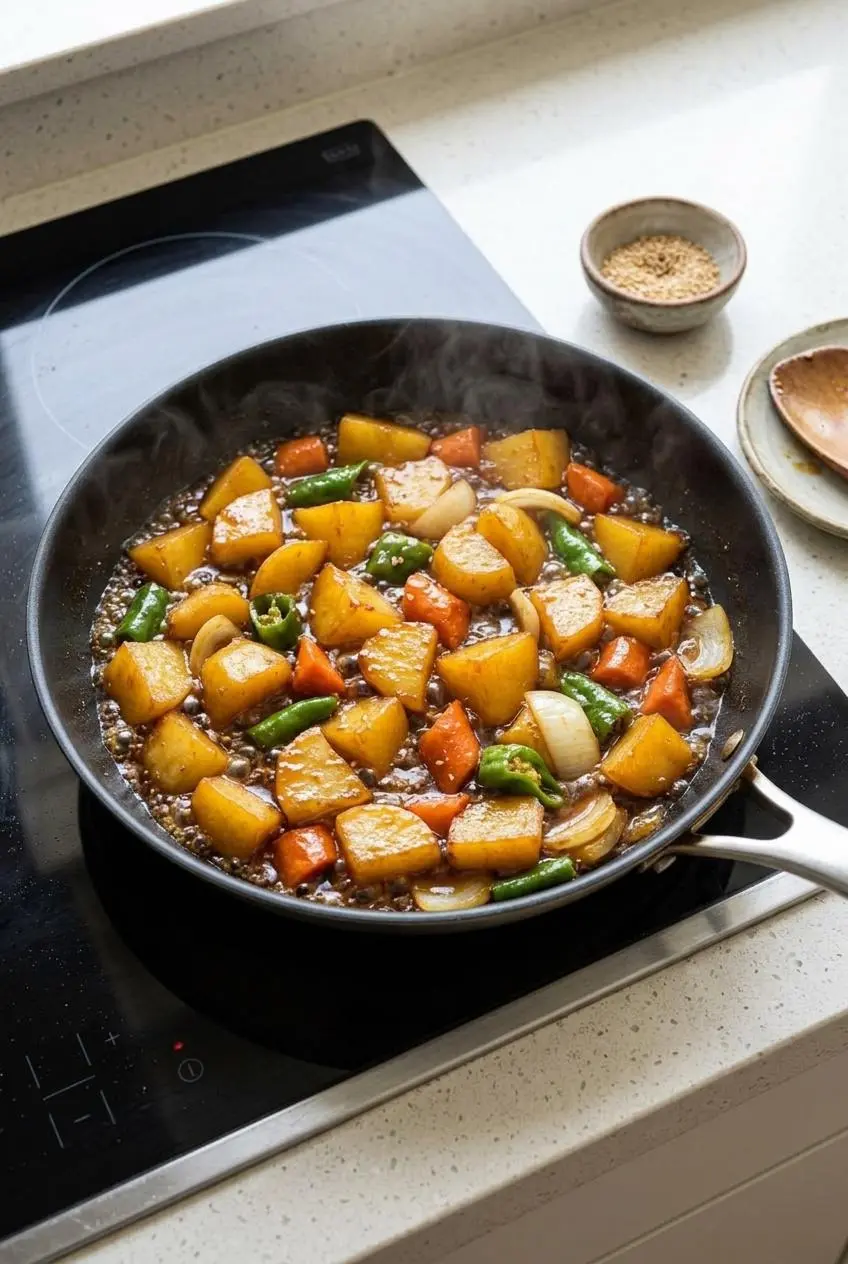
The cooking follows three stages: sauté the potatoes, simmer them covered, then uncover the pan to reduce the sauce. A small bowl and a nonstick pan or small pot are all the equipment you need.
Yield: 4 servings. Prep: 10 minutes. Cook: 15 minutes. Resting time: 5 minutes. Total: 30 minutes.
- Remove the potato skins and divide the flesh into roughly 1-inch cubes, then chop the carrot, peppers, and onion into chunky pieces.
A consistent potato size helps the centers soften evenly. - Reserve the sesame oil and sesame seeds for finishing, then stir the remaining braising liquid ingredients together in a small bowl.
The mixture should look evenly blended, with the garlic distributed throughout. - Sauté the potato cubes with the cooking oil in a nonstick pan or small pot over medium heat for 4 to 5 minutes, moving them occasionally to limit sticking.
Look for lightly translucent edges rather than a browned crust. - Pour in the mixed sauce, raise the heat to high until boiling, then add the carrots, cover the pan, and cook over medium heat for about 5 to 6 minutes.
Depending on their size and variety, the potatoes should be nearly tender but still firm enough to retain clean edges. - Add the peppers and onion and boil with the lid off for about 3 minutes, then turn off the heat, fold in the sesame oil, and scatter the sesame seeds over the potatoes.
Stop with a lightly thickened coating and some moisture remaining, since the potatoes continue absorbing sauce after cooking.
The initial sauté helps limit sticking and supports intact edges, but it doesn’t create a waterproof seal. Browning isn’t the goal. Once liquid enters the pan, covered cooking helps soften the centers without evaporating the sauce too quickly.
For an optional doneness check, test the largest cube with a fork tip around the start of the covered-cooking window’s final minutes. Almost-tender flesh offers slight resistance without cracking apart. It still has the uncovered stage ahead of it.
During that final boil, watch the liquid as closely as the potatoes. A light coating is enough. The sauce may look a little loose when you turn off the heat, then cling more closely as the potatoes absorb it.
Expert Tips and Troubleshooting for Firm Potato Cubes
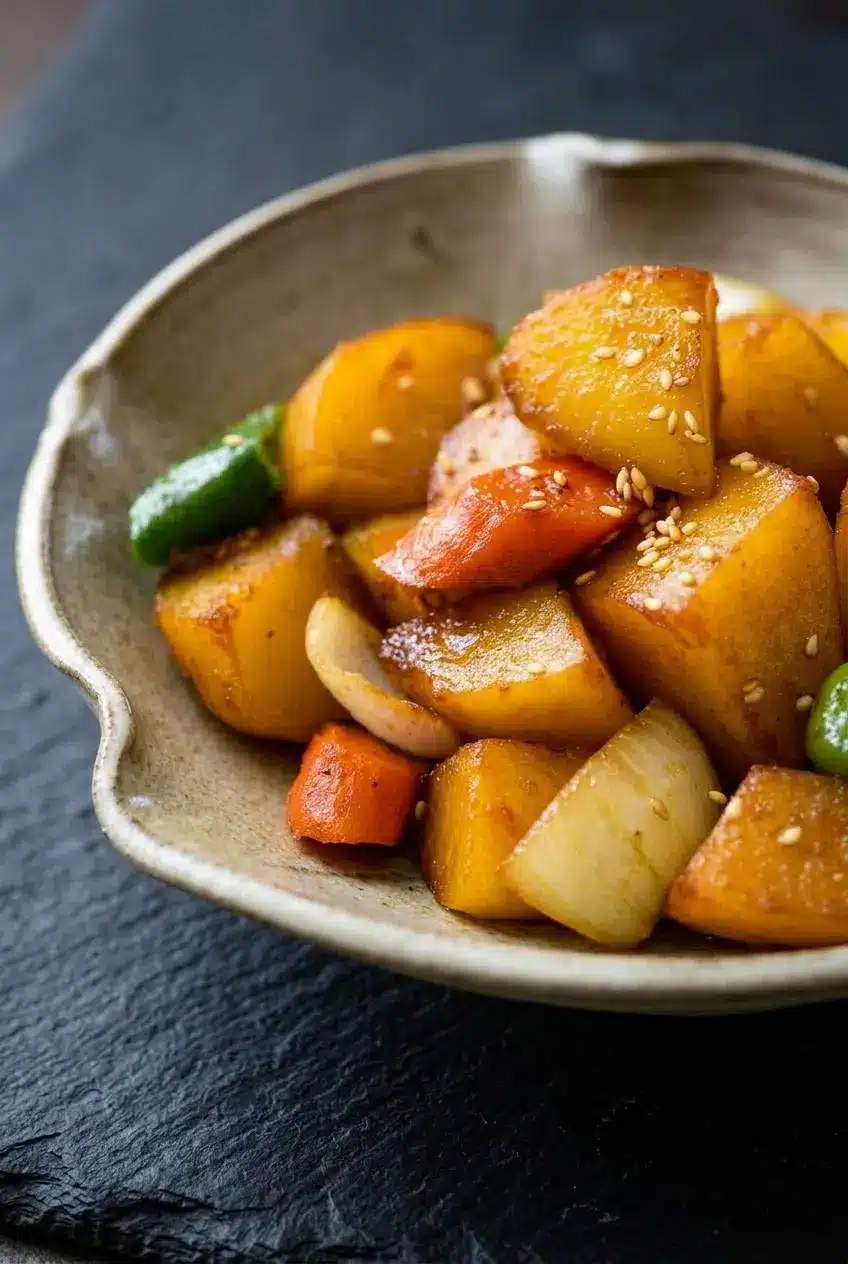
The most common problems come from cooking the potatoes too far or reducing the sauce too aggressively. Use the texture of the cubes and the moisture in the pan together as your guide.
- Cubes crumble: Starchy potatoes, uneven cuts, rough stirring, and excessive covered cooking can all contribute. Handle the cubes gently and check tenderness earlier next time; already broken potatoes can’t be made firm again. The optional Russet rinse can help with surface starch, not overcooking.
- The sauce stays watery: A lid traps moisture. Remove it for the final stage so evaporation can concentrate the sauce, and look for liquid that coats the cubes rather than pooling like broth.
- The glaze becomes sticky or too salty: Over-reduction concentrates the soy sauce and sweeteners. Keep the supplied proportions and stop before the pan becomes dry, remembering that the potatoes continue taking up liquid.
- Peppers and onions turn limp: Adding them during the covered stage gives them too much cooking. Keep them for the final uncovered boil to preserve some bite.
- The sesame aroma seems faint: Long boiling dulls that finishing character. Add the sesame oil after turning off the heat.
A busy pan doesn’t need constant stirring. Move the potatoes gently enough to redistribute the sauce without scraping softened corners against one another.
Spicy, Baby Potato, and Sweet Potato Versions of Gamja Jorim
These optional variations change the flavor or potato texture. Keep their differences in mind rather than assuming every version will follow the cubed potatoes’ cooking time.
Spicy Gochujang and Gochugaru Braised Potatoes
For the listed spicy option, replace the 3 tablespoons soy sauce with 2 tablespoons soy sauce and 1 tablespoon gochujang. The paste adds heat, sweetness, and body to the coating. It also contains salt, so don’t treat it as a sodium-free replacement or reduce the glaze excessively.
Gochugaru offers a separate direction for adding chile heat. Use it only as an optional variation; it isn’t interchangeable with gochujang’s thick, fermented paste.
Whole Baby Potatoes as Algamja Jorim
Algamja jorim uses whole, unpeeled baby or new potatoes instead of peeled cubes. Choose similarly sized potatoes so their centers become tender at a comparable pace.
The oil sauté still belongs to this style, but larger whole potatoes may need longer covered cooking. Judge by tenderness rather than applying the cubed version’s timing unchanged.
Korean Braised Sweet Potatoes
Sweet potatoes bring more natural sweetness and a different texture to a related braised side dish. Their behavior won’t necessarily match regular potatoes, so this isn’t a swap to make while assuming the same cooking window.
Keep it as a separate variation rather than changing the potato quantity or sauce proportions here without a sweet-potato-specific formula.
Serving and Storing Gamja Jorim for Banchan Meal Prep
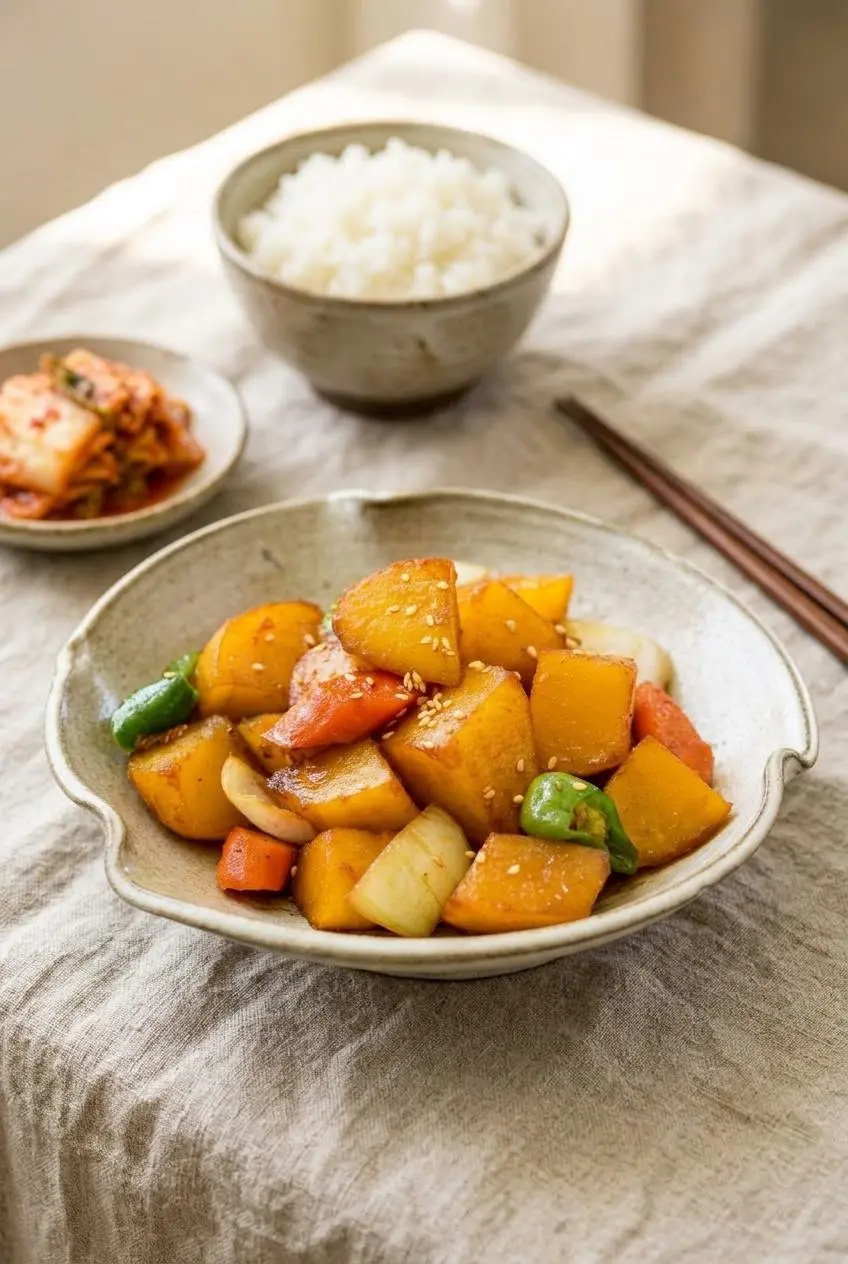
Gamja jorim works well as a portioned side dish because you can enjoy it warm or chilled. As the potatoes cool, they continue taking up sauce, which can make the seasoning taste more settled.
Rice, Kimchi, and Korean Barbecue Pairings
Serve alongside steamed short-grain rice and cabbage kimchi for contrast between mellow sweetness and tangy crunch. Bulgogi or Korean barbecue ribs make richer main-dish partners.
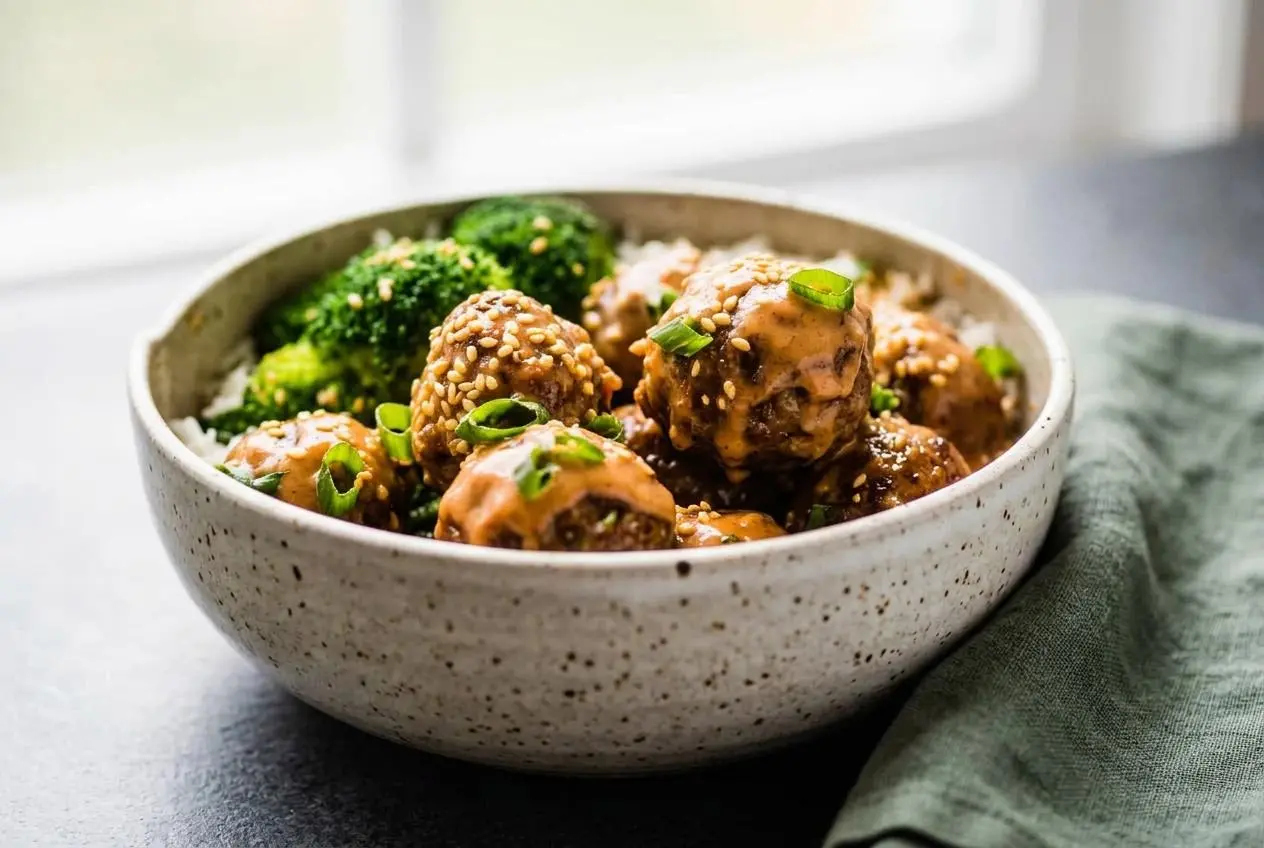
For an easy bowl dinner, add a portion beside a Korean ground beef bowl. The tender potatoes complement the beef without needing another sauce.
Warm, chilled, or briefly brought to room temperature for serving, the potatoes retain their sweet-savory character. Serving temperature doesn’t replace chilled storage for portions you’re saving.
Refrigerating, Reheating, and Packing the Potatoes
Refrigerate leftovers promptly in a covered airtight container rather than leaving the serving dish out. Portioning them separately makes it easier to take what you need without repeatedly handling the whole batch.
If you prefer them warm, reheat a portion gently and handle the cubes carefully. Aim to warm them through without boiling away more glaze or stirring until their edges break down.
For lunchboxes, pack chilled potatoes and keep them cold with refrigeration or an ice pack until eating. Their pleasant chilled texture makes reheating optional, not cold storage.
Conclusion
Gamja jorim brings tender potato cubes, a glossy sweet-savory coating, and a nutty sesame finish to a rice-centered meal.
Stop covered cooking while the cubes still hold firm edges, then let the uncovered stage finish the glaze. A little sauce left in the pan is your friend.
Frequently Asked Questions
What Is the Best Potato Variety for Korean Braised Potatoes?
Yukon Gold, red potatoes, and fingerlings generally hold their shape well during braising. Starchier Russets need closer monitoring; optionally rinse, briefly soak, and thoroughly drain the cubes before cooking.
Can I Make Gamja Jorim With Whole Baby Potatoes Instead of Cubed Potatoes?
Yes. The whole, unpeeled baby potato version is called algamja jorim. Whole potatoes may need more covered cooking than cubes, so use tenderness rather than the cubed version’s timing as your guide.
How Do I Keep My Braised Potatoes From Turning Mushy?
Cut uniform 1-inch cubes and give them the 4 to 5 minute oil sauté. End covered cooking while they remain firm, then reduce the sauce uncovered and stir gently.
Can Korean Braised Potatoes Be Eaten Cold Out of the Fridge?
Yes. Chilled gamja jorim makes a flavorful banchan without reheating. Keep saved portions refrigerated and packed lunchbox portions cold until eating.
Korean Braised Potatoes

Equipment
- Small bowl
- Non-stick Pan
- Small Pot
Ingredients
- 1.5 pounds potatoes (about 3 medium size)
- 1 carrot (about 3 ounces)
- 2 to 3 green chili peppers (or 1/2 green bell pepper)
- 1/4 medium onion
- 1 tablespoon cooking oil
Braising liquid
- 3 tablespoons soy sauce (or 2 T soy sauce and 1 T gochujang)
- 1 tablespoon sugar
- 1 tablespoon rice wine (or mirin) (You can omit it if unavailable)
- 1 tablespoon corn syrup (or oilgodang) (Or use 1 tablespoon more sugar)
- 1 teaspoon minced garlic
- pinch black pepper
- 3/4 cup water
- 1 teaspoon sesame oil
- 1/2 teaspoon roasted sesame seeds
Instructions
- Remove the potato skins and divide the flesh into roughly 1-inch cubes, then chop the carrot, peppers, and onion into chunky pieces. A consistent potato size helps the centers soften evenly.
- Reserve the sesame oil and sesame seeds for finishing, then stir the remaining braising liquid ingredients together in a small bowl. The mixture should look evenly blended, with the garlic distributed throughout.
- Sauté the potato cubes with the cooking oil in a nonstick pan or small pot over medium heat for 4 to 5 minutes, moving them occasionally to limit sticking. Look for lightly translucent edges rather than a browned crust.
- Pour in the mixed sauce, raise the heat to high until boiling, then add the carrots, cover the pan, and cook over medium heat for about 5 to 6 minutes. Depending on their size and variety, the potatoes should be nearly tender but still firm enough to retain clean edges.
- Add the peppers and onion and boil with the lid off for about 3 minutes, then turn off the heat, fold in the sesame oil, and scatter the sesame seeds over the potatoes. Stop with a lightly thickened coating and some moisture remaining, since the potatoes continue absorbing sauce after cooking.