To make whipped brie, remove the rind while the cheese is cold, cut the center into cubes, and soften at room temperature for 1 hour. Blend in a food processor until smooth and airy, then finish with cranberry sauce, honey, and pistachios.
A firm cheese wheel turns into a velvety, buttery spread with a little patience and the right temperature. This whipped brie pairs rich cheese with tart fruit and salty crunch, making a scoopable appetizer that needs no baking.
The food processor does the whipping, but softening the cheese first makes the biggest difference. Serve it on a shallow plate so every swipe catches cheese, cranberry, and honey. Keep blending past the clumps.
Trim the wheel straight from the refrigerator, before the soft center starts sticking to your knife.
Ingredients and Why Each One Matters
Brie supplies the creamy texture, cranberry sauce brings tartness, and honey rounds out the fruit. Salted pistachios add crunch, rosemary contributes a woodsy aroma, and toasted baguette gives the soft cheese a crisp partner.
- 8 ounces Brie cheese (cold)
- 2 to 3 tablespoons cranberry sauce (homemade or from a can of whole berry cranberry sauce; or swap your favorite jam)
- 1 to 2 tablespoons honey
- 1 tablespoon chopped roasted and salted pistachios
- Rosemary
- Toasted baguette slices (for dipping)
Choose the brie for its texture. Double-creme brie works well, while triple-creme has more butterfat and offers an especially rich, supple finish. Neither replaces the need to soften the cheese. A chilled triple-creme wheel can still leave stubborn pieces around the blade.
A cold 8-ounce wheel holds its shape while you remove the bloomy white rind, helping you shave away thin layers rather than lose soft cheese in thick cuts. Wedges also work, but their shape alone doesn’t indicate a higher butterfat content. Check the label if you want triple-creme.
Whole-berry cranberry sauce gives the topping little bursts of fruit. Start toward the lower end of the honey range if the sauce or jam tastes particularly sweet. The goal is contrast, rather than covering the cheese completely.
Roasted, salted pistachios bring toasted flavor as well as crunch. Chop them so they scatter across the spread instead of rolling off. Rosemary has a strong aroma, so use small pieces for the optional garnish rather than large, woody sprigs.
I prefer a sharp chef’s knife for the flat surfaces and a vegetable peeler for thin edges, working while the brie is still firm from the refrigerator.
How to Make Whipped Brie Step by Step

Give the cheese its full softening time before you switch on the food processor. Cold trimming and room-temperature blending solve different problems: one makes the rind easier to remove, while the other helps the cheese become smooth.
Serves: 6 people. Equipment: food processor. Rest time: 1 hour.
- Use a sharp knife to shave off and discard the white rind from the refrigerated brie, then cube the cheese and leave it at room temperature for 1 hour.
The softened pieces should indent easily under gentle finger pressure rather than feel firm through the center. - Process the softened cubes, stopping to scrape cheese from the bowl walls back toward the blade whenever needed.
Continue until the mixture loses its dense lumps and develops a smooth, glossy, lightly aerated texture. - Spoon the cheese onto a plate, spread it into shallow swirls, place cranberry sauce in the middle, drizzle with honey, scatter over the pistachios, and serve with toasted baguette slices, adding rosemary pieces if desired.
The cheese should hold soft ridges, with the fruit centered and the nuts distributed across the surface.
Expect the texture to look unpromising at first. The blade breaks the cubes into dense pieces, and those pieces may collect into a ball. That doesn’t mean you’ve done anything wrong.
As blending continues, the cheese becomes more cohesive and may smear against the bowl walls. Stop the machine before scraping it down, bringing the mixture back into the blade’s path. Scraping is particularly useful when a small batch forms a ring above the blade.
Finally, look for a glossy paste that spreads without tearing or leaving firm bits. A lifted spatula should leave a soft curl rather than a crumbly mound. Cheese temperature, ripeness, and processor size affect how quickly this happens, so follow the texture instead of expecting a particular minute to deliver the result.
Expert Tips and Troubleshooting for Fluffy Whipped Brie
Match the bowl to the amount of cheese before trying to fix the mixture with extra dairy. If the blade or paddle can’t catch the cheese, more mixing alone won’t accomplish much.
Food Processor vs Stand Mixer Batch Sizes
- Food processor: The best starting point for one 8-ounce wheel, provided the bowl isn’t oversized. Its low blade catches the softened pieces and brings them together into a spread.
- Stand mixer with paddle attachment: Better suited to larger batches, often two or three wheels depending on bowl size. A single wheel can flatten against the bowl below or beyond the paddle’s reach.
- Hand mixer: A deep, narrow bowl helps the beaters engage the cheese. Thoroughly softened brie and a larger batch make the job easier, but expect more scraping than with a processor.
Think about contact, not just motor power. Even a powerful machine struggles when the cheese sits outside its working area. Scrape down with the machine off, and avoid overfilling a smaller processor when scaling up.
How to Fix Grainy or Stiff Whipped Brie
- Firm, grainy pieces: The cheese may still be cold in the center. Let it soften until it yields easily, then resume processing rather than forcing cold cubes through repeated blending.
- A ball around the blade: This can be an intermediate stage. Redistribute the cheese and continue until it becomes cohesive and glossy.
- Cheese coating the bowl walls: Stop and scrape it back toward the blade. If the machine repeatedly misses it, use a better-fitting bowl or equipment suited to the batch.
- A stiff finished spread: Chilled brie firms up again. Let it become spreadable before stirring or briefly re-whipping; don’t microwave it, which can create melted, oily patches.
- A different consistency: As an optional variation, a splash of heavy cream can loosen the spread. Softened cream cheese produces a tangier, more structured blend, rather than necessarily making it looser.
No extra dairy is required for the cranberry-pistachio version. For a distinctly tangier cheese spread instead, try creamy whipped goat cheese.
Best Whipped Brie Toppings and Flavor Variations

Keep the cheese mild and buttery, then choose toppings that supply contrast. The cranberry, honey, and pistachio combination is festive, but the same spread also suits fruit preserves or a savory herb finish.
For an optional brightening touch, blend freshly grated lemon or orange zest into the softened cheese near the end. Add flaky sea salt sparingly, especially when using salted nuts. Zest contributes fragrant citrus oils without the extra moisture of juice.
Sweet Honey, Fig Jam, and Candied Nut Toppings
- Honey and honeycomb: Finish with floral honey or hot honey, a piece of honeycomb, and cracked black pepper for sweetness with a little bite.
- Fig jam: Spoon it over the center for a deeper, mellow fruit flavor that suits the buttery cheese.
- Candied almonds and pomegranate: Scatter candied sliced almonds and fresh arils over one side of the platter for crisp sweetness and juicy tartness.
- Seasonal preserves: Try blueberry or apricot preserves, or homemade peach jam for a summer fruit topping.
- Roasted strawberries: Use balsamic-roasted strawberries as a fruit-forward alternative, keeping excess roasting liquid off the platter.
Savory Garlic, Fresh Herb, and Olive Oil Swirl
Skip the sweet toppings and swirl extra-virgin olive oil over the cheese with finely minced garlic, chopped parsley, thyme, and rosemary. Finish with cracked black pepper and flaky sea salt to taste.
Use a light hand with raw garlic and rosemary so they don’t overwhelm the brie. If you prefer a silkier, looser savory spread, optionally blend in a splash of heavy cream with the garlic and herbs.
What to Serve with Whipped Brie and Make-Ahead Storage
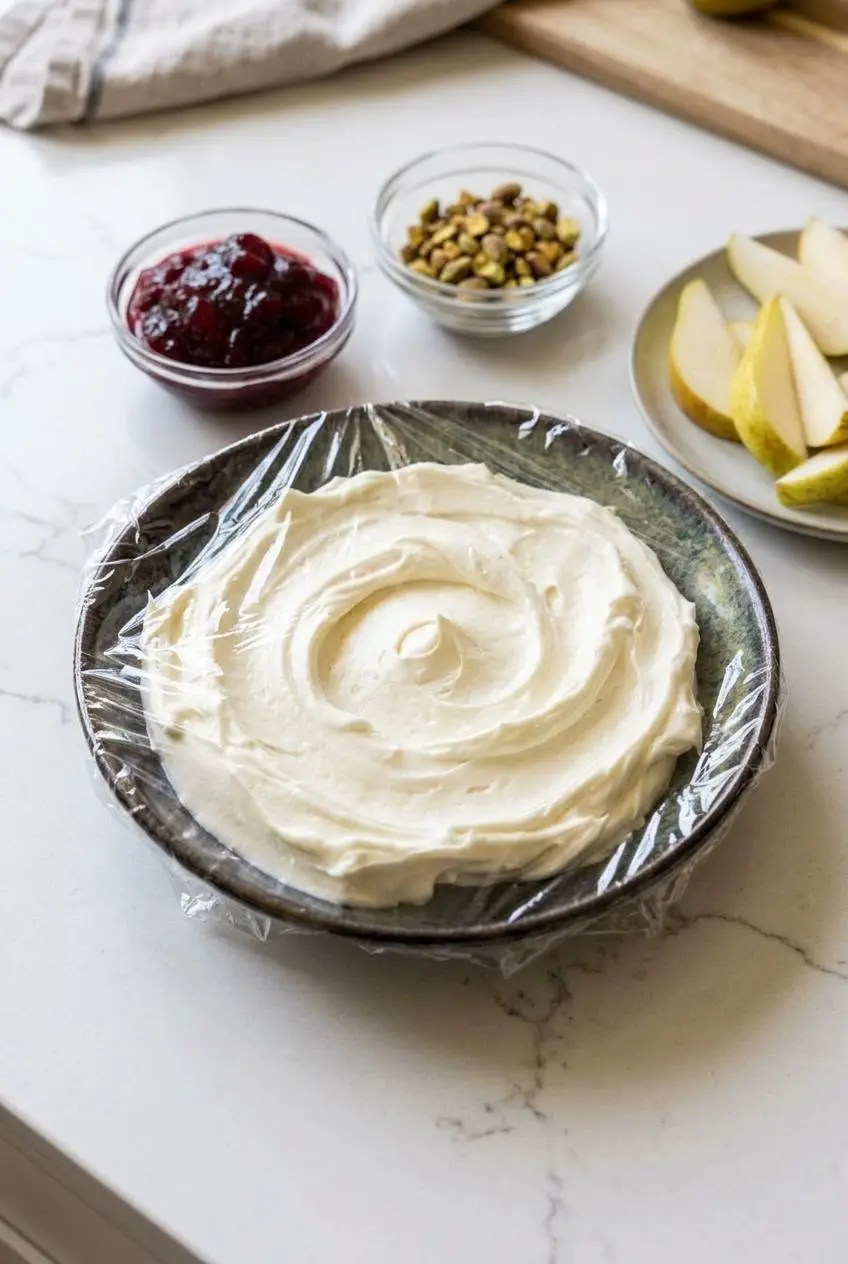
A shallow platter makes this spread easier to scoop than a deep bowl. Draw ridges through the cheese with the back of a spoon so honey and fruit settle into the grooves.
- Crisp bread: Arrange toasted baguette crostini and seeded crackers alongside, keeping them separate from the moist toppings.
- Fruit: Crisp apple slices and pear wedges offer fresh contrast without competing with the cheese.
- Bread-free choices: Offer parmesan crisps and fresh crudités; choose labeled gluten-free products when needed.
Serve the cheese soft rather than hot to preserve its whipped texture. If you’re looking for a melted appetizer instead, classic baked brie is a better fit.
For prep and storage, keep the whipped cheese covered in the refrigerator and store the cranberry sauce, honey, nuts, and garnish separately. Add toppings just before serving so the sauce doesn’t bleed into the cheese and the nuts stay crunchy.
An airtight container works well. To protect a plated surface, brush plastic wrap lightly with oil and lay it against the cheese before covering; the oil helps the wrap release without lifting the swirls. Once chilled, let the cheese soften enough to spread, then stir or briefly re-whip if necessary.
Keep the spread chilled until you begin preparing it for serving, set out a manageable portion, and refrigerate leftovers promptly. Count softening and serving as time outside refrigeration rather than treating each stage separately.
If you choose to save the trimmed edible rinds instead of discarding them, keep them refrigerated and use them in a warm pasta sauce or soup. They may soften without disappearing completely, so remove any chewy pieces before serving.
Conclusion
Trim the brie cold, soften the cubes for a full hour, and blend until the clumps give way to a smooth spread. Tart cranberry sauce, honey, and salted pistachios finish it with contrast in every scoop.
Next time, try citrus zest and a little flaky salt for a brighter finish. Keep the baguette crisp and add the toppings just before gathering everyone around the platter.
Frequently Asked Questions
Can You Whip Brie Cheese?
Yes. Remove the rind, soften the cheese, and blend it until smooth and lightly aerated. The result is a buttery, spreadable cheese rather than a melted dip.
Why Won’t My Brie Whip Into a Smooth Spread?
The cheese may still be cold, the bowl may be too large for the batch, or you may have stopped at the clumping stage. Check softness and blade contact, scrape down, then continue processing.
Do You Cut the Rind Off Brie Before Whipping?
Yes. Remove the bloomy white rind while the cheese is cold and firm. It doesn’t blend as smoothly as the center and can leave chewy flecks in the finished spread.
Can I Make Whipped Brie With a Hand Mixer or Food Processor?
A food processor is the better choice for one 8-ounce wheel. A hand mixer can work with thoroughly softened cheese in a deep, narrow bowl, particularly for a larger batch that the beaters can catch.
Can You Serve Whipped Brie Warm or Make It Ahead of Time?
Serve it softened rather than heated, since melting changes the airy texture. If preparing the cheese before serving, keep it covered and refrigerated without toppings, then soften and refresh the texture before finishing the platter.

Whipped Brie

Equipment
- Food processor
Ingredients
- 8 ounces Brie cheese (cold)
- 2 to 3 tablespoons cranberry sauce (homemade or from a can of whole berry cranberry sauce; or swap your favorite jam)
- 1 to 2 tablespoons honey
- 1 tablespoon chopped roasted and salted pistachios
- Rosemary
- Toasted baguette slices (for dipping)
Instructions
- Use a sharp knife to shave off and discard the white rind from the refrigerated brie, then cube the cheese and leave it at room temperature for 1 hour. The softened pieces should indent easily under gentle finger pressure rather than feel firm through the center.
- Process the softened cubes, stopping to scrape cheese from the bowl walls back toward the blade whenever needed. Continue until the mixture loses its dense lumps and develops a smooth, glossy, lightly aerated texture.
- Spoon the cheese onto a plate, spread it into shallow swirls, place cranberry sauce in the middle, drizzle with honey, scatter over the pistachios, and serve with toasted baguette slices, adding rosemary pieces if desired. The cheese should hold soft ridges, with the fruit centered and the nuts distributed across the surface.