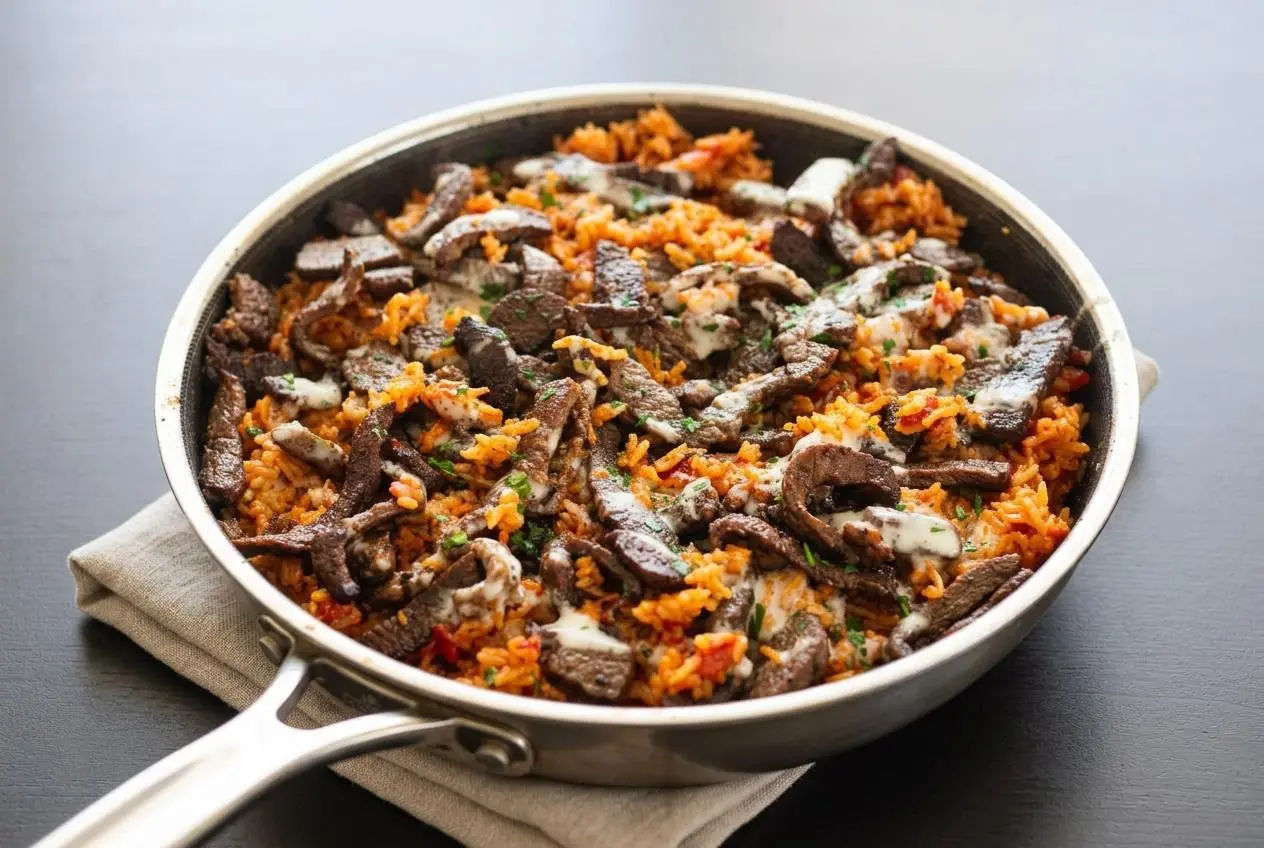
Steak and queso rice combines seasoned sirloin strips, fluffy tomato rice, and warm white queso in a one-hour dinner. Similar restaurant dishes may appear as Steak Loco Rice or Arroz con Carne, though names and preparations vary.
This skillet dinner brings together savory beef, tomato-infused basmati, and a creamy cheese topping without requiring a grill. The rice cooks in one pan while you prepare the steak in another, so everything comes together hot.
The real appeal is the contrast: browned steak edges, separate rice grains, and queso that flows between them. Careful rinsing and a little attention at the skillet make the difference. Keep that queso warm.
Set out a tight-fitting rice lid and a separate steak skillet before turning on the stove.
Why This Restaurant-Style Steak and Queso Rice Works
Cooking the rice and beef separately gives each the treatment it needs. Rice benefits from steady, covered heat; steak needs direct contact with a hot pan to brown rather than steam.
You may recognize this combination from Tex-Mex menus labeled Steak Loco Rice, Steak Bandido, or Arroz con Carne. Arroz con carne broadly means rice with meat, so it doesn’t always describe a queso-topped dish.
Here, paprika and cumin give the tomato rice warm, earthy depth, while butter enriches the seared sirloin. Queso blanco ties the components together. Prepare and season the beef during the rice simmer, then coordinate the searing with the rice’s covered rest.
Prep: 30 minutes. Cook: 30 minutes. Total: 1 hour. Servings: 4.
Key Ingredients and Smart Substitutions
Rice provides the fluffy foundation, broth and bouillon build savory depth, and tomatoes add moisture and tang. Garlic, spices, and steak seasoning supply aroma, while butter and queso bring richness balanced by fresh cilantro.
- 2 cups Basmati Rice
- 2 ½ cups Chicken Broth
- 1 cube Chicken Bouillon
- 1 can (about 14 oz Crushed Tomatoes, you can used diced instead or tomato sauce instead)
- 2 cloves Garlic (minced)
- 1 small Onion (finely chopped (optional))
- 1 teaspoon Paprika
- 1/2 teaspoon Cumin
- Salt and pepper to taste
- 2 tablespoons Olive Oil
- 1 pound Sirloin Steak (cut into thin strips)
- 2 tbsp Butter
- Montreal steak seasoning (to taste)
- White Queso (for topping)
- Fresh Cilantro (for garnish)
- Flour tortillas (optional for serving)
Best Rice and Tomato Choices for Fluffy Texture
Basmati’s long grains suit this dish because they tend to remain distinct rather than cling together like short-grain rice. Rinsing removes loose surface starch; draining thoroughly helps the grains toast instead of sitting in rinse water.
- Crushed tomatoes: Create a textured coating with tomato distributed throughout the rice.
- Diced tomatoes: Leave noticeable pieces and a less uniform coating.
- Tomato sauce: Gives the rice a smoother, more even red finish; choose plain sauce rather than pasta sauce.
Broth and bouillon contribute overlapping seasoning, so use a restrained hand with salt. Tomato products also vary in saltiness and thickness, which can affect both flavor and the final moisture level.
Steak Cuts, Seasoning Swaps, and White Queso Tips
Top sirloin offers beefy flavor without needing a long cooking time. Find the parallel muscle fibers, then cut across them into uniform strips. Shortening those fibers makes each bite easier to chew.
- Montreal seasoning: Offers a convenient, peppery coating; check the label before adding extra salt.
- Homemade herb-paprika seasoning: Combine salt, black pepper, garlic powder, paprika, onion powder, dried rosemary, and thyme to taste as an optional alternative.
For shopping, plan on 8 to 12 ounces of white queso dip for generous topping. Refrigerated or jarred queso blanco both work; choose a pourable dip rather than a firm cheese block. Warm it gently following its package directions.
Reserve 1 tablespoon of the listed olive oil for the steak and use the remainder for the rice.
I prefer a fine-mesh strainer for rinsing basmati because it keeps the slender grains contained while I check that the runoff looks clear.
How to Make Steak and Queso Rice Step by Step
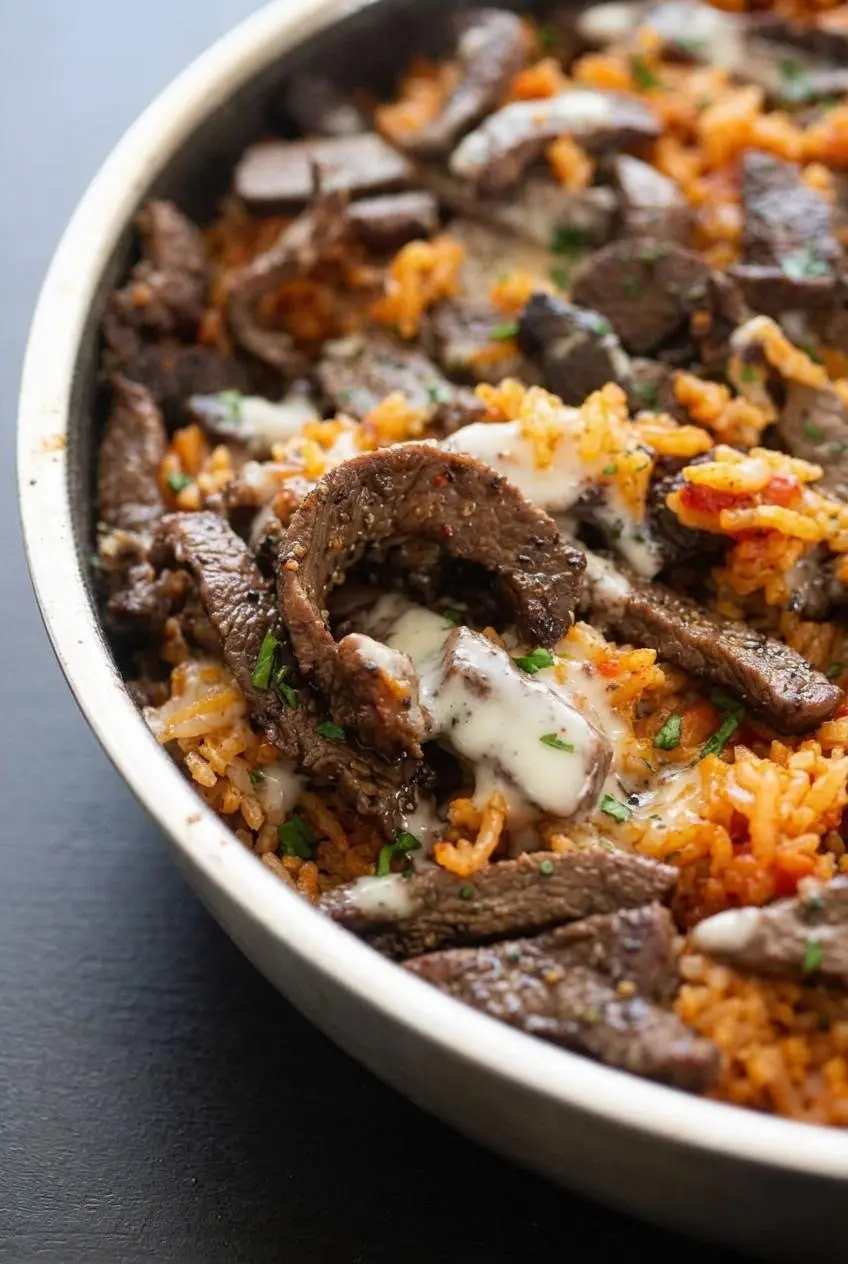
Keep the rice covered as it cooks, and watch the steak rather than relying on the clock alone. Strip thickness makes a substantial difference to searing time.
- Run cold water through the basmati in a strainer, agitating the grains gently, then drain thoroughly.
Clear runoff signals that much of the loose surface starch has washed away. - Over medium heat, warm the rice portion of olive oil in a large skillet or saucepan and soften the garlic with the optional onion for 2 to 3 minutes.
Look for translucent onion and a fragrant, rather than browned, garlic aroma. - Stir the drained rice through the aromatic oil for about 2 minutes.
The grains should become glossy, with a lightly nutty aroma as their surface moisture evaporates. - Combine the tomatoes, chicken broth, crumbled bouillon, paprika, cumin, salt, and pepper with the rice.
Stir until the seasonings spread evenly through the tomato-colored liquid. - Let the mixture reach a boil, then cover and lower the heat for an 18- to 20-minute simmer.
At the end, the grains should feel tender and the pan should have absorbed the liquid. - Move the covered rice pan off the heat for a 5-minute rest.
The trapped steam helps finish the upper grains without further browning the bottom. - During the rice cooking time, coat both sides of the sirloin strips with Montreal steak seasoning.
A uniform coating distributes the peppery flavor across the beef. - Heat the reserved 1 tablespoon olive oil and butter in another skillet over medium-high heat, then sear the steak, allowing about 4 to 5 minutes per side for thicker strips and checking thin strips sooner.
Watch for browned surfaces, but judge doneness separately because thickness changes the timing. - Loosen the rested rice with a fork, arrange the cooked steak across it, and drizzle generously with warm white queso.
The topping should flow over the beef rather than fall in cold clumps. - Finish with fresh cilantro and, if desired, the optional warm flour tortillas.
The cilantro adds a fresh contrast to the rich cheese and browned beef.
Rinsing, Toasting, and Simmering the Tomato Rice
During toasting, watch for glossy grains with slightly translucent edges. Keep them moving so the garlic doesn’t scorch. Once the liquid simmers under the lid, resist peeking: releasing steam can leave the upper layer less evenly cooked. The covered rest matters, too.
Searing the Sirloin Strips and Assembling With Warm Queso
Butter adds browned, nutty flavor, but it can still burn when mixed with oil. Reduce the heat if the butter darkens sharply. Very thin strips may need checking after just 2 to 3 minutes per side; the longer timing suits thicker pieces, not every cut. Use a food thermometer rather than color alone to assess doneness.
Expert Tips and Troubleshooting Common Mistakes
Most texture problems come from excess moisture, crowded cookware, or cooking past the point the food needs. Adjust the heat and pan space before adding more ingredients.
Lime and Cumin for Restaurant-Level Queso and Steak
For an optional finishing upgrade, stir a little fresh lime juice and a pinch of cumin into gently warmed queso. Add lime gradually and taste as you go. You want brightness against the rich cheese, not a sharply sour topping.
After removing the steak, loosen the browned skillet deposits with a spoonful of chicken broth. Scrape gently and spoon the savory juices over the beef. Skip this if the residue looks black or smells burned; those deposits bring bitterness instead of flavor.
Troubleshooting Sticky Rice and Overcooked Beef
- Tender rice with excess moisture: Let it stand covered off the heat before fluffing, giving the grains a chance to absorb remaining moisture without vigorous stirring.
- Firm rice: If liquid remains, continue the covered low simmer briefly; if the pan is dry, add a little broth first so the bottom doesn’t scorch.
- Gummy rice: Excess surface starch or repeated stirring may be responsible; fluff gently and rinse thoroughly next time rather than trying to stir away the stickiness.
- Gray or chewy beef: Pat the strips dry, cut across the grain, and cook in batches when necessary; crowded steak releases moisture faster than the pan can evaporate it.
- Thick queso: Warm gently in short bursts and stir, adding a little milk or broth if the product allows thinning; stop once it drizzles easily.
Serving Ideas and Easy Variations
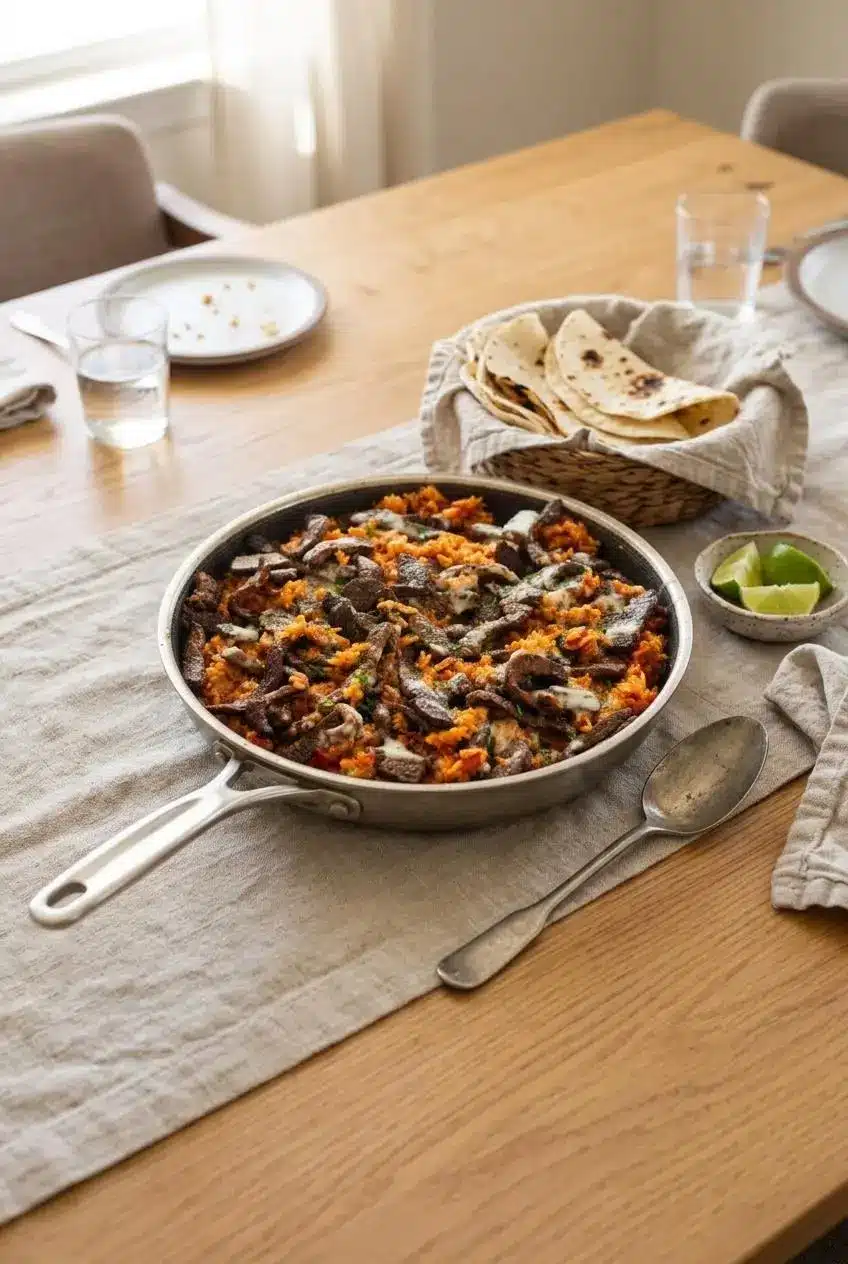
Keep the tomato rice, beef, and queso as the center of the meal, then choose optional swaps or toppings to suit your table.
Spicy Jalapeno, Rice, and Protein Swaps
- Spicy jalapeno version: Sauté diced jalapeno or red pepper flakes with the optional onion for heat throughout the rice.
- Rice swap: Try the same amount of rinsed jasmine or standard long-grain white rice, checking tenderness because varieties absorb liquid differently; for a separate plain-rice option, use Instant Pot jasmine rice.
- Different beef cuts: Flank, skirt, strip steak, or ribeye can work when sliced thinly across the grain; trim excess fat where needed.
- Different protein: Substitute seasoned chicken breast strips or shrimp, adapting cooking to that protein rather than using the steak timing.
- Meatless topping: Use black beans with grilled bell peppers and mushrooms, and choose vegetable broth and bouillon for the rice.
Best Tex-Mex Sides and Toppings
Warm flour tortillas make useful scoops for the rice and cheese. Put fresh toppings on the table so everyone can adjust their bowl without cooling the whole skillet.
- Cool and creamy: Diced avocado or guacamole balances the warm seasoning.
- Fresh and bright: Pico de gallo and lime wedges add acidity against the queso.
- Crunchy: Tortilla chips provide contrast to the tender rice and steak.
- Hearty: Seasoned black beans or charro beans round out the plate.
Storage and Reheating
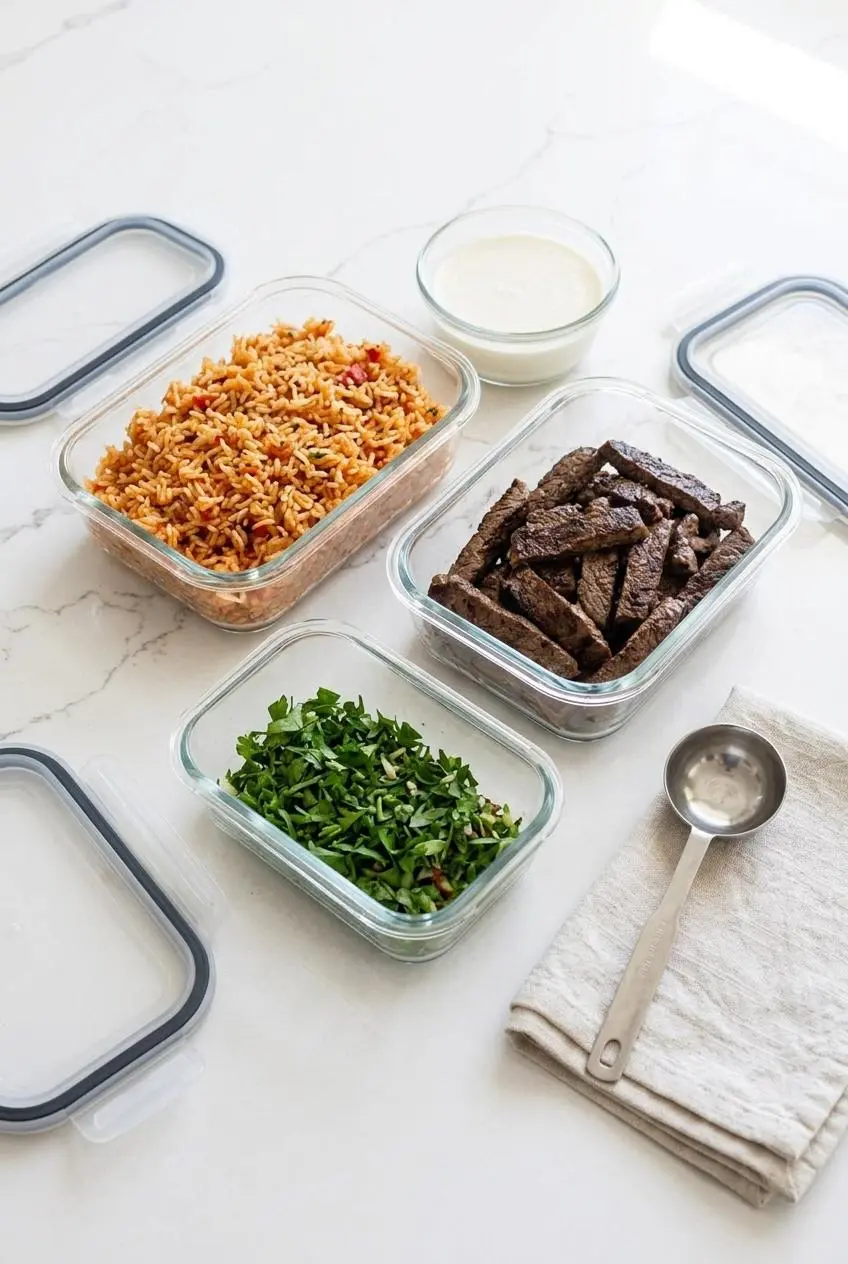
Keeping leftover components separate gives you better control over texture when warming them. Transfer rice, steak, and queso into separate covered containers and refrigerate promptly rather than leaving the serving skillet out.
Warm the rice with a splash of chicken broth or water in a covered skillet over medium-low heat, or use the microwave in short intervals, stirring between them. The added moisture helps loosen the grains without requiring more cheese.
Add the steak toward the end of skillet warming to limit additional cooking, and heat everything thoroughly. Warm the queso separately following its package directions, then drizzle it over the reheated portions. Add fresh cilantro at serving rather than reheating it with the rice.
Conclusion
This one-hour dinner delivers tomato rice, savory seared sirloin, and flowing white queso with restaurant-style appeal. Rinse the grains well, keep the rice covered, and give the beef room to brown.
Try the optional lime-cumin queso when you want a brighter finish. Bring the components together hot, and leave the fresh toppings within easy reach.
Frequently Asked Questions
What Is Mexican Steak, Rice, and Cheese Called?
Menu names include Steak Loco Rice, Steak Bandido, and Arroz con Carne. Names vary by restaurant, and arroz con carne can also refer more broadly to rice dishes with meat that don’t include queso.
What Kind of Rice Goes Well With Steak and Queso?
Basmati and standard long-grain white rice work well because their grains tend to stay separate. Jasmine is another option, though it usually has a softer, slightly clingier texture. Rinse and drain before cooking.
How Should the Components Be Stored Before Reheating?
Keep the cooked rice, steak, and queso separately covered and chilled. This prevents the cheese from soaking into the grains and lets you warm each component without overcooking the beef.
How Do You Reheat Steak and Queso Rice Without Drying It Out?
Add a splash of broth or water to the rice and warm it covered in a skillet or microwave. Heat the steak thoroughly without prolonged cooking, then finish with separately warmed queso.
Can I Use a Different Cut of Beef Instead of Sirloin Steak?
Yes. Flank steak, skirt steak, strip steak, and ribeye are options. Slice across the grain into evenly sized strips, and adjust the cooking to their thickness rather than automatically using the longest searing time.
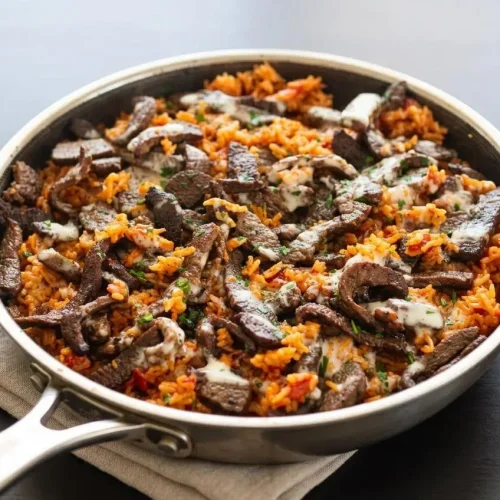
Steak and Queso Rice

Equipment
- Large Skillet
- Saucepan
Ingredients
- 2 cups Basmati Rice
- 2 ½ cups Chicken Broth
- 1 cube Chicken Bouillon
- 1 can Crushed Tomatoes (about 14 oz, you can used diced instead or tomato sauce instead)
- 2 cloves Garlic (minced)
- 1 small Onion (finely chopped (optional))
- 1 teaspoon Paprika
- 1/2 teaspoon Cumin
- Salt and pepper to taste
- 2 tablespoons Olive Oil
- 1 pound Sirloin Steak (cut into thin strips)
- 2 tbsp Butter
- Montreal steak seasoning (to taste)
- White Queso (for topping)
- Fresh Cilantro (for garnish)
- Flour tortillas (optional for serving)
Instructions
- Run cold water through the basmati in a strainer, agitating the grains gently, then drain thoroughly. Clear runoff signals that much of the loose surface starch has washed away.
- Over medium heat, warm the rice portion of olive oil in a large skillet or saucepan and soften the garlic with the optional onion for 2 to 3 minutes. Look for translucent onion and a fragrant, rather than browned, garlic aroma.
- Stir the drained rice through the aromatic oil for about 2 minutes. The grains should become glossy, with a lightly nutty aroma as their surface moisture evaporates.
- Combine the tomatoes, chicken broth, crumbled bouillon, paprika, cumin, salt, and pepper with the rice. Stir until the seasonings spread evenly through the tomato-colored liquid.
- Let the mixture reach a boil, then cover and lower the heat for an 18- to 20-minute simmer. At the end, the grains should feel tender and the pan should have absorbed the liquid.
- Move the covered rice pan off the heat for a 5-minute rest. The trapped steam helps finish the upper grains without further browning the bottom.
- During the rice cooking time, coat both sides of the sirloin strips with Montreal steak seasoning. A uniform coating distributes the peppery flavor across the beef.
- Heat the reserved 1 tablespoon olive oil and butter in another skillet over medium-high heat, then sear the steak, allowing about 4 to 5 minutes per side for thicker strips and checking thin strips sooner. Watch for browned surfaces, but judge doneness separately because thickness changes the timing.
- Loosen the rested rice with a fork, arrange the cooked steak across it, and drizzle generously with warm white queso. The topping should flow over the beef rather than fall in cold clumps.
- Finish with fresh cilantro and, if desired, the optional warm flour tortillas. The cilantro adds a fresh contrast to the rich cheese and browned beef.