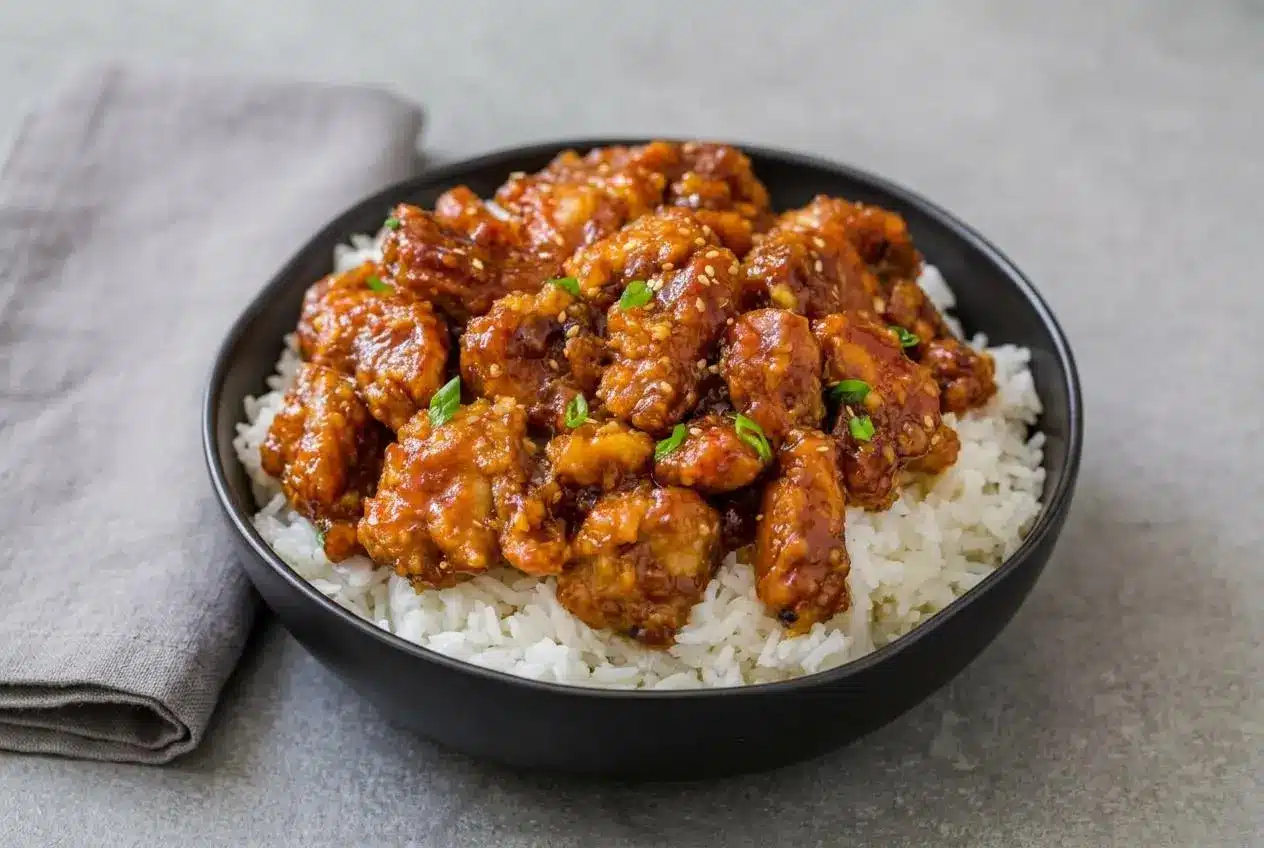
General Tso’s chicken is bite-sized chicken coated in cornstarch, shallow-fried until crisp, then quickly tossed in a sweet, tangy, spicy garlic-ginger glaze.
This General Tso’s Chicken Recipe brings fast takeout-style flavor to a weeknight dinner, with juicy chicken thighs and a crackly coating that holds up under the sauce.
Sizzling garlic, ginger, and vinegar make the kitchen smell instantly inviting. The key is a quick final toss.
Pat the chicken dry before coating it so the cornstarch can cling evenly instead of turning pasty.
Essential Ingredients and Flavor Roles
Every ingredient contributes to the contrast that makes this dish work: crisp coating, juicy chicken, bright acidity, savory depth, sweetness, and aromatic heat.
Chicken and Aromatics
- 2 lb chicken thighs, trimmed and cut into 1-inch pieces
- 1/2 cup corn starch
- 1/4 cup extra light olive oil, for frying, plus more as needed
- 2 tbsp minced ginger, from a 2-inch piece of ginger
- 3 cloves garlic, or 1 Tbsp grated or finely minced
- 1/2 tsp red pepper flakes, or added to taste
- 1 tsp sesame seeds, optional for garnish
General Tso’s Sauce
- 1/2 cup cold water
- 5 tbsp low sodium soy sauce
- 3 tbsp rice vinegar, or more to taste
- 1 1/2 tbsp hoisin sauce
- 4 tbsp granulated sugar
- 1 1/2 tbsp corn starch
Chicken thighs are especially forgiving over high heat because their higher fat content helps them stay succulent. Cornstarch forms a light shell that fries up crisper than flour, while the cold-water slurry thickens the glaze without leaving a floury taste.
Low-sodium soy sauce keeps the sauce from becoming overly salty as it bubbles. Hoisin adds dark, rounded sweetness, granulated sugar gives the glaze its classic sticky edge, and rice vinegar cuts through both with a clean tang. Fresh ginger and garlic bring the sharp, savory aroma that makes the sauce taste lively rather than flat.
I prefer to mince the ginger finely rather than grate it into a wet paste, because the tiny pieces stay fragrant and distinct in the finished glaze.
Dark Meat vs White Meat
Boneless chicken thighs are the strongest choice for this pan-frying method because they stay juicy even when the exterior needs time to become deeply golden. Cut the pieces evenly so they finish at the same pace and develop similar crunch.
Chicken breast can work when that is what you have. Cut it into slightly larger, even cubes and watch it closely in the skillet, since lean breast meat dries out more quickly than thighs. Remove each batch once the coating is golden and the centers are cooked through.
The Perfect Sauce Balance
The sauce should taste sweet first, then savory, tangy, and gently spicy. Whisk it thoroughly while cold so the cornstarch dissolves smoothly and does not form little lumps once it reaches the skillet.
Taste the mixed sauce before heating. If it feels too sweet for your preference, use a little more rice vinegar. If the vinegar seems too sharp, a small addition of soy sauce can bring back savory balance. Make modest adjustments, since the flavor becomes more concentrated as the sauce thickens.
How to Make Crispy General Tso’s Chicken
Keep the cooked batches separate while you finish frying. That simple pause prevents the first pieces from sitting in sauce too early and losing their crisp edges.
- Cut the chicken thighs into 1-inch pieces, then coat them in cornstarch in batches and gently shake away the extra.
The pieces should look evenly dusted rather than heavily caked, with no loose piles of starch on the platter. - Whisk the cold water, low sodium soy sauce, rice vinegar, hoisin sauce, sugar, and cornstarch in a bowl until smooth.
The mixture should look thin and cloudy at this stage, with the sugar and cornstarch fully dispersed. - Warm the oil in a non-stick skillet, then fry the chicken in 2 to 3 uncrowded batches until golden on both sides and cooked through; transfer each batch to a bowl.
The chicken should sizzle steadily on contact and develop a deep golden crust instead of pale, steamed patches. - Add more oil if needed while frying, leaving at least 1 Tbsp oil in the skillet after the last batch.
A light coating of hot oil should remain across the pan to carry the aromatics without letting them stick. - Stir in the ginger, garlic, and red pepper flakes and cook for about 30 seconds.
The sharp garlic scent should soften into a warm ginger aroma before the garlic begins to brown. - Pour in the whisked sauce and stir as it comes to a simmer, then let it bubble for 1 minute and adjust with more soy sauce or rice vinegar to taste if desired.
The sauce changes from cloudy to glossy and translucent as it thickens enough to lightly coat a spoon. - Return the fried chicken to the skillet and toss it quickly in the hot glaze, then garnish with sesame seeds if desired.
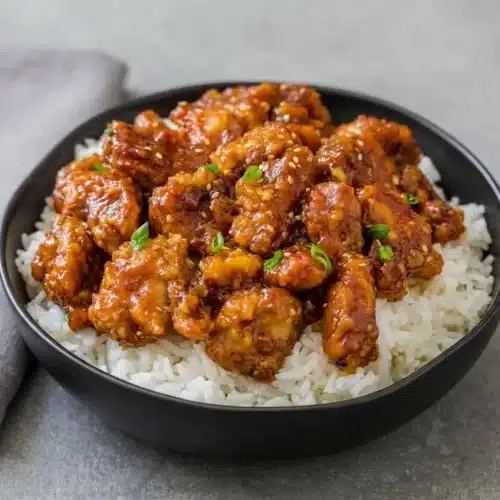
Each piece should look lacquered with sauce while its crisp ridges still remain visible.
Mastering the Crispy Coating Without Deep Frying
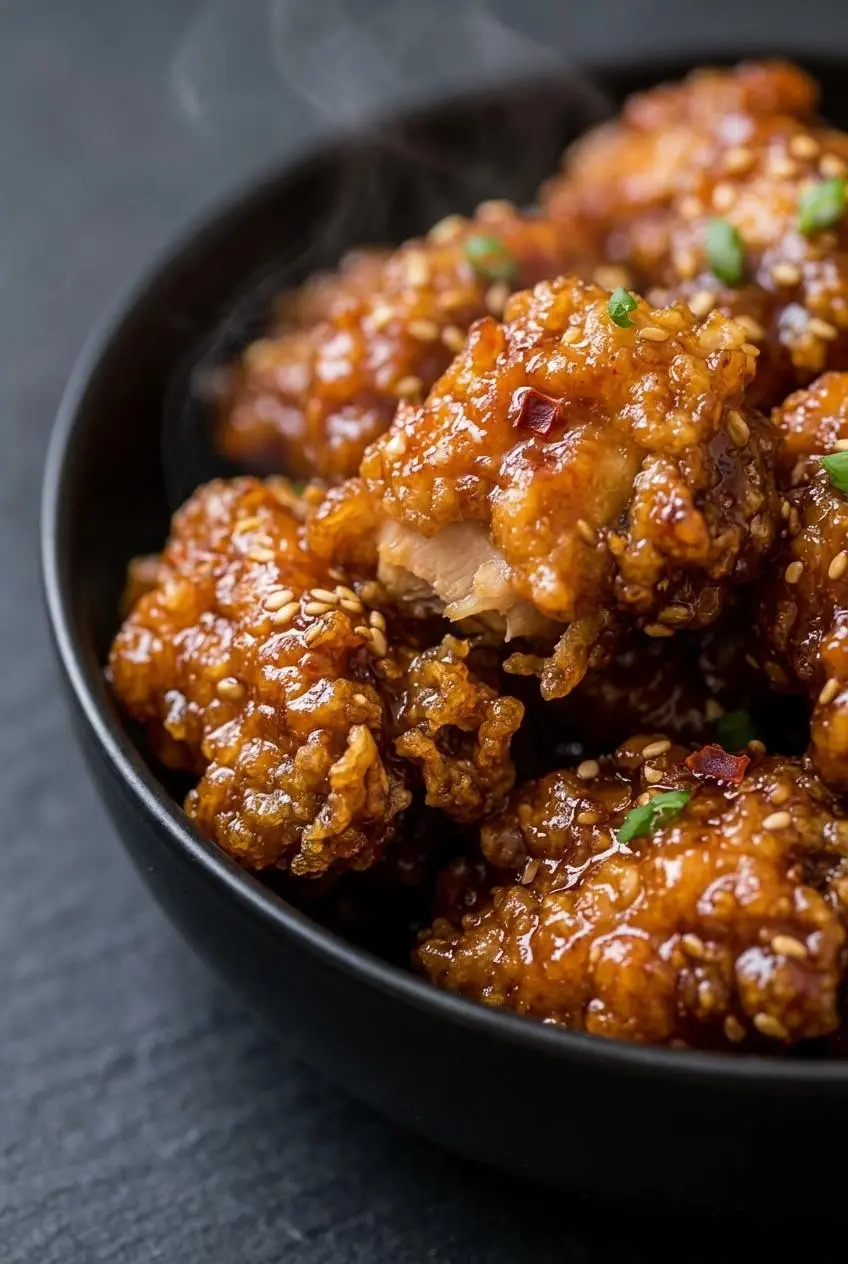
Shallow frying gives the chicken plenty of crunch without filling a pot with oil. The coating needs hot oil and open space around each piece, so use a wide skillet and resist the urge to cook everything at once.
Dredge the chicken shortly before it goes into the pan. If cornstarch-coated pieces sit too long, moisture from the chicken hydrates the coating and turns it gummy before frying. Tap away excess starch as well, since thick clumps can fall into the oil and burn.
- Listen for a lively sizzle. Quiet oil often means it is not hot enough, which encourages the chicken to absorb oil instead of crisping.
- Leave room between pieces. Crowding traps steam, cools the pan, and softens the crust before it can set.
- Give the pan a moment between batches. Let the oil regain its heat before adding more chicken.
- Sauce at the last minute. Add the chicken only after the glaze is glossy and thickened, then toss quickly and serve.
The same moisture-control approach is useful for crispy popcorn chicken, where small pieces need space and steady heat to stay crunchy.
Troubleshooting Common Mistakes for Maximum Crispness
Most problems come down to moisture, skillet heat, or sauce timing. Small adjustments can rescue the texture without starting over.
- The chicken is soggy: The pan was likely crowded, the oil cooled too much, or the chicken sat in sauce too long. Fry in smaller batches next time, then keep the cooked pieces aside until the glaze is ready.
- The pieces stick together: Cornstarch can bond when coated chicken is piled up. Spread the pieces across a platter after dredging and separate any clumps before they reach the skillet.
- The sauce is too thick: Remove the skillet from the heat and whisk in a small splash of warm water until the glaze loosens. Bring it back to a gentle simmer only if needed.
- The sauce tastes too salty: Low-sodium soy sauce matters here because reduction intensifies saltiness. Balance the finished glaze with a little more rice vinegar or water rather than adding extra sugar immediately.
- The garlic tastes bitter: The skillet was too hot when the aromatics went in. Lower the heat and stir constantly during the brief sauté so the garlic and ginger bloom without browning.
- The glaze turns lumpy: Whisk the cornstarch into cold water before heating. If it thickens around the edges, stir steadily from the center and scrape the pan gently.
Flavor Variations to Match Your Taste
Keep the main method intact, then make optional changes in the aromatic stage or with the protein. These ideas shift the flavor without changing the core sweet, savory, tangy profile.
For a citrusy, tingling finish, add finely minced fresh orange peel and toasted crushed Sichuan peppercorns to the hot aromatic oil. The orange adds perfume rather than a full orange-chicken flavor, while the peppercorns bring a gentle numbing warmth.
Extra Spicy Sichuan Style
Add whole dried red chiles alongside the ginger and garlic for deeper chile flavor, or stir in chili crisp for a richer, savory heat. Start cautiously because the spice level becomes more noticeable as the sauce reduces.
Keep the red pepper flakes in the glaze for direct heat, then use the dried chiles or chili crisp as an optional layer of complexity. This version works especially well with plain jasmine rice, which gives the sauce room to shine.
Air Fryer General Tso Chicken
For an air fryer variation, coat the chicken with cornstarch as directed, arrange it in a single layer, and spray it generously with oil. Cook at 400 °F until browned, crisp, and cooked through, working in batches if needed.
Prepare the garlic-ginger sauce separately on the stovetop, then toss the air-fried chicken into the warm glaze just before serving. The texture will be a little drier and lighter than skillet-fried chicken, but it still delivers a crisp exterior with less oil in the pan.
Crispy Tofu Vegetarian Option
Use pressed extra-firm tofu cut into cubes in place of chicken. Coat it in cornstarch and pan-fry until the surfaces are golden and firm before tossing it briefly with the garlic-ginger glaze.
Tofu benefits from a patient fry because it needs time to release moisture and form a sturdy crust. Add it to the sauce only at the end so the cubes keep their crisp corners.
For another sweet-spicy chicken dinner with a different sauce profile, try bang bang chicken.
Make-Ahead, Storage, and Reheating
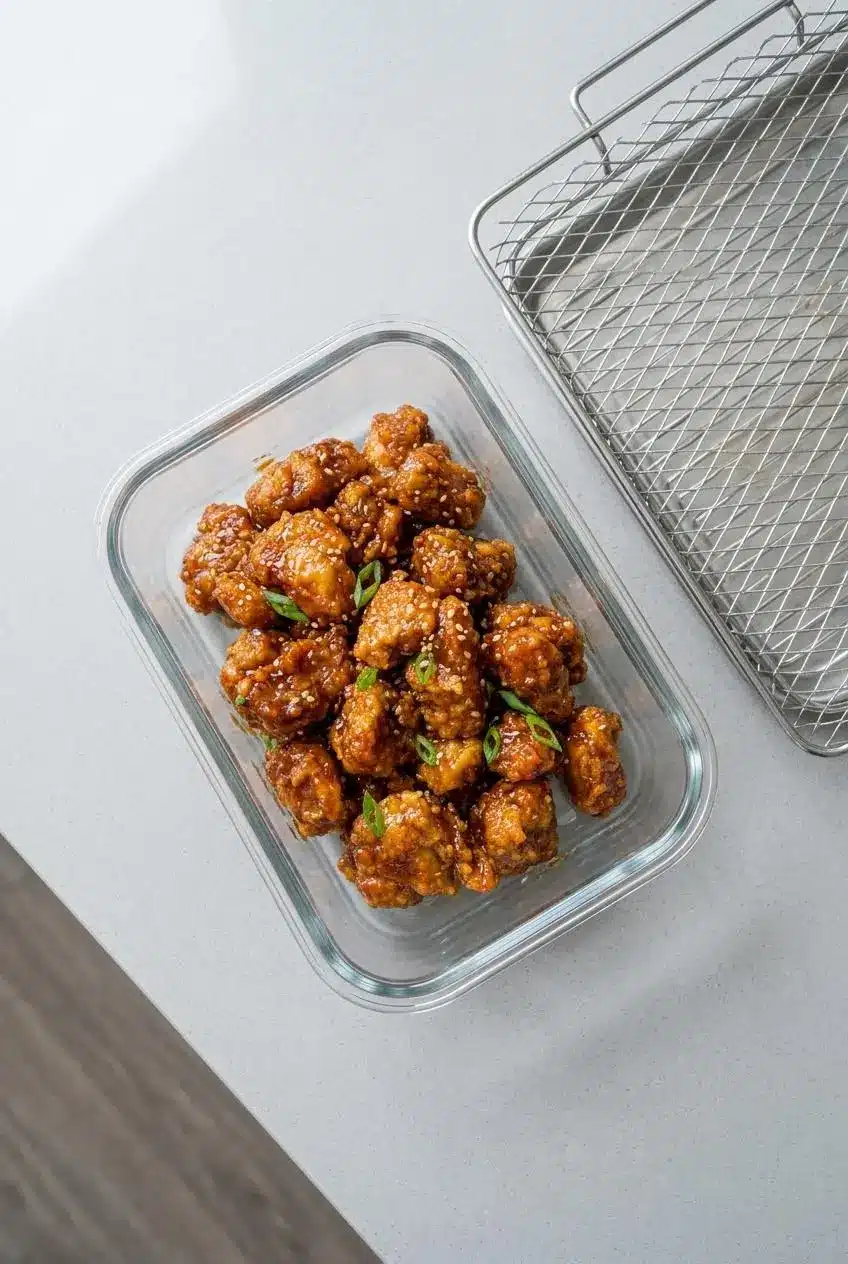
For the best texture, cook and sauce the chicken close to serving time. You can trim and cut the chicken ahead, keep it chilled in a covered container, and whisk the sauce separately so dinner moves quickly once the skillet is hot.
If you have leftovers, cool them promptly and refrigerate them in a covered airtight container. For food handling and leftover storage details, follow safe leftover storage and reheating practices.
Skip the microwave when crunch is the goal. Rewarm leftover chicken in an air fryer or toaster oven until hot and crisp, preferably in a single layer. If you can keep extra sauce separate before storing, reheat the chicken first and add the warmed sauce only when ready to eat.
Delicious Serving and Pairing Ideas
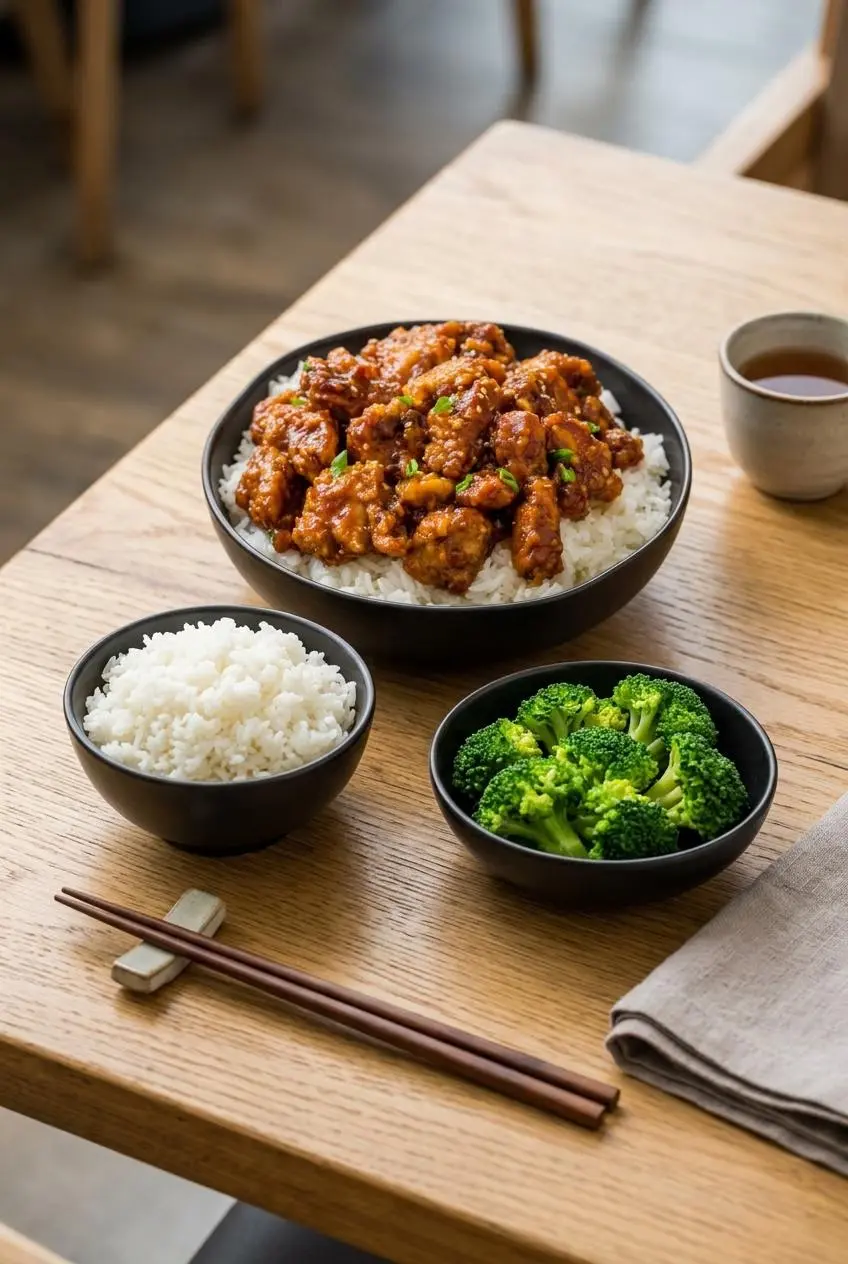
The sweet-tangy glaze pairs best with mild grains, noodles, and crisp green vegetables that soak up sauce without competing with it.
- Steamed jasmine rice: The classic choice for catching every bit of glossy sauce.
- Brown rice: A heartier option with a nutty flavor that stands up well to ginger and hoisin.
- Vegetable chow mein: Add noodles when you want a more takeout-style spread.
- Steamed broccoli, sugar snap peas, or garlic baby bok choy: Fresh vegetables balance the rich glaze and add welcome crunch.
- Sesame seeds and sliced green onions: Use them as optional finishing touches for color and a mild oniony bite.
A crisp, vegetable-forward Asian chicken salad also makes a refreshing side when you want a cooler contrast to the warm glazed chicken.
Conclusion
This skillet dinner delivers crisp chicken, a bold garlic-ginger glaze, and adjustable heat in about 30 minutes without deep frying.
Fry in batches, wait for the sauce to turn glossy, and toss the chicken only at the end. That final timing makes every bite more satisfying.
Frequently Asked Questions
What Is the Secret to Making General Tso Chicken Crispy?
Dry the chicken before coating it in pure cornstarch, then shake off the excess. Fry in small batches with plenty of space between pieces, and add the chicken to the sauce only right before serving.
Can I Make General Tso Chicken With Chicken Breast Instead of Thighs?
Yes. Cut chicken breast into slightly larger, even cubes and reduce the pan-frying time by 1 to 2 minutes so the lean meat does not dry out. Watch for a golden crust and remove it once cooked through.
How Do I Reheat Leftover General Tso Chicken So It Stays Crunchy?
Use an air fryer or toaster oven rather than a microwave. Spread the chicken in a single layer and heat until hot and crisp, then add any reserved sauce after reheating.
What Is the Difference Between General Tso Chicken and Orange Chicken?
General Tso chicken centers on garlic, ginger, soy sauce, vinegar, and chile heat. Orange chicken usually has a sweeter, fruit-forward glaze built around orange juice and zest.
General Tso’s Chicken Recipe

Equipment
- Non-stick skillet
- Mixing Bowl
- Whisk
- platter
Ingredients
Chicken and Aromatics
- 2 lb chicken thighs trimmed and cut into 1-inch pieces
- 1/2 cup corn starch
- 1/4 cup extra light olive oil for frying, plus more as needed
- 2 tbsp minced ginger from a 2-inch piece of ginger
- 3 cloves garlic or 1 Tbsp grated or finely minced
- 1/2 tsp red pepper flakes or added to taste
- 1 tsp sesame seeds optional for garnish
General Tso’s Sauce
- 1/2 cup cold water
- 5 tbsp low sodium soy sauce
- 3 tbsp rice vinegar or more to taste
- 1 1/2 tbsp hoisin sauce
- 4 tbsp granulated sugar
- 1 1/2 tbsp corn starch
Instructions
- Cut the chicken thighs into 1-inch pieces, then coat them in cornstarch in batches and gently shake away the extra. The pieces should look evenly dusted rather than heavily caked, with no loose piles of starch on the platter.
- Whisk the cold water, low sodium soy sauce, rice vinegar, hoisin sauce, sugar, and cornstarch in a bowl until smooth. The mixture should look thin and cloudy at this stage, with the sugar and cornstarch fully dispersed.
- Warm the oil in a non-stick skillet, then fry the chicken in 2 to 3 uncrowded batches until golden on both sides and cooked through; transfer each batch to a bowl. The chicken should sizzle steadily on contact and develop a deep golden crust instead of pale, steamed patches.
- Add more oil if needed while frying, leaving at least 1 Tbsp oil in the skillet after the last batch. A light coating of hot oil should remain across the pan to carry the aromatics without letting them stick.
- Stir in the ginger, garlic, and red pepper flakes and cook for about 30 seconds. The sharp garlic scent should soften into a warm ginger aroma before the garlic begins to brown.
- Pour in the whisked sauce and stir as it comes to a simmer, then let it bubble for 1 minute and adjust with more soy sauce or rice vinegar to taste if desired. The sauce changes from cloudy to glossy and translucent as it thickens enough to lightly coat a spoon.
- Return the fried chicken to the skillet and toss it quickly in the hot glaze, then garnish with sesame seeds if desired. Each piece should look lacquered with sauce while its crisp ridges still remain visible.