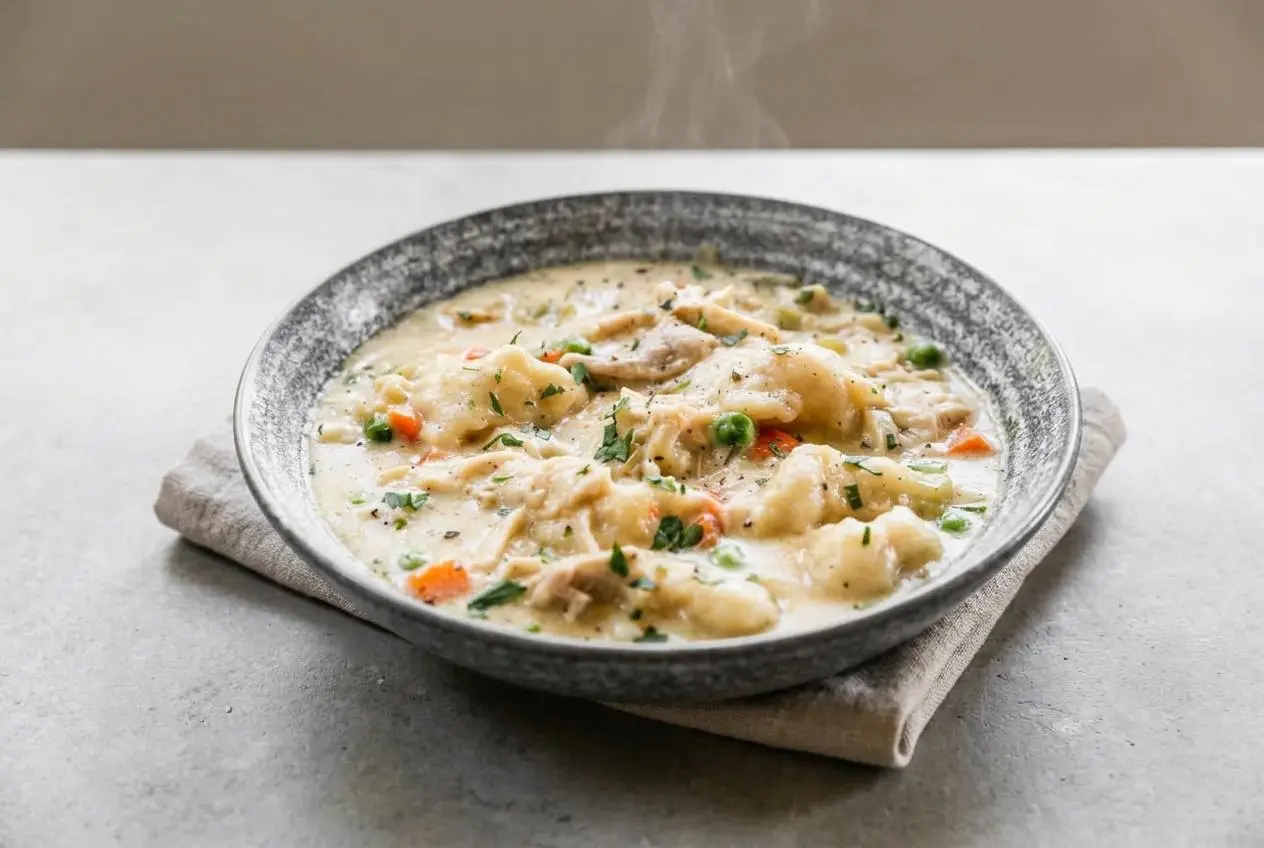
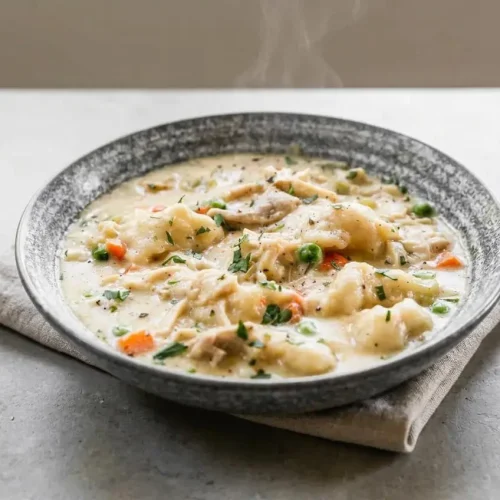
This chicken and dumplings recipe makes a creamy stovetop chicken stew with vegetables, tender chicken, and fluffy homemade drop dumplings steamed right on top.
Tender chicken simmers in a glossy, herb-scented broth while the dumplings puff beneath the lid. It is the kind of comforting dinner that feels generous without requiring an all-day simmer.
The key is gentle heat, minimal mixing, and a tightly covered pot. That steam does the quiet work.
Use a wide, heavy soup pot or Dutch oven so the dumplings have room to spread across the surface instead of piling into one crowded spot.
Why This Homemade Chicken and Dumplings Recipe Works
This version builds flavor in layers without making the process fussy. The celery, carrots, onion, garlic, herbs, chicken broth, and bouillon paste create a savory base, while butter, flour, and evaporated milk turn it into a creamy stew that coats a spoon.
The chicken cooks gently in the seasoned broth, which keeps it tender and lets its flavor enrich the soup. Once shredded and stirred back in, it stays surrounded by the creamy liquid instead of drying out.
The dumpling dough gets its soft texture from baking powder, sour cream, milk, and melted butter. Baking powder creates lift, while sour cream adds moisture and tenderness. The dough should be stirred only until the flour disappears, then dropped into a gentle simmer and steamed under a tight lid.
A loud rolling boil can tear delicate dumplings apart. Listen instead for a steady, quiet simmer beneath the lid. When the dumplings have expanded, float lightly, and feel tender in the center, dinner is ready.
Ingredients for Chicken and Dumplings
Every ingredient has a job here: vegetables build aroma and sweetness, herbs deepen the broth, flour gives the stew body, and the dairy keeps both the soup and dumplings creamy and tender.
Soup
- 2 Tablespoons olive oil
- 2 celery (, ribs, diced)
- 2 carrots (, large, diced)
- 1 yellow onion (, chopped)
- 1 clove garlic (, minced)
- 5 Tablespoons unsalted butter
- 1/3 cup all-purpose flour
- 6 cups low-sodium chicken broth
- 4 teaspoons chicken bouillon paste (, better than bouillon base)
- 1/4 teaspoon dried thyme
- 1/4 teaspoon dried sage
- 1/4 teaspoon dried rosemary
- 1 teaspoon kosher salt
- 1/2 teaspoon freshly ground black pepper
- 1 1/2 pounds boneless skinless chicken breasts or thighs
- 12 oz evaporated milk (, canned)
- ½ cup frozen peas
- fresh chopped parsley (, for garnish)
Dumplings
- 1 2/3 cups all-purpose flour
- 1 tablespoon baking powder
- 1/2 teaspoon kosher salt
- 3/4 cup milk
- ¼ cup sour cream
- 2 Tablespoons butter (, melted)
Evaporated milk gives the broth creamy body while staying smooth during simmering. Bouillon paste brings concentrated chicken flavor, so taste before adding extra salt. In the dumplings, sour cream and melted butter soften the flour’s structure, while baking powder provides the lift.
I like to bring the milk and sour cream close to room temperature so the dumpling batter mixes evenly with the melted butter.
How to Make Chicken and Dumplings
Make the Soup and Cook Chicken
- Warm a large soup pot over medium heat, add the olive oil, then cook the celery, carrots, and onion for 3 minutes.
The vegetables should soften slightly and smell sweet before the garlic goes in. - Stir in the garlic and cook for 30 seconds, then add the butter and flour and whisk for 1 minute.
The roux should bubble gently and look smooth, which cooks away the raw flour taste. - Pour in the chicken broth gradually while whisking, then stir in the bouillon paste, thyme, sage, rosemary, salt, and pepper.
Scrape the bottom of the pot as you stir so the broth becomes smooth and glossy. - Add the chicken and bring the soup to a boil, then cover, lower the heat, and simmer for 10 minutes.
The chicken should be cooked through before it is moved to a cutting board; poultry should reach 165°F in the center. - Stir the evaporated milk and frozen peas into the soup after removing the chicken.
The broth should look creamy and lightly thickened before the dumplings are added.
Make and Cook Dumplings
- Whisk the flour, baking powder, and salt in a bowl, then add the milk, sour cream, and melted butter to the center.
Stir just until the dough comes together with no dry flour patches. - Bring the soup back to a gentle simmer and spoon teaspoon-sized portions of dough across the surface.
Leave a little space between portions because the dumplings will roughly double as they cook. - Cover the pot tightly and cook on low for 12 to 15 minutes without lifting the lid.
The trapped steam cooks the centers, and the dumplings should look plump and feel tender when tested. - Uncover the pot, gently separate the dumplings with a spoon, and test one from the center.
A toothpick inserted into a cooked dumpling should come out clean rather than coated in wet dough. - Chop the chicken, return it to the soup, then taste and adjust the seasoning if desired.
Finish with fresh chopped parsley and serve while the broth is hot and creamy.
Essential Ingredients and Smart Substitutions
A few thoughtful choices make the difference between a thin soup with heavy dough and a rich chicken stew with soft, cloudlike dumplings.
Chicken Options: Fresh, Bone-In, or Rotisserie
Boneless chicken breasts and thighs both work well in this pot. Breasts are leaner and shred neatly, while thighs stay especially succulent in the broth. For the best texture, remove the chicken as soon as it is cooked through, then chop or shred it before returning it to the stew.
For a faster weeknight version, use cooked leftover chicken or rotisserie chicken. Prepare the soup through the evaporated milk and peas, then stir in about 3 cups of tender shredded chicken just before dropping in the dumpling dough. Since the chicken is already cooked, it only needs time to warm through.
Bone-in chicken can add extra depth, but it needs a different cooking schedule than this recipe’s quick simmer. Keep it as an optional approach rather than a direct swap for the listed boneless chicken.
Vegetables and Broth Base Essentials
Celery, carrots, and onion make the familiar mirepoix foundation that gives the broth sweetness, aroma, and color. Cook them until they begin to soften before adding flour. That brief sauté keeps the finished stew from tasting raw or sharply oniony.
The butter and flour form a roux, which thickens the broth and helps the evaporated milk blend into a velvety sauce. Add the broth slowly while whisking so the roux loosens smoothly instead of forming lumps.
Low-sodium broth gives you more control because bouillon paste already adds savory intensity. If you want a subtle extra layer of tang and celery-like savoriness, stir a small dash of Dijon mustard and a pinch of ground celery seed into the roux. Keep this optional, since the stew is already well seasoned.
Flour, Butter, and Dairy for Tender Dumplings
All-purpose flour gives the dumplings enough structure to hold together in steam. Baking powder creates small air pockets, which is why the dough rises into tender puffs rather than sinking like paste.
Sour cream adds moisture and gentle acidity, while melted butter keeps the crumb soft. Stirring too much develops gluten and changes that tender batter into a chewy, heavy dough. Once the mixture comes together, stop stirring.
Drop Dumplings vs. Rolled Dumplings
Both styles belong at the chicken-and-dumplings table, but they create completely different textures and require different handling.
Fluffy Drop Dumplings Technique
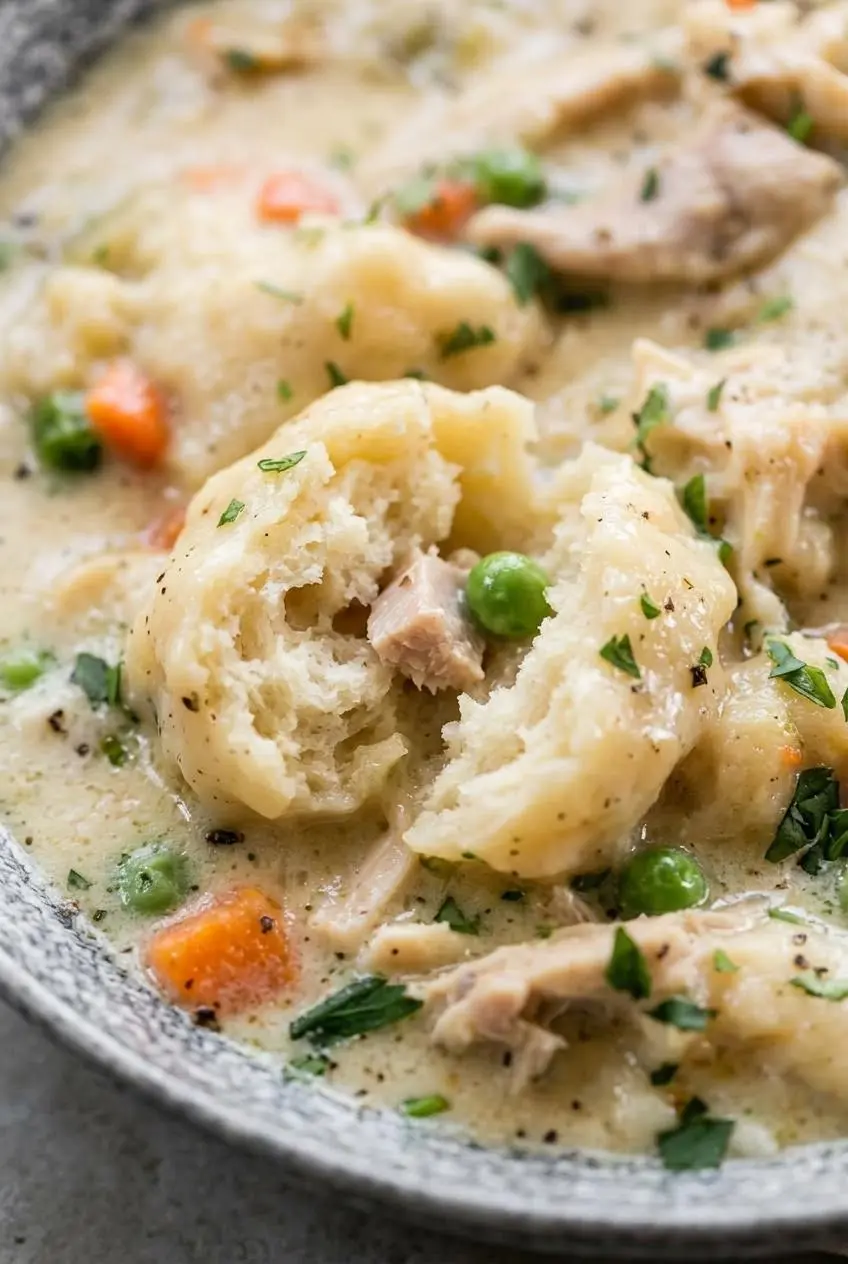
Drop dumplings are the style used here. The dough is soft and spoonable, then dropped over a gently simmering stew. With the lid closed, steam cooks the tops while the broth cooks the bottoms, producing soft, biscuit-like dumplings.
- Use a gentle simmer, not a hard boil.
- Mix only until the flour streaks disappear.
- Keep the lid closed for the full steaming time.
- Expect a light, tender interior rather than a chewy noodle texture.
Traditional Rolled Southern Pastry Strips
Rolled Southern dumplings begin with a firmer dough that is rolled thin, cut into flat strips, and simmered in broth. They cook more like tender, chewy noodles and naturally thicken the soup as their flour releases into the liquid.
This is a wonderful style if you prefer flat, hearty dumplings with more bite. It is not interchangeable with the soft drop dough in this recipe, since rolled strips need a stiffer dough and a different simmering approach.
Canned Biscuit Dough Shortcut
Refrigerated buttermilk biscuit dough can stand in for homemade dumplings when time is tight. Cut it into small pieces and cook it gently in the simmering soup, keeping in mind that it tends to be saltier and slightly more bread-like than homemade sour cream dumplings.
For another cozy chicken dinner with soft dumpling-style comfort, try saucy chicken paprikash.
Step-by-Step Method With Practical Doneness Cues
The main rhythm is sauté, thicken, simmer, then steam. Give each stage enough attention and the pot takes care of the rest.
When the butter and flour bubble together, the roux is cooking. Once the broth goes in, whisk steadily until it loosens into a smooth base. The soup should become glossy and lightly coat a spoon before the dumpling batter is added.
Keep the chicken at a covered simmer rather than a long, aggressive boil. That gentler heat cooks it through while helping it remain tender enough to chop or shred easily.
After dropping the dough, lower the heat and seal the lid. Steam collects above the soup and cooks the dumpling tops, while the simmering broth cooks underneath. Opening the lid early releases that heat and can leave the centers underdone.
After 12 to 15 minutes, check one dumpling from the middle of the pot. It should be expanded, light inside, and free of wet batter. If needed, cover the pot again and continue cooking until tender.
Troubleshooting Common Dumpling Mistakes
Most chicken and dumplings problems come down to dough mixing, simmer strength, or broth thickness. Each is easy to spot once you know what to look for.
How to Prevent Dense or Heavy Dumplings
- Problem: Dumplings are firm, rubbery, or heavy. Cause: The batter was overmixed. Fix: Stir gently with a fork only until the ingredients combine.
- Problem: Dumplings feel dry. Cause: The dough was worked too much before cooking. Fix: Spoon it into the pot soon after mixing.
- Problem: Dumplings stay small. Cause: The simmer was too weak or the baking powder did not get enough steam. Fix: Maintain a quiet simmer and keep the lid closed.
Stopping Dumplings From Dissolving in the Soup
- Problem: Dumplings break apart. Cause: The soup is boiling too hard. Fix: Lower the heat until the surface moves gently rather than violently.
- Problem: Dumplings sink and lose shape. Cause: The batter was too loose or the pot was stirred immediately. Fix: Drop the dough onto a gentle simmer and leave it undisturbed beneath the lid.
- Problem: The lid keeps getting lifted. Cause: Checking too early lets steam escape. Fix: Wait until the steaming period is complete before testing one dumpling.
Fixing Broth Consistency: Too Thin vs Too Thick
If the broth seems thin after the dumplings finish cooking, let the soup simmer uncovered for 2 minutes so some moisture can evaporate. Stir gently around the dumplings rather than mashing them.
If the stew becomes thicker than you like, add a warm splash of low-sodium chicken broth and stir carefully. The broth should look creamy and spoon-coating, but still fluid enough to surround the chicken and dumplings.
Storage and Reheating Guide
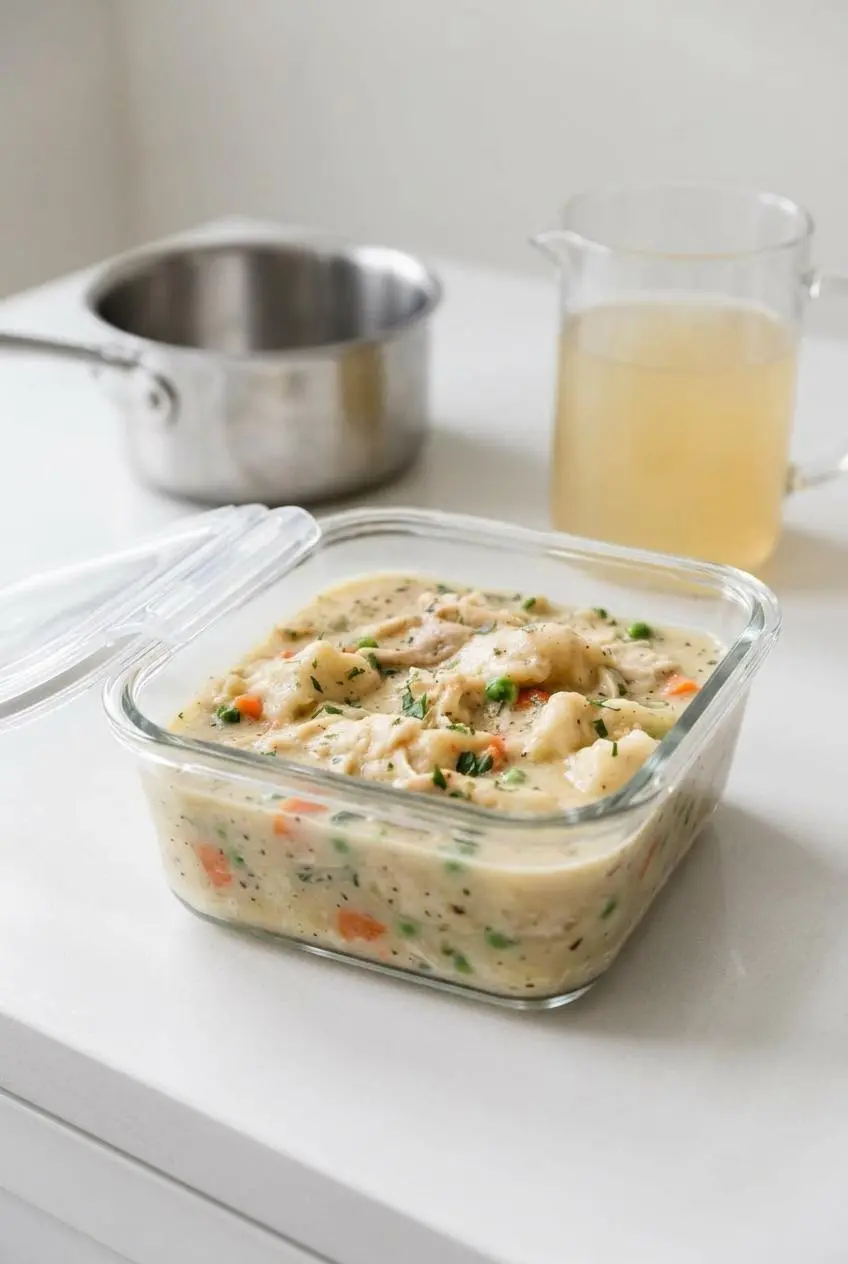
Cool leftovers promptly, transfer them to an airtight container, and keep them chilled. The dumplings will continue to absorb broth as they sit, so the stew may thicken noticeably.
Reheat portions gently in a saucepan over low heat with a splash of chicken broth to loosen the creamy base. Stir around the dumplings rather than vigorously through them, which helps them stay intact. Avoid high heat, since it can make the dairy-based broth scorch and cause delicate dumplings to break apart.
For the best texture, make the dumplings close to serving time. Their soft steamed structure is at its best fresh from the pot.
Serving Suggestions to Complete the Meal
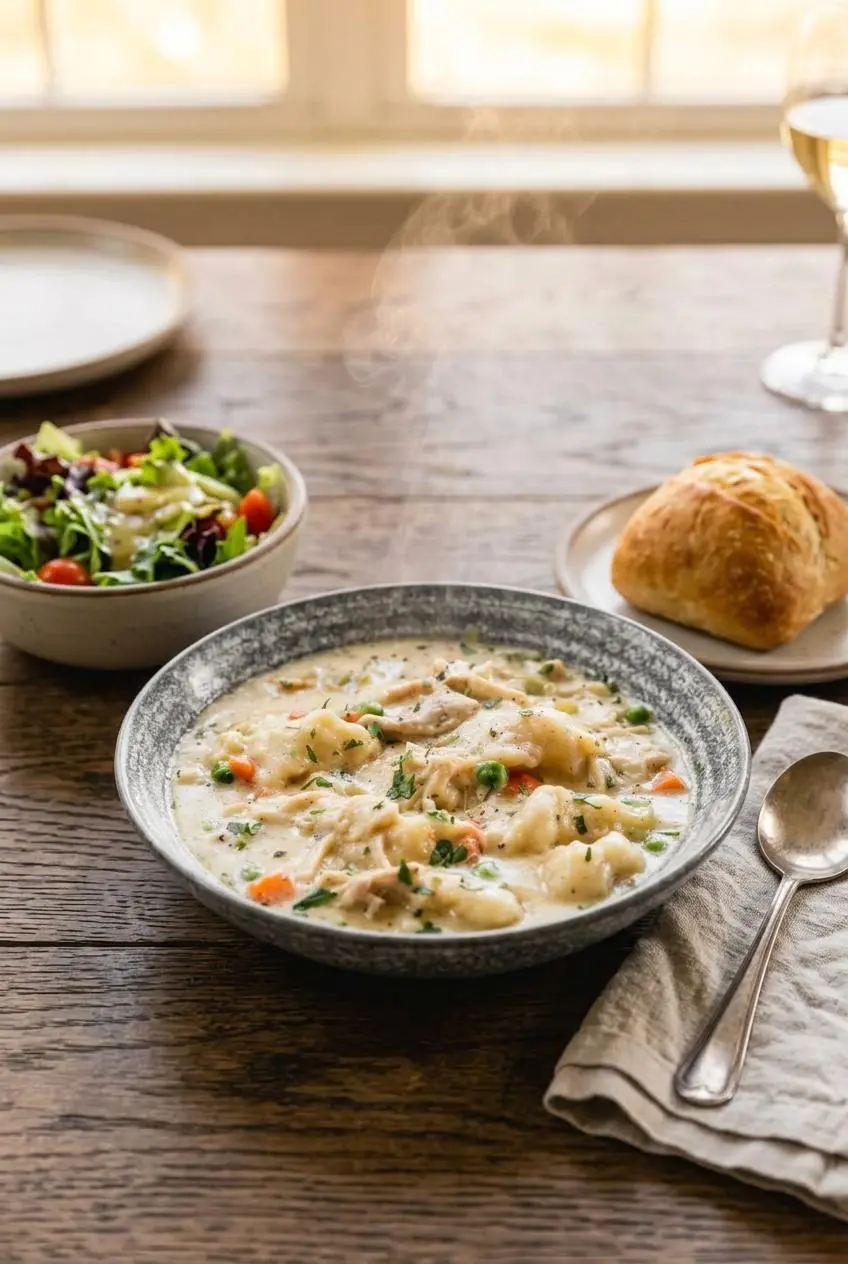
This rich chicken stew benefits from something crisp, green, or lightly acidic alongside it.
- Serve a green salad with a tangy vinaigrette to cut through the creamy broth.
- Add roasted broccoli or green beans for a vegetable side with a little bite.
- Offer warm crusty dinner rolls for scooping up every last bit of sauce.
- Keep the meal cozy with soft buttermilk biscuits, especially if you want extra dipping power.
Conclusion
Chicken and dumplings is one of those meals that rewards calm cooking. Let the vegetables soften, whisk the broth until glossy, and keep the chicken at a gentle simmer.
Handle the dumpling batter lightly and trust the covered pot to create the steam. A creamy bowl with tender chicken and soft dumplings is well worth the wait.
Frequently Asked Questions
Why Are My Dumplings Doughy in the Center?
Dumplings often stay doughy when the lid comes off too early or the soup boils too hard. Keep the pot tightly covered on a low simmer for the full 12 to 15 minutes. Test a dumpling from the center with a toothpick. If wet dough clings to it, cover the pot again and continue cooking until the center is tender.
What Is the Difference Between Drop Dumplings and Rolled Pastry Dumplings?
Drop dumplings use a soft, spoonable batter that steams into fluffy, biscuit-like puffs. They are tender, light, and best cooked under a lid. Rolled dumplings use firmer dough rolled thin and cut into strips. They simmer directly in broth and become flatter, chewier, and more noodle-like.
How Do You Store and Reheat Leftover Chicken and Dumplings?
Store cooled leftovers in an airtight container in the refrigerator. The dumplings absorb broth during storage, so expect a thicker stew when reheating. Warm the stew slowly in a saucepan over low heat and add a splash of chicken broth if needed. Stir gently to avoid breaking up the dumplings.
Can I Use Leftover Cooked Chicken or Rotisserie Chicken?
Yes. Shredded leftover chicken or rotisserie chicken works well for a quicker meal. Stir about 3 cups of cooked chicken into the creamy soup base just before adding the dumpling batter. This warms the chicken without overcooking it.
Chicken and Dumplings Recipe

Equipment
- Large soup pot or Dutch oven
- Mixing Bowl
- Small cookie scoop or spoon
- Whisk
Ingredients
Soup
- 2 Tablespoons olive oil
- 2 celery ribs, diced
- 2 carrots large, diced
- 1 yellow onion chopped
- 1 clove garlic minced
- 5 Tablespoons unsalted butter
- 1/3 cup all-purpose flour
- 6 cups low-sodium chicken broth
- 4 teaspoons chicken bouillon paste better than bouillon base*
- 1/4 teaspoon dried thyme
- 1/4 teaspoon dried sage
- 1/4 teaspoon dried rosemary
- 1 teaspoon kosher salt
- 1/2 teaspoon freshly ground black pepper
- 1 1/2 pounds boneless skinless chicken breasts or thighs
- 12 oz evaporated milk canned
- ½ cup frozen peas
- fresh chopped parsley for garnish
Dumplings
- 1 2/3 cups all-purpose flour
- 1 tablespoon baking powder
- 1/2 teaspoon kosher salt
- 3/4 cup milk
- ¼ cup sour cream
- 2 Tablespoons butter melted
Instructions
Make the Soup and Cook Chicken
- Warm a large soup pot over medium heat, add the olive oil, then cook the celery, carrots, and onion for 3 minutes. The vegetables should soften slightly and smell sweet before the garlic goes in.
- Stir in the garlic and cook for 30 seconds, then add the butter and flour and whisk for 1 minute. The roux should bubble gently and look smooth, which cooks away the raw flour taste.
- Pour in the chicken broth gradually while whisking, then stir in the bouillon paste, thyme, sage, rosemary, salt, and pepper. Scrape the bottom of the pot as you stir so the broth becomes smooth and glossy.
- Add the chicken and bring the soup to a boil, then cover, lower the heat, and simmer for 10 minutes. The chicken should be cooked through before it is moved to a cutting board; poultry should reach 165°F in the center.
- Stir the evaporated milk and frozen peas into the soup after removing the chicken. The broth should look creamy and lightly thickened before the dumplings are added.
Make and Cook Dumplings
- Whisk the flour, baking powder, and salt in a bowl, then add the milk, sour cream, and melted butter to the center. Stir just until the dough comes together with no dry flour patches.
- Bring the soup back to a gentle simmer and spoon teaspoon-sized portions of dough across the surface. Leave a little space between portions because the dumplings will roughly double as they cook.
- Cover the pot tightly and cook on low for 12 to 15 minutes without lifting the lid. The trapped steam cooks the centers, and the dumplings should look plump and feel tender when tested.
- Uncover the pot, gently separate the dumplings with a spoon, and test one from the center. A toothpick inserted into a cooked dumpling should come out clean rather than coated in wet dough.
- Chop the chicken, return it to the soup, then taste and adjust the seasoning if desired. Finish with fresh chopped parsley and serve while the broth is hot and creamy.