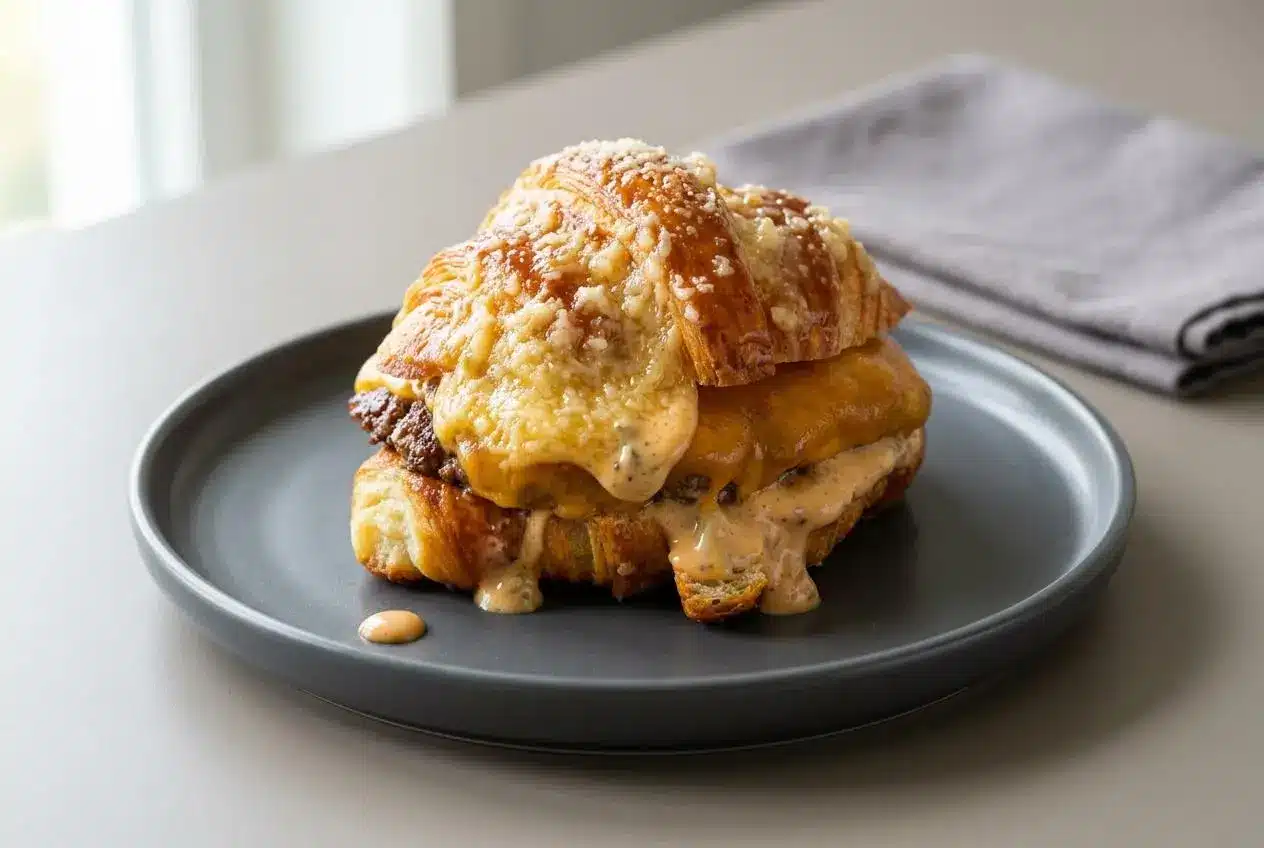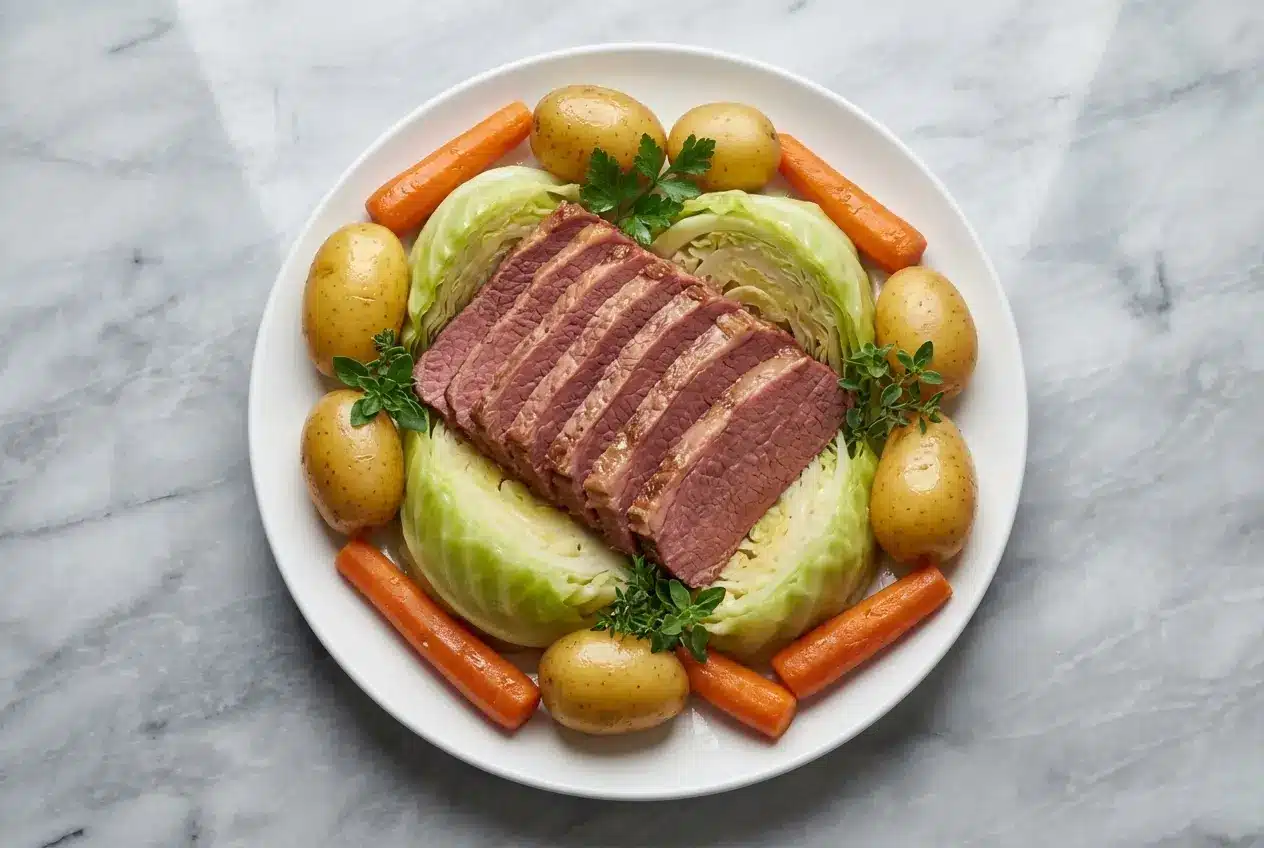
Every March, my kitchen starts to smell like St. Patrick’s Day long before anyone sits down to eat. The mingled aroma of spice, onions, and that savory pot liquor drifting through the house is half the magic, and this corned beef and cabbage recipe turns that old-fashioned comfort into something especially memorable.
It is the kind of meal that suits a quiet Sunday, a family gathering, or anyone who wants a reliable holiday centerpiece without babysitting the stove. The slow cooking keeps the brisket beautifully tender, and the honey-mustard finish adds the kind of browned, glossy edge that plain boiling just cannot deliver.
Why You’ll Love This Recipe
Slow cooker ease: In my kitchen, this is the kind of dinner I start in the morning and let the slow cooker handle while the day moves on. Low, gentle heat gives corned beef brisket the time it needs to soften without turning dry or stringy.
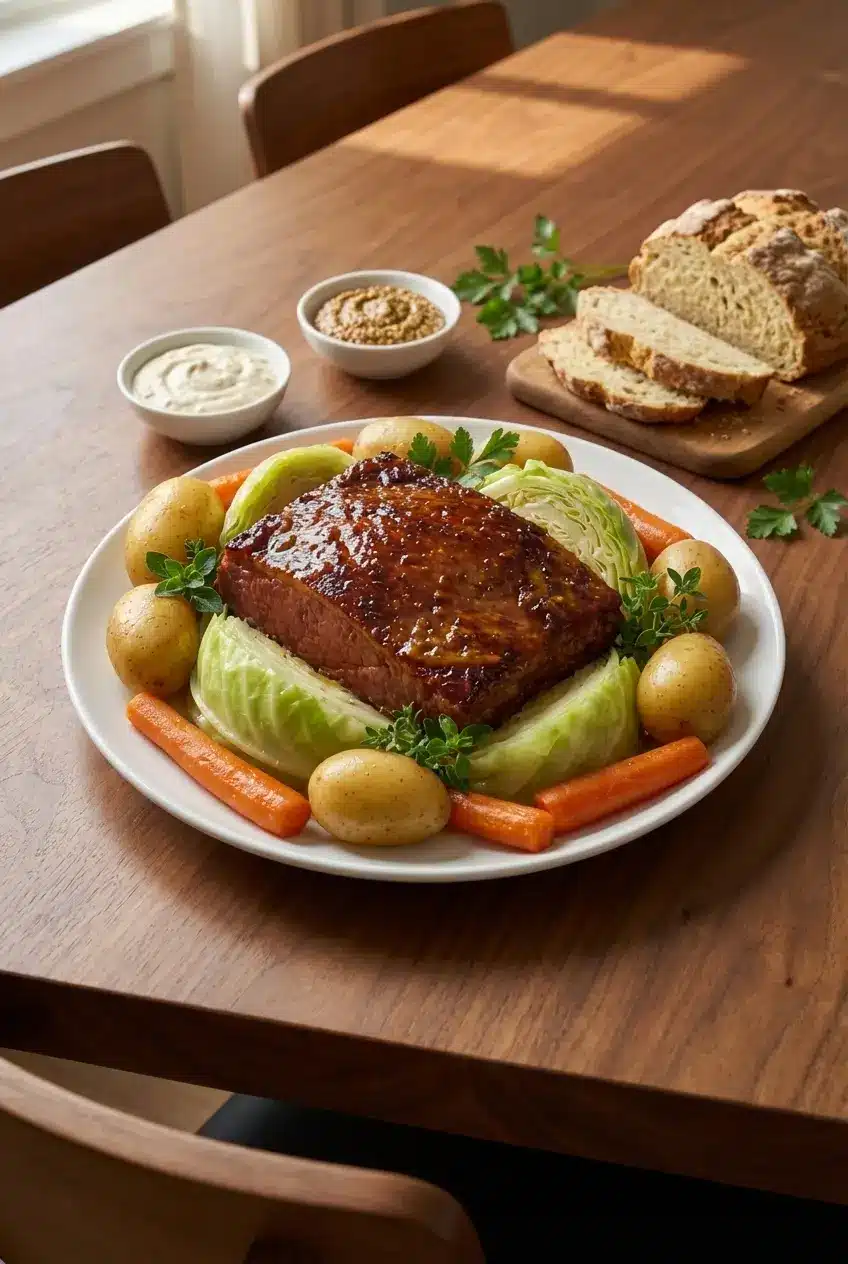
The broiled finish: I discovered that a quick trip under the broiler changes everything. That honey, Dijon, and clove glaze bubbles and browns on the surface, creating a savory-sweet crust that makes the brisket feel worthy of the holiday table.
Balanced flavor: Corned beef has that signature salty brine, and the glaze gives it contrast instead of more heaviness. The result is a better bite, especially with tender cabbage wedges and buttery potatoes alongside.
Classic with more character: This still tastes like the traditional meal everyone hopes for on St. Patrick’s Day, but with deeper flavor and better texture. It has the cozy soul of the original, with just enough polish to feel special.
Ingredients and Substitutions
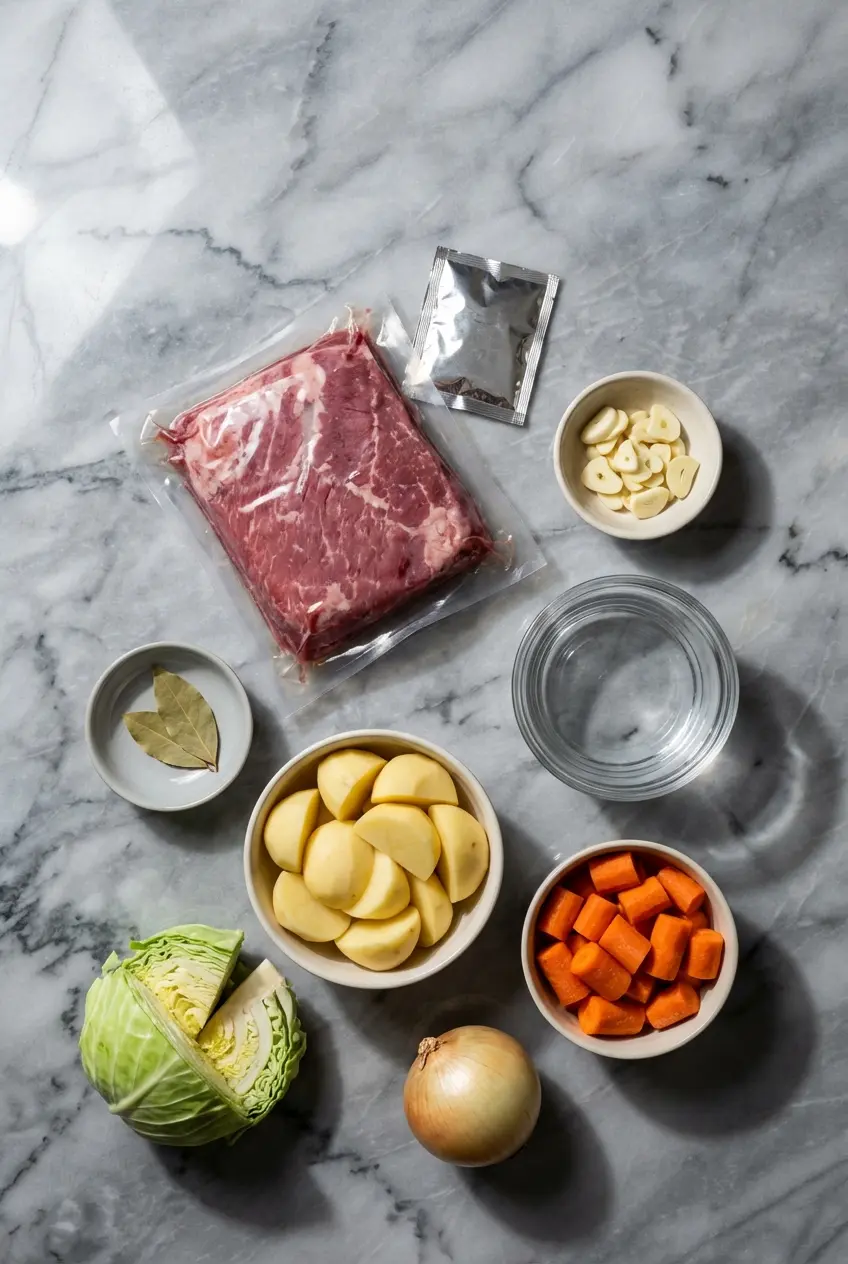
These simple ingredients build a deeply comforting pot, with the brisket flavoring the vegetables and the vegetables returning that goodness right back to the broth.
Ingredients
- 3 to 4 pounds corned beef brisket uncooked, with spice packet
- 1 onion
- 3 cloves garlic sliced
- 2 bay leaves
- 2 1/2 to 3 cups water
- 2 pounds potatoes peeled and quartered
- 2 large carrots chopped
- 1 small head green cabbage cut into wedges
Ingredient Notes & Substitutions
Corned beef brisket: If you get a choice between brisket flat vs point, the flat cut is leaner and slices neatly for a classic presentation, while the point cut carries more fat and often tastes richer. I usually choose a brisket flat when I want clean slices, especially after adding the broiled glaze.
Spice packet: Most packaged corned beef brisket includes pickling spice, but if yours does not, you can make a quick version with peppercorns, mustard seeds, and coriander seeds. A pinch of crushed red pepper or a bay leaf extra will not hurt either, and it still gives you that familiar deli-style aroma tied to sodium nitrate cured beef.
Potatoes: Red potatoes and Yukon Golds are my favorites here because they keep their shape better during the long cook. Russets work in a pinch, but they tend to break down faster and can cloud the broth.
Cabbage: A small green cabbage is the traditional choice because it turns silky and sweet in the pot liquor without overpowering the beef. If you want a lower-carb variation, turnips or radishes can stand in for the potatoes, but I would keep the cabbage exactly as is for the full holiday feel.
Cooking liquid: Water is perfectly reliable, but I have had great results replacing part of it with a bottle of Guinness stout or a cup of apple cider. Either one adds depth without changing the soul of the dish.
Glaze ingredients: For the finishing twist, stir together 3 tablespoons honey, 2 tablespoons Dijon mustard, and a pinch of ground cloves. If Dijon is not in the fridge, stone-ground mustard works well too, though the glaze will be a bit more rustic in texture.
How to Make corned beef and cabbage recipe
Build the flavor base
- Cut the onion into large chunks and scatter them across the bottom of a 6 quart slow cooker so they form a sturdy bed for the meat. Set the corned beef on top, then open the seasoning packet and sprinkle it evenly over the brisket so every part of the surface starts picking up that spiced aroma.
- Pour in 2 1/2 to 3 cups water, using enough so the liquid just about covers the corned beef without drowning the whole pot. Add the sliced garlic and bay leaves, and you should already catch that sharp, savory scent rising up.
Cook low and slow
Cover and cook on low for 8 to 10 hours. The brisket is ready for the next stage when it smells deeply seasoned and a fork begins to slide into the thickest part with less resistance than it had early on.
Add the vegetables in stages
- After the initial 3 hours, add the potatoes and carrots to the slow cooker. This timing matters, because putting them in too soon leaves you with vegetables that are overly soft instead of tender and well-shaped.
- Two hours before serving, tuck the cabbage wedges into the cooking liquid around the beef and vegetables. Let them steam and braise until they are silky and sweet, not gray, bitter, or falling apart.
Glaze, rest, and slice
- About 10 minutes before you plan to serve, lift the corned beef from the slow cooker and set it on a foil-lined tray. Brush it generously with the honey, Dijon mustard, and pinch of ground cloves mixture, then broil for 3 to 5 minutes until the top looks glossy, bubbly, and browned around the edges.
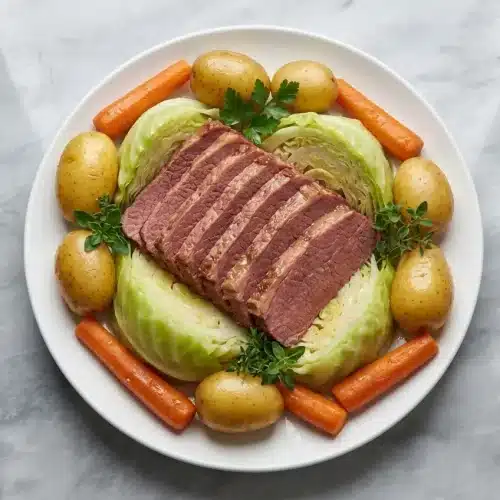
- Let the brisket rest for 15 minutes before slicing. That short pause helps the juices stay in the meat, so when you carve it and serve it with the potatoes, carrots, and cabbage, each slice stays moist and tender.
Secrets for Meltingly Tender Beef
Brisket plays by its own rules. Although 145°F is considered a safe internal temperature, corned beef becomes truly tender closer to 190°F to 200°F, when the connective tissue has had time to relax and soften instead of staying chewy.
That is why low heat matters so much. A hard boil tightens the muscle fibers, while a gentle braise in a slow cooker or similar slow cooker method gives the collagen time to break down gradually, which is exactly what creates that spoon-tender texture people remember.
There is real kitchen science behind it. The process of collagen to gelatin conversion is what turns a tough cut into silky, juicy slices, and it is the reason patience pays off so handsomely with brisket.
Do not pour out the pot liquor when dinner is done. A ladle of that savory broth over the sliced beef and vegetables brings everything together, and it adds back moisture if the meat has been resting for a few minutes on the board.
Understanding Your Brisket: Flat Cut vs. Point Cut
The flat cut is broad, relatively even in thickness, and much leaner, which makes it the easiest piece to slice neatly for serving. The point cut is thicker, more marbled, and a little more irregular, but it rewards you with fuller beef flavor and a softer, richer bite.
With corned beef, both cuts are usually cured in a seasoned brine that may include sodium nitrate or similar curing agents, which help create that familiar color and deli-style flavor. What matters most for home cooks is choosing the cut that fits how you want to serve it, tidy slices from the flat or extra succulent pieces from the point.
The grain matters too, and it does not always run the same way across both cuts. On a flat, the muscle fibers are usually easier to spot, while the point can look a little more chaotic once cooked, so it helps to study the direction of the lines before you start carving.
The Art of Slicing Against the Grain
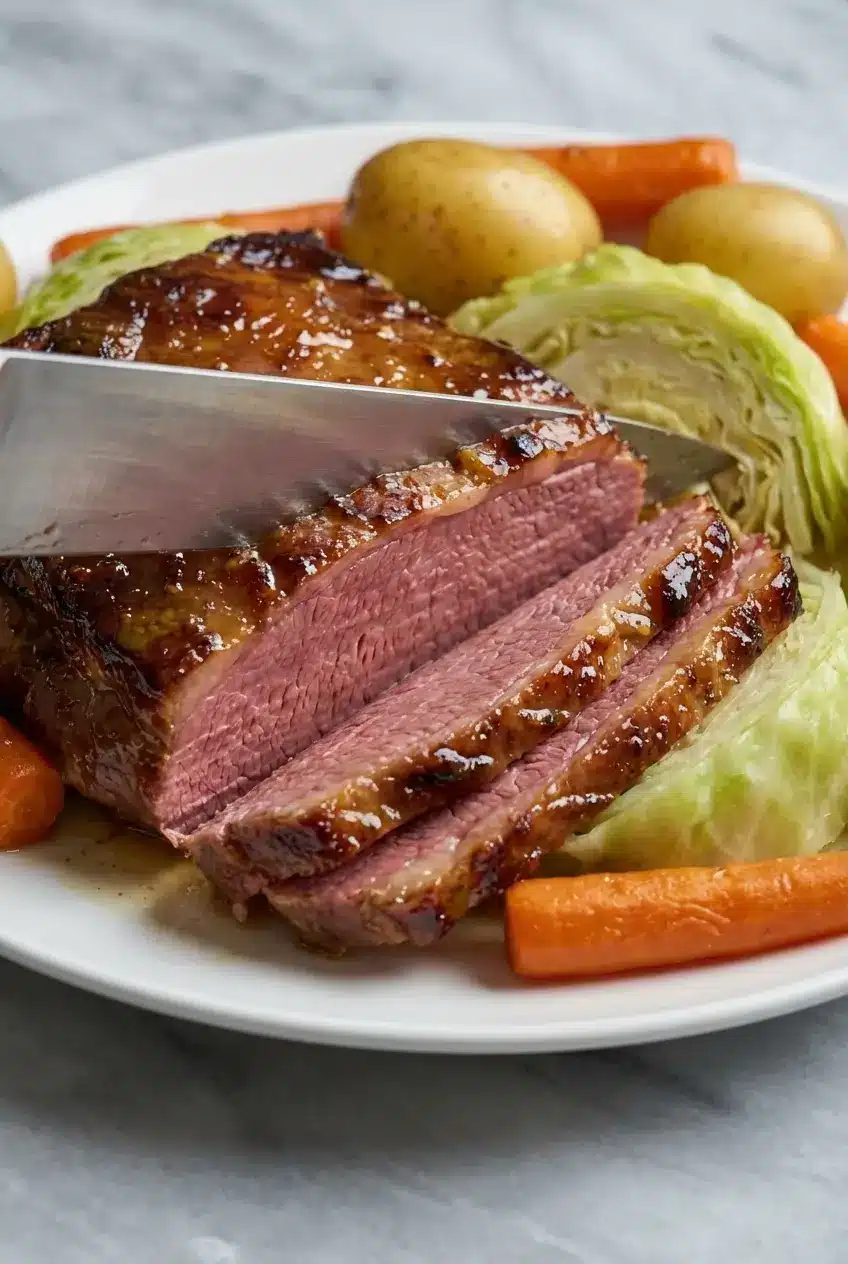
If you want tender corned beef on the plate, slicing against the grain is not optional. When you cut perpendicular to the muscle fibers, you shorten them, and that makes each bite easier to chew instead of long, stringy, and tuggy.
After the glaze has browned, look closely at the brisket before slicing. You will see faint lines running in one direction across the meat, and your knife should cross those lines, not follow them.
I like to let the brisket rest, then turn the board until the grain runs left to right in front of me. From there, I slice straight down across it into even pieces, which is the easiest way to get slices that stay juicy and feel tender from edge to edge.
Pro Tips & Troubleshooting
Expert Tips for Success
- Swap part of the water for Guinness stout or apple cider if you want a deeper, more layered cooking liquid with an earthy edge.
- Rub the inside of the serving bowl with a cut garlic clove before adding the potatoes, it gives a subtle pub-style aroma without overpowering the meal.
- A single cinnamon stick in the pot can add a warm background fragrance that pairs beautifully with the pickling spice.
- If the brisket still feels firm after the full cooking time, it usually needs more time, not less. Give it another 30 to 60 minutes on low until it yields easily to a fork.
Common Mistakes to Avoid
- Do not let the meat cook too aggressively. High heat can make brisket tough and rubbery instead of tender.
- Do not add the cabbage at the beginning, or it can turn sulfurous, bitter, and far too soft by dinnertime.
- Do not slice with the grain, even a perfectly cooked brisket can seem tough if it is carved the wrong way.
- Do not freeze the brisket before cooking if you can help it, because the final texture is often better when it goes into the pot fresh.
Serving and Storage
Perfect Pairings and Serving Ideas
Serve the beef with some of the warm pot liquor spooned over the top, plus creamy horseradish sauce or a good stone-ground mustard on the side. A shower of chopped parsley wakes up the plate, and a little Irish butter melting over the potatoes feels exactly right.
For a fuller holiday spread, Irish soda bread is the classic partner for soaking up every last drop of broth. If you like a sweet note that echoes the glaze, honey butter cornbread also fits surprisingly well alongside the salty brisket and tender vegetables.
When I am feeding a crowd, I sometimes add a second comfort-food side so the table feels truly celebratory. A hearty Shepherd’s Pie casserole works especially well for an Irish-inspired feast, particularly if you are serving extra guests with big appetites.
Storage and Reheating Instructions
Leftovers keep best when stored in the cooking liquid, not dry. Tuck the sliced or whole corned beef into an airtight container with some pot liquor and vegetables, then refrigerate for up to 4 days so the meat stays moist instead of firming up.
For reheating, use a low-power microwave setting or warm everything gently in a covered pan with a splash of broth. High heat dries the brisket quickly, so a slow, steamy reheat gives you the best chance of keeping that tender texture.
If you have extra potatoes and beef, leftovers turn into a mighty good next-day supper. I often fold them into mashed potato pancakes, where the savory meat and soft potatoes get a whole new life without wasting a thing.
Glazed Corned Beef And Cabbage Recipe

Equipment
- 6-quart slow cooker
- Baking Sheet
- Aluminum Foil
Ingredients
- 3 to 4 pounds corned beef brisket uncooked, with spice packet
- 1 onion
- 3 cloves garlic sliced
- 2 bay leaves
- 2 1/2 to 3 cups water
- 2 pounds potatoes peeled and quartered
- 2 large carrots chopped
- 1 small head green cabbage cut into wedges
Instructions
Build the Flavor Base
- Cut the onion into large chunks and arrange them at the bottom of a 6-quart slow cooker to form a bed for the meat. Place the corned beef brisket on top and sprinkle the included seasoning packet evenly over the surface.
- Pour in the water until it almost covers the brisket, then add the sliced garlic and bay leaves to the liquid.
Slow Cook
- Cover the pot and cook on the low setting for 8 to 10 hours. The brisket is ready when a fork slides easily into the thickest part of the meat.
Add Vegetables in Stages
- Add the quartered potatoes and chopped carrots to the slow cooker after the beef has cooked for 3 hours. This prevents them from becoming mushy.
- About 2 hours before you are ready to serve, tuck the cabbage wedges into the cooking liquid around the beef and other vegetables. Cook until the cabbage is silky and tender.
Glaze, Broil, and Rest
- Preheat your broiler. Lift the brisket from the cooker and place it on a foil-lined baking tray. Brush the top generously with a mixture of honey, Dijon mustard, and a pinch of ground cloves. Broil for 3 to 5 minutes until the glaze is bubbly and browned.
- Let the meat rest for 15 minutes before carving. Slice the brisket against the grain into even pieces and serve with the vegetables and a ladle of the cooking liquid.
Notes
Conclusion
This is the kind of corned beef and cabbage recipe that keeps the heart of tradition intact while giving it a smart finishing touch. The broiled honey-mustard crust brings color, contrast, and a little extra wow to a meal that is already deeply comforting.
Set it up in the morning, slice it against the grain, and let that fragrant pot liquor do the rest. Once you make it this way, it has a very good chance of becoming your new St. Patrick’s Day standard.
Frequently Asked Questions
How do I ensure my corned beef is tender every time?
Do I need to rinse the brine off the meat before it goes in the pot?
What is the difference between flat cut and point cut brisket?
How do I prevent the cabbage and potatoes from getting mushy?
What should I do if my corned beef didn’t come with a seasoning packet?
Can I cook this on high in the slow cooker?