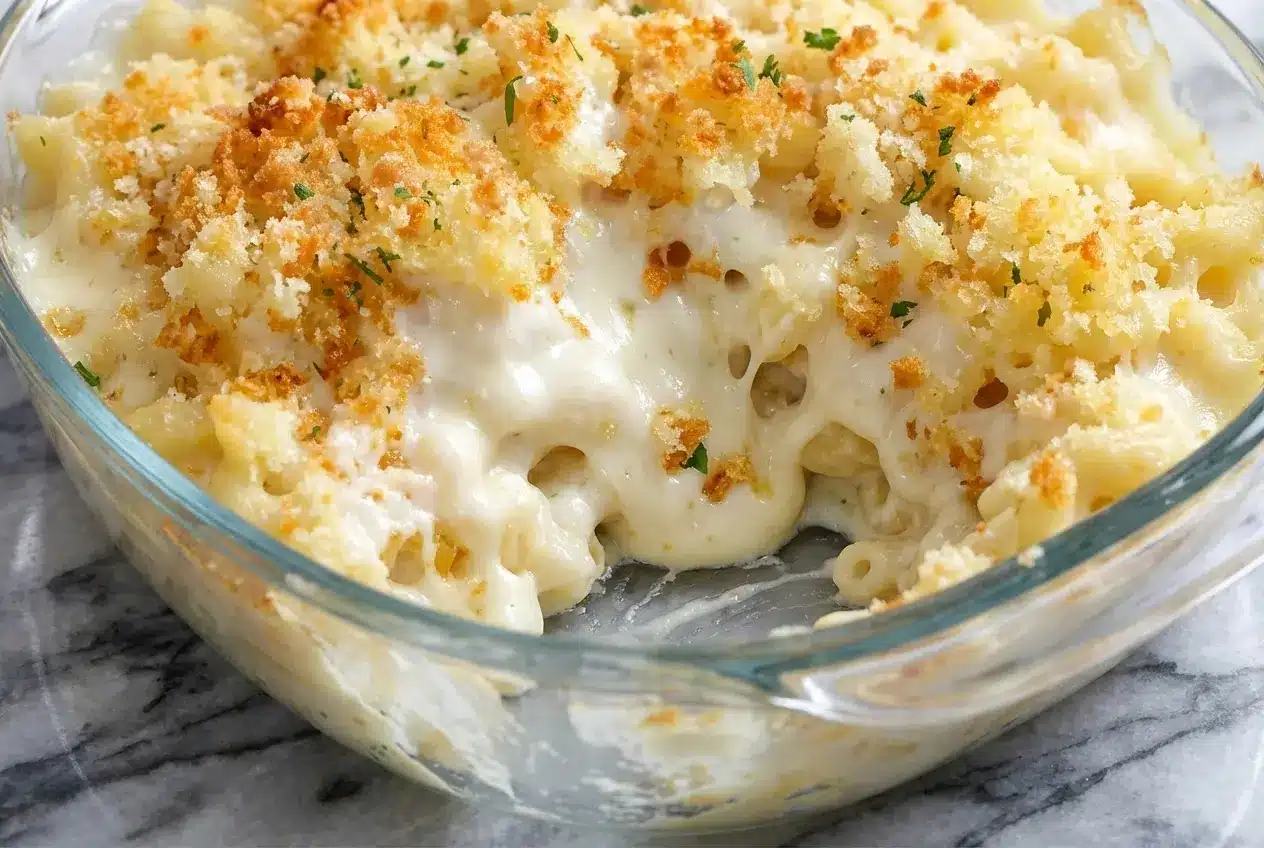
Sunday dinners in my kitchen have always had one non-negotiable rule, if there’s a bubbling pan of cheese and pasta on the table, everyone shows up early. Baked Macaroni and Cheese has that kind of pull, the kind that smells like home before you even open the oven door.
This version is for anyone who wants the cozy comfort of the classic, but with a little more finesse. The secret is a true Mornay sauce, built for a velvety finish, with a gentle garlic infusion and a whisper of nutmeg that make it taste far richer and more grown-up than the usual weeknight box.
Why You’ll Love This Recipe
Ultra-creamy center: I make this with a proper roux and warm milk, which gives the sauce a silky body instead of a gluey or grainy one. The pasta stays tender, but the interior remains lush and spoonable.
The secret twist: A smashed garlic clove perfumes the butter without overpowering the dish, and freshly grated nutmeg deepens the naturally nutty flavor of Gruyère and Sharp Cheddar. It is one of those small touches that makes people pause after the first bite.
Golden crunch on top: Panko breadcrumbs bring that bakery-style crisp lid every good casserole dreams of. Underneath, the Mornay sauce stays soft and rich, so you get contrast in every forkful.
Reliable every time: In my kitchen, the little success secrets matter, warm milk, block cheese, and truly al dente pasta. Those three moves keep Baked Macaroni and Cheese from turning dry, split, or heavy.
Ingredients and Substitutions
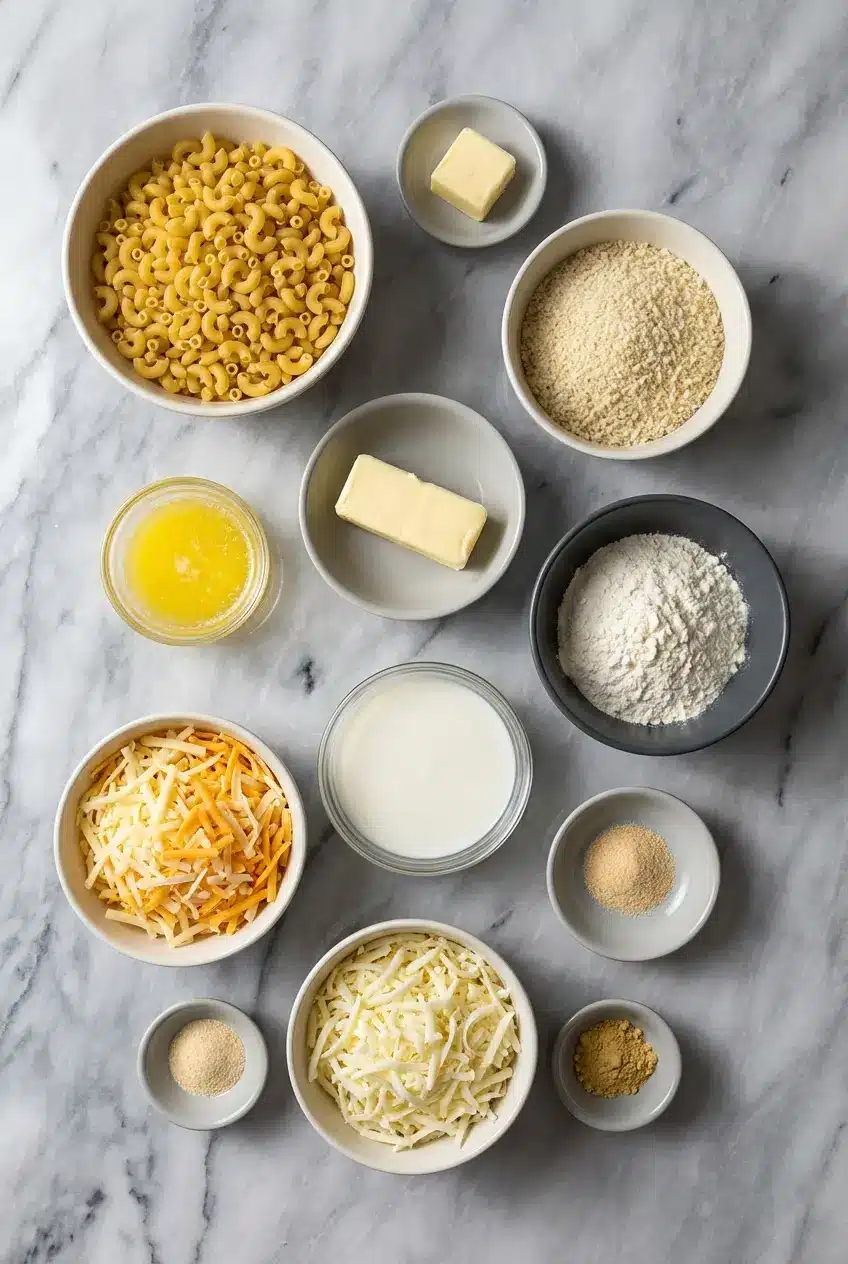
These ingredients build a classic comfort dish with better texture and deeper flavor, from the buttery macaroni base to the creamy cheese sauce and crisp topping.
Ingredients
Macaroni:
- 250g / 8 oz macaroni (elbow pasta)
- 1 tbsp (15g) unsalted butter
Topping:
- 2/3 cup panko breadcrumbs
- 2 tbsp (30g) unsalted butter, melted
- 1/4 tsp salt
Sauce:
- 4 tbsp (60g) unsalted butter
- 1/3 cup flour, plain / all purpose
- 3 cups milk, warmed
- 2 cups freshly shredded cheese, gruyere best (followed by cheddar and Colby)
- 1 cup freshly shredded mozzarella cheese
- 3/4 tsp salt
Seasonings (optional):
- 1 tsp garlic powder
- 1/2 tsp onion powder
- 1/2 tsp mustard powder
Ingredient Notes & Substitutions
Cheese: Block cheese is the best choice here, no question. I always grate Gruyère, cheddar, Colby, or mozzarella myself because pre-shredded bags often carry anti-caking starches that can leave a Mornay sauce dull or slightly grainy.
Whole milk: Whole milk gives this Bechamel base the full, rounded texture that makes the finished casserole taste luxurious. Skim milk can work in a pinch, but the sauce will be thinner and less rich.
Pasta: Elbow macaroni is the classic because the curved shape catches sauce in every nook, but other short shapes like cavatappi or small shells also hold up well. The key is choosing a shape sturdy enough to stay al dente through baking.
Gluten-free swaps: For a gluten-free pan, I’ve had good results with a 1:1 gluten-free flour blend in the roux and corn-based elbow pasta. Keep a close eye on the sauce thickness, since some blends tighten a little faster than regular flour.
Seasonings: The optional onion powder and mustard powder quietly round out the cheese flavor without shouting. If you want to lean into the outlined twist, a pinch of freshly grated nutmeg brings a classic French warmth that fits beautifully with Gruyère.
How to Make Baked Macaroni and Cheese
Prep the Pasta and Topping
- Bring a large pot of water to a full boil, then cook the macaroni for 1 minute less than the package directions. You want it firmly al dente, with just a little bite left in the center, because it will keep cooking in the oven.
- Drain the pasta, return it to the pot, and toss it with 1 tbsp (15g) unsalted butter until every piece looks lightly glossy. Set it aside to cool while you make the sauce, which helps prevent the macaroni from swelling up and drinking in too much liquid too soon.
- In a small bowl, stir together the panko breadcrumbs, melted butter, and salt until the crumbs look evenly moistened. Set the topping aside, then preheat the oven to 180°C/350°F.
Build the Sauce
- Set a large saucepan or ovenproof skillet over medium heat and melt the butter until it begins to foam gently. If you want that subtle extra layer of flavor, let a smashed garlic clove sizzle in the butter for 1 to 2 minutes, then remove it before moving on.
- Whisk in the flour and cook the mixture for 1 minute, stirring constantly, until it looks smooth and smells lightly toasty rather than raw. This is your roux, the backbone of both Bechamel and Mornay sauce.
- Pour in about 1 cup of the warmed milk first and whisk until the thick flour paste loosens into a smooth base. Add the remaining milk and keep whisking until the sauce is completely lump free.
- Stir in the salt and the optional seasonings, then cook for 5 to 8 minutes, stirring regularly, until the sauce thickens to a creamy consistency. It is ready when it coats the back of a wooden spoon and you can run your finger through it to leave a clean line, which matches the science of al dente texture and starch control that makes baked pasta dishes hold together without turning mushy.
- Take the pan off the heat and stir in the shredded cheeses until they are evenly incorporated and the sauce looks glossy and thick. It does not need to be fully melted at this stage, then taste and adjust the salt if needed.
Assemble and Bake
- Pour the hot cheese sauce over the cooled macaroni and stir quickly so every piece is coated before the pasta can absorb too much of the sauce. Transfer everything to a 2.5L baking dish or back into the cast iron skillet.
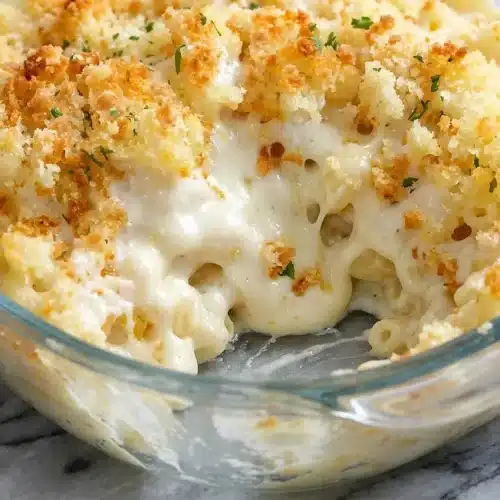
- Scatter the breadcrumb topping evenly over the surface, then bake for 25 minutes until the top is light golden and the edges are bubbling. Pull it from the oven before it goes too far, because overbaking is what turns a creamy pan into a dry one.
Serve it right away while the top is crisp and the center is still flowing softly. A little fresh parsley is optional, but it does brighten the rich, cheesy finish.
Secrets for a Velvety Cheese Sauce
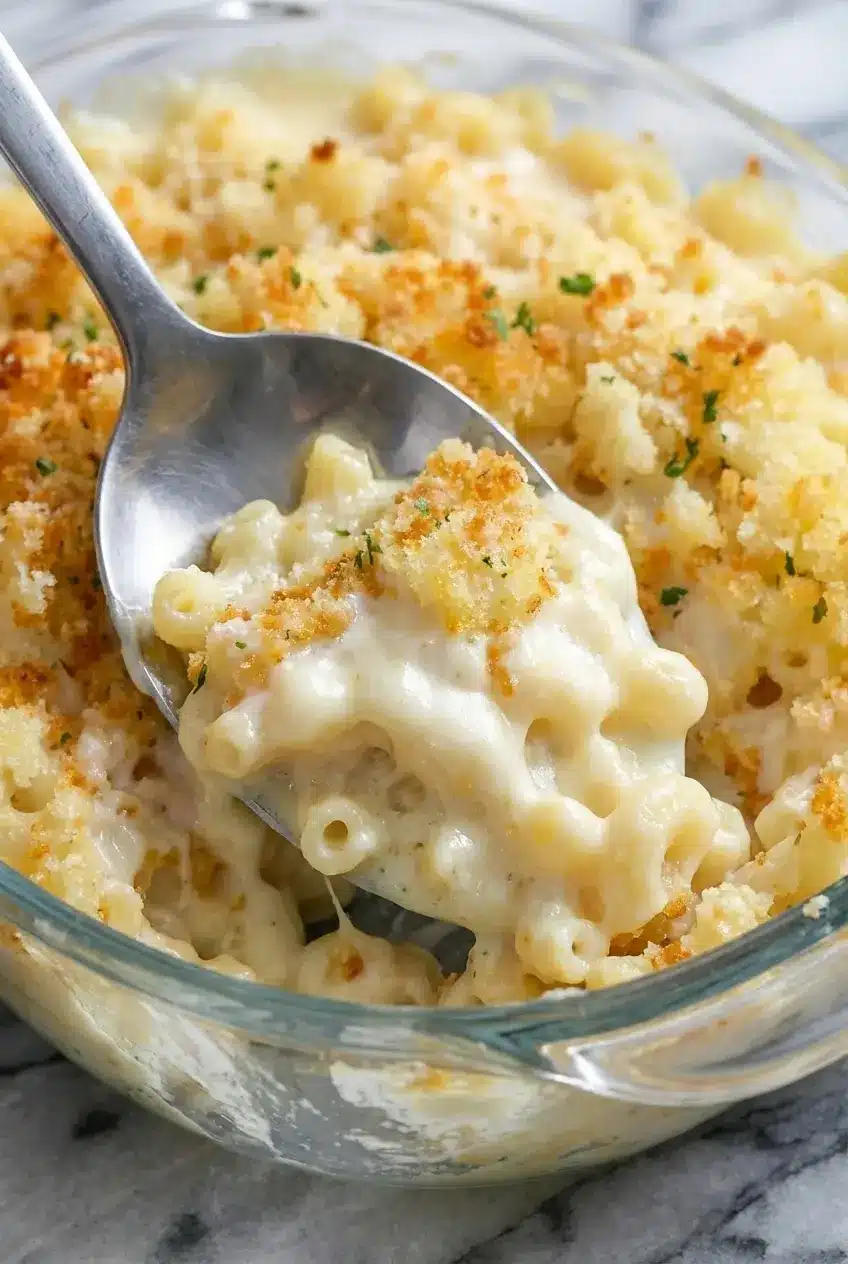
Warm milk is one of those old-school kitchen habits that really earns its place. When cold milk hits a hot roux, the starch can seize unevenly, but warmed milk blends into the Bechamel base more smoothly and helps the sauce thicken without stubborn lumps.
This dish also works because it goes beyond a standard cheese sauce and into true Mornay sauce territory. Once a Bechamel is enriched with cheese, plus a touch of nutmeg and that gentle garlic note, it gets the same kind of polished richness you find in dishes like creamy Alfredo pasta, but with a more structured baked finish that clings beautifully to macaroni.
Undercooking the pasta is not optional here. As the casserole bakes, the macaroni keeps absorbing liquid from the sauce, so starting with fully cooked pasta almost guarantees a soft, bloated texture by the time the topping turns golden.
Scaling Baked Macaroni and Cheese for Large Gatherings
For potlucks, church suppers, graduation parties, or any crowd of 50 or more, this recipe scales surprisingly well if you protect the sauce-to-pasta ratio. I use the base recipe as a single unit and multiply every ingredient evenly, then bake in full-size hotel pans rather than one very deep dish, which helps the center heat through without drying out the edges.
As a rough guide, one base batch serves about 6 to 8 people as a side, so feeding 50 usually means making 7 to 8 batches. In very large quantities, I keep a little extra warm milk on hand and loosen the sauce as needed before combining, because oversized batches tend to tighten up while waiting to be assembled.
For buffet tables, a shallow layer is kinder to this dish than a deep one. If you are planning a comfort-food spread, something like a cheesy hamburger casserole works alongside it for a second hearty option, especially when you want different textures without straying from the classic American casserole spirit.
Adapting for High-Altitude and Specialized Equipment
At higher elevations, water boils at a lower temperature, so pasta can behave differently and sauces lose moisture faster. I usually boil the macaroni 2 to 3 minutes less than usual and add a small splash more milk to the sauce so the finished bake stays creamy instead of tightening up in the oven.
For reheating leftovers, an air fryer does a beautiful job on this dish. Heat portions at 350°F for 3 to 5 minutes, and the panko topping regains that crisp edge while the center warms through without turning rubbery, especially if you add a tiny spoonful of milk before reheating.
Pro Tips & Troubleshooting
Professional Tips for Success
- Use a blend of cheeses for the best balance, Sharp Cheddar or Gruyère for bold flavor, and mozzarella for that stretchy, creamy pull.
- Grate your cheese from a block so it melts cleanly into the sauce. This one habit makes a huge difference in keeping the texture smooth.
- Keep the pasta just shy of done before baking. Truly al dente macaroni will finish in the oven without losing its shape.
- Stir the sauce regularly while it thickens so the roux cooks evenly and the bottom does not catch. You are looking for a silky spoon-coating consistency, not a stiff paste.
- A crisp topping is all about contrast, and the same oven logic that makes twice baked potatoes so satisfying applies here too, a well-buttered surface, steady heat, and enough space for the top to dry and brown instead of steaming.
Common Mistakes to Avoid
- Overbaking the casserole. Even after it leaves the oven, the residual heat keeps cooking the pasta and thickening the sauce.
- Using skim milk for the sauce. Without enough fat, the finished texture can taste watery instead of plush and creamy.
- Dumping cheese into a sauce that is still over active heat. High heat can cause the proteins to tighten and break, leaving the sauce grainy.
- Mixing hot sauce with very hot pasta and then letting it sit too long before baking. That gives the macaroni extra time to absorb liquid and lose its ideal texture.
Serving & Storage
Creative Serving Ideas
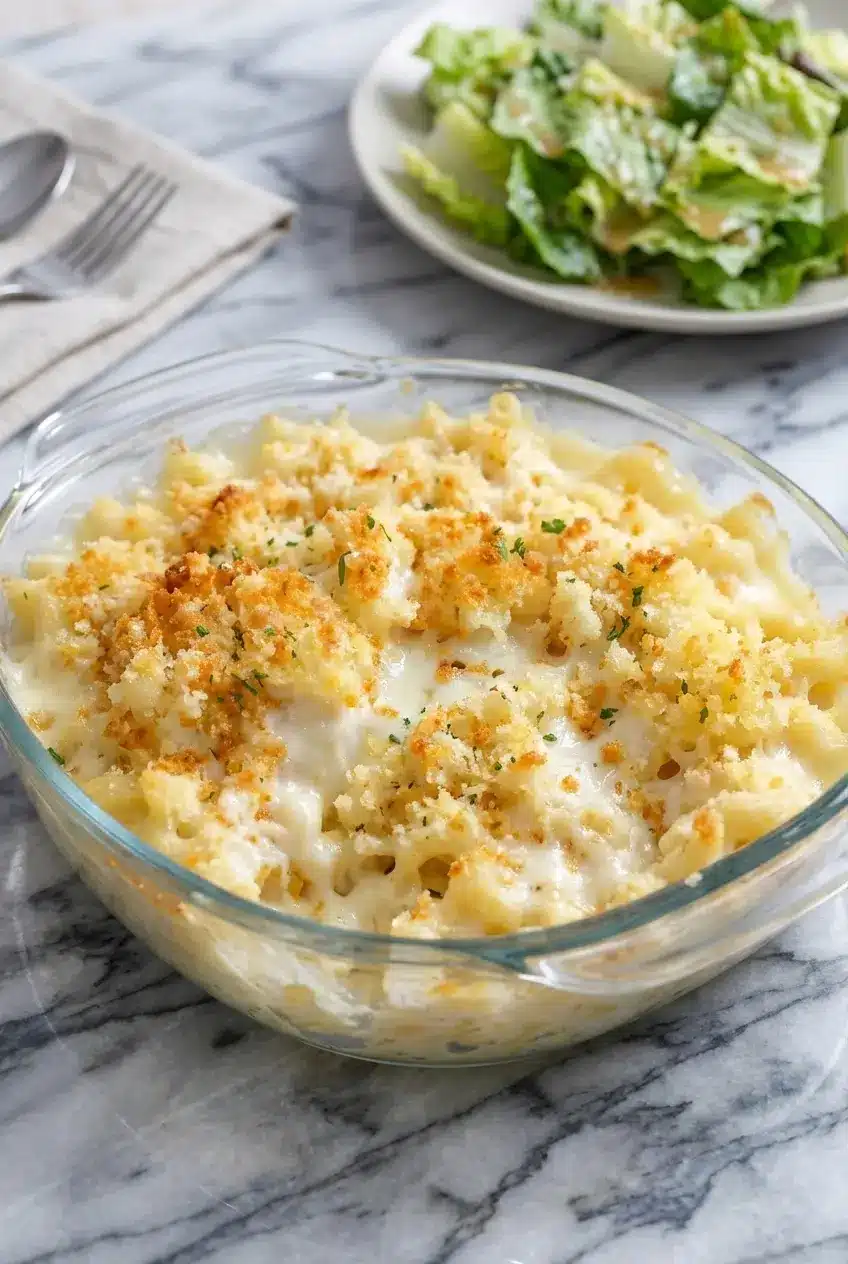
This dish is right at home next to BBQ ribs, pulled pork, fried chicken, or a holiday ham. When I want to balance the richness, I add a crisp green salad with a sharp vinaigrette or something bright and juicy like a melon mosaic salad, which cuts through all that creamy cheese beautifully.
A finishing touch goes a long way here. Fresh chives, a dusting of smoked paprika, or even a little chopped parsley make the pan look livelier and give the richness a gentle lift.
Storage and Reheating Tips
Leftovers keep well in the refrigerator for up to 4 days, tightly covered. The sauce will firm up as it chills, which is completely normal for a pasta dish built on a roux and cheese.
For oven reheating, add a splash of milk, cover loosely with foil, and warm until heated through. That little bit of extra moisture helps bring the sauce back to a creamy consistency instead of letting it bake into the pasta a second time.
You can freeze it too, and I prefer doing that before the final bake if possible. Wrap the assembled dish well, freeze, then bake later for the freshest texture, or freeze baked leftovers in individual portions for easier weeknight dinners.
Classic Baked Macaroni And Cheese

Equipment
- Large Pot
- Large saucepan or ovenproof skillet
- Baking dish (2.5L)
- Whisk
- Oven
Ingredients
Macaroni:
- 250g / 8 oz macaroni (elbow pasta)
- 1 tbsp (15g) unsalted butter
Topping:
- 2/3 cup panko breadcrumbs
- 2 tbsp (30g) unsalted butter, melted
- 1/4 tsp salt
Sauce:
- 4 tbsp (60g) unsalted butter
- 1/3 cup flour, plain / all purpose
- 3 cups milk, warmed
- 2 cups freshly shredded cheese, gruyere best (followed by cheddar and Colby)
- 1 cup freshly shredded mozzarella cheese
- 3/4 tsp salt
Seasonings (optional):
- 1 tsp garlic powder
- 1/2 tsp onion powder
- 1/2 tsp mustard powder
Instructions
Prep the Pasta and Topping
- Bring a large pot of water to a boil and cook the macaroni for 1 minute less than the package directions until firmly al dente. Drain and toss with 1 tablespoon of butter, then set aside to cool.
- In a small bowl, combine the panko breadcrumbs, 2 tablespoons of melted butter, and salt. Preheat your oven to 180°C/350°F.
Build the Sauce
- In a large saucepan or skillet, melt 4 tablespoons of butter over medium heat. Optional: sizzle a smashed garlic clove in the butter for 2 minutes and remove before proceeding.
- Whisk in the flour and cook for 1 minute to create a roux. Gradually whisk in the warmed milk until the sauce is smooth and free of lumps.
- Stir in the salt and optional seasonings. Cook for 5 to 8 minutes, stirring regularly, until the sauce thickens enough to coat the back of a spoon.
- Remove from heat and stir in the shredded Gruyere and mozzarella until the sauce is glossy and thick.
Assemble and Bake
- Pour the cheese sauce over the macaroni and stir to coat. Transfer the mixture to a 2.5L baking dish or ovenproof skillet.
- Top evenly with the prepared panko crumbs and bake for 25 minutes until golden brown and bubbling at the edges. Serve immediately.
Notes
Conclusion
This is the kind of Baked Macaroni and Cheese that earns a permanent place in the family rotation, creamy in the middle, crisp on top, and layered with just enough garlic and nutmeg to taste special. Those small details turn a familiar casserole into something you really remember.
If you grate your own cheese and pull the dish from the oven while it is still saucy, you are already halfway to the best pan you’ve ever made. Make it your own with a few small variations, then settle in for a very cozy dinner.
Frequently Asked Questions
How do I fix a broken or grainy cheese sauce?
Can I use pre-shredded cheese for the sauce?
What is the secret to keeping mac and cheese creamy after baking?
Do I have to boil the pasta before baking?
How long does baked mac and cheese last in the fridge?
Can I make baked macaroni and cheese ahead of time?
Why did my pasta get mushy?
Can I freeze baked macaroni and cheese?