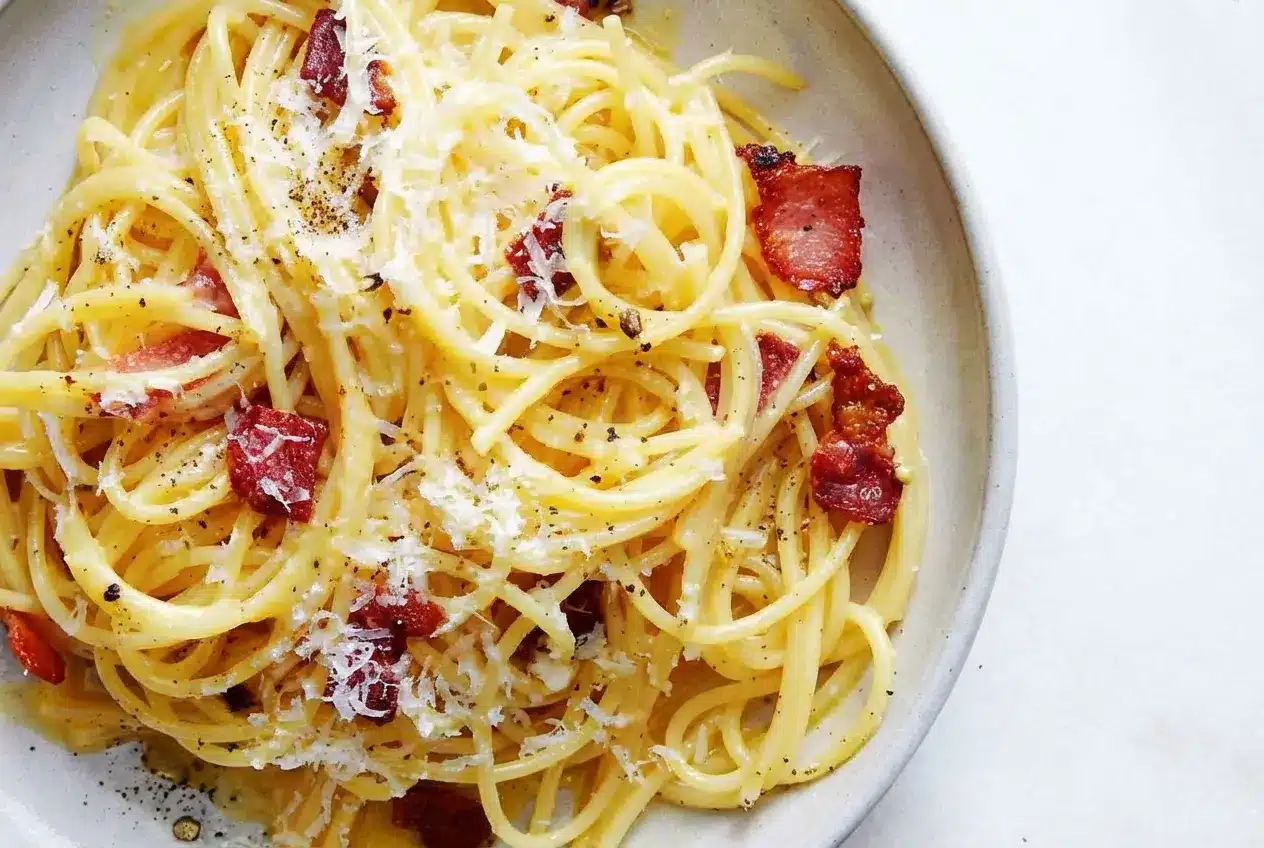
Few pasta dishes feel as comforting as a bowl of pasta carbonara done right, glossy strands, savory pork, sharp cheese, and that unmistakable black pepper warmth rising with the steam. In my kitchen, this is the kind of dinner I make when I want something deeply satisfying without a long ingredient list or a restaurant bill.
If you have ever worried about turning the sauce into scrambled eggs, you are in exactly the right place. This version uses a foolproof fat-tempering approach that gives you a silky, authentic Roman-style finish with far less stress.
Why You’ll Love This Recipe
Silky every time: The finished sauce clings to the spaghetti in a glossy coat instead of sitting heavy or turning clumpy. It tastes rich and intensely savory, but still feels elegant, the way great Roman cuisine should.
The secret twist: I slowly whisk 1 to 2 tablespoons of hot rendered fat into the egg and cheese mixture before it ever touches the pasta. That simple tempering step helps protect the egg proteins and builds a more stable emulsion from the start.
Big flavor, few ingredients: With Guanciale, Pancetta, or even bacon, plus good cheese and black pepper, every ingredient earns its place. When the balance is right, pasta carbonara tastes far more complex than the shopping list suggests.
Beginner-friendly science: Once I started using this method, the fear of scrambled eggs nearly disappeared. The warm fat, the starchy pasta water, and the off-heat mixing all work together to make success much more reliable.
Ingredients and Substitutions
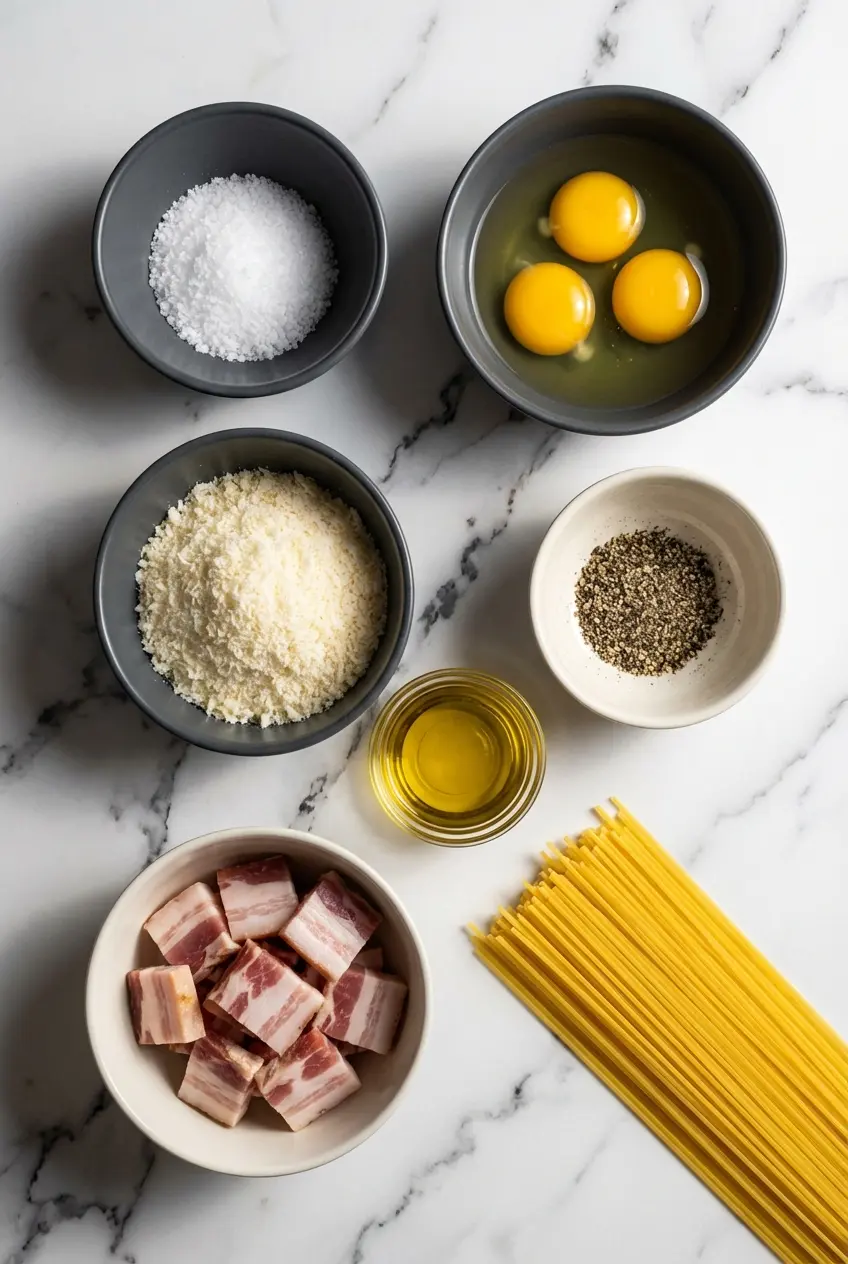
This recipe leans on a short list of pantry and deli staples, and each one plays a clear role in creating that creamy, peppery, deeply savory sauce.
Ingredients
- Salt
- 2 large eggs and 2 large yolks, room temperature
- 1 ounce (about 1/3 packed cup) grated Parmesan
- Coarsely ground black pepper
- 1 tablespoon olive oil
- 3 1/2 ounces of slab guanciale, pancetta or bacon, sliced into pieces about 1/4 inch thick by 1/3 inch square
- 12 ounces spaghetti (about 3/4 box)
Ingredient Notes & Substitutions
Guanciale, Pancetta, or Bacon: Guanciale gives the most authentic Roman depth, with a fuller cured pork flavor and luxurious rendered fat. Pancetta is the closest substitute in spirit, while bacon works in a pinch but brings a smokier note that changes the personality of the dish.
Cheese: Freshly grated cheese from a block melts more smoothly and gives the sauce a cleaner, silkier texture. Pre-grated cheese often contains anti-caking agents, and in carbonara that usually shows up as a grainy finish instead of a velvety one.
Spaghetti: Spaghetti is classic and wonderful here because the sauce coats every strand beautifully. Bucatini gives you a more dramatic bite, and rigatoni is excellent if you want the sauce to settle into the ridges and hollow centers.
Black Pepper: Carbonara should taste peppery, not timid. Coarsely ground black pepper adds both aroma and a gentle heat that cuts through the richness of the eggs, cheese, and rendered fat.
Eggs: Room temperature eggs blend far more smoothly than cold ones. When they are not fridge-cold, they emulsify more easily and are less likely to seize when they meet the hot pasta.
How to Make pasta carbonara
Prepare the water and mixing bowl
- Set a large pot of water over high heat and season it lightly, using no more than 1 tablespoon salt. At the same time, fill a large serving bowl with hot water and let it sit, because a warmed bowl helps keep the final sauce fluid and glossy instead of tightening up too quickly.
- While the water heats, whisk the eggs and yolks with the cheeses in a mixing bowl until the mixture looks thick, smooth, and pale golden. Add a small pinch of salt and plenty of coarsely ground black pepper, keeping in mind that the pork and cheese will bring plenty of salinity on their own.
Render the pork and temper the eggs
Warm the olive oil in a large skillet over medium heat, then add the guanciale, pancetta, or bacon and cook until the fat turns translucent and glossy, with edges that are lightly crisp but centers still pleasantly chewy, not hard. Take the skillet off the heat, then slowly whisk 1 to 2 tablespoons of that hot rendered fat into the egg and cheese mixture, little by little, so the eggs gently warm and the emulsion starts before the pasta ever goes in.
Cook the pasta and build the base
- Drop the spaghetti into the boiling water and cook it until just a bit firmer than al dente. This matters, because it will continue softening slightly during the final toss with the hot pork and sauce.
- Right before the pasta is ready, warm the pork again in the skillet if it has cooled too much. Scoop out 1 cup of pasta water, drain the spaghetti, then transfer it straight to the skillet over low heat and toss for about a minute so the noodles pick up the rendered fat and stay hot.
Finish the sauce
Pour the hot water out of the serving bowl and dry it well, then add the pasta and pork mixture to the bowl. Stir in the egg and cheese mixture quickly, loosening with a little reserved pasta water as needed, until the sauce turns silky, creamy, and shiny, then serve right away with extra Pecorino and a final shower of black pepper.
Chef’s Secrets For A Perfect Sauce
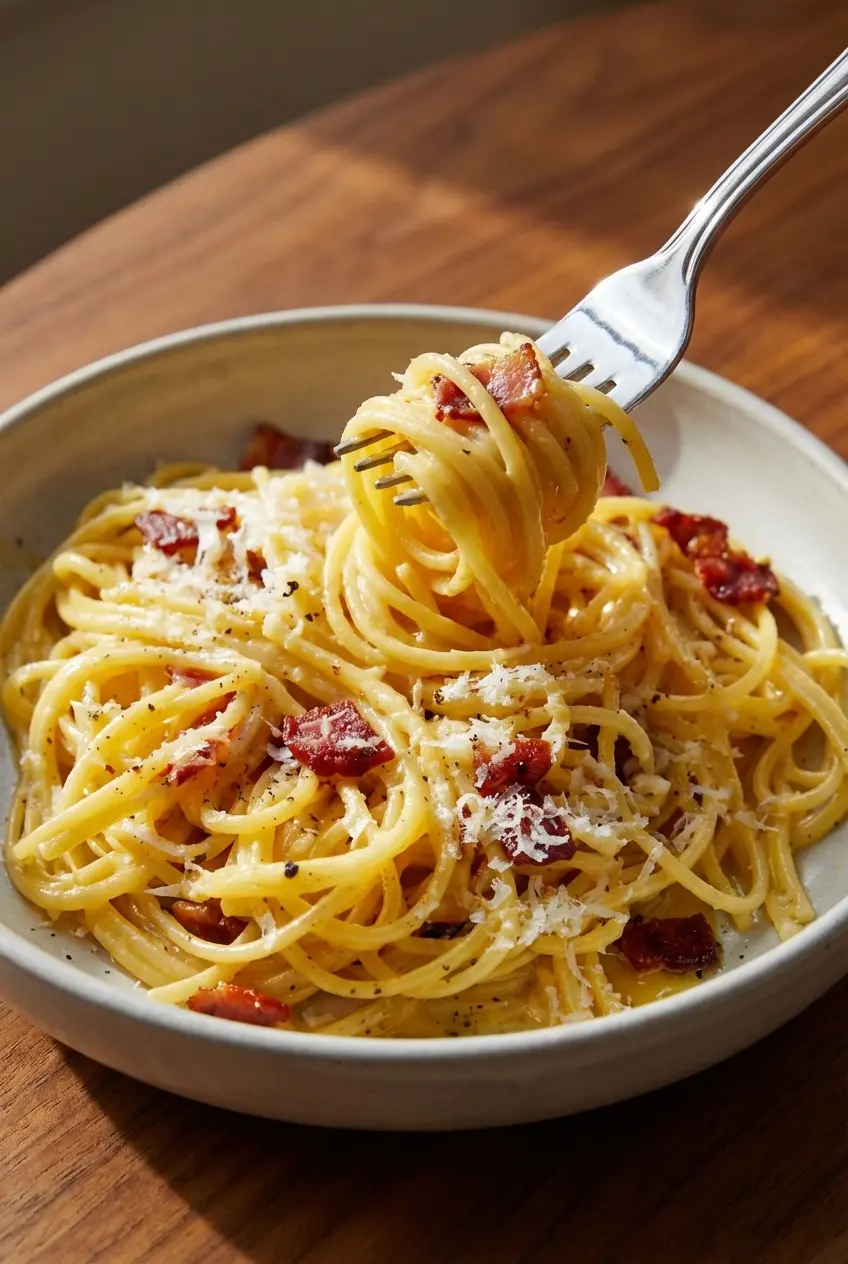
Salt smartly: This is not the pasta pot for aggressive salting. Pecorino Romano and cured pork already carry plenty of salt, so keeping the water lighter than usual gives you room to season the finished dish without tipping it over the edge.
Watch the guanciale closely: The sweet spot is rendered fat that looks clear and shimmering, edges that are crisp, and centers that still have a little chew. If you push it until every piece is dark and rigid, the pork turns hard and the sauce loses some of that luscious pork flavor.
Use starch to your advantage: I like boiling pasta in a little less water than I would for a plain buttered noodle dish. The resulting starchy pasta water is more concentrated, and that extra starch helps the sauce bind beautifully instead of turning greasy or thin.
The Science Behind A Perfect Emulsion
Carbonara lives or dies by coagulation, which is simply the way egg proteins react to heat. If they heat too fast, they tighten abruptly and curdle, but if they warm gently, they thicken into a soft, creamy sauce.
Tempering is what makes this version so dependable. First, the hot rendered fat gently raises the temperature of the egg mixture and coats those proteins in fat, then the heat from the pasta carries the sauce the rest of the way without shocking it.
Starchy pasta water is the quiet hero here. It acts like culinary glue, helping the rendered fat, cheese, and egg mixture join into one glossy emulsion rather than separating into oily patches and dense clumps.
Choosing Authentic Roman Ingredients
In traditional Roman cuisine, Guanciale and Pecorino Romano are not just nice upgrades, they shape the whole flavor of the dish. Guanciale, made from cured pork jowl, melts into a richer and more delicate fat than Pancetta, which comes from pork belly and tastes a touch cleaner and firmer.
Pecorino Romano brings sharp, salty sheep’s milk intensity, while Parmigiano Reggiano softens the edges with a nuttier, rounder flavor. When I want that classic balance, I lean on both, and the result is less harsh, more layered, and easier to love forkful after forkful.
For readers who enjoy learning the standards behind authentic Roman ingredients, the European Commission’s PDO record for Pecorino Romano is a fascinating look at why this cheese tastes so distinctive. That protected status helps explain why it brings such a specific salty, tangy backbone to a true carbonara.
That mellow Parmesan note also shows up beautifully in other pasta dishes, and I think a simple lemon Parmesan pasta really highlights how expressive a good wedge of cheese can be. It is a different mood entirely, brighter and lighter, but it proves how much quality Parmigiano Reggiano can do with very little help.
Pro Tips & Troubleshooting
Pro Tips
- Use room temperature eggs so they blend smoothly into the sauce instead of tightening into little lumps.
- Always combine the egg mixture with the pasta off direct heat, either in the warmed bowl or in a skillet with the burner turned low or off.
- If you want a little extra aroma, add a smashed garlic clove and a pinch of red pepper flakes while the pork renders, then remove the garlic before finishing. For cooks who love that deeper savory garlic note, dishes like garlic butter pasta show just how satisfying a garlic-forward bowl can be.
- Keep some reserved pasta water close by and add it a splash at a time, because a carbonara sauce often goes from too thick to perfectly glossy in seconds.
Common Mistakes to Avoid
- Pouring the egg mixture into a pan over active high heat, which is the fastest route to scrambled eggs.
- Over-salting the pasta water, even though the cheese and cured pork are already very salty.
- Rinsing the cooked pasta, which strips away the surface starch needed for a smooth emulsion.
- Adding heavy cream, which dulls the flavor of the pork, cheese, and pepper and is unnecessary for a proper carbonara texture.
Serving & Storage
Serving Ideas
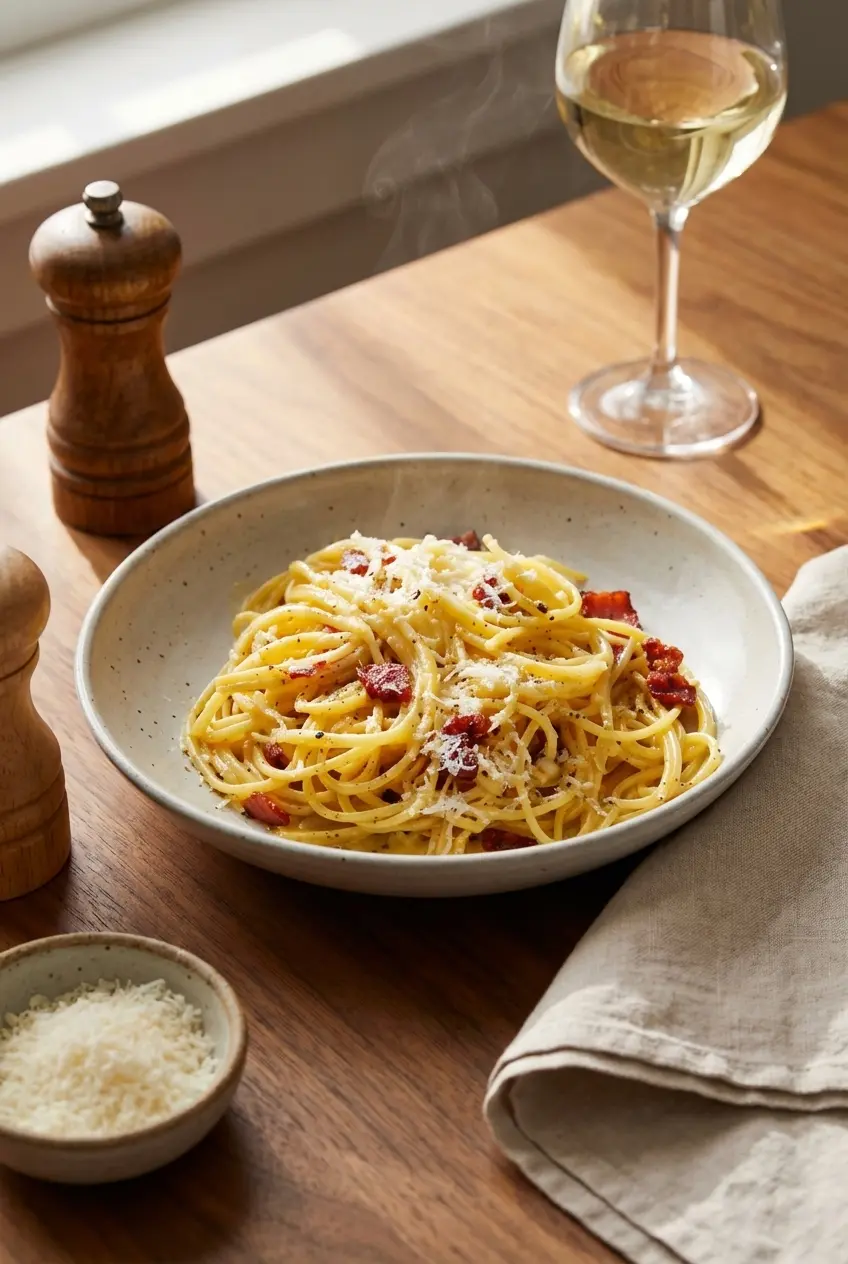
Carbonara is at its best the moment it is finished, when the sauce is still loose, glossy, and clinging to the pasta. I like serving it on warm plates with extra black pepper and another fine dusting of Pecorino Romano.
If you want to brighten the bowl, a handful of arugula folded in at the end adds peppery freshness, and peas bring a sweet pop of color. That same idea of balancing richness with greens works beautifully in a chilled spinach pasta salad, where fresh leaves keep the whole dish feeling lively and light.
Storage & Make-Ahead
Leftovers can be stored in an airtight container in the refrigerator for up to 2 days, though the texture is always best on day one. I do not recommend making the full dish ahead, because the emulsion is delicate and meant to be enjoyed fresh.
To reheat, place the pasta in a skillet over low heat with a small splash of water and stir gently until loosened and warmed through. Go slowly, because too much heat can break the sauce and turn the eggs grainy.
Authentic Pasta Carbonara

Equipment
- Large Pot
- Mixing Bowl
- Large Skillet
- Serving bowl
Ingredients
- Salt
- 2 large eggs and 2 large yolks, room temperature
- 1 ounce (about 1/3 packed cup) grated Parmesan
- Coarsely ground black pepper
- 1 tablespoon olive oil
- 3 1/2 ounces of slab guanciale, pancetta or bacon, sliced into pieces about 1/4 inch thick by 1/3 inch square
- 12 ounces spaghetti (about 3/4 box)
Instructions
Prepare the water and mixing bowl
- Set a large pot of water over high heat and season it lightly with no more than 1 tablespoon of salt. Simultaneously, fill a large serving bowl with hot water and let it sit to warm the bowl, which keeps the final sauce fluid and glossy.
- While the water heats, whisk the eggs and yolks with the grated Parmesan in a mixing bowl until the mixture looks thick, smooth, and pale golden. Add a small pinch of salt and plenty of coarsely ground black pepper.
Render the pork and temper the eggs
- Warm the olive oil in a large skillet over medium heat, then add the sliced guanciale, pancetta, or bacon. Cook until the fat turns translucent and glossy, with lightly crisp edges and chewy centers.
- Remove the skillet from the heat. Slowly whisk 1 to 2 tablespoons of the hot rendered fat into the egg and cheese mixture, little by little, to gently temper the eggs and start the emulsion.
Cook the pasta and build the base
- Drop the spaghetti into the boiling water and cook until just a bit firmer than al dente, as it will continue to soften slightly during the final toss.
- Right before the pasta is ready, warm the pork again in the skillet over low heat if it has cooled. Scoop out 1 cup of pasta water, drain the spaghetti, and transfer it directly to the skillet. Toss for about a minute so the noodles pick up the rendered fat and stay hot.
Finish the sauce
- Pour the hot water out of the serving bowl and dry it well. Add the pasta and pork mixture to the warmed bowl.
- Stir the tempered egg and cheese mixture into the pasta quickly, loosening with a little reserved pasta water as needed. Toss until the sauce turns silky, creamy, and shiny. Serve right away with extra cheese and a final shower of black pepper.
Notes
Conclusion
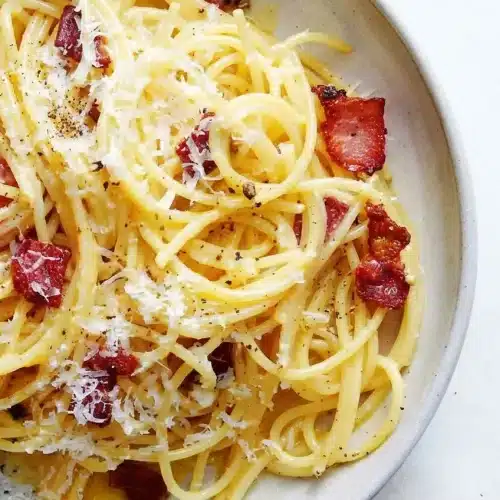
A great bowl of pasta carbonara should feel silky, savory, and deeply comforting, never heavy and never scrambled. That little fat-tempering step makes all the difference, giving you a more stable sauce and a much calmer cooking experience.
If carbonara has ever felt intimidating, this is the version to make tonight. Once you taste that glossy finish and bold Roman flavor, you will want to keep this method in your back pocket for every cold night and last-minute pasta craving.