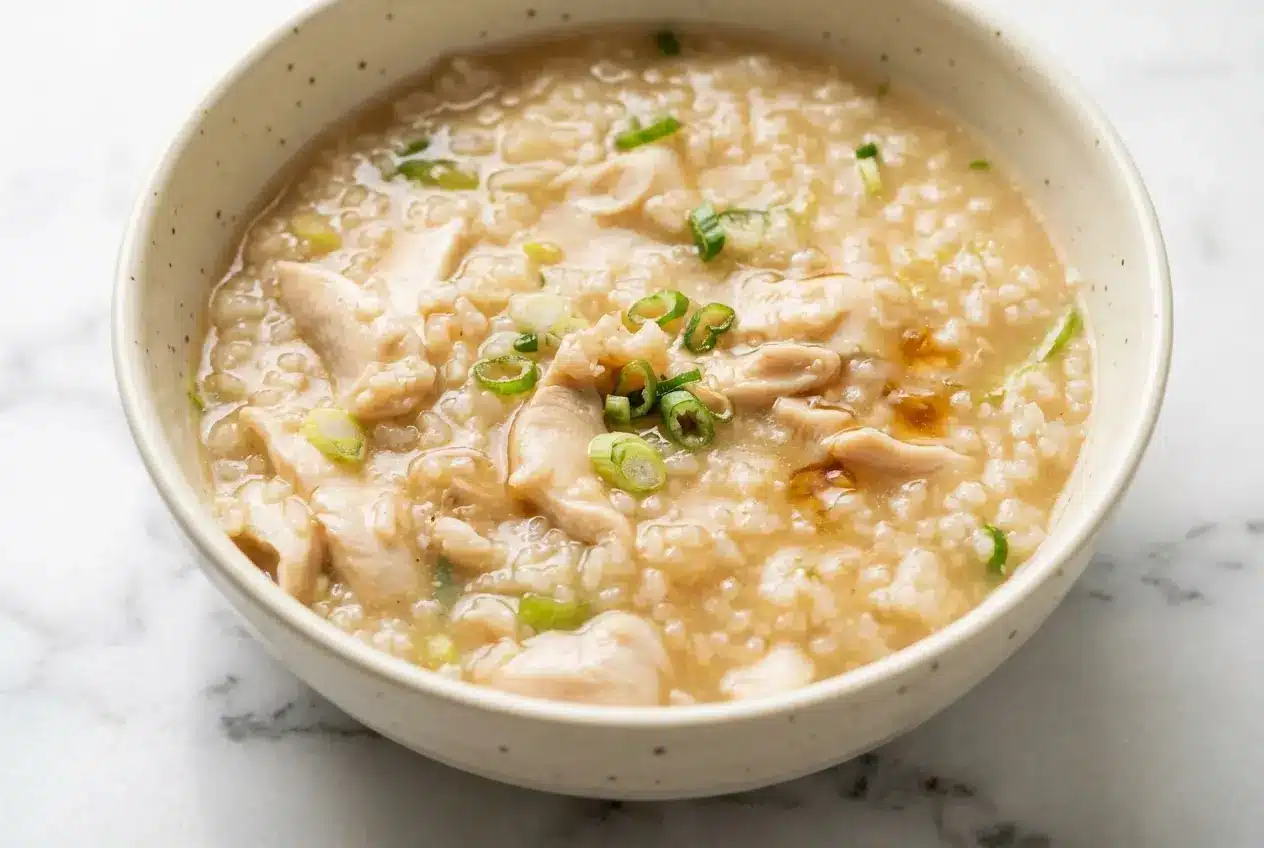
When I want something deeply cozy without babysitting a pot all afternoon, this chicken congee recipe is the bowl I turn to. It is the kind of comfort food that fits a quiet weekend breakfast, a gentle sick-day meal, or that nostalgic Dim sum craving when all you want is something warm, savory, and silky.
What makes this version special is the frozen rice trick and a good collagen-rich broth. In my kitchen, that combination turns Congee, or Jook, from a long simmered project into a surprisingly easy weeknight staple with rich flavor, tender chicken, and a creamy rice porridge texture that tastes like it took much longer.
Why You’ll Love This Recipe
Fast in a way that feels like kitchen magic: I love how freezing the rinsed rice overnight creates tiny fissures in each grain, so it softens and breaks down far faster than usual. That shortcut can shrink a traditional hour-long simmer into about 15 to 20 minutes in the Instant Pot.
Silky, rich texture: Short grain white rice naturally releases plenty of starch, and when it cooks in chicken broth, especially bone broth, the porridge turns lush and creamy. The finished bowl has that classic Jook consistency, soft, spoonable, and deeply comforting.
Tender chicken every time: The quick velveting marinade is one of those old-school techniques I never skip. A little Shaoxing wine and cornstarch keep the chicken juicy and delicate, so it slips into the congee instead of turning dry or stringy.
Ingredients and Substitutions
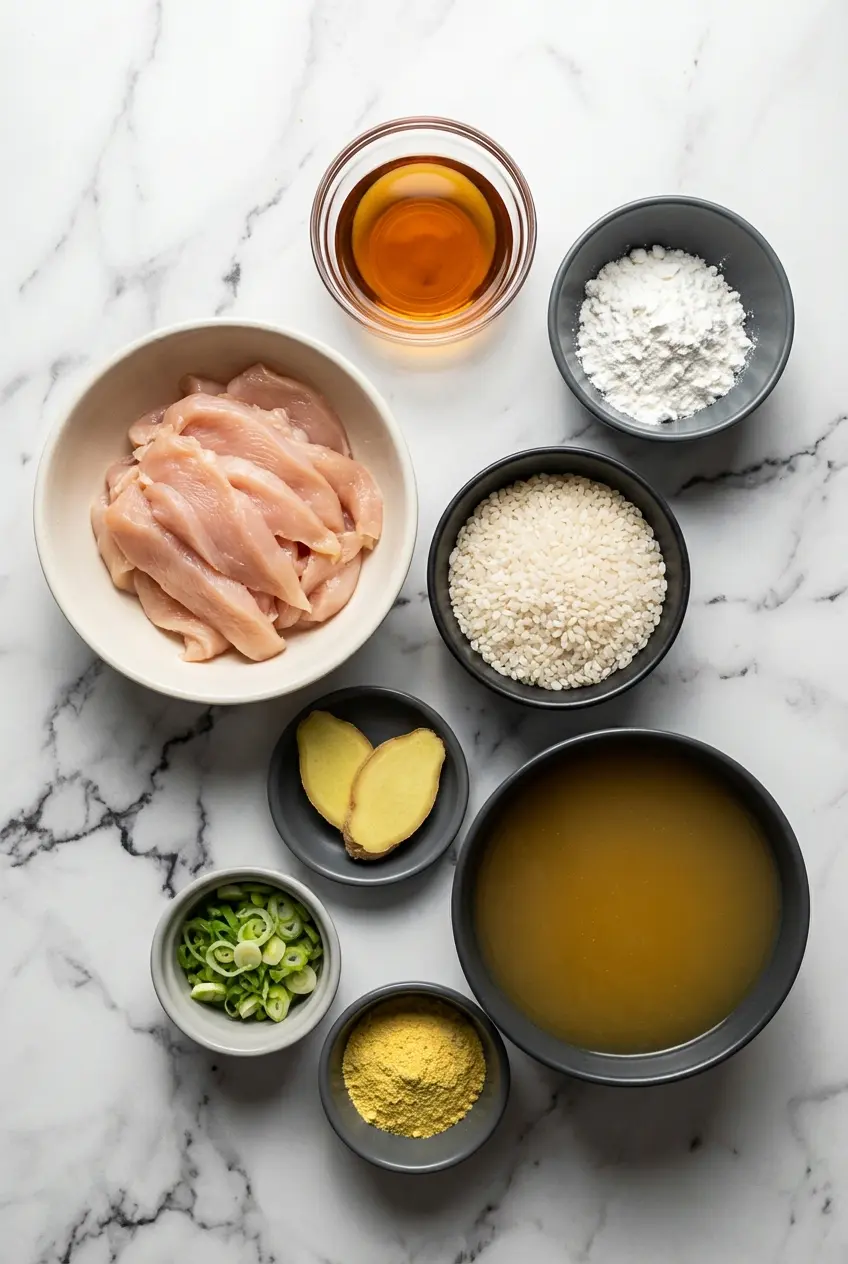
These ingredients are simple, but each one pulls its weight, from the fragrant ginger and scallions to the broth that gives the porridge its savory backbone.
Ingredients
Marinating:
- 8 oz chicken breast or tender, or thigh, thinly sliced
- 2 teaspoons Shaoxing wine
- 1/2 teaspoon salt
- 1 teaspoon cornstarch
Congee:
- 1/2 cup uncooked short grain white rice (or medium grain)
- 4 cups chicken broth
- 1 tablespoon Shaoxing wine (or dry sherry)
- 2 large slices of ginger
- 2 green onions, thinly sliced
- 1/4 teaspoon chicken bouillon, or to taste (or salt)
- 1 teaspoon toasted sesame oil
Ingredient Notes & Substitutions
Shaoxing wine: This brings that gently savory, slightly toasty flavor that gives Chinese porridge its familiar restaurant-style depth. If you do not keep it on hand, dry sherry is the best easy swap and works beautifully in both the marinade and the broth.
Chicken broth: A standard Chicken broth works well, but bone broth gives the congee a fuller body and a more luxurious finish. The extra gelatin makes the porridge feel creamier and more restorative, especially when served piping hot.
Short grain white rice: This is my first choice because it breaks down quickly and gives you that soft, pudding-like texture people expect from good Rice porridge. Medium grain is also fine, while Jasmine rice can work in a pinch if you do not mind a slightly looser finish.
Chicken bouillon: Just a small amount adds a savory, rounded depth that makes the broth taste fuller. If you prefer, you can season with salt instead and adjust at the end once the porridge has finished thickening.
Chicken cuts: Breast stays delicate when velveted properly, but thighs bring a little more richness. If I am cooking for someone who wants an especially soothing bowl, I often use tender or thigh because they stay forgiving even if the heat runs a touch high.
How to Make chicken congee recipe
Prepare the Rice and Set Up the Shortcut
- Place the uncooked rice in a medium bowl and cover it with water. Rub the grains gently with your fingers, drain, and repeat 1 to 2 more times until the water looks less cloudy, then drain very well so the rice is not waterlogged.
- Toss the drained rice with 1 teaspoon of oil, then place it in the freezer overnight. That freezing step is the real trick here, because the moisture inside the grains expands and creates tiny cracks, helping the rice collapse into a creamy porridge much faster once it hits hot liquid.
Cook the Congee Base
- For the Instant Pot method, add the frozen rice, 4 cups stock, 1 tablespoon Shaoxing wine, and the ginger slices to the pot. Cook on high pressure for 15 minutes, or if you are using a stovetop pressure cooker, bring it to pressure over medium heat, then cook on low heat for 15 minutes.
- Let the pressure come down naturally for at least 10 minutes before doing a quick release. This part matters, because starchy congee can sputter and clog the valve if you force it open too soon.
- For the stovetop method, combine the frozen rice, ginger, stock, and 4 cups of water in a large pot. Bring everything to a gentle simmer over medium-high heat, then lower the heat, cover the pot with a finger-wide gap, and simmer for 30 minutes, stirring frequently toward the end as the mixture turns thick, glossy, and sticky around the edges.
Velvet the Chicken and Finish the Pot
- While the congee cooks, place the sliced chicken in a medium bowl with 2 teaspoons Shaoxing wine, 1/2 teaspoon salt, and 1 teaspoon cornstarch. Mix until every piece is lightly coated, then let it sit so the marinade can form that protective velvety layer.
- Once the congee is fully cooked, set the Instant Pot to sauté or place the stovetop pot over medium heat. Add the marinated chicken, green onions, and 1/4 teaspoon chicken bouillon, then stir constantly so the slices separate cleanly and cook evenly.
- Cook for about 2 minutes, just until the chicken turns white and looks tender rather than tight. The broth should smell fragrant from the Ginger and Scallions, and the porridge should look silky and softly bubbling.
Season and Serve
Turn off the heat and stir in the toasted sesame oil. Taste the congee, add salt if needed, and ladle it into small bowls while it is steaming hot and at its creamiest.
Secrets for a Perfect Bowl
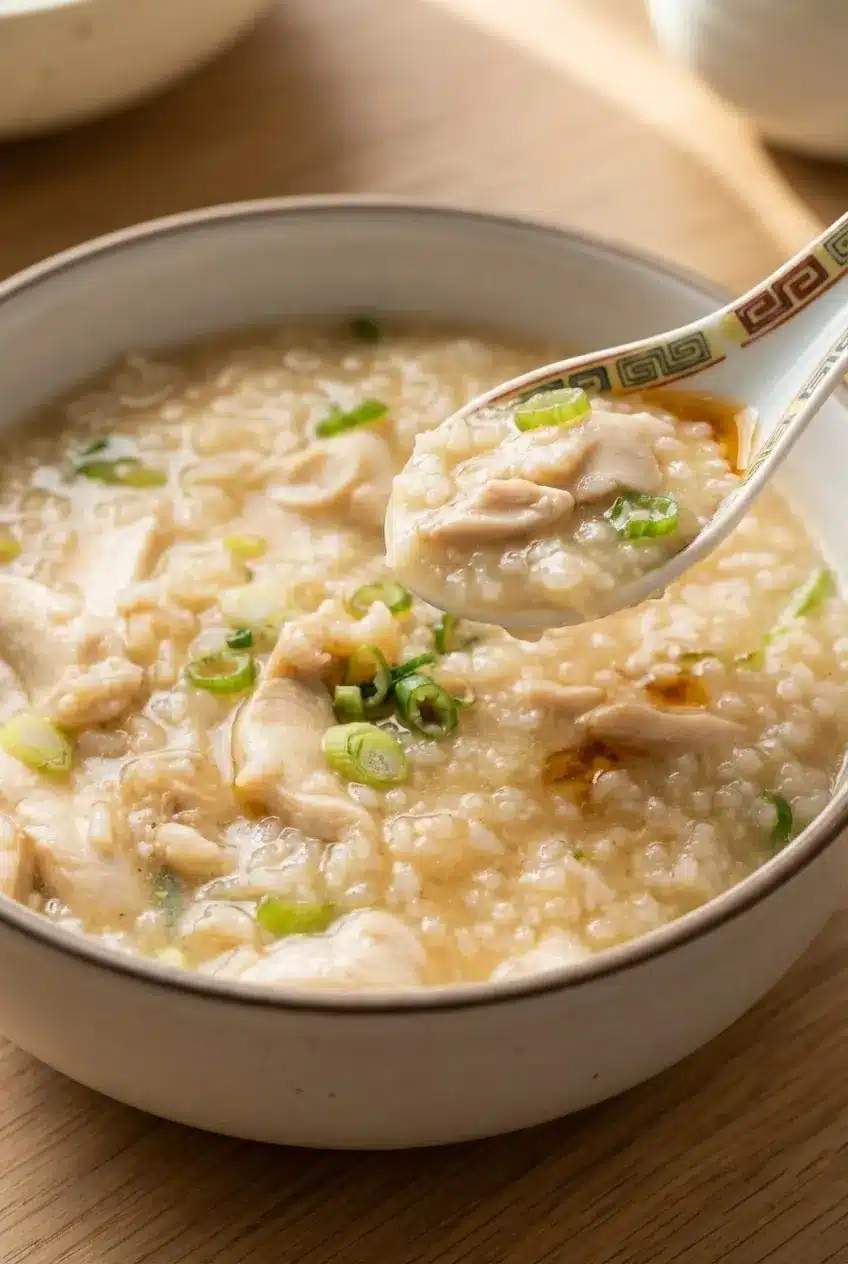
The rice-to-liquid ratio makes all the difference. If you like a thick, hearty porridge that holds a spoon upright, use a 1:8 ratio of rice to liquid, but if you want a looser, more sippable bowl, 1:10 gives you that lighter, brothy texture.
On the stovetop, the finger-wide gap under the lid is not optional. Congee gets foamy and starchy as it simmers, and that little opening lets steam escape so the pot does not surge up and spill all over the stove.
For the Instant Pot, the 10-minute natural release is the safest and cleanest approach. If you rush it, the thick starchy liquid can blast upward and make a mess of the steam valve before you ever get dinner into a bowl.
The Science of Velveting Lean Chicken
The Velveting technique is a classic Chinese method used in stir-fries, soups, and plenty of Dim sum dishes. Lean meat is coated with a little liquid and cornstarch before cooking, which helps it stay supple instead of tightening up the moment it meets heat.
In a pot of hot congee, chicken breast can go from tender to stringy in a hurry. The cornstarch forms a light gelatinous film around each slice, helping trap moisture so the chicken cooks gently in the porridge rather than turning dry and chalky.
I use this same idea in other poultry dishes too, because it is one of the easiest ways to improve texture without extra effort. The same tenderizing logic works beautifully in an Asian-inspired teriyaki chicken recipe, especially when you want lean cuts to stay juicy in a hot pan.
Choosing the Right Rice for Porridge
Short grain white rice is the gold standard for creamy Congee because it releases starch quickly and almost melts into the broth. Jasmine rice can also work well and gives a lovely aroma, though the final bowl is usually a touch lighter and less pudding-like.
Long-grain white rice and brown rice are a different story. They tend to stay more separate and firm, which is great in dishes where distinct grains are the goal, such as a baked chicken rice casserole, but less ideal when you want that classic spoon-coating porridge texture.
If you do use brown rice, expect to adjust both the liquid and the cooking time upward. It can be tasty, but it will not break down as willingly as short grain or Jasmine rice, so the result will be heartier and less silky.
Pro Tips & Troubleshooting
Pro Tips
- Rinse the rice every time. Washing away excess surface starch keeps the porridge creamy instead of gluey or pasty.
- Whisk the congee vigorously for 1 to 2 minutes right at the end if you want an extra smooth finish. That little bit of force helps crush the softened grains into the broth.
- Use bone broth when you can. It adds savory depth and gives the bowl a richer mouthfeel that plain broth cannot quite match.
- Keep the stovetop heat low once the pot reaches a simmer. Slow bubbling gives the rice time to open up and turn silky without scorching.
Common Mistakes to Avoid
- Do not cook the chicken with the rice for the full 30 to 45 minutes. That nearly always leaves you with dry, rubbery meat instead of tender slices.
- Do not walk away from stovetop congee during the last 15 minutes. As it thickens, it needs frequent stirring or the bottom will catch and burn.
- Do not skip the natural pressure release. A quick release immediately after pressure cooking can send starchy liquid into the valve.
- Do not use long-grain rice without adjusting expectations. It will not give the same creamy, unified texture this recipe is built around.
Serving & Storage
Serving Ideas
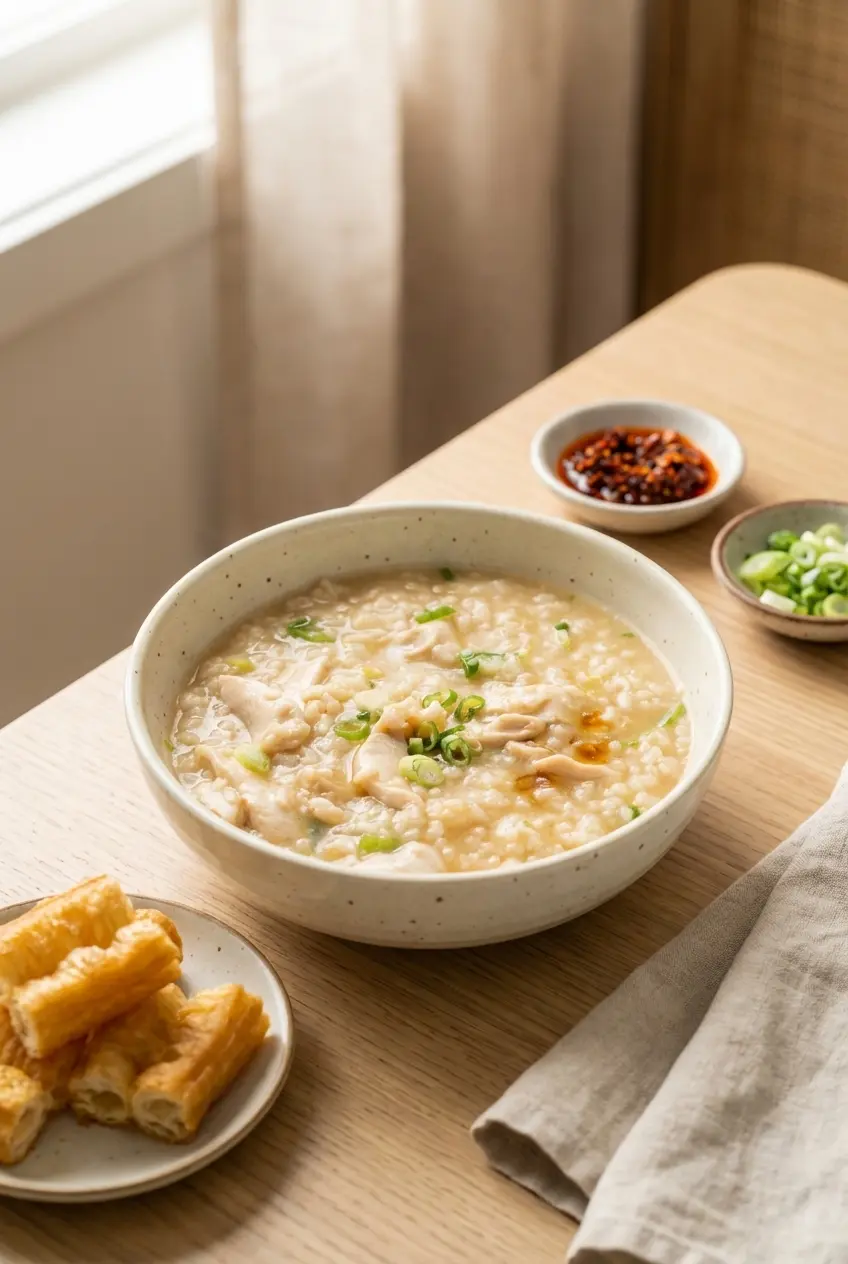
Chicken congee is wonderful on its own, but the toppings are where the bowl really wakes up. I love finishing it with chili crisp, a drizzle of extra Sesame oil, crispy fried shallots, fried garlic, cilantro, or thinly sliced Scallions for contrast against the soft porridge.
If you want the full cozy spread, serve it with youtiao, salted duck eggs, pork floss, or a soft-boiled soy-marinated egg. For a variation at home, I sometimes stir in a beaten egg at the very end so it forms delicate ribbons, almost like an Egg Drop Congee.
Storage & Make-Ahead
Leftover congee will thicken dramatically in the fridge, often turning into a soft, jelly-like block. That is completely normal, because the rice starch and any gelatin from the broth firm up as they cool.
To reheat, scoop the cold congee into a pot, add a splash of water or Chicken broth, and warm it over low heat while stirring steadily. After a few minutes, it loosens back into that smooth, silky texture you started with.
If you enjoy keeping a few gentle comfort meals in rotation, this porridge fits right beside soothing bowls like chicken pastina soup. Both are easy to reheat, easy on the stomach, and especially welcome on chilly days when you want something simple and nurturing.

Easy Chicken Congee Recipe

Equipment
- Instant Pot or Large Pot
- Mixing Bowls
Ingredients
Marinating:
- 8 oz chicken breast or tender, or thigh, thinly sliced
- 2 teaspoons Shaoxing wine
- 1/2 teaspoon salt
- 1 teaspoon cornstarch
Congee:
- 1/2 cup uncooked short grain white rice (or medium grain)
- 4 cups chicken broth
- 1 tablespoon Shaoxing wine (or dry sherry)
- 2 large slices of ginger
- 2 green onions, thinly sliced
- 1/4 teaspoon chicken bouillon, or to taste (or salt)
- 1 teaspoon toasted sesame oil
Instructions
Prepare the Rice and Set Up the Shortcut
- Place the uncooked rice in a medium bowl and cover it with water. Rub the grains gently with your fingers, drain, and repeat 1 to 2 more times until the water looks less cloudy, then drain very well so the rice is not waterlogged.
- Toss the drained rice with 1 teaspoon of oil, then place it in the freezer overnight. That freezing step is the real trick here, because the moisture inside the grains expands and creates tiny cracks, helping the rice collapse into a creamy porridge much faster once it hits hot liquid.
Cook the Congee Base
- For the Instant Pot method, add the frozen rice, 4 cups stock, 1 tablespoon Shaoxing wine, and the ginger slices to the pot. Cook on high pressure for 15 minutes, or if you are using a stovetop pressure cooker, bring it to pressure over medium heat, then cook on low heat for 15 minutes.
- Let the pressure come down naturally for at least 10 minutes before doing a quick release. This part matters, because starchy congee can sputter and clog the valve if you force it open too soon.
- For the stovetop method, combine the frozen rice, ginger, stock, and 4 cups of water in a large pot. Bring everything to a gentle simmer over medium-high heat, then lower the heat, cover the pot with a finger-wide gap, and simmer for 30 minutes, stirring frequently toward the end as the mixture turns thick, glossy, and sticky around the edges.
Velvet the Chicken and Finish the Pot
- While the congee cooks, place the sliced chicken in a medium bowl with 2 teaspoons Shaoxing wine, 1/2 teaspoon salt, and 1 teaspoon cornstarch. Mix until every piece is lightly coated, then let it sit so the marinade can form that protective velvety layer.
- Once the congee is fully cooked, set the Instant Pot to sauté or place the stovetop pot over medium heat. Add the marinated chicken, green onions, and 1/4 teaspoon chicken bouillon, then stir constantly so the slices separate cleanly and cook evenly.
- Cook for about 2 minutes, just until the chicken turns white and looks tender rather than tight. The broth should smell fragrant from the ginger and scallions, and the porridge should look silky and softly bubbling.
Season and Serve
- Turn off the heat and stir in the toasted sesame oil. Taste the congee, add salt if needed, and ladle it into small bowls while it is steaming hot and at its creamiest.
Notes
Conclusion
This is the kind of chicken congee I come back to again and again, because it delivers all the comfort of a long-simmered classic with a much faster path to the table. The frozen rice hack and a rich broth make it creamy, savory, and wonderfully reliable.
Once you try it, you can make it your own with toppings, eggs, or different cuts of chicken. It is a foolproof bowl of comfort food that feels just right whether you need a cozy breakfast, a light dinner, or a quiet reset meal.