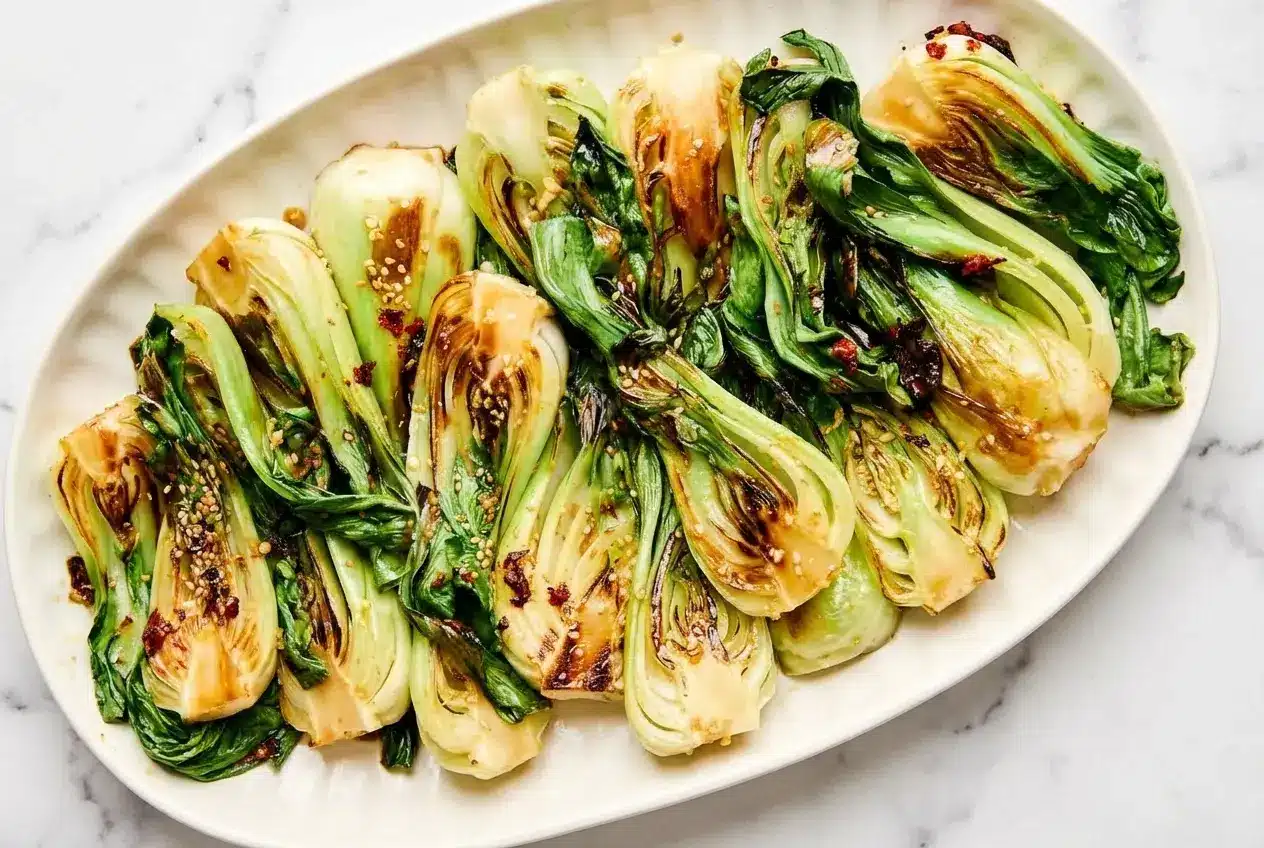
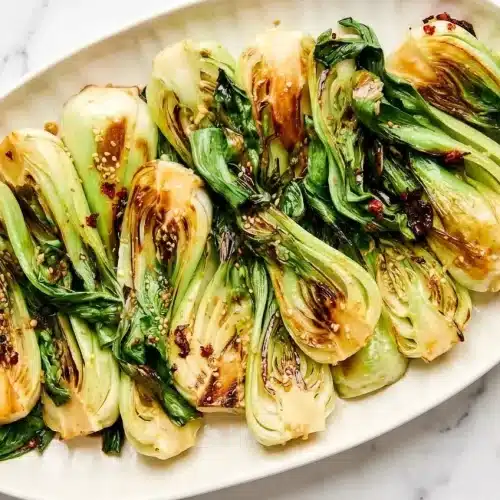
When I want restaurant-style greens on the table fast, this Sauteed Bok Choy Recipe is the one I trust. It gives you glossy, garlicky bok choy with browned edges and crisp-tender stems, all in about 10 minutes.
If you have ever ended up with watery, limp greens, this method fixes that. I use a simple sear-then-steam approach that keeps the bok choy sweet, savory, and never soggy, even on a busy weeknight.
Why You’ll Love This Recipe
Fast but polished: This is one of those rare vegetable sides that feels dinner-party worthy while still being easy enough for a Tuesday night. In my kitchen, a hot wok or nonstick skillet and a few pantry staples are all it takes.
The secret twist: Right before the bok choy leaves the pan, I add a splash of Chinese black vinegar and a dash of ground white pepper. That last-second finish wakes everything up and makes the garlic, soy sauce, and toasted sesame oil taste more layered and balanced.
Better flavor balance: The acetic acid in Chinkiang vinegar cuts through the richness of the oil and softens any lingering bitterness that can show up in mustard greens. White pepper brings a gentle, earthy heat with a slightly floral edge, which I find far more authentic here than black pepper.
Big umami, little effort: Between the shoyu, garlic, sesame oil, and a pinch of MSG, every bite tastes deeply savory without masking the natural sweetness of baby bok choy. It is a vegan recipe that still feels rich and satisfying.
Ingredients and Substitutions
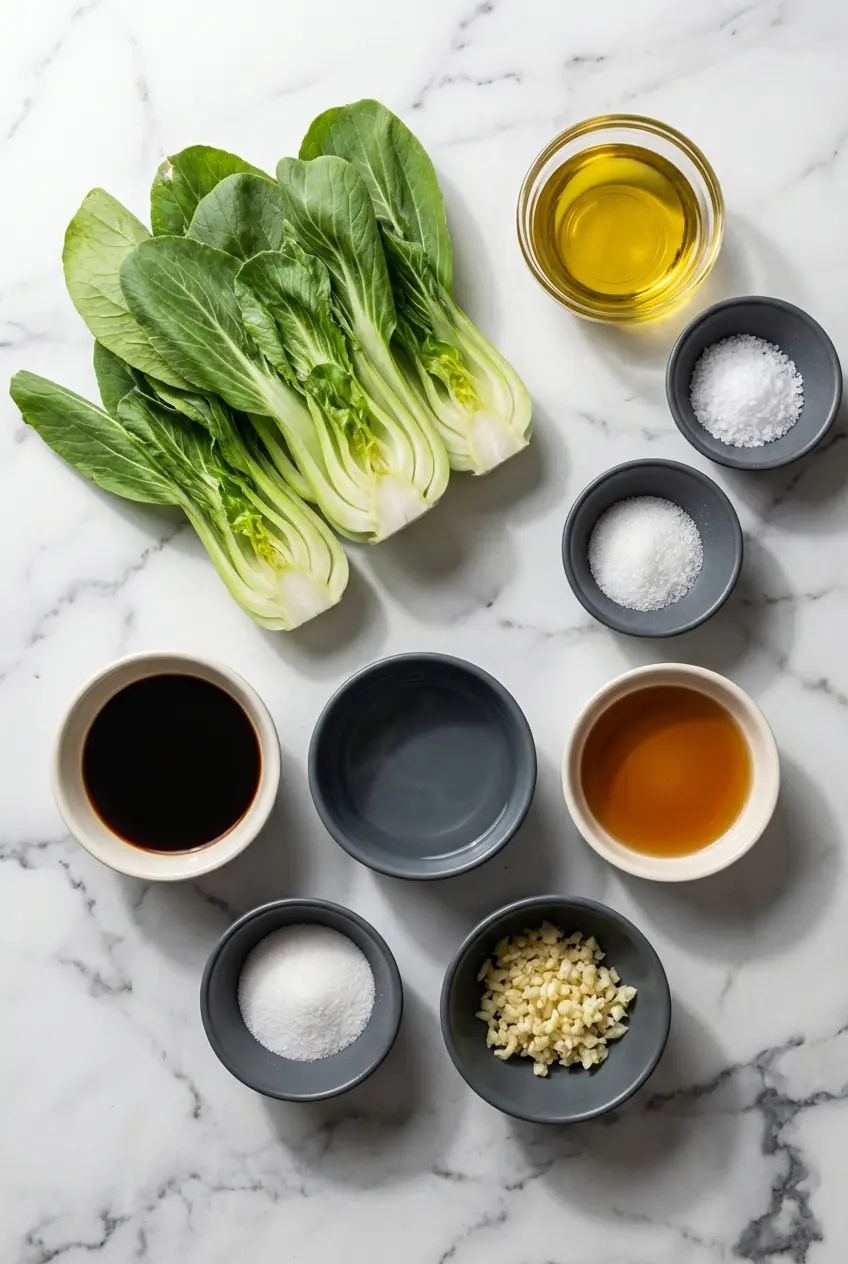
This ingredient list is short, smart, and built for strong savory flavor. Each item has a job, from the sear on the bok choy to the glossy garlic sauce that clings to every leaf.
Ingredients
- 16 ounces baby bok choy, halved lengthwise, washed and dried
- 2 tablespoons neutral oil
- 1 pinch kosher salt
- 1 pinch MSG
- 2 tablespoons shoyu or soy sauce
- 1 tablespoon water
- 2 teaspoons toasted sesame oil
- 1 teaspoon granulated sugar
- 4 cloves garlic, finely chopped
- 1 splash Chinese black vinegar
- 1 dash ground white pepper
Ingredient Notes & Substitutions
Baby bok choy: Smaller heads are ideal because they cook quickly and stay tender-crisp. If you spot Shanghai bok choy or Shanghai Jr., expect an even sweeter, more delicate bite.
Shoyu or soy sauce: Shoyu gives a slightly rounder, gentler flavor, but standard soy sauce works beautifully. If you need a gluten-free side dish, tamari is the easiest swap and still delivers plenty of umami.
MSG: A small pinch makes the savory notes taste fuller and more restaurant-like without making the dish taste artificial. If you prefer not to use it, simply leave it out, or add a tiny extra splash of soy sauce for a different kind of depth.
Toasted sesame oil: This goes into the sauce for aroma, not high-heat frying. Its nutty finish is part of what makes the black vinegar twist shine.
Chinese black vinegar: This finishing splash is what sets the dish apart from a basic stir-fry. It adds mellow acidity and a little smoky tang that keeps the greens lively rather than heavy.
White pepper: Ground white pepper brings a softer, earthier warmth than black pepper. It slips into the garlic and sesame flavors instead of sitting on top of them.
Easy flavor variations: If you like a brighter glaze, a splash of rice vinegar and a teaspoon of mirin can lean the sauce slightly sweeter and tangier. Grated ginger, red pepper flakes, or even a spoonful of vegetarian oyster sauce can also deepen the flavor without changing the basic method.
How to Make Sauteed Bok Choy Recipe
Prep the Bok Choy
- Slice the baby bok choy in half lengthwise, keeping the core intact so the leaves stay neatly together. Rinse between the layers if you see any grit hiding near the base, then pat everything completely dry so the oil does not splatter and the cut sides can brown properly.
- Set out a small bowl while you prep, because this recipe moves quickly once the pan is hot. Having the bok choy dry and ready is the first step toward that tender-crisp texture.
Build the Garlic Sauce
In a small bowl, whisk together the shoyu, water, toasted sesame oil, sugar, and finely chopped garlic until the sugar dissolves. The mixture should smell savory and garlicky, with a nutty sesame aroma already coming through.
Sear and Finish
- Heat the neutral oil in a medium nonstick skillet or wok over medium-high heat. Lay the bok choy cut-side down in the pan, sprinkle with the kosher salt and MSG, and leave it completely undisturbed for 2 to 3 minutes, until the cut faces are deeply golden brown and you hear a steady, confident sizzle.
- Lower the heat to medium-low, then pour in the prepared sauce. Let it bubble for 1 to 2 minutes, turning the bok choy so the stems and leaves get coated, until the stems are tender and the sauce lightly thickens into a shiny glaze.
- Just before you take the pan off the heat, add a splash of Chinese black vinegar and a dash of ground white pepper. Toss once more so the bok choy picks up that sharp, fragrant finish, then serve right away with green onions, sesame seeds, or a little chili crisp if you like extra heat.
Secrets for Perfect Caramelization
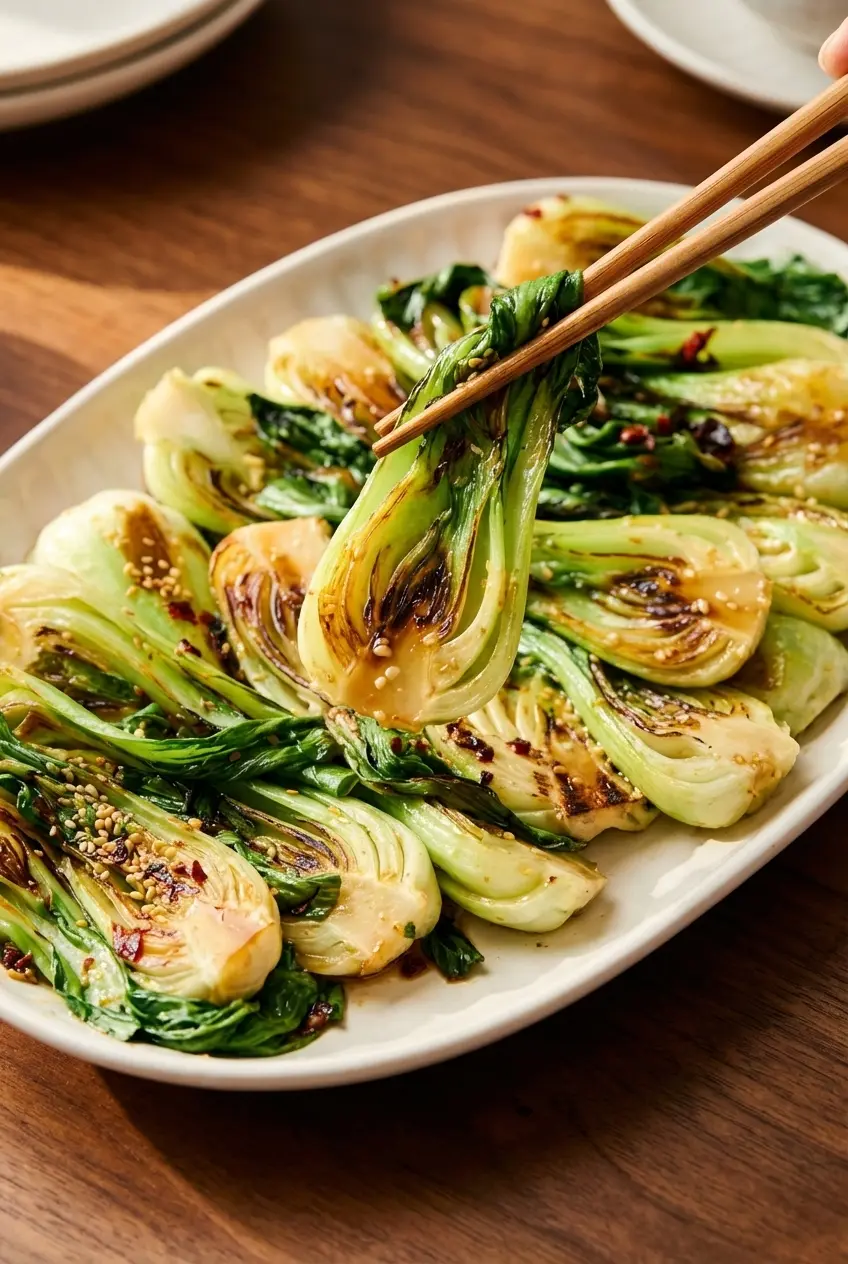
The magic here is the sear-then-steam method. First, the cut side of the bok choy gets direct contact with the hot pan, which creates deep browning and sweet, roasty flavor, then the sauce finishes the stems gently so they soften without falling apart.
Dry surfaces matter more than people think. The browning you want depends on heat and contact, and the science of the Maillard reaction helps explain why wet bok choy turns steamy instead of beautifully caramelized.
The biggest rule is simple, do not touch the bok choy during the first 2 to 3 minutes. If you keep moving it around, you interrupt the sear and lose that golden crust that makes this dish taste like it came from a great Chinese restaurant.
For the right tender-crisp finish, the stems should give easily when pierced with a fork but still keep a little snap. The leaves should be vividly green and softly wilted, not dull, limp, or brown around the edges.
Choosing the Right Bok Choy
Standard baby bok choy usually has bright white stems and darker, slightly crinkled leaves. It has a pleasant mustard greens edge, which means it tastes fresh and vegetal with a little more bite.
Shanghai bok choy, and the smaller Shanghai Jr., look different right away. The stems are pale green, the leaves are smooth and spoon-shaped, and the overall flavor is sweeter and more tender once cooked.
I like either type for this Sauteed Bok Choy Recipe, but if you want the softest, sweetest result, Shanghai bok choy is the prize. Whichever variety you buy, look for firm stalks, fresh leaves, and heads without bruising, yellow spots, or slimy patches.
Pro Tips & Troubleshooting
Expert Tips
- To clean the root base without tearing the leaves, submerge the bok choy in a bowl of cold water and gently separate the leaves with your fingers to loosen any trapped grit. A salad spinner makes drying much easier and helps the greens sear instead of steam.
- Make sure the bok choy is completely dry before it hits the hot pan. That is the best way to prevent dangerous oil splatter and get proper caramelization.
- If you are cooking large, mature bok choy rather than baby bok choy, separate the stems from the leaves first. Cook the chopped stems at the start, then add the leaves at the very end so they just wilt.
Common Mistakes to Avoid
- Overcooking is the fastest way to ruin the texture. Once the stems go mushy and the leaves turn dark, wilted brown, the dish loses its clean, fresh character.
- Stirring too soon during the initial sear stops the browning process in its tracks. Leave the bok choy cut-side down and let the pan do its work.
- Skipping a thorough wash can leave sandy grit tucked into the base. A gentle soak and swish is worth the extra minute.
Serving and Storage
Serving Ideas
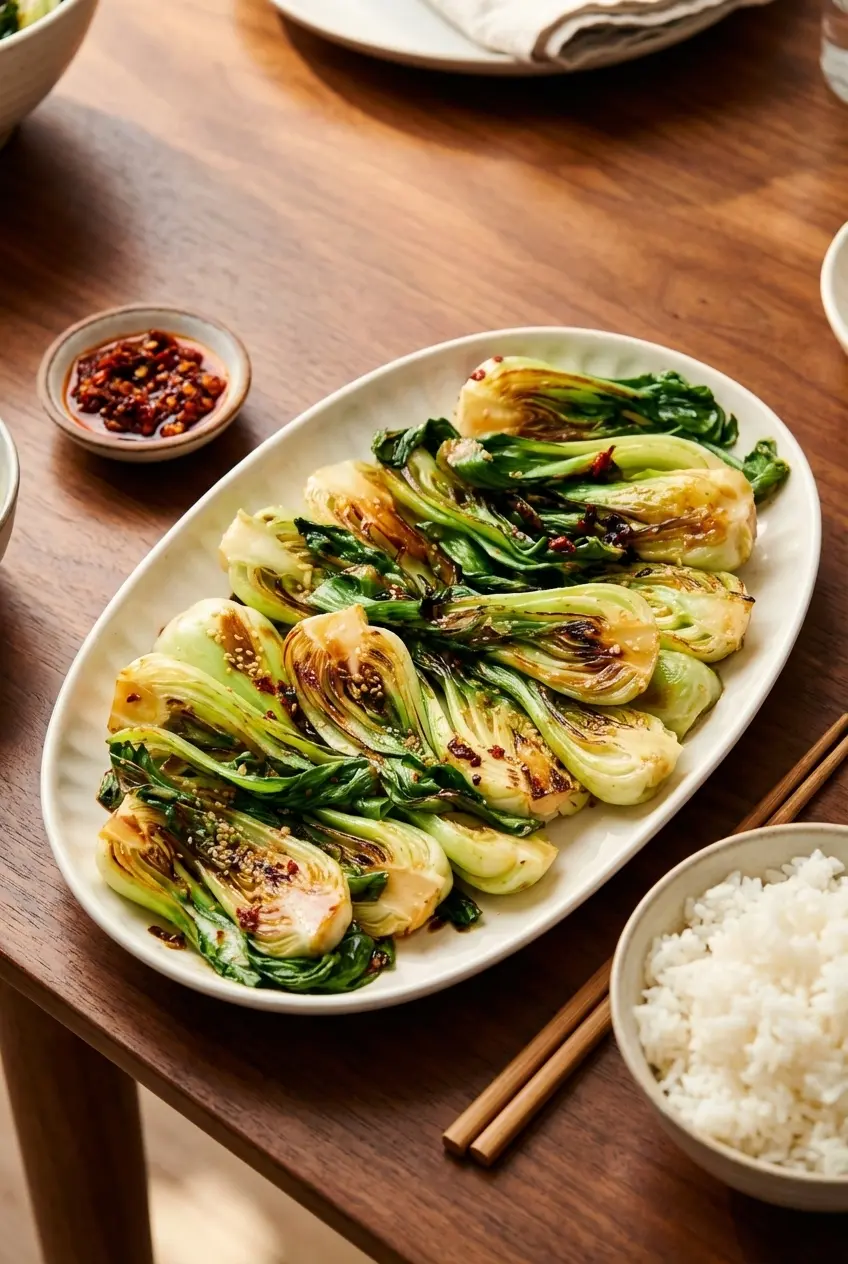
This bok choy is especially good next to teriyaki salmon, shoyu chicken, or crispy baked tofu. For a lighter spread, I also like it with something bright and herbaceous, such as Vietnamese chicken salad, because the fresh crunch balances the warm garlic and sesame notes beautifully.
For a quick meal, pile the bok choy over steamed jasmine rice or quinoa and top it with a sunny-side-up egg. A shower of toasted sesame seeds and a spoonful of chili crisp turn it into the kind of simple dinner that disappears fast.
If you are building out the meal, a cold citrusy drink works especially well with the savory glaze. A glass of yuzu lemonade brings enough brightness to cut through the garlicky richness without overpowering the greens.
Storage and Make-Ahead
This dish is at its best straight from the pan, when the stems are still crisp around the edges and the leaves are silky but not limp. If you do have leftovers, store them in an airtight container in the fridge for up to 3 days.
For reheating, I prefer a skillet over medium heat rather than the microwave. A quick warm-up in the pan helps preserve texture and keeps the bok choy from turning overly soggy.
Fast Sauteed Bok Choy Recipe

Equipment
- Nonstick skillet or wok
- Small mixing bowl
Ingredients
- 16 ounces baby bok choy, halved lengthwise, washed and dried
- 2 tablespoons neutral oil
- 1 pinch kosher salt
- 1 pinch MSG
- 2 tablespoons shoyu or soy sauce
- 1 tablespoon water
- 2 teaspoons toasted sesame oil
- 1 teaspoon granulated sugar
- 4 cloves garlic, finely chopped
Instructions
Prep the Bok Choy
- Slice the baby bok choy in half lengthwise, keeping the core intact so the leaves stay neatly together. Rinse between the layers if you see any grit hiding near the base, then pat everything completely dry so the oil does not splatter and the cut sides can brown properly.
- Set out a small bowl while you prep, because this recipe moves quickly once the pan is hot. Having the bok choy dry and ready is the first step toward that tender-crisp texture.
Build the Garlic Sauce
- In a small bowl, whisk together the shoyu, water, toasted sesame oil, sugar, and finely chopped garlic until the sugar dissolves. The mixture should smell savory and garlicky, with a nutty sesame aroma already coming through.
Sear and Finish
- Heat the neutral oil in a medium nonstick skillet or wok over medium-high heat. Lay the bok choy cut-side down in the pan, sprinkle with the kosher salt and MSG, and leave it completely undisturbed for 2 to 3 minutes, until the cut faces are deeply golden brown and you hear a steady, confident sizzle.
- Lower the heat to medium-low, then pour in the prepared sauce. Let it bubble for 1 to 2 minutes, turning the bok choy so the stems and leaves get coated, until the stems are tender and the sauce lightly thickens into a shiny glaze.
- Just before you take the pan off the heat, toss once more so the bok choy picks up the fragrant finish and is fully coated, then serve right away with green onions, sesame seeds, or a little chili crisp if you like extra heat.
Notes
Conclusion
This is the kind of fast vegetable side that earns a permanent spot in the dinner rotation. The sear gives you real caramelized flavor, and that final splash of black vinegar with white pepper takes it from simple to restaurant-quality.
If you give it a try, I hope you make it your own with a few small variations and let the pan work its magic. And if you are putting together a full menu, something like matcha brownies makes a fun finish after the savory greens, so leave a comment and share how your meal turned out.