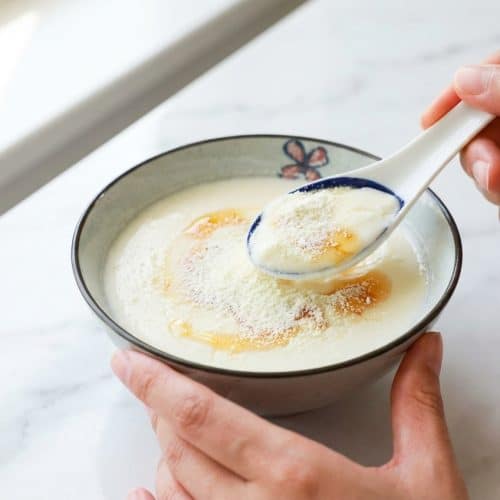
Silky Ginger Milk Pudding

Experience a traditional Cantonese dessert miracle. This silky, spoon-trembling custard forms perfectly using only the natural enzymes in fresh ginger juice and warm milk.
Equipment
- Microplane or fine grater
- Small saucepan
- Instant-read thermometer
- Fine mesh strainer or clean towel
Ingredients
Ginger milk pudding:
- 2/3 cup whole milk
- 1 tablespoon granulated sugar
- 1 tablespoon ginger juice
Osmanthus honey (optional):
- 1 tablespoon honey
- 3/4 teaspoon dry osmanthus tea
Instructions
Extract the ginger juice
- Peel the ginger and grate it as finely as possible using a microplane to create a wet pulp.
- Squeeze the pulp through a fine mesh strainer or towel into a bowl until you have a pool of juice with white starchy sediment at the bottom.
Prepare the bowl and warm the milk
- Place 1 tablespoon of the fresh ginger juice into a small serving bowl, making sure to include the sediment.
- Combine the milk and sugar in a saucepan over medium heat, stirring until the sugar is fully dissolved.
- Heat the milk until it reaches exactly 155-158°F (68-70°C), then remove from the heat immediately.
The high pour and the quiet set
- Give the ginger juice a quick stir to lift the starch, then pour the hot milk into the bowl from about 5 inches above the surface.
- Cover the bowl with a plate and let it rest undisturbed for 5 minutes while the curd forms.
Osmanthus honey and serving
- Microwave the honey and dry osmanthus tea for 5 to 10 seconds until it bubbles and becomes fragrant.
- Uncover the pudding, spoon the warm osmanthus honey over the top, and serve immediately while warm.
Notes
Temperature Control: Use an instant-read thermometer to ensure the milk is between 155-158°F. If the milk is too hot, it will destroy the ginger enzyme and the pudding will not set.
Ginger Selection: Only use mature ginger with thick, fibrous skin. Young ginger lacks the zingibain concentration needed for successful coagulation.
Resting Period: Do not move, nudge, or peek under the plate during the 5-minute rest. Any vibration can break the fragile bonds of the forming custard.
Nutrition information is estimated based on common ingredients and serving sizes and may vary.
Nutrition
Calories: 185kcalCarbohydrates: 23gProtein: 6gFat: 5gSaturated Fat: 3gCholesterol: 20mgSodium: 82mgPotassium: 260mgFiber: 0.5gSugar: 21gVitamin A: 395IUVitamin C: 2mgCalcium: 210mgIron: 0.3mg
Tried this recipe?Let us know how it was!