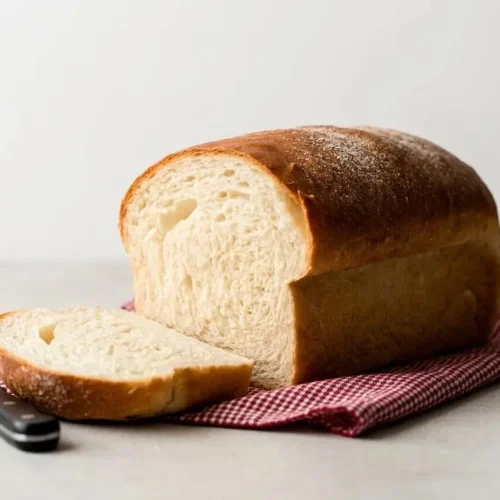
Sandwich Bread Recipe

This easy recipe yields a single loaf of incredibly soft, fluffy sandwich bread with a golden crust. It slices neatly for everyday sandwiches and makes perfect toast.
Equipment
- Stand mixer
- Dough hook
- 9×5-inch Loaf Pan
- Rolling Pin
Ingredients
- 1 cup water, warmed to about 110°F (43°C) (240ml)
- 1/4 cup whole milk, warmed to about 110°F (43°C) (60ml)
- 2 1/4 teaspoons Platinum Yeast from Red Star instant yeast (1 standard packet) (7g)
- 2 Tablespoons granulated sugar (25g)
- 4 Tablespoons unsalted butter, softened to room temperature (1/4 cup; 56g)
- 1 1/2 teaspoons salt (9g)
- 3 1/3 cups all-purpose flour or bread flour (spooned & leveled), plus more as needed (about 420–430g)
Instructions
- Whisk the warm water, warm milk, instant yeast, and sugar together in the bowl of a stand mixer fitted with the dough hook, then cover and let the mixture stand for 5 minutes. The surface should look a little creamy and active by the end of the rest.
- Add the softened butter, salt, and 1 cup flour, mix on low speed for 30 seconds, scrape the bowl, add another cup of flour, then mix on medium until mostly combined before adding the remaining flour and mixing for about 2 minutes. The dough should begin to gather and pull away from the sides of the bowl, even if a few butter pieces are still visible at first.
- Knead the dough in the mixer for 5–8 minutes more, or turn it out onto a lightly floured surface and knead by hand for 5–8 minutes, adding flour 1 teaspoon at a time only if the dough becomes too sticky. When it is ready, the dough should feel smooth, elastic, and slightly tacky, and a small piece should stretch thin enough to let light through without tearing right away.
- Lightly grease a large bowl with olive oil or nonstick spray, place the dough inside, turn it so all sides are coated, then cover and let it rise in a warm spot for 1-2 hours. The dough should expand until it has doubled in size and feel airy when you press it lightly.
- Grease a 9×5-inch loaf pan. Having the pan ready now makes shaping easier once the first rise is complete.
- Deflate the risen dough, lightly flour the work surface, hands, and rolling pin, then roll the dough into an 8×15-inch rectangle and roll it up into an 8-inch log before placing it in the prepared pan. A snug roll helps the finished loaf hold a neat sandwich shape instead of spreading wide.
- Cover the shaped loaf with aluminum foil, plastic wrap, or a clean kitchen towel and let it rise for about 1 hour. It should crest about 1 inch above the top edge of the pan before it goes into the oven.
- Move the oven rack to a lower position and preheat the oven to 350°F (177°C). Baking the loaf lower in the oven helps the top brown more evenly without getting too dark too soon.
- Bake the loaf for 32-36 minutes, tenting it loosely with aluminum foil if the top is browning too fast. The crust should turn golden brown, and the loaf should sound hollow when tapped on the bottom or read 195–200°F (90–93°C) in the center if you check with an instant-read thermometer.
- Let the bread cool in the pan for a few minutes on a wire rack, then remove it from the pan and cool before slicing. If you cut it while still hot, the crumb can turn gummy instead of light and fluffy.
Notes
Texture Tip: For a lighter loaf, resist adding too much extra flour. A slightly tacky dough bakes into a much softer bread than a dry one.
Doneness Check: The bread is ready when the crust is golden brown and the loaf sounds hollow when tapped. For accuracy, an instant-read thermometer in the center should read 195–200°F (90–93°C).
Slicing Tip: Allow the loaf to cool completely on a wire rack before slicing. Cutting into it while warm can make the crumb gummy.
Storage: Store the completely cooled loaf in a sealed bag at room temperature for up to 5 days. Avoid the refrigerator, which can make it go stale faster.
Nutrition information is an estimate based on common ingredients and serving sizes. Values may vary depending on brands, portions, and substitutions.