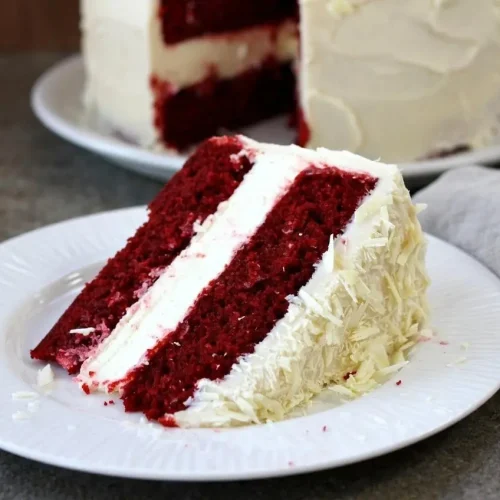
Red Velvet Cheesecake Cake

Tall and celebration-ready, this red velvet cheesecake cake layers two tender, oil-based red velvet rounds around a creamy baked cheesecake center, all finished with tangy cream cheese frosting.
Equipment
- Large roasting pan
- 9-inch Springform Pan
- Electric Mixer
- two 9-inch round metal baking pans
- Wire rack
- Rubber spatula
- long, thin spatula
Ingredients
CHEESECAKE
- Two 8-ounce packages cream cheese at room temperature
- ⅔ cup granulated white sugar
- pinch of salt
- 2 large eggs
- ⅓ cup sour cream
- ⅓ cup heavy whipping cream
- 1 teaspoon vanilla extract
RED VELVET CAKE
- 2½ cups all purpose flour
- 1½ cups granulated white sugar
- 2 tablespoons unsweetened cocoa powder
- 1½ teaspoons baking soda
- 1 teaspoon salt
- 2 large eggs at room temperature
- 1½ cups vegetable or canola oil
- 1 cup buttermilk
- ¼ cup red food coloring (two 1-ounce bottles)
- 2 teaspoons vanilla extract
- 2 teaspoons white vinegar
CREAM CHEESE FROSTING
- 2½ cups powdered sugar sifted to remove lumps
- Two 8-ounce packages cream cheese at room temperature
- ½ cup unsalted butter (1 stick), at room temperature
- 1 tablespoon vanilla extract
Instructions
PREPARE THE CHEESECAKE LAYER
- Heat the oven to 325 °F, position a roasting pan on the lower-third rack, and bring a kettle of water to a boil. The roasting pan must have enough room around the springform pan to hold the water bath.
- Coat a 9-inch springform pan with nonstick spray, fit parchment over its base, and wrap its exterior bottom and sides with two layers of foil. Keep the foil intact and raised along the sides to help block water from reaching the seams.
- Beat the cream cheese until creamy, then mix in the sugar and salt for 2 minutes, scraping the bowl as needed. The mixture should look even, with no firm cream cheese pieces remaining.
- Blend in the eggs individually, followed by the sour cream, whipping cream, and vanilla, then transfer the batter to the prepared pan. Stop once the batter looks smooth rather than continuing to whip air into it.
- Set the springform inside the roasting pan, carefully add boiling water to a depth of about 1 inch around it, and bake for 45 minutes. The cheesecake should feel set to a gentle touch and should not jiggle.
- Lift the cheesecake pan out of the water bath, cool it on a rack for at least an hour, then freeze it completely in its pan. Allow several hours or overnight for a firm disk that can be handled without bending.
PREPARE THE CAKE LAYERS
- Raise the oven temperature to 350 °F and grease and flour two 9-inch round metal pans, or coat them with baking spray containing flour. Cover the pan corners as well as the bases to help the cakes release cleanly.
- Whisk the flour, sugar, cocoa, baking soda, and salt together, then add the eggs, oil, buttermilk, coloring, vanilla, and vinegar. The dry mixture should have an even cocoa tint before the wet ingredients go in.
- Mix on medium-low for 1 minute, scrape the bowl’s sides and bottom, then beat on high for 2 minutes. The finished batter should look evenly colored without dry pockets underneath.
- Divide the batter equally between the pans and bake for 30 to 35 minutes. A toothpick inserted into the middle should carry moist crumbs rather than wet batter.
- Cool the cakes in their pans on a rack for 10 minutes, loosen their edges with a knife, and turn them onto racks to finish cooling. The layers must feel completely cool before assembly so they don’t soften the filling or frosting.
PREPARE THE FROSTING
- Combine the sifted powdered sugar, softened cream cheese, butter, and vanilla in a large bowl and beat on medium-high just until blended. Stop when the frosting looks creamy and spreads smoothly without visible lumps.
ASSEMBLE THE CAKE
- Center one cake round on a platter, then release the frozen cheesecake from its springform ring and base, using a knife beneath the parchment to loosen it. Peel away all the paper while the cheesecake is still firm.
- Compare the cheesecake diameter with the cake rounds and, if necessary, shave its perimeter on a cutting board before stacking it between the cakes. The edges should line up, with no frosting between the layers because the cheesecake supplies the filling.
FROST THE CAKE
- Spread a thin coat of frosting over the assembled cake with a long, narrow spatula, wiping the blade clean before taking more frosting, then refrigerate for 30 minutes. Visible crumbs are fine in this first coat, which should feel set before the final frosting goes on.
- Spoon frosting onto the chilled cake’s top and spread it outward and down the sides, then decorate as desired and keep refrigerated. The set crumb coat helps the outer frosting stay white, and optional white chocolate shavings add a delicate finish.
Notes
Ingredient tip: Use full-fat brick cream cheese at full room temperature for both the cheesecake and frosting, and stick with natural unsweetened cocoa powder so it reacts properly with the buttermilk, vinegar, and baking soda.
Assembly tip: Let the baked cheesecake cool on a rack for at least an hour before freezing it solid in the pan; unmolding and stacking it while completely frozen prevents bending or cracking.
Frosting tip: Wipe your spatula clean on a damp towel before dipping back into the frosting bowl during the crumb coat, then chill the cake for 30 minutes so red crumbs do not streak the outer white layer.
Serving tip: Chill the finished cake until the center softens to a sliceable texture, and dip a long, sharp knife into hot water and wipe it completely dry between every cut for clean layers.
Nutrition information is an estimate based on common ingredients and serving sizes. Values may vary depending on brands, portions, and substitutions.