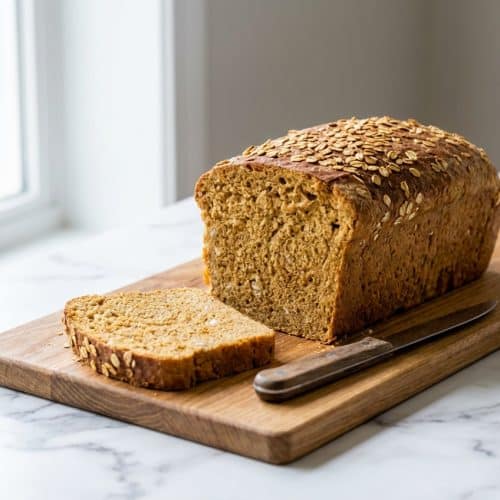
Oatmeal Bread

Enjoy a soft, honey-hued oatmeal bread with a sturdy structure and nutty depth. This beginner-friendly loaf uses a toasted oat infusion for the perfect old-fashioned breakfast slice.
Equipment
- Skillet
- Medium mixing bowl
- Large Mixing Bowl
- 9×5-inch Loaf Pan
- Wire cooling rack
Ingredients
- 2 ¾ cups bread flour
- ½ cup old fashioned rolled oats
- 2 teaspoons kosher salt
- 3 tablespoons shortening at room temperature
- 1 cup water warmed to 110-115 degrees F
- 1 package dry active yeast
- 1 egg at room temperature
- 3 tablespoons molasses
Instructions
Toast the oats and build your dry base
- Warm a dry skillet over medium heat and add the rolled oats. Stir for 3 to 5 minutes until they are lightly golden and fragrant. Remove from heat and let them cool slightly.
- In a medium bowl, combine the bread flour, toasted oats, and salt. Add the shortening and rub it in with your fingertips until the mixture resembles sandy crumbs with small buttery clumps.
Wake up the yeast and mix the dough
- In a large mixing bowl, combine the warm water and active dry yeast. Let the mixture stand for 3 to 5 minutes until a creamy foam forms on the surface.
- Stir the egg and molasses into the yeast mixture, then add half of the flour mixture. Beat on medium speed for about two minutes until the batter is smooth and glossy.
- Scrape down the sides of the bowl and add the remaining flour mixture. Beat for another 1 to 2 minutes until the dough is thick, cohesive, and tacky to the touch.
First rise, shape, and second proof
- Cover the bowl and let the dough rise in a warm place for 30 to 40 minutes, or until it has doubled in size and passes the finger-dent test.
- Grease your loaf pan. Deflate the dough by gently pressing it down with about 25 repeated strokes to remove air without tearing the structure.
- Spread the dough into the prepared pan and tap it on the counter to remove air pockets. Let it rise for about 30 minutes until it reaches the top of the pan. Preheat your oven to 375 degrees F during this time.
Bake and cool for the best crumb
- Bake for 40 to 50 minutes until the crust is deeply browned and the loaf sounds hollow when tapped. The internal temperature should reach 190 degrees F.
- Remove the bread from the pan immediately and place it on a wire rack. Allow it to cool completely before slicing to ensure the crumb sets correctly.
Notes
Pro Tip: If your kitchen is chilly, let the bowl rise in a turned-off oven with the light on. The steady warmth helps the proofing process remain predictable.
Storage Tip: Store the loaf at room temperature in a breathable bag. Avoid sealing it airtight too soon, as trapped moisture can soften the crust and make the oats soggy.
Common Mistake: Do not slice the bread while it is still hot. Early slicing compresses the crumb and can result in a gummy texture instead of a tender one.
Nutrition information is estimated based on common ingredients and serving sizes and may vary.
Nutrition
Calories: 185kcalCarbohydrates: 34gProtein: 5gFat: 4.5gSaturated Fat: 1.2gCholesterol: 18mgSodium: 475mgPotassium: 82mgFiber: 1.8gSugar: 5.5gVitamin A: 12IUCalcium: 18mgIron: 1.9mg
Tried this recipe?Let us know how it was!