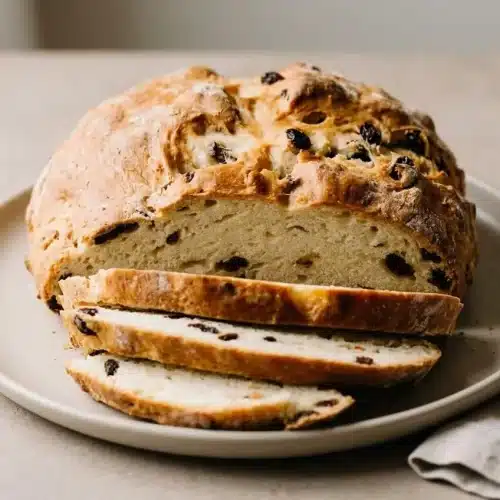
Irish Soda Bread

This American-style Irish soda bread comes together in under an hour. It features a rich, scone-like texture thanks to butter and egg, with a wonderfully crusty top and a soft, dense crumb inside.
Equipment
- Baking Sheet
- 10-12 inch cast iron skillet
- 9-10 inch cake pan or pie dish
- 5 quart dutch oven
- Pastry Cutter
- Bread lame
- Instant-read thermometer
Ingredients
- 1 3/4 cups buttermilk (420ml)
- 1 large egg
- 4 1/4 cups all-purpose flour, plus more for your hands and counter (531g)
- 3 Tablespoons granulated sugar (38g)
- 1 teaspoon baking soda
- 1 teaspoon salt
- 5 Tablespoons unsalted butter, cold and cubed (71g)
- 1 cup raisins (optional) (150g)
Instructions
- Heat the oven to 400°F (204°C) and prepare your pan by lining a baking sheet with parchment paper or a silicone baking mat, or by greasing a seasoned 10 to 12 inch cast iron skillet, a 9 to 10 inch cake pan or pie dish, or a 5 quart or larger dutch oven. The pan choice affects the shape and crust, with a baking sheet allowing more spread and cast iron giving a crisper exterior.
- Whisk the buttermilk and egg together in a small bowl, then whisk the flour, granulated sugar, baking soda, and salt in a large bowl. Starting with separate wet and dry mixtures helps the dough come together evenly without overworking it.
- Cut the cold butter into the flour mixture with a pastry cutter, a fork, or your fingers until the butter pieces are about pea-size, then stir in the raisins if using. The bowl will still look flour-heavy at this stage, which is exactly right.
- Pour the buttermilk mixture into the dry ingredients and fold gently until the dough becomes too stiff to stir, then turn it out onto a lightly floured surface. It should look like a shaggy, sticky mass rather than a smooth bread dough, so don’t worry if it looks a bit messy.
- With floured hands, bring the dough together into a ball and knead it briefly for about 30 seconds, just until all the flour is moistened, adding a little more flour only if it feels unmanageably sticky. Minimal kneading keeps the loaf tender instead of tough.
- Move the dough to your prepared pan and cut a deep slash or X about 1/2 inch deep across the top with a very sharp knife or bread lame. This cut is more than decoration, because it helps the dense center bake through and gives the loaf room to expand cleanly.
- Bake for 45 to 55 minutes, and if the top is browning too quickly, loosely tent it with aluminum foil. The bread should look deeply golden and feel set through the center.
- Check for doneness by inserting an instant-read thermometer into the center and looking for 195°F (90°C), or by lifting the loaf carefully and tapping the bottom for a hollow sound. That hollow knock is one of the best old-school signs that the loaf is baked through.
- Let the bread cool in the pan for 10 minutes, then transfer it to a wire rack before slicing and serving warm, at room temperature, or toasted. The crumb settles as it cools, so the slices cut more neatly after a short rest.
Notes
Dough Tip: Do not overmix the dough. Stop when it is combined and shaggy, then knead only enough to moisten the flour. Overmixing develops too much gluten and can make the bread dense and heavy.
Ingredient Tip: Use very cold butter and buttermilk. Cold butter creates a more tender, scone-like crumb, and cold buttermilk makes the dough easier to handle.
Baking Tip: Score a deep X (about 1/2 inch) across the top of the loaf. This helps the dense center cook through evenly and prevents the loaf from bursting unexpectedly.
Storage: Store the fully cooled loaf well-wrapped at room temperature for up to 2 days. The crust is best on the day it is baked.
Nutrition information is an estimate based on common ingredients and serving sizes. Values may vary depending on brands, portions, and substitutions.