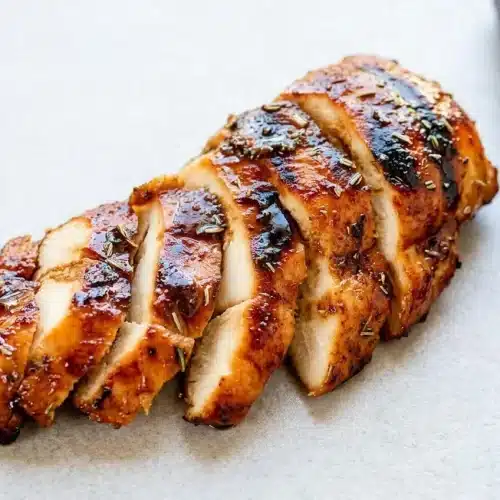
Grilled Chicken Marinade

This grilled chicken marinade uses a balanced blend of balsamic vinegar, soy sauce, and brown sugar to create exceptionally juicy and flavorful chicken, perfect for grilling, baking, or pan-searing.
Equipment
- large bowl
- Whisk
- Resealable bag
- Grill
Ingredients
- ½ cup extra virgin olive oil
- ½ cup balsamic vinegar or other vinegar
- ¼ cup soy sauce I use low sodium soy sauce
- ¼ cup Worcestershire sauce
- ⅛ cup lemon juice
- ¾ cup brown sugar
- 2 teaspoon dried rosemary
- 2 tablespoon Dijon mustard or Spicy Brown mustard
- 1 ½ teaspoons salt
- 1 teaspoon ground black pepper
- 2 teaspoon garlic powder
- 6 chicken breasts or 3.5 lb chicken
Instructions
Step 1: Prepare the Marinade
- Whisk the olive oil, vinegar, soy sauce, Worcestershire sauce, lemon juice, brown sugar, rosemary, mustard, salt, pepper, and garlic powder in a large bowl until blended. The marinade should look glossy and slightly thickened, like a well-mixed vinaigrette.
- Pour ½ cup of the marinade into a separate container before adding any chicken. Keep that reserved portion separate if you want to baste during cooking or simmer it into a sauce later.
Step 2: Marinate the Chicken
- Place the chicken in a large resealable bag and pour in the marinade. Press out extra air, seal the bag, and massage the chicken so every piece is evenly coated.
- Refrigerate the chicken for at least 30 minutes and no more than 24 hours. For the best flavor and texture, aim for 4 to 6 hours, and poke the chicken with a fork first if you need the marinade to work faster.
Method 1: Grilling Instructions
- Heat the grill to medium-high and oil the grates lightly. When the chicken hits the grill, you want a sharp sizzle instead of a faint hiss.
- Lift the chicken from the bag and let the excess marinade drip off before placing it on the grill. Less dripping helps limit flare-ups and keeps the outside from scorching too early.
- Cook for 5 to 6 minutes per side, turning once. The surface should pick up charred spots and the meat should feel firmer as it cooks through.
- Baste occasionally with the reserved marinade during cooking. Brush lightly so the coating builds flavor without flooding the grates.
- Remove the chicken when it reaches 165°F and tent it loosely with foil for at least 5 minutes. That short rest helps the juices settle back into the meat instead of running onto the cutting board.
Method 2: Baking Instructions
- Heat the oven to 400°F and arrange the marinated chicken on a baking sheet. Leave a little space between pieces so the heat can circulate and brown the edges.
- Bake for 18 to 22 minutes, depending on thickness. The chicken is ready when the center reaches 165°F and the juices run clear when pierced.
- Rest the chicken briefly before slicing or serving. The texture will stay noticeably juicier if you give it a few minutes before cutting.
Method 3: Stovetop Instructions
- Set a large skillet over medium-high heat and add the chicken in a single layer. The pan should sound lively when the chicken goes in, but it should not smoke aggressively.
- Cook for 5 to 7 minutes per side, adjusting as needed for thickness. The outside should turn deep golden brown while the center finishes cooking through.
- Do not overcrowd the pan, and cook in batches if needed. Giving the pieces space helps them sear instead of steam.
- Take the chicken out of the skillet when it reaches 165°F, then let it rest before serving. You’ll keep more juice in the meat and get cleaner slices.
Notes
Safety Tip: If you want to use marinade that has touched raw chicken as a sauce, you must bring it to a full rolling boil for at least 1-2 minutes to make it safe to consume, as per USDA guidance. The safest method is to reserve some marinade before it touches the raw poultry.
Cooking Tip: For more even cooking, lightly pound thicker chicken breasts to a uniform thickness before marinating. This prevents the thinner parts from drying out while the thicker parts cook through.
Resting Tip: Always let the cooked chicken rest for 5 to 10 minutes before slicing. This allows the juices to redistribute, resulting in a much juicier piece of meat.
Storage and Freezing: Store leftover cooked chicken in an airtight container in the refrigerator for up to 4 days. You can also freeze raw chicken in the marinade in a freezer-safe bag for up to 3 months; thaw in the refrigerator before cooking.
Grilling Tip: If using a charcoal grill, set up a two-zone fire. This allows you to move the chicken to a cooler area if the sugar in the marinade starts to burn before the chicken is cooked through.
Nutrition information is an estimate based on common ingredients and serving sizes. Values may vary depending on brands, portions, and substitutions.