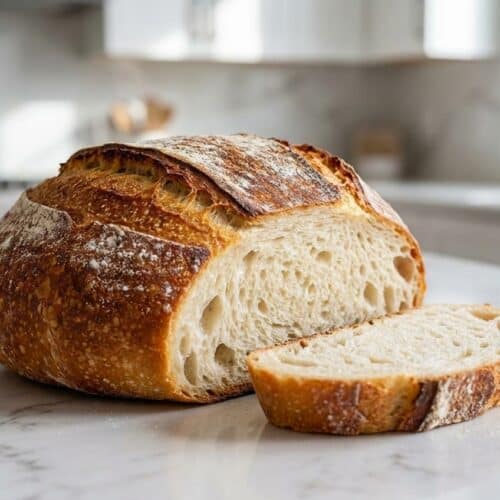
Easy Artisan Bread

A no-knead Dutch oven artisan bread with a blistered crust and airy, chewy crumb—made with very warm water and a pro crust-boosting twist.
Equipment
- large bowl
- Wooden Spoon
- Dutch oven with lid
- Parchment/baking paper
- Dough scraper (optional)
- Cooling Rack
Ingredients
- 3 cups flour, bread or plain/all purpose 450g
- 2 tsp instant or rapid rise yeast
- 2 tsp cooking / kosher salt NOT table salt
- 1 1/2 cups very warm tap water 375 ml; not boiling or super hot (up to 55°C/130°F)
- 1/2 tsp diastatic malt powder stirred into the dry ingredients
- 1 1/2 tbsp flour for dusting (dough shaping)
Instructions
Mix and Build the No-Knead Dough
- In a large bowl, mix the flour, yeast, and salt together, including the malt powder with the dry ingredients. Pour in the very warm tap water, then stir with the handle of a wooden spoon until no dry flour remains.
- The dough should look shaggy, wet, and sloppy—sticky but scoopable, not runny like cake batter. If needed, adjust with a touch more water or flour to reach the right consistency.
Let It Rise (and Optionally Cold Ferment)
- Cover the bowl with cling wrap or a plate and leave on the counter for 2 to 3 hours, until doubled and bubbly on top.
- If after 1 hour it looks sleepy, move it somewhere warmer so the yeast can get going.
- At this stage, bake right away or refrigerate the dough for up to 3 days for deeper flavor development.
- If the dough was refrigerated, leave it on the counter for 45 to 60 minutes while the oven preheats, because cold dough will not rise as well.
Preheat for Maximum Oven Spring
- Put the Dutch oven in the oven with the lid on, then preheat to 230°C/450°F (220° fan) for 30 minutes prior to baking.
Shape, Transfer, and Bake Until Crackling
- Sprinkle the work surface with 1 tbsp flour, scrape the dough out, then sprinkle the top with 1/2 tbsp flour.
- Using a dough scraper or similar tool, fold the sides inward about 6 times to form a rough round, deflating big bubbles and building a little surface tension.
- Slide a large piece of parchment/baking paper next to the dough, then flip the dough onto the paper so the smooth side is up. Nudge and reshape into a round(ish) loaf.
- Carefully remove the piping hot Dutch oven, then use the parchment paper to lower the dough into the pot and put the lid on.
- Bake 30 minutes covered, then bake 12 minutes uncovered, until the crust is deep golden and crispy.
- Cool on a rack for 10 minutes before slicing.
Notes
For best doneness, aim for an internal temperature of 205 to 210°F in the center of the loaf. Avoid slicing too early to prevent a gummy crumb.
Nutrition information is estimated based on common ingredients and serving sizes and may vary.
Nutrition
Calories: 230kcalCarbohydrates: 47gProtein: 7gFat: 1.2gSaturated Fat: 0.2gSodium: 440mgPotassium: 80mgFiber: 2gSugar: 0.6gCalcium: 12mgIron: 2.5mg
Tried this recipe?Let us know how it was!