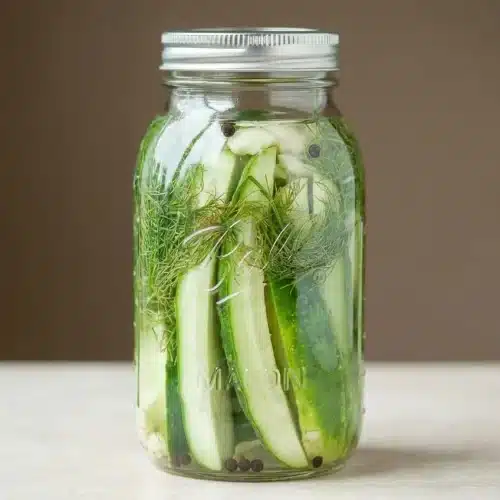
Dill Pickles Recipe

Learn how to make perfectly crisp and tangy homemade dill pickles. This recipe includes easy-to-follow instructions for both quick refrigerator pickles and a long-lasting canned version for your pantry.
Equipment
- Mason jars
- Medium saucepan
Ingredients
- 12 pickling cucumbers
- 4 cups water
- 2 cups white vinegar
- 2 tablespoons kosher salt
- 1 teaspoon sugar
- 1 bunch fresh dill
- 1 head garlic, skins removed, cloves smashed
- 1 tablespoon peppercorn kernels
Instructions
Method 1: Quick Refrigerator Pickles (Step-by-Step)
- Wash the 12 pickling cucumbers well, then cut them into 1/4-inch slices or spears and set them aside while you prep the aromatics and jars. The cucumbers should look fresh and firm, and uniform pieces pickle more evenly.
- Smash the garlic cloves, pull the dill away from any thick stems, and sanitize the Mason jars before filling them. Having everything ready makes packing easier and helps keep the dill and garlic evenly distributed.
- Combine 4 cups water, 2 cups white vinegar, 2 tablespoons kosher salt, and 1 teaspoon sugar in a medium saucepan and bring the mixture to a boil. When the brine is ready, it will smell bright and sharp with a fresh vinegary aroma, and the salt and sugar should be fully dissolved.
- Take the saucepan off the heat and let the brine cool to room temperature before using it for refrigerator pickles. This helps protect the cucumbers from softening and keeps their texture snappy.
- Layer the cucumbers, 1 bunch fresh dill, 1 head garlic, skins removed, cloves smashed, and 1 tablespoon peppercorn kernels into the jars without pressing everything in too tightly. Leave a little space between pieces so the brine can move around and season the cucumbers evenly.
- Pour in enough cooled brine to fully cover the cucumbers, seal the jars with airtight lids, and refrigerate them. The pickles can be tasted sooner, but the flavor is best after about 1 week when the dill, garlic, and peppercorns have had time to settle in.
Method 2: Shelf-Stable Canned Pickles (Step-by-Step)
- Wash and cut the cucumbers as directed above, then prepare clean jars, lids, and a water bath setup before you make the brine. Starting organized makes it easier to pack the jars while the brine is still hot.
- Bring the water, white vinegar, kosher salt, and sugar to a boil in a medium saucepan until the salt and sugar dissolve completely. The liquid should look clear and smell brisk and vinegary.
- Pack the jars with cucumbers, fresh dill, smashed garlic, and peppercorn kernels, keeping the pieces snug but not jammed in place. Good packing gives you room for hot brine to flow around the cucumbers.
- Pour the hot brine over the cucumbers to cover them, wipe the jar rims clean, and apply the lids according to your canning setup. Clean rims help the lids seal more reliably during processing.
- Process the jars in a boiling water bath using a tested dill pickle procedure for your jar size and conditions, then lift them out carefully and let them cool undisturbed. After cooling, a sealed jar often gives a clear little ping, and the center of the lid should stay down when pressed.
- If a jar does not seal, move it to the refrigerator and use it as a refrigerator pickle instead of storing it in the pantry. A properly sealed jar stays closed on its own, while an unsealed lid will flex or pop when touched.
Notes
Texture tip: For the crispiest pickles, always trim the blossom end from each cucumber and let the brine cool completely before adding it to jars for the refrigerator method.
Storage: Refrigerator pickles should be kept chilled and will last for 4-6 weeks. Properly sealed canned pickles can be stored in a cool, dark place for up to one year.
Garlic color: Don't be alarmed if your garlic cloves turn blue or green in the brine. This is a natural, harmless chemical reaction with the vinegar and doesn't affect the safety or flavor of the pickles.
Nutrition information is an estimate based on common ingredients and serving sizes. Values may vary depending on brands, portions, and substitutions.