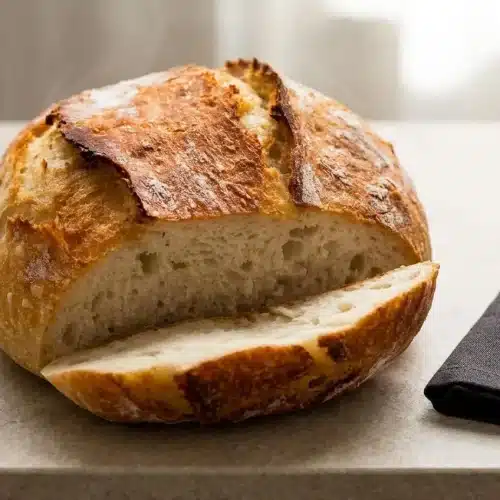
Crusty Bread Recipe

Create an artisan-style loaf at home with this simple no-knead crusty bread recipe. It uses just 4 basic ingredients and a long rise to develop a beautifully crisp, golden crust and a soft, chewy crumb.
Equipment
- Dutch oven
- large bowl
- Dough scraper
- Parchment Paper
Ingredients
- 3 cups flour, bread or plain/all purpose (450g)
- 2 tsp instant or rapid rise yeast
- 1 1/2 tsp cooking salt / kosher salt HALVE if using table salt
- 1 1/2 cups very warm tap water (375 ml) NOT boiling or super hot (ie up to 55°C/130°F)
Dough shaping
- 1 1/2 tbsp flour, for dusting
Instructions
- Stir the flour, yeast, and salt together in a large bowl, then pour in the water and mix with the handle of a wooden spoon until no dry flour remains. The dough should look like a shaggy, sticky mess that holds together loosely without flowing like cake batter.
- Cover the bowl with plastic wrap or a plate and leave it on the counter for 2 to 3 hours to rise. It’s ready when it has roughly doubled, the surface looks bubbly, and the dough jiggles with a wobbly, jelly-like movement.
- If you want deeper flavor, place the covered dough in the refrigerator after the rise instead of baking right away. This rest develops a more complex taste and the dough will look a little firmer once chilled.
- If the dough has been chilled, set the bowl on the counter for 45 to 60 minutes while the oven heats. Taking off some of the chill helps the loaf expand better in the oven.
- Set a Dutch oven with its lid in the oven and preheat to 230°C/450°F (220° fan) for 30 minutes. The pot needs to be fully hot so the loaf gets a strong oven spring and a crisp crust.
- Dust the work surface with 1 tbsp flour, scrape out the dough, and sprinkle the top with the remaining 1/2 tbsp flour. The flour makes the sticky surface easier to handle without turning the dough stiff.
- Use a dough scraper, cake server, large knife, or spatula to fold the edges inward about 6 times to make a rough round. You’re shaping just enough to gather the dough and knock out some oversized air pockets, not making it perfectly smooth.
- Place a large sheet of parchment paper beside the dough, turn the dough onto it so the smoother side faces up, and nudge it back into a round shape. A slightly uneven loaf is completely fine and often gives you more craggy, crunchy edges.
- Carefully remove the hot Dutch oven, lift the dough by the parchment, lower it into the pot, and cover with the lid. Work carefully here because the pot is extremely hot and the dough will still feel soft and delicate.
- Bake for 30 minutes covered, then remove the lid and bake 12 minutes more until the loaf is deep golden and crisp. The bread should sound hollow when tapped on the bottom and the crust should feel firm, not pale or soft.
- Transfer the loaf to a rack and cool for 10 minutes before slicing. The crumb finishes setting as it cools, so waiting helps keep the center chewy instead of gummy.
Notes
Flavor Tip: For a more complex, breadier flavor, place the covered dough in the refrigerator for up to 3 days after its initial rise. Let it sit on the counter for 45-60 minutes to take the chill off before baking.
Crispy Crust Tip: If your crust is too soft, ensure the Dutch oven is fully preheated before adding the dough. Bake the loaf uncovered long enough for the crust to become deep golden and crisp.
Serving Tip: Let the bread cool on a rack for at least 10 minutes before slicing. This allows the interior crumb to set properly and prevents a gummy texture.
Storage: Store the cooled bread at room temperature, cut-side down on a cutting board or loosely wrapped in paper. Avoid storing it in the refrigerator, which can dry it out.
Nutrition information is an estimate based on common ingredients and serving sizes. Values may vary depending on brands, portions, and substitutions.