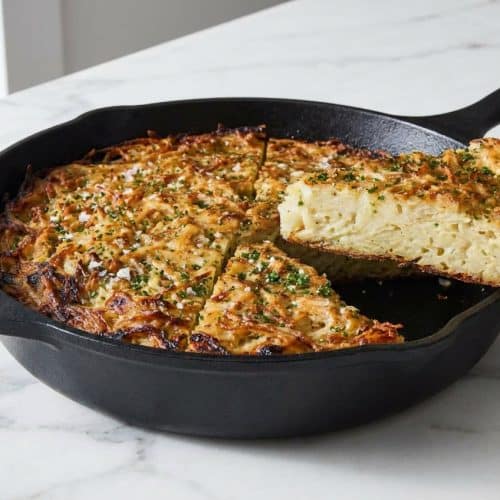
Crispy Potato Kugel Recipe

Achieve shatteringly crisp edges and a tender, creamy center with this old-school potato kugel recipe. The secret lies in a boiling water pour and a screaming hot cast-iron skillet.
Equipment
- Cast Iron Skillet
- Box grater or food processor
- Colander
- Cheesecloth
Ingredients
- 4 pounds russet potatoes, peeled
- 1 large yellow onion
- 6 large eggs
- 10 tablespoons chicken fat, melted
- To taste Kosher salt and freshly ground black pepper
- 1/3 cup finely chopped chives
- To taste Flaky sea salt
Instructions
Grate, Drain, and Get Ready
- Heat your oven to 425 degrees, and let it fully come up to temperature so the kugel starts browning right away. Set a colander over a big bowl, or park it in the sink, because the potatoes will release a surprising amount of liquid.
- Grate the 4 pounds russet potatoes, peeled, and 1 large yellow onion using a box grater or a food processor shredding blade, letting the shreds fall straight into the colander. You want thin, lacy strands that look a little messy. That roughness is what makes the crust extra craggy later.
Squeeze It Like You Mean It
- Working in handfuls, wring the potato and onion shreds as hard as you can, until they feel dry and slightly springy instead of wet and heavy. If you grab a fistful and no liquid drips, you are on the right track.
- For the driest shreds, bundle them in cheesecloth or a porous kitchen towel and twist tight. The goal is as much water out as humanly possible. Transfer the squeezed mixture to a large bowl that is drained and dry, because any leftover puddle steals crispiness.
The Boiling Water Pour and the Hot Skillet Sear
- Add 6 large eggs and 6 tablespoons of the melted chicken fat to the bowl, then season generously with kosher salt and freshly ground black pepper. Mix until the eggs disappear and everything looks evenly glossed, not clumpy.
- Now for the crucial twist, pour in 1/2 cup of boiling water and stir immediately. The mixture will look a bit silkier and warmer, which is exactly what you want for a creamy interior and less oxidation.
- Set a 9- or 10-inch cast-iron skillet over medium-high heat and add 2 tablespoons of melted chicken fat. Let it get slick and properly hot. You should see the fat shimmer and feel radiant heat when you hover your hand above the pan.
- Delicately spoon the potato mixture into the skillet without packing it down. A light touch keeps the kugel airy, so it eats like a tender slice, not a heavy brick.
Stovetop Browning, Then Oven Baking
- Cook on the stovetop, rotating the skillet occasionally for even browning, until the edges and sides turn golden and you hear a steady sizzle, about 10 to 12 minutes. When you peek at the perimeter, you should see crisp bits climbing the sides.
- Drizzle the top with the remaining 2 tablespoons of chicken fat, then transfer the skillet to the oven. Bake until the top is deeply golden brown, the edges look wispy and crunchy, and the potatoes are fully tender, about 45 to 50 minutes.
- Remove from the oven and finish with more pepper, 1/3 cup finely chopped chives, and flaky sea salt. Let it settle for a few minutes so slices hold together, then serve warm while the crust still sings.
Notes
Preparation Tip: Alternate grating the onion with the potatoes. The onion's sulfur compounds help slow oxidation, keeping the mixture lighter in color while you work.
Texture Tip: The drier the shreds, the crispier the kugel. Squeeze until your hands are tired, then bundle the shreds in a cheesecloth and squeeze once more to remove maximum moisture.
Cooking Tip: Let the cast-iron skillet and chicken fat get genuinely hot before the batter goes in. A visible shimmer on the fat is the sign you are looking for, not just warm.
Storage & Make-Ahead: Cool the kugel completely, cover, and refrigerate for up to 4 days. Reheat slices on a sheet pan in a 425 degree oven so hot air can circulate and re-crisp the edges.
Nutrition information is estimated based on common ingredients and serving sizes and may vary.