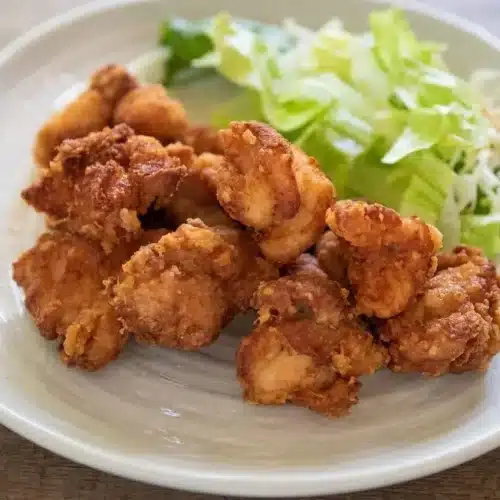
Chicken Karaage

Bite-size chicken thighs soak in a savory ginger-soy marinade before receiving a light cornstarch coating. Two frying stages create a shatteringly crisp shell around juicy meat in 25 minutes of active time.
Equipment
- Ziplock bag
- bowl
- deep pot or pan
- Kitchen thermometer
- bamboo chopsticks
Ingredients
- 350 g chicken thigh fillets 12.3oz, cut into large bite size pieces
- 20 g corn flour / cornstarch 0.7oz
- Vegetable oil for deep frying
Marinade
- 1 tbsp soy sauce
- 1 tbsp cooking sake
- 1/2 tsp mirin
- 2 tsp freshly grated ginger including juice
Garnish (optional)
- Shredded lettuce or cabbage
- Sprigs of parsley
Instructions
- Use paper towels to blot the chicken dry, then combine it with all the marinade ingredients in a zip-top bag or bowl. The seasoning should contact the chicken directly rather than mix with excess surface moisture.
- Work the marinade around the chicken until every piece is covered, then marinate for 30 minutes to an hour in the refrigerator. Look for an even distribution of ginger and soy seasoning across the pieces.
- Bring vegetable oil to 160°C/320°F in a deep pot or pan, using an oil depth of about 3–4 cm/1¼–1½ inches. This lower temperature is for the first fry, not the final browning.
- Pour away the unused marinade, blot the chicken on paper towels, and transfer it to a bowl. The surface should remain seasoned but no longer drip with liquid.
- Scatter the cornstarch over the chicken and turn the pieces until coated on all sides. A light, powdery covering is the goal rather than a paste.
- Lower individual pieces into the oil in small batches and cook for about 2.5–3 minutes, gently shifting any that catch on the bottom. Leave space between pieces so they can fry separately.
- Lift each batch onto paper towels and leave it undisturbed for at least 3–4 minutes, continuing with the remaining chicken. The coating won't yet have its final deep golden color.
- Remove loose starch crumbs from the oil, then bring it to 190–200°C/374–392°F. Clear oil helps prevent burnt crumbs from clinging to the chicken.
- Give the rested pieces a second fry in batches for about 30 seconds to 1 minute. Remove them when the shell looks golden brown and feels crunchy.
- Bring the chicken to the table immediately, adding shredded lettuce and parsley if using. The coating has its best crunch while freshly fried.
Notes
Texture tip: Drain and blot the marinated chicken thoroughly on paper towels before tossing with cornstarch so the coating stays powdery and crisp instead of turning gummy.
Doneness: Because soy sauce and mirin brown quickly in hot oil, do not rely on crust color alone; check the thickest piece with a food thermometer for a minimum internal temperature of 165°F/74°C.
Ingredient tip: For an optional alcohol-free marinade, swap the 1 tbsp cooking sake for an equal amount of water or low-sodium chicken broth, and replace the 1/2 tsp mirin with 1/4 tsp sugar dissolved in the soy sauce.
Storage: Let cooked pieces briefly release steam on a wire rack, then refrigerate in an airtight container for 3 to 4 days, or freeze in a single layer before bagging for a quality window of 3 to 4 months.
Reheating: Warm leftover pieces unstacked in a hot oven or air fryer to help dry and crisp the coating, checking the center temperature with a food thermometer.
Nutrition information is an estimate based on common ingredients and serving sizes. Values may vary depending on brands, portions, and substitutions.