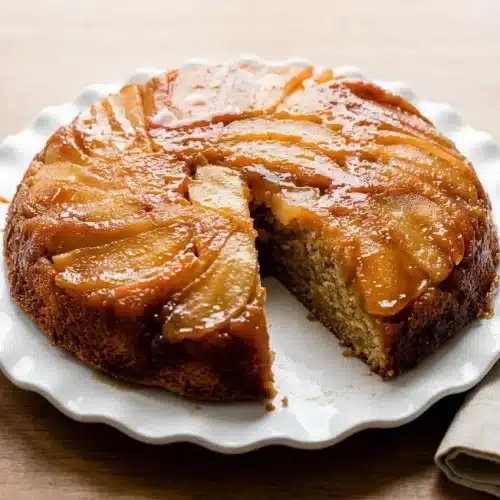
Caramel Apple Upside Down Cake

This classic scratch cake features glossy caramelized apples arranged over a warmly spiced, tender crumb. It bakes beautifully and flips cleanly when timed within the golden ten-minute window.
Equipment
- Saucepan
- Whisk
- 9-inch Pie Dish
- Glass Mixing Bowl
- Electric Mixer
- Cooling Rack
Ingredients
Topping
- 6 Tablespoons (85g) unsalted butter
- 1/2 cup (100g) packed light or dark brown sugar
- 1/4 teaspoon ground cinnamon
- 1/4 teaspoon pure vanilla extract
- 2 medium apples, peeled and sliced into 1/4-inch slices (1.5-2 cups, or 188-250g, apple slices)
Cake
- 1 and 1/2 cups (188g) all-purpose flour (spooned & leveled)
- 1 and 1/2 teaspoons baking powder
- 1 and 1/2 teaspoons ground cinnamon
- 1/4 teaspoon ground nutmeg
- 1/2 teaspoon salt
- 1/2 cup (8 Tbsp; 113g) unsalted butter, softened to room temperature
- 1/2 cup (100g) granulated sugar
- 1/2 cup (100g) packed light or dark brown sugar
- 2 large eggs, at room temperature
- 1 teaspoon pure vanilla extract
- 6 Tablespoons (90ml) whole milk, at room temperature
Instructions
Preparation
- Heat the oven to 350°F (177°C). The cake bakes most evenly when the oven is fully preheated before the pan goes in.
- Warm the butter and brown sugar in a small saucepan over medium heat, whisking now and then until melted, then whisk constantly for 1 minute as the mixture thickens before stirring in the cinnamon and vanilla. The topping should look smooth, glossy, and amber colored, more like a loose glaze than a thin syrup.
- Pour the caramel into an ungreased 9×2 inch pie dish or round cake pan, arrange the apple slices on top in slightly overlapping layers, and chill the pan for a few minutes while you mix the batter. This brief chill helps set the design so the apples stay in place when the batter is added.
- Whisk together the flour, baking powder, cinnamon, nutmeg, and salt in a bowl. Mixing the dry ingredients first helps the spice and leavening distribute evenly through the cake.
- Beat the softened butter on high speed for about 1 minute until creamy, beat in both sugars for about 1 minute, then mix in the eggs and vanilla, scraping the bowl as needed. The mixture should look lighter and smoother before the dry ingredients go in.
- Add the dry ingredients to the bowl, turn the mixer to low, and slowly pour in the room temperature milk until the batter is just combined, finishing by hand if needed to catch any flour pockets. The batter will be slightly thick, and that thickness helps it sit over the apples instead of sinking straight through.
- Take the pan from the refrigerator and spread the batter evenly over the apple layer. Use a gentle hand so the apple pattern stays in place under the batter.
- Bake for 40-46 minutes, loosely tenting foil over the top halfway through so the surface does not brown too fast. The center is ready when a toothpick comes out mostly clean with a couple of moist crumbs, and you should feel slight resistance rather than wet drag.
- Set the cake on a wire rack for 15 minutes, then invert it onto a serving plate or cake stand. A little caramel may run down the sides, which is normal and part of the appeal.
- Cool the cake completely at room temperature before slicing for the neatest portions, or serve it warm if you do not mind messier slices. Cooling at room temperature keeps the crumb from turning overly dense.
- Cover any leftover slices and refrigerate or freeze them as needed, thawing frozen slices at room temperature before serving. Freeze slices rather than the whole cake if you want the topping to look better after thawing.
Notes
Apple Selection: Use firm, tart baking apples such as Granny Smith, Pink Lady, or Honeycrisp. They keep their structure during baking and balance the sugary caramel, whereas soft apples like McIntosh or Red Delicious break down and make the topping soggy.
The Flipping Window: Invert the cake onto your plate exactly 10 minutes after it comes out of the oven. If you flip too early, the caramel runs and slides. If you wait until the cake is completely cold, the sugar will harden and stick to the bottom of the pan.
Fixing Stuck Apples: If a couple of apple slices stick to the baking pan during inversion, lift them out carefully with a spatula while they are still warm and place them back on top of the cake, using a touch of extra caramel from the pan to smooth over the seam.
Preventing Leaks: Avoid springform pans as the hot liquid caramel can seep through the bottom seams. If you must use one, wrap the outside bottom tightly with heavy-duty foil. Set a baking sheet on the lower oven rack to catch any accidental drips.
Leftover Storage: Store cooled cake slices in the refrigerator for up to 3 days or freeze individual slices for up to 3 months. Avoid freezing the whole cake, as the neat apple design does not thaw well. Reheat slices gently in the microwave to soften the caramel.
Nutrition information is an estimate based on common ingredients and serving sizes. Values may vary depending on brands, portions, and substitutions.