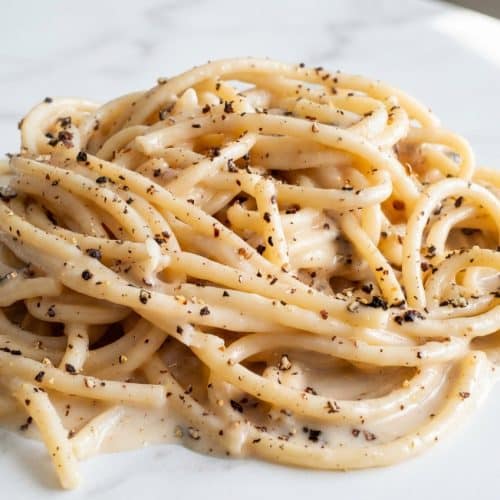
Bucatini Cacio E Pepe

Master the art of Roman pasta with this silky Bucatini Cacio e Pepe. Using a unique hybrid tempering method, this recipe ensures a glossy, emulsified sauce that perfectly clings to every strand.
Equipment
- Large Pot
- Skillet
- Whisk
- Cheese grater
Ingredients
- 6 ounces bucatini pasta
- 1 tablespoon very coarsely ground black pepper
- 1 cup reserved pasta water
- 1 cup finely grated Pecorino Romano
- 1/2 cup pasta water
- 1/2 cup medium grated caciocavallo cheese
- salt to taste
Instructions
Set Up the Water and Your Mise en Place
- Bring a large pot of water to a rolling boil and season generously with salt until it tastes like the sea.
- While the water heats, finely grate the Pecorino Romano and medium grate the caciocavallo cheese, keeping them in separate bowls. Prepare the coarsely ground black pepper.
Cook the Pasta and Build the Pepper Tea
- Add the bucatini to the boiling water, stirring gently at first to prevent the strands from sticking together. Cook until the pasta is slightly underdone with a firm core.
- In a dry skillet over medium heat, toast the black pepper for 2-3 minutes, stirring constantly until it becomes fragrant and slightly darker.
- Carefully pour 1 cup of the boiling pasta water into the skillet with the pepper. Let it sizzle to create a concentrated pepper broth, then set the skillet aside.
The Hybrid Tempering Finish and Mantecatura
- In a small bowl, create a paste by whisking 1 cup of finely grated Pecorino Romano with 1/2 cup of pasta water until it reaches a thick, ricotta-like consistency.
- Drain the bucatini about three minutes before it reaches al dente, making sure to reserve at least two cups of the starchy water.
- Place the drained pasta into the skillet with the pepper water. Bring to a gentle simmer, allowing the pasta to finish cooking while absorbing the peppery liquid.
- Remove the skillet from the heat completely. Add the Pecorino paste and toss vigorously. The sauce should turn glossy and coat the pasta; if it is too thick, add a splash of reserved water.
- Add the caciocavallo cheese and give it a final confident toss until melted and creamy. Serve immediately in warm bowls with an extra crack of black pepper.
Notes
Storage and Reheating: Cacio e pepe is best enjoyed immediately. To reheat leftovers, use a skillet over very low heat with a small splash of water, stirring constantly to re-emulsify the sauce without clumping.
Temperature Control: Never add the cheese paste while the pan is over active heat. If the pan is too hot, the cheese proteins will seize and create a rubbery texture instead of a silky sauce.
Ingredient Tip: Always use bronze-die pasta and freshly grated cheese. Pre-grated cheeses contain stabilizers that prevent them from melting smoothly into the sauce.
Nutrition information is estimated based on common ingredients and serving sizes and may vary.
Nutrition
Calories: 580kcalCarbohydrates: 62gProtein: 24gFat: 28gSaturated Fat: 16gCholesterol: 70mgSodium: 1150mgPotassium: 140mgFiber: 3gSugar: 2gVitamin A: 12IUCalcium: 55mgIron: 8mg
Tried this recipe?Let us know how it was!