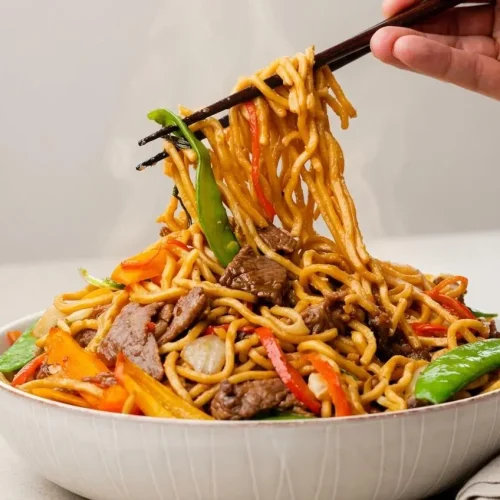
Beef Lo Mein Recipe

Tender beef, chewy noodles, crisp-tender vegetables, and a glossy savory sauce come together fast in this reliable weeknight stir-fry.
Equipment
- wok
- Large Pot
- Strainer
- Medium-sized bowl
Ingredients
Main Ingredients
- 1 lb lo mein
- 0.50 lb beef (New York strip steak)
- 6 oz napa cabbage
- 2 oz mini sweet pepper
- 2 oz snow pea
- 4 stalk green onion
- 2 oz carrot
- 2 clove garlic
Beef Marinade
- 1 tbsp light soy sauce
- 1 tbsp oyster sauce
- 0.25 tsp white pepper
- 2 tbsp cornstarch
- 0.50 tsp sugar
- 2 tbsp water
- 1 tbsp oil
Stir-fry Sauce
- 1.5 tbsp light soy sauce
- 2 tbsp oyster sauce
- 1 tbsp dark soy sauce
- 0.25 tsp white pepper
- 0.50 tsp cornstarch
- 2 tbsp water
- 1 tbsp sugar
Cooking
- 8 cup water minimum
- 3 tbsp oil for stir-frying
- 0.50 tbsp light soy sauce
- 1 tsp sesame oil
Instructions
Prepare vegetables
- I start with the napa cabbage by separating the stems from the leaves.
The leaves get torn into bite-sized pieces, and I slice the stems against the grain into 1/4-inch pieces so they soften quickly but still keep a little bite. - Next, I prep the snow peas by snapping off the stem end and pulling away the string.
That tiny step makes a big difference in texture, and nobody wants a stringy snow pea hanging off their fork. - I cut the mini sweet peppers in half, remove the seeds, and slice them vertically into 1/2-inch wide strips.
They stay bright and slightly crisp in the final toss, which keeps the pan from feeling heavy. - I cut the green onions into 2-inch pieces and keep the whites separate from the greens.
The whites go in earlier for flavor, while the greens stay fresher and brighter at the end. - I peel the garlic, smash it, and roughly mince it.
Smashing first helps it release more aroma, and you will smell that whiff of garlic almost immediately in the wok. - For the carrot, I slice it thinly first, then cut those slices into very fine strips.
Thin carrot cooks fast and blends into the noodles better than chunky coins.
Prepare beef
- I trim off any gristle from the beef and slice it perpendicular to the grain into 1/8-inch pieces.
This is one of the biggest texture makers in the whole dish, so I take my time here even though the recipe is quick. - I give the sliced beef a rinse in cold water, then drain it well.
After that, I gently squeeze out the extra water so the marinade can actually cling instead of sliding off. - In a medium bowl, I mix together 1 tbsp light soy sauce, 1 tbsp oyster sauce, 0.25 tsp white pepper, 2 tbsp cornstarch, 0.50 tsp sugar, and 2 tbsp water.
The mixture should look smooth and lightly thick, almost like a thin paste. - I add the beef to that marinade and mix until the liquid is absorbed, then coat it with 1 tbsp oil.
This gives the beef that velvety stir-fry texture people chase at restaurants, and trust me, it is worth the extra minute.
Create sauce
- I whisk together 1.5 tbsp light soy sauce, 2 tbsp oyster sauce, 1 tbsp dark soy sauce, 0.25 tsp white pepper, 1 tbsp sugar, 0.50 tsp cornstarch, and 2 tbsp water until fully smooth.
I like to keep the sauce in a cup with a spout because pouring with one hand while stirring with the other feels oddly heroic.
Parboil noodles
- I bring 8 cup water to a vigorous boil in a large pot, add the lo mein, and stir right away.
Once the water comes back to a boil, about 90 seconds later, I lower the heat and cook the noodles for about 2 minutes until soft but still pleasantly chewy. - I drain the noodles in a strainer and leave them as they are if I am stir-frying right away.
The key is to stop before they get too soft, because they still have more cooking to do in the wok.
Stir-fry beef
- I heat the wok on high first, then mix 1 tbsp oil into the marinated beef.
You want the wok seriously hot here, the kind of heat that means no wandering off to check your phone. - When the wok is smoking, I add 2 tbsp oil and let it heat for 30 to 40 seconds before laying in the beef in one even layer.
I leave it alone for 20 seconds so the edges can grab some color instead of turning gray and steamy. - Then I stir-fry the beef for another 20 to 30 seconds, just until it is about 80% cooked, and take it out.
It finishes later with the noodles, which keeps it tender instead of overworked.
Stir-fry veggies, Add noodles & stir-fry everything
- I add 1 tbsp oil to the wok, then toss in the minced garlic and stir-fry for 15 seconds.
You will know it is ready when the garlic smells intensely fragrant but has not started to brown. - Next go in the napa cabbage stems for 15 to 20 seconds.
They need a head start because they are firmer than the leaves. - I add the napa leaves and the green onion whites, then cook them for 20 to 30 seconds.
The leaves should just begin to wilt without collapsing completely. - Then I add the carrot strips and stir-fry for about 1 minute until the vegetables soften.
At this point the wok should smell sweet, savory, and very alive. - I add the cooked noodles and use tongs to loosen and separate them for 30 seconds.
This quick toss helps them warm through and get ready for the sauce instead of clumping in one big noodle brick. - I give the sauce another stir, pour it into the wok, and return the beef to the pan.
Everything gets mixed together right away so the sauce can coat the noodles before it thickens too much. - I stir-fry for 30 to 40 seconds, then add the sweet peppers, snow peas, and green onion greens.
Those later-added vegetables keep their color and a little snap, which makes the whole dish feel fresher. - I keep stir-frying for another 40 to 50 seconds and taste for seasoning, adding 0.50 tbsp light soy sauce if needed.
If the noodles look glossy and evenly colored, you are exactly where you want to be. - I finish with 1 tsp sesame oil, stir for another 1 to 2 minutes, then turn off the heat.
The sauce should cling lightly to the noodles, not drown them, and the aroma right here is fantastic.
Plate & serve
- I scoop everything onto a large serving dish and serve it hot.
This is when the noodles are at their chewiest and the beef is at its most tender.
Notes
Storage Tip: Store leftovers in an airtight container in the refrigerator for up to 3 to 4 days.
Reheating Tip: For the best texture, reheat quickly in a hot pan with a small splash of water to loosen the noodles. A microwave works too when convenience wins.
Make-Ahead Tip: Cut the vegetables, slice and marinate the beef, and mix the sauce ahead so the final stir-fry comes together faster.
Variation Tip: For a slightly creamier, nuttier finish, whisk 1 teaspoon of Chinese sesame paste or smooth peanut butter into the stir-fry sauce before cooking.
Texture Tip: Slice the beef against the grain, keep the wok very hot, do not crowd the pan, and slightly undercook the noodles before they go into the wok.
Nutrition information is an estimate based on common ingredients and serving sizes. Values may vary depending on brands, portions, and substitutions.