Skip to content
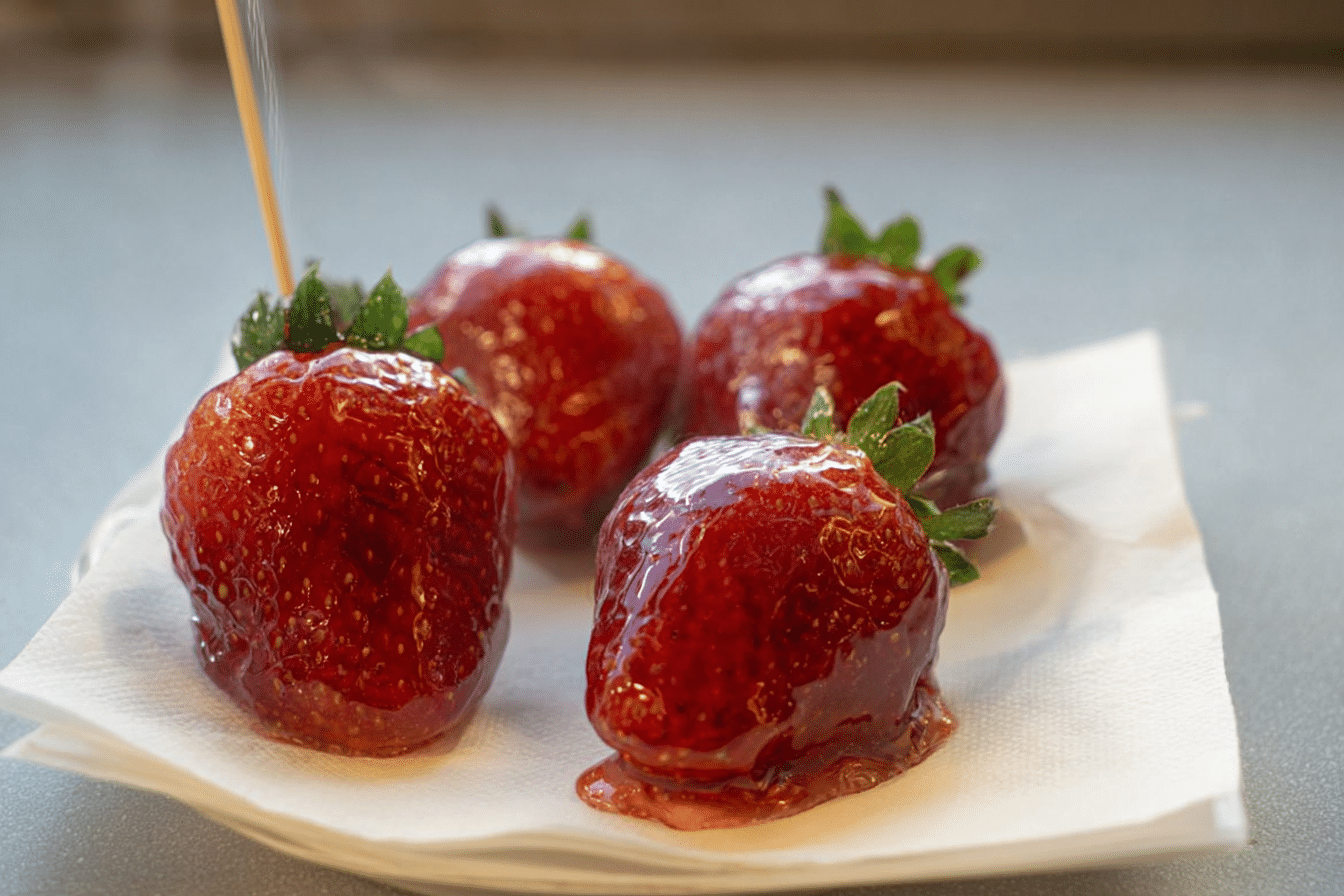
The best tanghulu moment is the sound, that loud, clean crack when your teeth hit the glass candy shell, then the strawberry bursts juicy underneath.
If you have tried and failed at strawberry tanghulu without corn syrup because your sugar turned grainy or stayed sticky, this is the method I trust in my own kitchen. You will make a shiny, crunchy coating, and you will also understand the simple science that keeps sugar syrup crystal-clear, thanks to one tiny, “magic” ingredient.
Why This Recipe is a Game-Changer
- The secret twist: Adding 1/4 teaspoon lemon juice or cream of tartar at the start acts like corn syrup, it helps prevent crystallization so your Tanghulu stays clear and glassy.
- Foolproof texture: You get that ultra-thin, crunchy shell that shatters, not a sticky, chewy coating, as long as you hit the hard crack stage.
- True pantry method: No need to buy corn syrup for one recipe, just sugar, water, and strawberries, plus the acid trick.
- My reliability upgrade: I discovered this tweak after a few “white and gritty” batches, and the difference in stability is immediate, especially if you use a candy thermometer.
Ingredients & Equipment
Ingredients and Substitutions
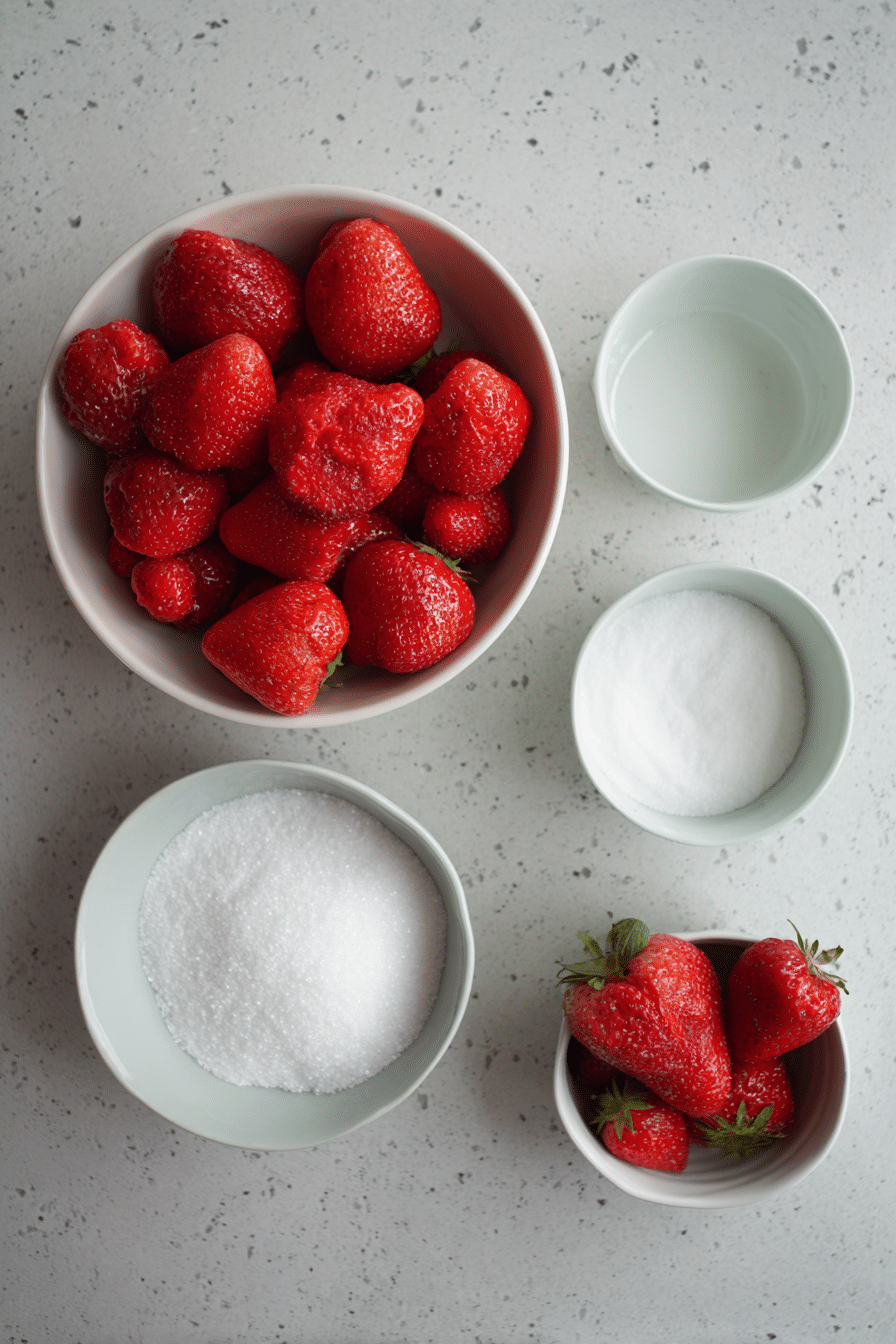
This recipe is intentionally simple: perfectly dry fruit, a clean sugar syrup, and the right temperature. When those three line up, you get a glossy shell that sets in minutes.
Ingredients
- 8 strawberries thoroughly washed and dried
- 200 g (1 cup) caster sugar
- ¼ cup (60ml) cool water
Ingredient Notes & Substitutions
¼ teaspoon lemon juice OR cream of tartar (This is the magic ingredient!): This tiny amount of acid is the whole “without corn syrup” hack, it helps keep the syrup smooth and clear so it coats like glass candy instead of turning sandy.
Caster sugar: Caster sugar dissolves a bit faster than granulated sugar, which makes the early stage easier, but granulated sugar can still work if you are patient and fully dissolve it before the syrup boils.
Strawberries: Strawberries must be COMPLETELY DRY, moisture is the enemy because it makes the candy shell slide off or turn sticky. I also avoid bruised or overripe berries since they leak juice quickly and soften the shell from the inside.
Other fruit options: If you want a Bingtanghulu style mix, try firm, low-moisture fruits like seedless grapes or mandarin segments, and dry them just as aggressively as you do the strawberries.
Essential Equipment
- Heavy-bottomed saucepan: This helps the sugar heat evenly so you are less likely to scorch or get hot spots that trigger crystallization.
- Candy thermometer: The most reliable way to know you hit the hard crack stage, which is what makes tanghulu crunchy instead of sticky.
- Skewers: Wooden or bamboo skewers, toothpicks work for smaller fruit like strawberries.
- Non-stick surface: A Silpat mat is my favorite because the set candy releases cleanly, parchment paper works too but can sometimes grab the coating.
- Pastry brush and a small dish of cool water: For washing down the pan sides to remove stray sugar crystals.
How to Make strawberry tanghulu without corn syrup
Prep Your Fruit & Station
- Gently spear each strawberry through the stem end with a toothpick, going about halfway down so it feels secure. Line a baking tray or plate with parchment paper, then set a pastry brush and a small dish of cool water beside the stove so you can react quickly once the syrup is hot.
Dissolve the Sugar (The No-Stir Rule Begins Soon!)
- Add the sugar to a small, heavy-bottomed saucepan and cover with ¼ cup (60ml) cool water. Add ¼ teaspoon lemon juice OR cream of tartar now, then set the pan over medium-low heat so the sugar can melt slowly and evenly.
- Stir constantly with a heatproof silicone spatula until every grain dissolves and the syrup goes from cloudy to clear. Do not let it boil before it is fully dissolved, and if it heats too fast, briefly pull the pan off the burner to keep it under control.
Boil to the Hard Crack Stage (Don’t Stir!)
- As soon as the syrup starts to simmer, stop stirring completely to avoid crystallization. Use the damp pastry brush to wash down the sides of the pan so no sugar crystals fall back in, then let the syrup boil, never stirring, until it reaches 300°F (150°C) on a thermometer, about 15 minutes.
Dip and Set
- Remove the pan from heat and let the bubbling calm down and the syrup settle for 1 to 2 minutes. Working quickly, tilt the pan to pool the syrup, dip each strawberry for an even, glossy coat, then let it set on the parchment until cool and hard, about 5 minutes, and eat within 1 hour of dipping.
The Science of a Perfect Crunch & Essential Safety
Why This Recipe Works: The No-Crystallization Secret
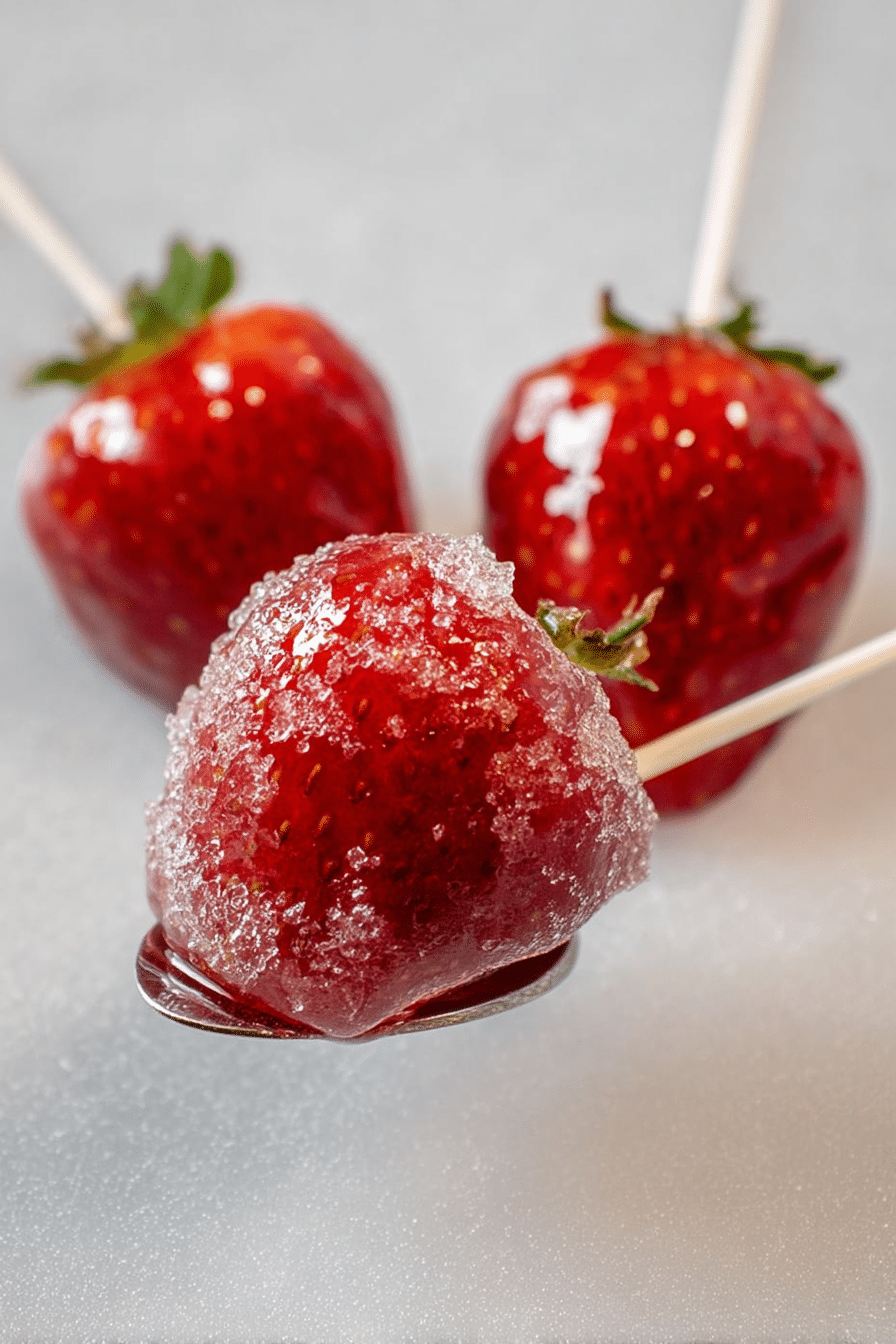
Tanghulu is Chinese street food at its core, fruit coated in a thin layer of glass candy, and the whole challenge is keeping sugar from turning opaque and gritty.
Corn syrup is normally used because it acts like an interfering agent, it gets in the way of sucrose molecules locking into crystals.
Here, a tiny amount of lemon juice or cream of tartar does a similar job by inverting a little of the sucrose into different sugars, which disrupt crystal formation like “bouncers” preventing a pile-up. If you want the deeper food science, this science of preventing sugar crystallization explains why interfering agents work.
Temperature is the other half of the crunch equation, hard crack stage is where the syrup sets brittle and snappy instead of tacky. If you like reference charts, this candy temperature chart for the hard crack stage is a handy guide to bookmark.
Safety First: Working with 300°F Sugar
Boiling sugar at 300°F is far hotter than boiling water, and it sticks to skin, which can cause severe burns.
Keep kids and pets out of the kitchen, wear long sleeves if you can, and never walk away from the pan once it is simmering.
Have a bowl of cold water nearby in case of accidental splashes, and if a burn happens, cool it immediately and seek medical advice when appropriate.
Pro Tips & Troubleshooting
Pro Tips
- Use a Silpat mat instead of parchment or wax paper for the best non-stick surface.
- Immediately dip the coated fruit into a bowl of ice water to shock it and create a super hard, glassy shell instantly.
- Stand the finished skewers in a glass filled with uncooked rice to hold them upright while they set, preventing flat spots.
- To make dipping easier with a small amount of syrup, tilt the pan to create a deeper pool of candy.
- If the sugar syrup starts to harden in the pan while you work, you can gently reheat it on low heat to make it liquid again.
Common Mistakes to Avoid
- Sticky, not crunchy: The syrup did not reach the hard crack stage (300°F / 150°C), so it sets chewy and tacky instead of brittle.
- Grainy, white syrup: You likely stirred after boiling started, or crystals from the pan sides fell back in, stop stirring once it simmers and keep washing down the sides.
- Shell slid off the fruit: The strawberries were not completely dry, any water on the surface blocks adhesion and melts the sugar on contact.
- Leaks that ruin the crunch: Bruised or overripe fruit releases juice quickly, which dissolves the coating from underneath.
Serving, Storing, and Fun Variations
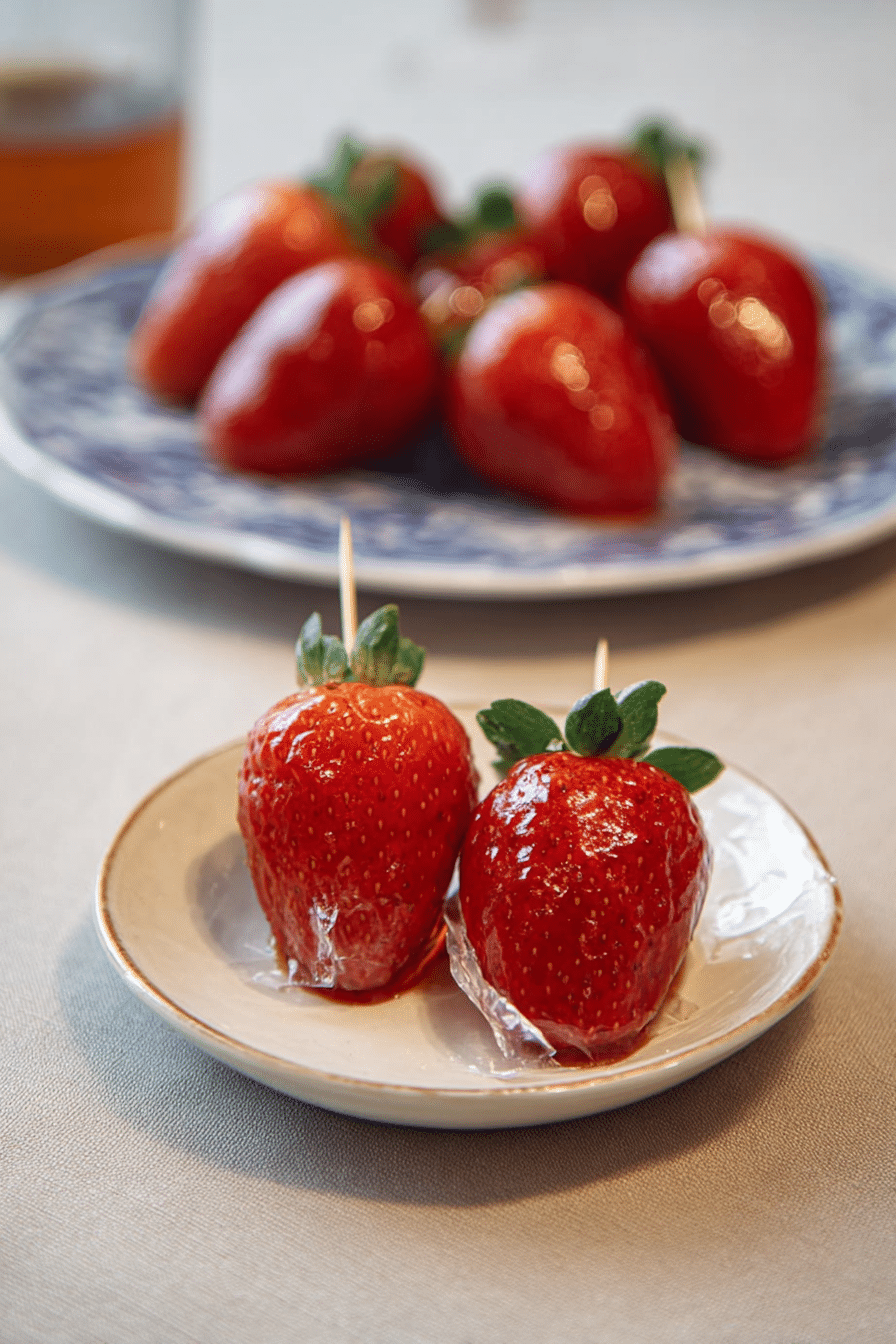
Serving Ideas
Serve tanghulu immediately for maximum crunch, it is meant to be dramatic, crackly, and eaten fresh.
I also love using candied fruit skewers as a garnish for cakes or even cocktails, they look like something from a street stall but feel restaurant-level at home. If you are planning a strawberry-themed dessert table, pair it with strawberry crunch cake for a fun contrast of textures.
For Valentine’s Day, this is my favorite alternative to chocolate-covered strawberries because the shell is clean, glassy, and loud when you bite.
How to Store Tanghulu (and Why You Shouldn’t Refrigerate It)
Tanghulu is best eaten within 1 to 2 hours, after that the candy shell starts pulling moisture from the air and loses its snap.
Do not refrigerate it, the fridge is humid, and humidity dissolves sugar, which turns your shell sticky and weepy.
If you must hold it briefly, keep it at room temperature in the driest spot you can find for the shortest time possible, and avoid covering it tightly with plastic, which traps moisture.
Fun Variations
Other fruits: Try seedless green grapes, mandarin orange segments, blueberries, or kiwi slices, the key is firm fruit with low surface moisture, and drying it thoroughly before dipping.
Chocolate tanghulu: You can whisk in 1 tablespoon sifted cocoa powder after the syrup reaches temperature, but it is more advanced because it encourages crystallization, so work very quickly and expect a slightly higher fail rate.
More strawberry inspiration: If you want a lighter, creamy counterpoint to the candy crunch, try my refreshing strawberry sago, or prep breakfast with strawberry shortcake overnight oats for the next day.
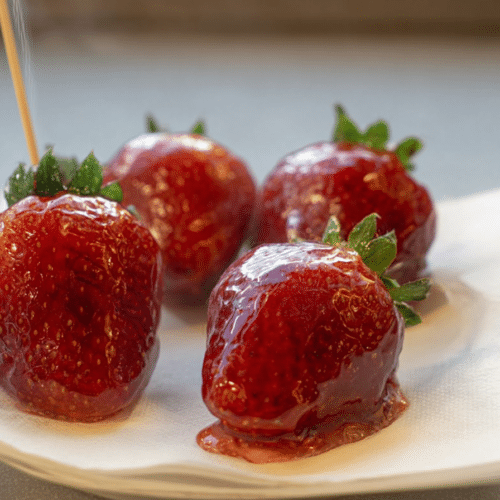
Strawberry Tanghulu Without Corn Syrup (Secret Tip!)

Equipment
- Heavy-bottomed saucepan
- Candy thermometer
- Skewers (wooden or bamboo) or toothpicks
- Non-stick surface (Silpat mat or parchment paper)
- Pastry brush
- Small dish of cool water
- Baking tray or plate
- Heatproof silicone spatula
Ingredients
- 8 strawberries thoroughly washed and dried
- 200 g caster sugar (1 cup)
- 1/4 cup cool water (60ml)
- 1/4 teaspoon lemon juice OR cream of tartar This is the magic ingredient!
Instructions
Prep Your Fruit & Station
- Gently spear each strawberry through the stem end with a toothpick, going about halfway down so it feels secure.
- Line a baking tray or plate with parchment paper, then set a pastry brush and a small dish of cool water beside the stove so you can react quickly once the syrup is hot.
Dissolve the Sugar (The No-Stir Rule Begins Soon!)
- Add the sugar to a small, heavy-bottomed saucepan and cover with 1/4 cup (60ml) cool water. Add 1/4 teaspoon lemon juice OR cream of tartar now, then set the pan over medium-low heat so the sugar can melt slowly and evenly.
- Stir constantly with a heatproof silicone spatula until every grain dissolves and the syrup goes from cloudy to clear. Do not let it boil before it is fully dissolved, and if it heats too fast, briefly pull the pan off the burner to keep it under control.
Boil to the Hard Crack Stage (Don’t Stir!)
- As soon as the syrup starts to simmer, stop stirring completely to avoid crystallization. Use the damp pastry brush to wash down the sides of the pan so no sugar crystals fall back in, then let the syrup boil, never stirring, until it reaches 300°F (150°C) on a thermometer, about 15 minutes.
Dip and Set
- Remove the pan from heat and let the bubbling calm down and the syrup settle for 1 to 2 minutes.
- Working quickly, tilt the pan to pool the syrup, dip each strawberry for an even, glossy coat, then let it set on the parchment until cool and hard, about 5 minutes, and eat within 1 hour of dipping.
Notes
Nutrition
Conclusion
This is my go-to method for the best strawberry tanghulu without corn syrup because it focuses on what actually makes or breaks the shell: fully dissolved sugar, no stirring after simmering, hard crack stage, and that tiny bit of acid to prevent crystallization.
Once you hear that first clean crunch, you will know you nailed it. If you loved this recipe, please leave a rating or share it with a friend who needs to try it!
Your Tanghulu Questions, Answered
Why is my tanghulu sticky and not crunchy?
Your sugar syrup did not reach the hard crack stage of 300°F (150°C). A candy thermometer is the most dependable way to get a crunchy, brittle shell.
How do you make tanghulu without a thermometer?
It is riskier, but you can do the cold water test. Drizzle a little hot syrup into a bowl of ice water, if it forms hard, brittle threads that snap when bent, it is ready.
What’s the secret to preventing sugar from crystallizing without corn syrup?
Add ¼ teaspoon lemon juice or cream of tartar to the sugar and water at the beginning. The acid helps interfere with sugar crystal formation, keeping the syrup clear and smooth.
How do you store tanghulu and how long does it last?
Tanghulu is best within 1 to 2 hours and should not be refrigerated. Humidity melts the glass candy shell and makes it sticky, store briefly at room temperature in the driest place possible.
What are the best fruits to use for tanghulu?
Firm, low-moisture fruits work best. Besides strawberries, try seedless grapes, mandarin orange segments, blueberries, and kiwi slices, and always dry the fruit completely before dipping.
How do I clean the hardened candy from my saucepan?
Fill the saucepan with water and bring it to a boil. The hardened sugar dissolves back into the water, then you can pour it out and wash the pan as usual.