Skip to content
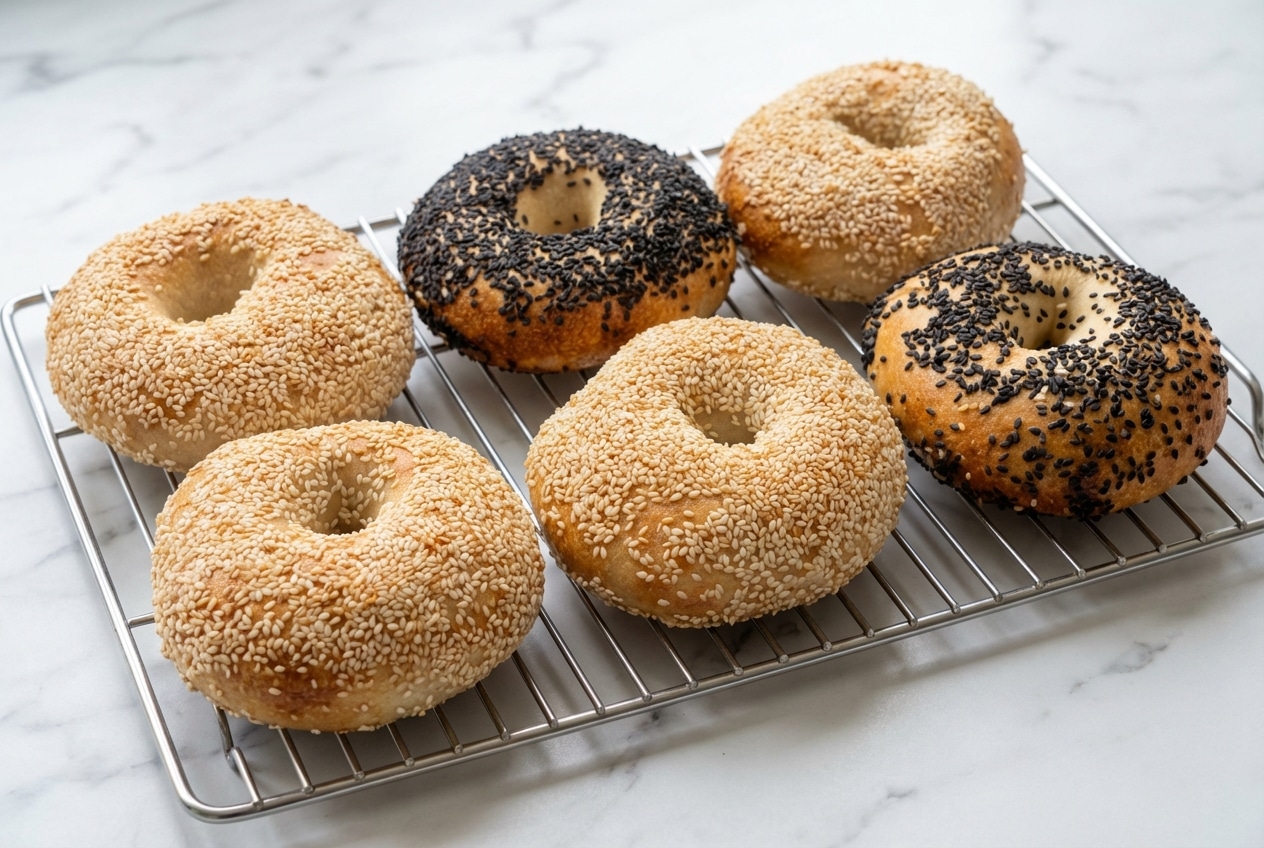
In my kitchen, the moment I smell wild yeast warming up in a hot oven, I’m right back in a New York bagel shop line, debating sesame or everything. This Sourdough Bagels Recipe is for anyone who wants that real-deal chew, the glossy crust, and the tang you only get from a slow sourdough fermentation.
If your homemade bagels have ever tasted like “bread in a ring,” this is the reset. I’ll show you the little moves that matter, from a stiff dough made with bread flour to the boil that sets that iconic crust.
Why You Will Love This Recipe
Double-malt magic: In my batches, the double-malt infusion strategy is what finally delivered that NYC-style aroma, the kind that makes the whole house smell like a bagelry at sunrise.
Serious chew, not a soft roll: Bread flour builds the gluten strength you need for that resistant bite, and the dough’s low hydration percentage keeps everything dense in the best way.
Flavor that deepens overnight: Cold proofing gives the sourdough starter time to develop, so the tang tastes clean and complex, not sharp, and the crust browns with a gorgeous Maillard reaction.
Ingredients and Substitutions
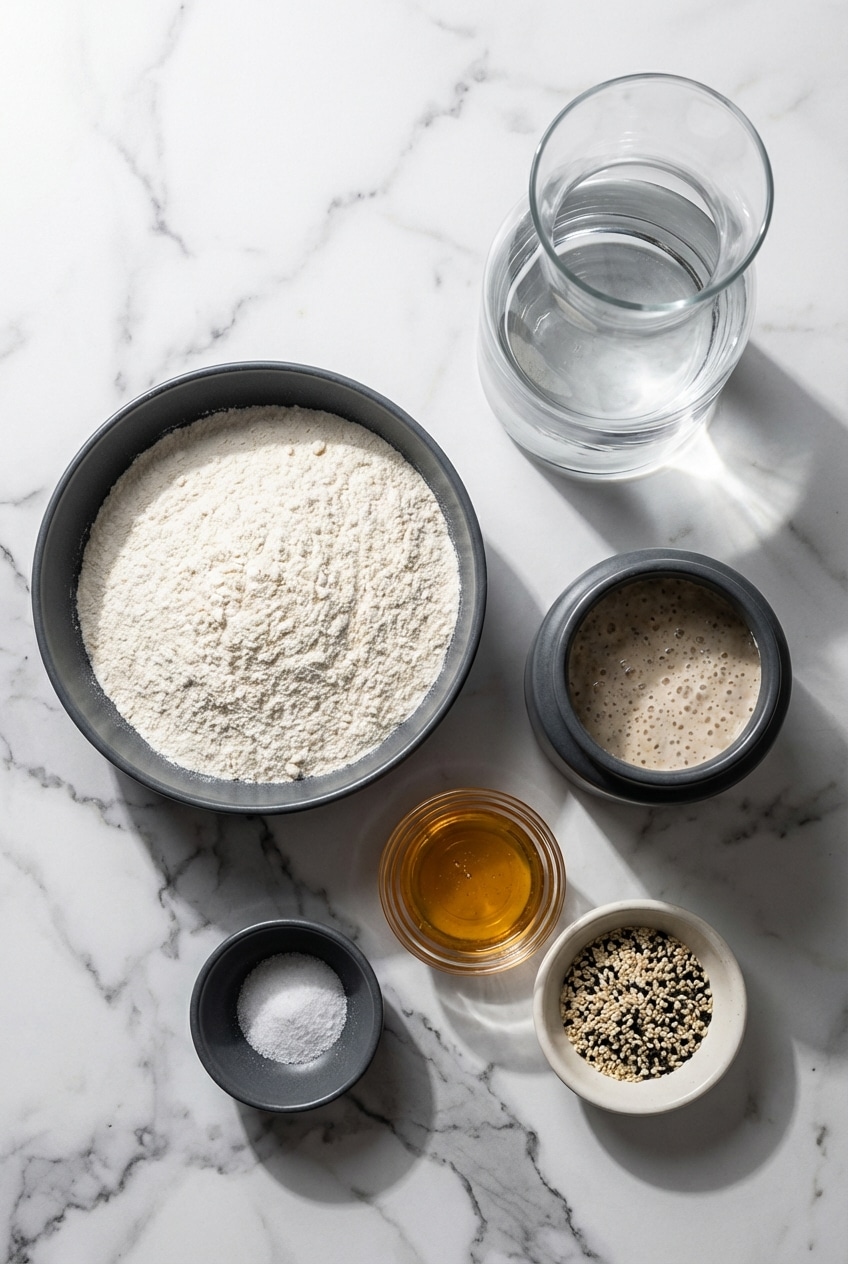
These are classic bagel basics, but each one has a job. Think strength from flour, balance from salt and honey, and that signature finish from your toppings.
Ingredients
- 450g Bread Flour
- 225g Water
- 100g Sourdough Starter
- 20g Honey
- 10g Salt
Sesame seeds or other toppings for the bagels:
Ingredient Notes & Substitutions
Sourdough Starter: Use it active and risen, not sleepy. If you only have discard, the dough will struggle to rise on this timeline, and you’ll miss that spring from lively wild yeast.
Bread Flour: This is the backbone. All-purpose flour can bake up pleasant, but it won’t give you that bagel-shop pull and chew.
Honey: It adds sweetness and helps browning, especially in the boil. For a more old-school NYC vibe, I like using barley malt syrup in the boiling water instead of honey, while keeping the dough exactly as written.
Non-diastatic malt powder (optional): The most “New York” trick is stirring 1 tsp into the dry ingredients, it boosts that malty perfume and deepens color without changing the dough’s structure.
Sesame seeds or other toppings for the bagels:: Everything bagel seasoning is my weeknight favorite, and it clings best right after boiling when the surface is tacky and glossy.
How to Make Sourdough Bagels Recipe
Wake up the starter and build strength
- Pull 25 grams of sourdough starter from the fridge, then stir in 50 grams of water until it loosens up. Add 50 grams of bread flour and mix until you can’t see dry bits, it should look like a thick paste.
- Mark the level with a rubber band, cover loosely, and let it rise at room temperature for 8-10 hours until doubled. When it’s ready, it will look domed and bubbly, and smell lightly tangy, not harsh.
Mix, knead, and let the dough ferment
- In a large bowl or a stand mixer bowl, combine 225 grams of water, 10 grams of salt, 100 grams of active starter, and 20 grams of honey. Stir until the liquid looks cloudy and evenly blended.
- Add 450 grams of bread flour and stir until a stiff, shaggy dough forms. It will feel dry at first, keep pressing and folding until all flour is hydrated and you have one rough mass.
- Knead by hand for 8-10 minutes on a clean counter without adding extra flour, until the dough turns smooth, tight, and elastic. With a stand mixer, run low for 1 minute, then medium for 8 minutes, and stop when the dough cleans the bowl and feels firm like a stress ball.
- Move the dough into an oiled container, cover, and let it rise at room temperature for 4-6 hours until doubled. You’ll notice it becomes slightly puffed and lively, but still dense, that’s exactly what you want for bagels.
Shape, proof, boil, and bake
- Divide into six pieces, about 134 grams each, and shape each into a tight ball by stretching the surface smooth. Cover and let them rest for 15-30 minutes so the gluten relaxes and stops fighting you.
- Press your thumb through the center of each ball, then gently widen the hole by rotating the ring like a steering wheel. Make the hole a little larger than you think, it always shrinks during proofing and baking.
- Set the shaped bagels on a baking sheet lined with cornmeal or flour, cover, and proof for 2-3 hours until doubled. For better flavor and easier handling, refrigerate for a cold proof of 8-24 hours, the chilled dough holds its shape beautifully.
- Preheat the oven to 450°F (232°C). Bring 2-3 liters of water to a boil and stir in 1 Tbsp of honey, then boil each bagel for 1 minute per side, working in batches so the pot stays lively.
- Drain on a wire rack, then dip into toppings immediately while the surface is still wet and sticky. Bake on the middle rack for 20 minutes until deeply golden brown, then cool on a wire rack before slicing so the crumb sets.
Secrets for Perfection
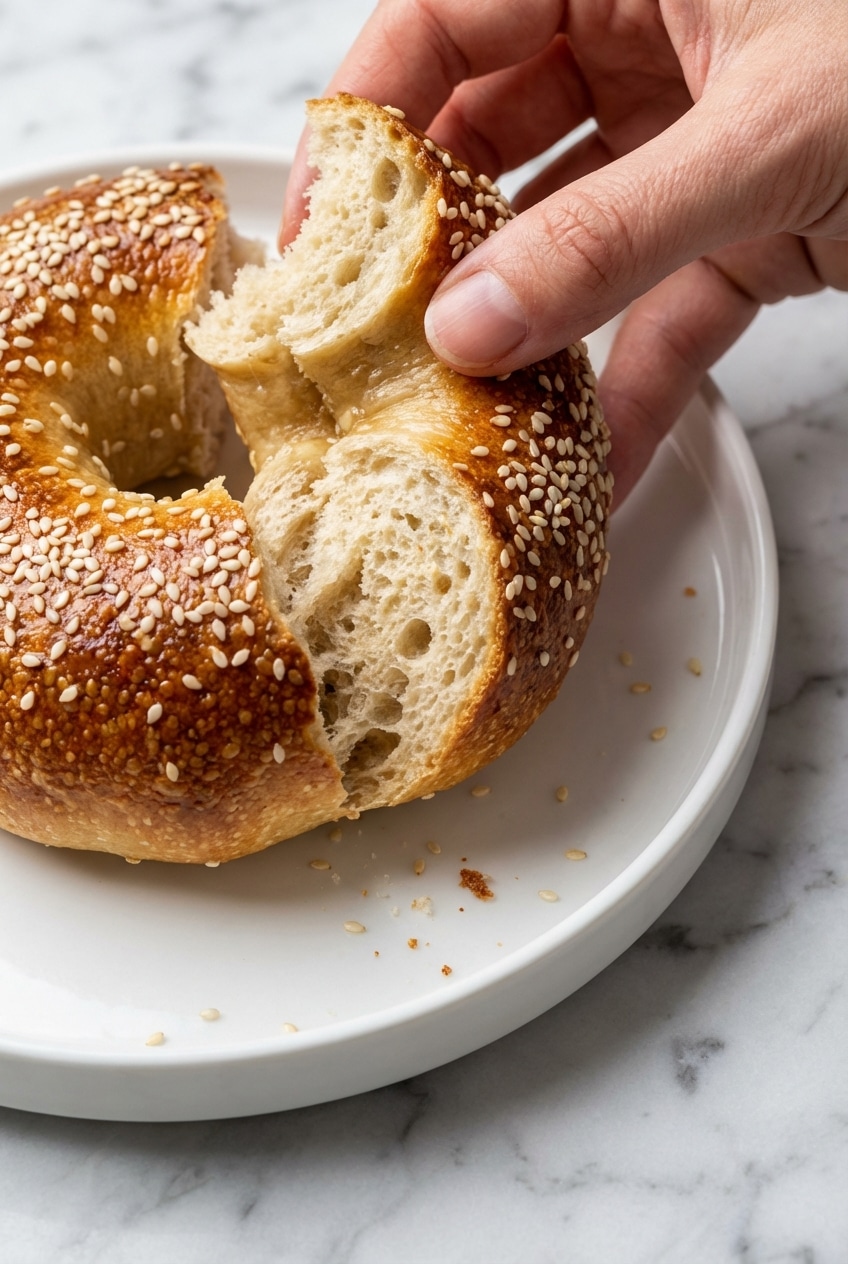
Stiff dough, smart hydration: Bagel dough should feel stubborn, but not crumbly. If your kitchen is very dry, I’ve found that a tiny splash more water can help the dough come together, but the goal is still a firm, low-hydration mix.
Cold proofing is more than flavor: That long chill “sets” the rings, so they don’t deflate when you lift them into the pot. It’s also where wild yeast and lactic bacteria round out the flavor, similar to how a great sourdough focaccia develops depth during fermentation, just with a very different texture goal.
Boil for chew, not just tradition: The boil triggers gelatinization on the surface, which is why the crust bakes up shiny and crackly instead of dry. When you nail this step, the bite has that proper bagel resistance, not sandwich-bread softness.
Heat from below matters: A preheated pizza stone or baking steel gives the bottom a fast blast of heat, which boosts oven spring and keeps the crust snappy. If you use a regular sheet pan, let it preheat in the oven so the bagels hit a hot surface.
Pro Tips & Troubleshooting
Pro Tips
- Use the float test: Drop one shaped bagel in cold water, and if it floats, it’s ready to boil.
- Keep the pot uncrowded: Boil in batches so the water stays at a true boil and cooks evenly.
- Top while glossy: Toppings stick best right after boiling, when the starch gel is still tacky.
- Use the right tools: A slotted spoon helps you lift bagels gently without deflating them.
Common Mistakes to Avoid
- Center holes that are too small: If the hole isn’t bigger than a half-dollar, it may close up in the oven.
- Wrinkled skins after boiling: That usually signals over-proofing, proof a bit less next time and rely on the float test.
- Overworking a stand mixer: This stiff dough can strain a home motor, finishing the last minutes by hand keeps things safe.
- Skipping the boil: That boil is the entire reason the crust gets glossy and chewy, similar to the method used for cinnamon sugar pretzels, where boiling sets up that signature bite.
Serving & Storage
Best Ways to Serve
For the classic lox moment, I go heavy on cream cheese, then smoked salmon, capers, and thin red onion. When the bagel is properly chewy, those silky toppings feel even more luxurious.
If you’re building a breakfast sandwich, a toasted sesame bagel loves a fried egg, crispy bacon, and avocado. On weekends, I’ll put out a fermented spread alongside, and sourdough English muffins fit the same cozy breakfast table with similar toppings.
Storage and Reviving
Keep bagels at room temperature in a sealed bag for 2-3 days, then toast to bring back the crust. Sourdough stays pleasant a touch longer than yeasted bread, but the chew tightens after day one, and toasting fixes that.
For freezing, slice first, then freeze so you can toast straight from frozen. If one feels a little stale, a light water spritz before toasting rehydrates the crust and helps it turn crisp again.
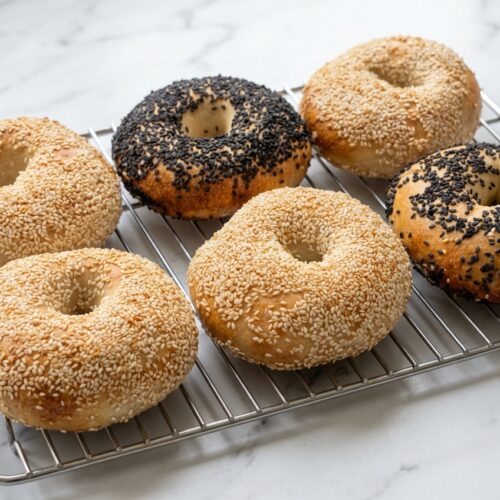
Authentic Sourdough Bagels Recipe

Equipment
- Stand mixer
- Baking Sheet
- Large Pot
- Slotted spoon
- Wire rack
Ingredients
- 450 g Bread Flour
- 225 g Water
- 100 g Sourdough Starter
- 20 g Honey
- 10 g Salt
Sesame seeds or other toppings for the bagels
Instructions
Wake up the starter and build strength
- Combine 25 grams of sourdough starter with 50 grams of water and 50 grams of bread flour. Mix until no dry spots remain and it forms a thick paste.
- Cover the mixture and let it rise at room temperature for 8 to 10 hours until it has doubled in size, looks bubbly, and has a domed top.
Mix, knead, and let the dough ferment
- In a large bowl, whisk together 225 grams of water, 10 grams of salt, 100 grams of the active starter, and 20 grams of honey until well combined.
- Add 450 grams of bread flour and mix until a stiff, shaggy dough forms. Ensure all the flour is fully hydrated into a rough mass.
- Knead the dough by hand for 8 to 10 minutes, or use a stand mixer on medium speed for 8 minutes, until the dough is smooth, firm, and elastic.
- Place the dough in an oiled container, cover, and allow it to undergo bulk fermentation at room temperature for 4 to 6 hours until doubled.
Shape, proof, boil, and bake
- Divide the dough into six equal pieces, shape into tight balls, and let them rest covered for 15 to 30 minutes to relax the gluten.
- Press your thumb through the center of each ball and rotate to widen the hole. Place on a floured baking sheet and proof for 2 to 3 hours at room temperature, or 8 to 24 hours in the fridge.
- Preheat your oven to 450°F (232°C). Bring 2 to 3 liters of water to a boil with 1 tablespoon of honey added. Boil the bagels for 1 minute per side in batches.
- Drain the bagels briefly on a rack and immediately dip them into your chosen toppings. Bake on the middle rack for 20 minutes until deeply golden brown.
- Transfer the baked bagels to a wire rack to cool completely before slicing to allow the internal crumb structure to set properly.
Notes
Nutrition
Conclusion
Once you taste a sourdough bagel with that double-malt character, it’s hard to go back, the crust is darker, shinier, and the chew is pure NYC. Keep the dough stiff, respect the proof, and let the boil do its job.
When you’re ready to keep the sourdough rhythm going, a good loaf-style crumb has its own charm, and this sourdough focaccia is a fun contrast to bagel density.