In my kitchen, parmesan crusted chicken is the kind of comfort food that can make a Tuesday feel like a win. But I have seen it go wrong so many times, dry cutlets, pale coating, or that heartbreaking moment when the breading slides off in the pan. This version fixes all of it with a small, smart routine that feels almost too easy.
You will get a crisp, golden crust with real cheese flavor, and chicken that stays juicy even when life distracts you for a minute. I also sneak in a bright citrus note that makes the whole bite taste a little more “restaurant” without getting fussy.
Why You Will Love This Recipe
The Double-Citrus Pecorino Crust: Lemon zest plus a little Pecorino Romano gives the crust a tangy lift that cuts through the rich, fried cheese, and makes Parmigiano-Reggiano taste even nuttier.
The 15-Minute Quick Brine: I discovered that a short brine is the easiest insurance policy against dry chicken breasts, it helps the meat stay tender even if your timing is not perfect.
Shattering Crisp Texture: When the cutlets hit a hot cast iron skillet, that Maillard reaction builds a deep golden crust that audibly crunches before you reach the juicy center.
Weeknight Friendly: This is a classic dredging station setup, nothing fancy, just a reliable method that cooks fast and tastes like you planned ahead.
Ingredients and Substitutions

These ingredients work like a team, flour for grip, egg for glue, and seasoned crumbs plus cheese for that savory, crisp shell that makes the chicken feel special.
Ingredients
For Breading:
- 1/2 cup all purpose flour
- 2 eggs
- 2/3 cup seasoned Italian bread crumbs
- 1/3 cup freshly grated Parmigiano-Reggiano cheese
- 1/4 teaspoon salt
- 1/4 teaspoon freshly ground black pepper
- 1 tablespoon finely chopped fresh herbs
For Chicken:
- 1 1/2 pounds boneless skinless chicken breasts
- Salt to taste
- Freshly ground black pepper to taste
- 1/4 cup olive oil
- Lemon wedges
Ingredient Notes & Substitutions
The Cheese Factor: Freshly grated Parmigiano-Reggiano melts and browns into a lacy crust, while many pre-grated options can burn oddly or taste flat. The FDA even outlines standards for grated parmesan cheese and those allowed add-ins change how it behaves in a skillet.
Pecorino Romano: The outline twist uses Pecorino for a sharper, saltier bite and a slightly different melt, so a small handful mixed into your crumb bowl is magic. If you only have Parmesan, the recipe still works, it just tastes a bit rounder and less zippy.
Fresh Herbs: I love parsley for clean flavor, thyme for a cozy aroma, and oregano for that Italian-seasoning vibe. Whatever you pick, chop it fine so the crust stays tight and even.
Breadcrumb Variations: Panko crumbs give a more jagged crunch, and they brown beautifully if your oil temp is steady. For a gluten-free approach, almond flour can replace the flour dredge, and gluten-free crumbs can stand in for the Italian bread crumbs.
How to make parmesan crusted chicken
Quick brine, then dry the cutlets
- Stir together a simple salt-water brine and submerge the chicken for 15 minutes, this little soak helps the meat hold onto moisture. The science behind it is the process of osmosis and protein denaturation, which is why even a short brine matters.
- Lift the chicken out and pat it very dry, I mean really dry, so the coating can grab. Wet surfaces are the fastest way to get a crust that slips.
Pound and set up the dredging station
- Use a meat tenderizer to pound the chicken into cutlets about 1/4-inch thick, aiming for even thickness edge to edge. When the thickness matches, the outside turns golden without the center lagging behind.
- Line up three wide, shallow bowls like an assembly line: flour in the first, eggs beaten smooth in the second, and in the third bowl mix the seasoned Italian bread crumbs, Parmigiano-Reggiano, salt, pepper, chopped herbs, plus your twist of lemon zest and a little Pecorino Romano.
Coat the chicken, then let it rest
- Season the chicken with salt to taste and freshly ground black pepper to taste, then dredge in flour and shake off anything heavy. You want a light dusting, like a thin sweater, not a winter coat.
- Dip into egg and let the excess drip, then press into the crumb and cheese mixture, turning and pressing so it looks fully dressed with no bald spots. Browning comes from dry contact and heat, and that Maillard reaction in high-heat cooking loves a well-packed coating.
- Set the breaded cutlets on a plate and let them sit 5 to 10 minutes, this rest hydrates the crumbs slightly and helps the coating cling in the pan.
Pan-fry until deeply golden
Warm the 1/4 cup olive oil in a large sauté pan over medium heat, then fry the cutlets for 2 to 3 minutes per side, until the crust is a deep golden brown and smells nutty and toasted. Work in batches if needed, then serve right away with lemon wedges while the crust still crackles.
The Secret Science of a Perfect Crust

Internal temperature guidance: I never guess with chicken cutlets, I use a thermometer and pull them at exactly 165°F (74°C). That number gives you safety and juiciness, without overcooking the center while you chase color.
Oil smoke points: Olive oil brings flavor, but it can smoke if the pan runs too hot, especially in cast iron. If your stove is aggressive, mixing in a little avocado oil helps keep things calm while still tasting rich.
Uniform thickness: Uneven chicken is why you get burnt edges and a raw middle, and no breading trick can fix that. The pounding step is non-negotiable if you want consistent color and tender cutlets.
Kitchen safety: With raw poultry, I keep a “clean hand, dirty hand” rhythm and wipe down as I go. The CDC’s safe handling practices for raw poultry are a good refresher for avoiding cross-contamination.
Pro Tips & Troubleshooting
Pro Tips
- Use the one-hand rule, one hand for dry, one for egg, so the dredging station stays tidy and your coating stays crisp.
- Let the chicken sit out 15 minutes before frying, cold cutlets cool the oil and you lose crunch.
- Press the crumb layer on firmly, then give it that 5 to 10 minute rest so it “sets” before the skillet.
- A cast iron skillet holds heat beautifully, which helps the cutlets brown evenly and fast.
- Good crumbs matter, and a batch of homemade breadcrumbs can make the crust taste fresher and crunch louder. I like them on days when I want extra texture and less dusty coating.
Common Mistakes to Avoid
- Crowding the pan, too many cutlets drop the oil temperature and you end up steaming instead of frying.
- Using shaker-style “Parmesan” from a green can, it does not melt into a proper crust.
- Skipping the dry pat after brining, moisture on the surface makes breading slip.
- Flour that is left thick and patchy, a heavy flour coat turns gummy under the crumbs.
Serving & Storage

Creative Serving Ideas
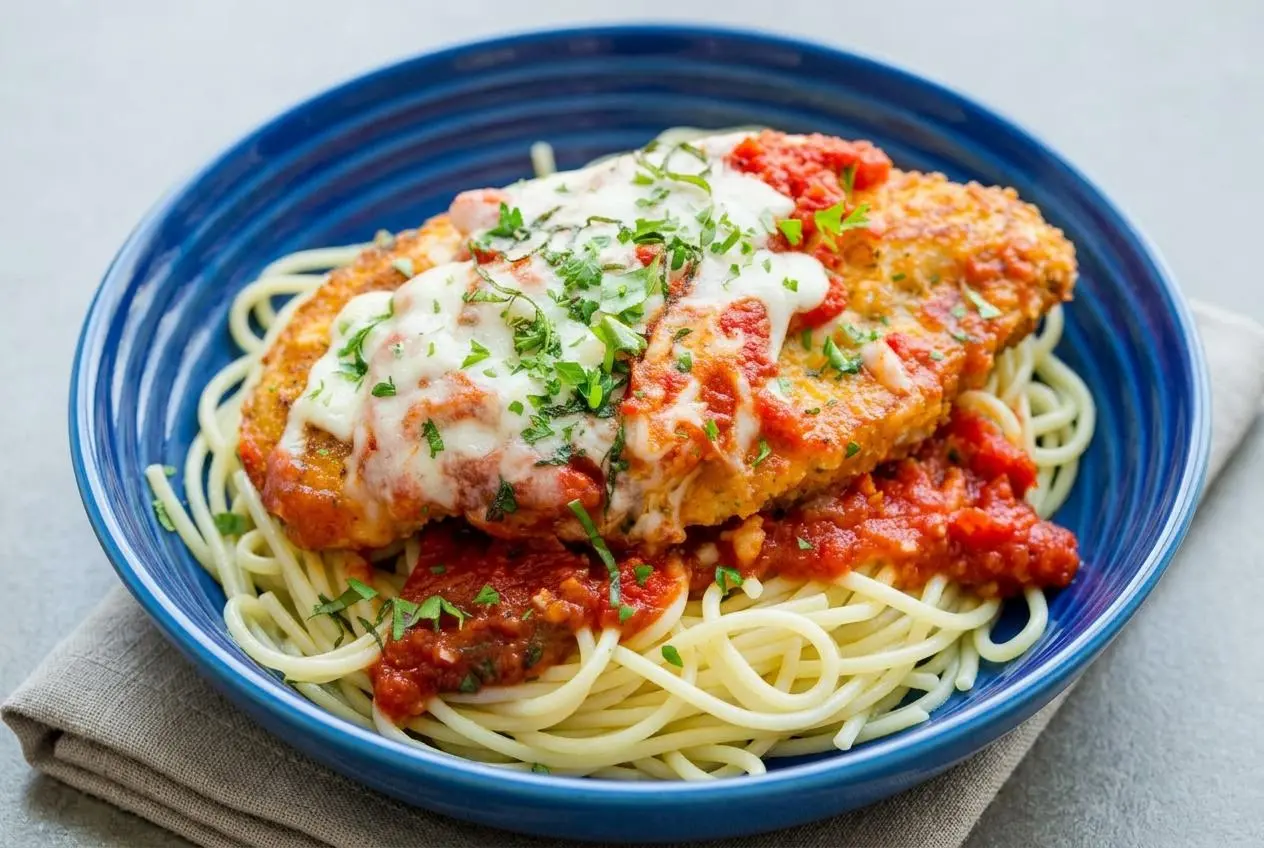
For a bright, modern plate, I tuck the cutlets under arugula and cherry tomatoes with a lemony vinaigrette, the peppery greens wake up the cheese. A summer-friendly side like caprese pasta salad keeps the whole meal light while still feeling abundant.
When you want cozy, garlic-buttered noodles or creamy mashed potatoes never miss, because they soak up every lemony, cheesy crumb. A bowl of lemon parmesan pasta also echoes the citrus note and makes dinner feel extra polished.
Storage and Reheating
Store leftovers covered in the fridge, and expect the crust to soften a bit overnight. For best texture, reheat on a wire rack set over a sheet pan in a hot oven until the crust feels dry and crisp again.
An air fryer also brings the crunch back quickly, just keep the cutlets in a single layer so hot air can circulate. I avoid the microwave for this one, it turns that shattering crust into a soft jacket in minutes.
Why This Recipe Redefines Dinner
The quick brine keeps the chicken juicy, and that citrus-pecorino boost makes the crust taste bright, salty, and a little fancy. When the coating stays put and the cutlets come out evenly golden, dinner feels effortless, even if your day was not.
Once you have the rhythm, you can play with herbs, crumbs, or even the cooking method without losing the core crunch. That confidence is what turns a simple cutlet into a house specialty.

Crispy Parmesan Crusted Chicken

Equipment
- Cast Iron Skillet
- Meat tenderizer
- Meat Thermometer
Ingredients
For Breading
- 1/2 cup all purpose flour
- 2 eggs
- 2/3 cup seasoned Italian bread crumbs
- 1/3 cup freshly grated Parmigiano-Reggiano cheese
- 1/4 teaspoon salt
- 1/4 teaspoon freshly ground black pepper
- 1 tablespoon finely chopped fresh herbs
For Chicken
- 1 1/2 pounds boneless skinless chicken breasts
- Salt to taste
- Freshly ground black pepper to taste
- 1/4 cup olive oil
- Lemon wedges
Instructions
Quick brine, then dry the cutlets
- Stir together a simple salt-water brine and submerge the chicken for 15 minutes to help the meat retain moisture.
- Lift the chicken out and pat it very dry. Ensuring a dry surface is essential for the breading to adhere properly without slipping.
Pound and set up the dredging station
- Use a meat tenderizer to pound the chicken into cutlets about 1/4-inch thick. Aim for a uniform thickness edge to edge for even cooking.
- Set up three bowls: flour in the first, beaten eggs in the second, and a mix of seasoned bread crumbs, parmesan, salt, pepper, herbs, lemon zest, and Pecorino Romano in the third.
Coat the chicken, then let it rest
- Season the chicken with salt and pepper, then dredge in flour, shaking off the excess for a light dusting.
- Dip each piece into the egg and let the excess drip off, then press firmly into the crumb and cheese mixture until fully coated.
- Set the breaded cutlets on a plate and let them rest for 5 to 10 minutes. This allows the crumbs to hydrate and set before frying.
Pan-fry until deeply golden
- Heat 1/4 cup olive oil in a large sauté pan or cast iron skillet over medium heat. Fry the cutlets for 2 to 3 minutes per side until the crust is a deep golden brown and the internal temperature reaches 165°F (74°C).
- Serve immediately with fresh lemon wedges while the crust is at its crispiest.