Skip to content
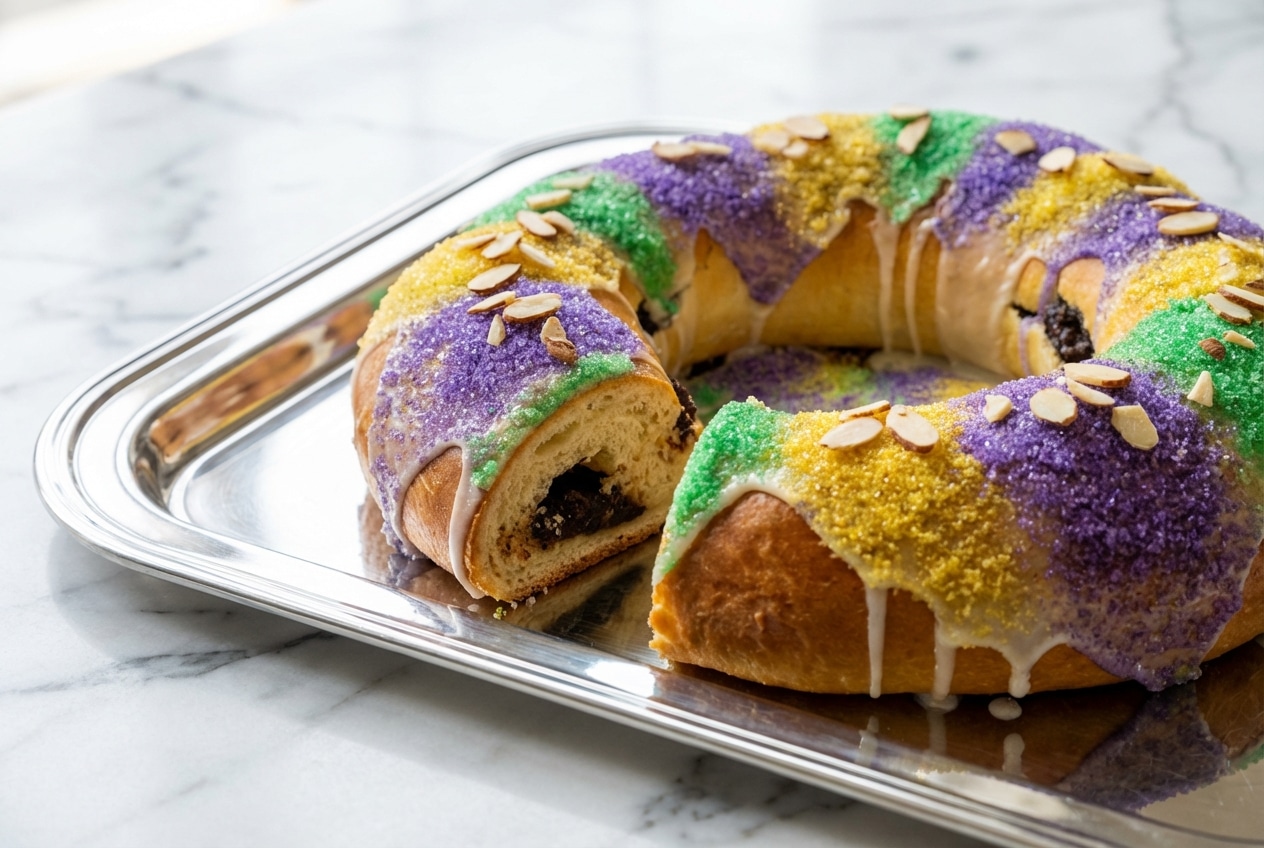
In my kitchen, king cake season always starts with the smell of butter turning nutty on the stove and yeast waking up in warm dairy. This king cake recipe is the one I bake when I want that New Orleans bakery feeling at home, the pillowy brioche dough, the cream cheese ribbon, and the loud, happy Mardi Gras colors.
It’s built for hosts, potluck heroes, and anyone who loves enriched bread but wants it to stay soft for days. The twist is simple but transformative, brown butter in the dough and a whisper of almond in the icing.
Why You’ll Love This Recipe
Brown butter magic: I brown the butter until it smells like toasted hazelnuts, and that “beurre noisette” depth makes the brioche dough taste like it came from a Carnival season bakery case.
Almond aroma: That tiny floral note in the icing is what I notice in the best Louisiana boxes, and it’s the detail that makes this king cake recipe feel grown-up without losing its fun.
Soft, bakery crumb: Scald-warm mixing and patient proofing keep the enriched bread tender, with a crumb that stays plush even the next day.
Yeast confidence: Rapid rise yeast can be speedy, but it still loves the right temperatures, and I’ll walk you to that perfectly domed rise.
Ingredients and Substitutions

These ingredients build a brioche-style dough, a tangy cream cheese filling, and a glossy icing that clings beautifully. Keep everything measured and at the right temperature, and the texture rewards you.
Ingredients
Sweet Dough:
- 4 cups all-purpose flour, or more if needed
- ½ cup white sugar
- 1 (.25 ounce) package rapid rise yeast
- 1 ¼ teaspoons salt
- 3 large eggs at room temperature
- 6 tablespoons butter
- ¾ cup Bulgarian-style buttermilk
Cream Cheese Filling:
- 1 (8 ounce) package cream cheese at room temperature
- 1 cup confectioners’ sugar
- 2 tablespoons all-purpose flour
- 2 tablespoons lemon juice
- 1 teaspoon vanilla extract
- ¼ teaspoon ground nutmeg
Egg Wash:
- 1 egg
- ¼ cup water
Icing:
- 1 cup confectioners’ sugar
- 4 teaspoons corn syrup
- 4 teaspoons milk
- 1 teaspoon lemon juice
Ingredient Notes & Substitutions
Bulgarian-style buttermilk: It’s thicker and tangier than standard buttermilk, which gives the dough a gentle bite that balances confectioners’ sugar sweetness. If yours is thin, the dough may feel softer at first, so resist adding extra flour too quickly.
Butter: Browning those 6 tablespoons is where the “Carnival bakery” flavor lives, so use a butter you like on toast. When the foam turns golden and the smell shifts from creamy to nutty, pull it immediately so it doesn’t go bitter.
Rapid rise yeast: Freshness matters more than brand here, because old yeast makes a heavy ring. I keep packets sealed in a cool spot and I always double-check the expiration date before Mardi Gras weekend.
Flour: The line “or more if needed” is your permission to adjust for humidity and egg size. The dough should be tacky but willing to pull from the bowl after kneading, not sloshy like batter.
Cream cheese: Room temperature cream cheese blends silky, which helps prevent filling leaks. If it’s cold, you’ll chase lumps and overmix, and that can thin the filling.
Nutmeg and lemon: That pairing is classic king cake energy, bright and warm at the same time. If you love a louder citrus note, a little zest (not required) plays nicely with the Epiphany-style sweetness.
How to make king cake recipe
Mixing the sweet dough base
- In the bowl of a stand mixer fitted with a dough hook, combine the flour, white sugar, rapid rise yeast, and salt so the yeast is evenly distributed. In a separate bowl, whisk the eggs until they look smooth and unified, no streaks clinging to the sides.
- In a small saucepan over low heat, melt the butter and keep going until it foams, turns light amber, and smells toasted and nutty. Whisk in the Bulgarian-style buttermilk and warm it until an instant-read thermometer reads 120 degrees F (49 degrees C), it should feel hot but not scorching.
- To protect the eggs from scrambling, slowly stream the warm buttermilk mixture into the eggs while whisking constantly. Let that mixture cool to 110 degrees F (43 degrees C), warm like a cozy bath, before it goes anywhere near your yeast.
Kneading and the first rise
- Pour the warm egg mixture into the flour mixture and knead on medium-low speed until the dough looks firm and elastic, about 10 minutes. You’re looking for a smooth surface and a dough that starts to slap the bowl gently as gluten develops.
- If the dough stubbornly smears on the sides and won’t gather, beat in up to 1/4 cup more flour, a little at a time. Stop as soon as it becomes workable, because too much flour is the fastest road to a dry king cake.
- Turn the dough onto your work surface and knead for 1 minute, just until it feels springy under your palms. Shape into a ball, place in a buttered bowl, turn to lightly coat, then cover with plastic wrap and let rise in a warm spot until doubled in volume, about 2 hours.
Filling, shaping, and glazing
- When the dough is nearly ready, preheat the oven to 350 degrees F (175 degrees C) and butter the outside edge of an 8-inch cake pan. That buttered pan edge is your shaping guide, not something you bake inside the cake.
- Stir the cream cheese, confectioners’ sugar, flour, lemon juice, vanilla extract, and ground nutmeg until smooth and spreadable. The filling should look glossy and thick, like a soft cheesecake batter that holds a ridge when you drag a spoon through it.
- Punch down the dough, then roll it on a lightly floured piece of parchment into a 10×28-inch rectangle. Spread the filling evenly, leaving a 1-inch border along each edge, because that clean border is your leak insurance.
- Starting at one long edge, lift the parchment to help you roll the dough into a tight log. Pinch the seams closed firmly so you don’t see gaps, then keep the roll resting on the parchment so it stays supported.
- Wrap the filled log around the outer edges of the prepared cake pan and pinch the ends together to form a ring. Slide a baking sheet underneath the parchment, then gently work the cake pan free, leaving a neat ring-shaped cake behind.
- Whisk the egg with the water and brush it all over the dough for shine. The surface should look lightly lacquered, not puddled.
Baking and finishing with icing
- Bake until the cake is golden brown, about 40 minutes, and it smells buttery and sweet like a bakery doorway. Let it cool about 30 minutes, because warm king cake will melt any icing right off.
- Stir confectioners’ sugar, corn syrup, and milk until smooth, then mix in 1 teaspoon lemon juice, adding only as much as needed to reach a thick but slightly runny texture. Drizzle the icing over the cooled ring so it drapes and settles into shiny ribbons.
Secrets for a Bakery Style Finish

Weighing flour: When I want the most consistent brioche dough, I reach for a scale, because 4 cups of flour should land around 500 grams. That precision prevents the classic heavy, dry Mardi Gras ring.
The “pillow” trick: Instant mashed potato flakes, about 1 cup, can be mixed into the dough for extra moisture retention. It’s an old-school bakery move that helps the crumb stay tender for days, especially if your house runs dry in winter.
Temperature control: Yeast is alive, and it’s picky about heat, so I treat my thermometer like a sous-chef. The Kansas State guide on Key temperatures for quality yeast bread explains the ranges bakers rely on.
Getting icing just right: If you love a richer finish, a cream cheese style glaze can turn this into a real showpiece. A good reference point is this cream cheese glaze guide, because consistency is everything when you want clean drips.
Pro Tips & Troubleshooting
Pro Tips
- Keep the dough slightly tacky, because a wetter enriched bread bakes up more tender than a stiff, over-floured one.
- Give the dough the full about 10 minutes of kneading, because that’s when it turns elastic and starts holding shape confidently.
- Use an instant-read thermometer, since 120 degrees F (49 degrees C) warms the mix without harming yeast.
- Wait the full about 30 minutes before icing, so the glaze stays thick and glossy.
- Add purple, green, and gold sanding sugar immediately after icing, so the colors stick and pop like true Mardi Gras.
Common Mistakes to Avoid
- Overheating the liquids, because anything much above the yeast-safe range can lead to a sluggish or failed proof.
- Rushing the rise, since under-proofed dough bakes dense instead of airy and brioche-like.
- Under-sealing the seam, which is the biggest reason cream cheese filling escapes and burns on the pan.
- Overbaking past golden brown, because a few extra minutes can dry the crumb surprisingly fast.
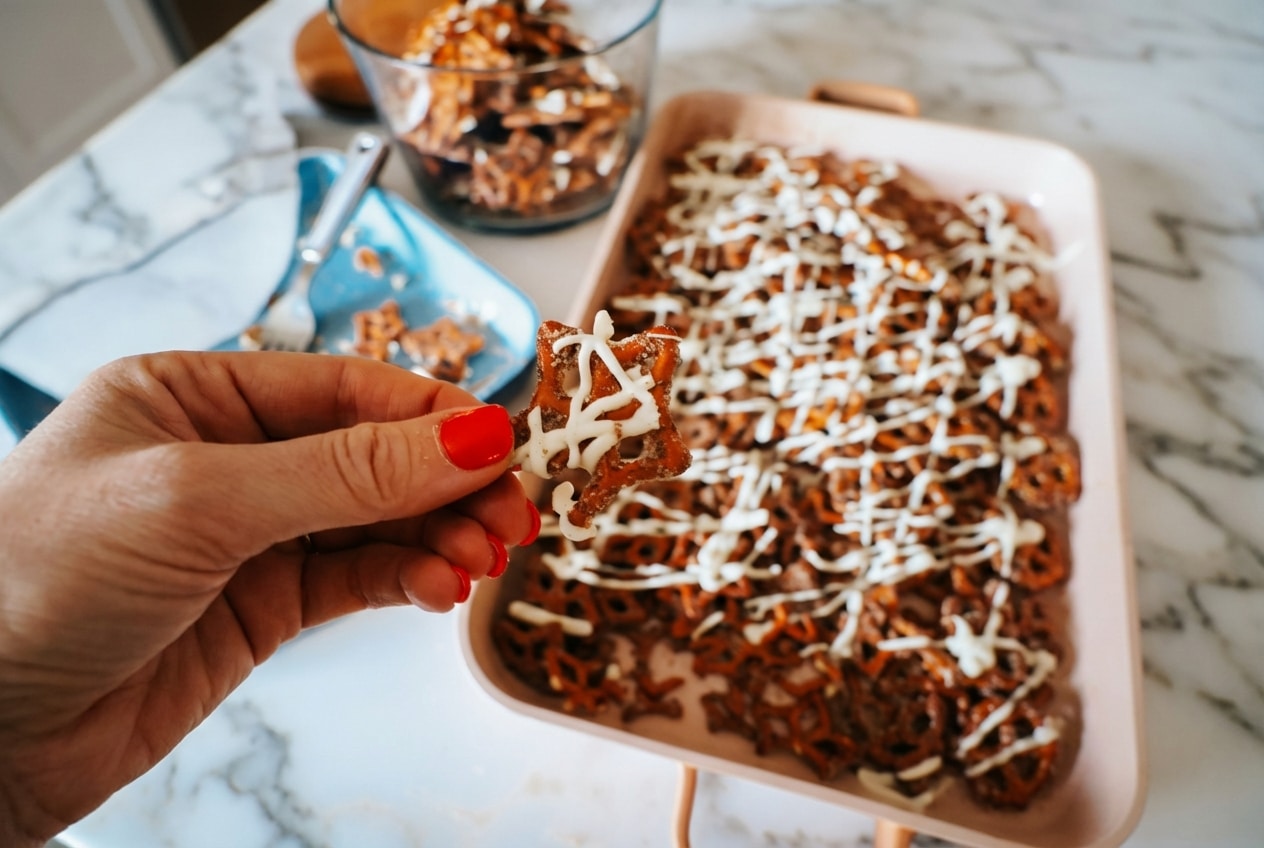
When you’re in a sweet-dough mood, recipes like cinnamon sugar pretzels use similar instincts about timing and coating. The payoff is the same, warm spice, glossy finish, and that bakery smell that pulls everyone into the kitchen.
Serving & Storage

Creative Serving Ideas
The chicory pairing: A slice alongside hot New Orleans chicory coffee tastes like Carnival season in one bite. The slight roasted bitterness keeps the confectioners’ sugar from feeling too sweet.
A fresh counterpoint: Something bright on the table makes king cake feel lighter and more festive. A chilled rainbow fruit salad brings color and acidity that plays beautifully with cream cheese filling.
Brunch spread energy: If you’re hosting, I like a savory anchor next to the sweets so guests can graze. A flaky, comforting breakfast casserole fits right in with a Mardi Gras brunch menu.
The plastic baby tradition: The baby symbolizes luck and the Epiphany story, but it belongs in the cake only after baking. Let the cake cool, tuck it into the underside, and warn guests before slicing so nobody bites down unexpectedly.
Storage and Make-Ahead Instructions
Overnight proofing: After kneading, the first rise can happen in the refrigerator overnight. The slow proofing deepens flavor, and in the morning you’ll just bring it out, let it lose the chill, then roll and shape.
Keeping it soft: Store the king cake covered at room temperature for short keeping, because air is what turns enriched bread stale. If your kitchen is warm, the refrigerator is fine, but wrap well so the crumb doesn’t dry out.
Reheating: A slice warmed briefly, about 10 seconds in the microwave, brings back that pillowy texture. The filling turns creamy again and the aroma wakes right back up.

Classic Bakery-style King Cake Recipe With Brown Butter

Equipment
- Stand mixer with dough hook
- Small saucepan
- Instant-read thermometer
- 8-inch cake pan
- Baking Sheet
- Parchment Paper
Ingredients
Sweet Dough:
- 4 cups all-purpose flour, or more if needed
- ½ cup white sugar
- 1 package rapid rise yeast 0.25 ounce
- 1 ¼ teaspoons salt
- 3 large eggs at room temperature
- 6 tablespoons butter
- ¾ cup Bulgarian-style buttermilk
Cream Cheese Filling:
- 1 package cream cheese at room temperature 8 ounce
- 1 cup confectioners' sugar
- 2 tablespoons all-purpose flour
- 2 tablespoons lemon juice
- 1 teaspoon vanilla extract
- ¼ teaspoon ground nutmeg
Egg Wash:
- 1 egg
- ¼ cup water
Icing:
- 1 cup confectioners' sugar
- 4 teaspoons corn syrup
- 4 teaspoons milk
- 1 teaspoon lemon juice
Instructions
Mixing the sweet dough base
- In a stand mixer bowl with a dough hook, combine flour, sugar, yeast, and salt. In a separate bowl, whisk the eggs until completely smooth.
- Melt butter in a saucepan over low heat until it foams and turns nutty amber. Whisk in the buttermilk and heat until it reaches 120 degrees F.
- Slowly stream the warm buttermilk mixture into the eggs while whisking constantly. Allow the combined mixture to cool to 110 degrees F before adding to the dry ingredients.
Kneading and the first rise
- Combine the liquid and flour mixtures. Knead on medium-low for 10 minutes until the dough is elastic and gathers around the hook. Add up to 1/4 cup more flour if the dough is too sticky to work with.
- Lightly knead by hand for 1 minute on a work surface. Shape into a ball, place in a buttered bowl, cover, and let rise in a warm spot for about 2 hours until doubled.
Filling, shaping, and glazing
- Preheat oven to 350 degrees F and butter the outside of an 8-inch cake pan. Mix the cream cheese, sugar, flour, lemon juice, vanilla, and nutmeg until thick and glossy.
- Punch down the dough and roll into a 10x28-inch rectangle on floured parchment. Spread filling evenly, leaving a 1-inch border.
- Roll the dough tightly from the long edge into a log and pinch seams shut. Wrap the log around the buttered cake pan on a baking sheet, pinch ends together, and then remove the pan.
- Whisk the egg wash ingredients and brush thoroughly over the dough ring for a shiny finish.
Baking and finishing with icing
- Bake for 40 minutes until golden brown. Cool the cake for 30 minutes before icing to prevent melting.
- Whisk icing ingredients until smooth and slightly runny. Drizzle over the cooled cake and top with Mardi Gras sanding sugars if desired.
Notes
Nutrition
Conclusion
What I love most about this king cake recipe is how the brown butter makes it taste deeper and more “bakery,” without changing the soul of the tradition. Keep an eye on your temperatures, give the dough its full rise, and finish with that glossy icing for a true Mardi Gras centerpiece.
If you want to play, a little fruit swirl or a pecan-praline vibe can fit right in. And when the sweet-dough bug bites again, the technique practice you get from cinnamon sugar pretzels carries straight back into your next king cake.
Frequently Asked Questions
What does finding the baby in the king cake mean?
Can I make king cake dough ahead of time and let it rise overnight?
How do I get the classic Mardi Gras colors for the sugar topping?
What is the best way to reheat king cake?
How can I prevent my cream cheese filling from leaking out during baking?