Skip to content
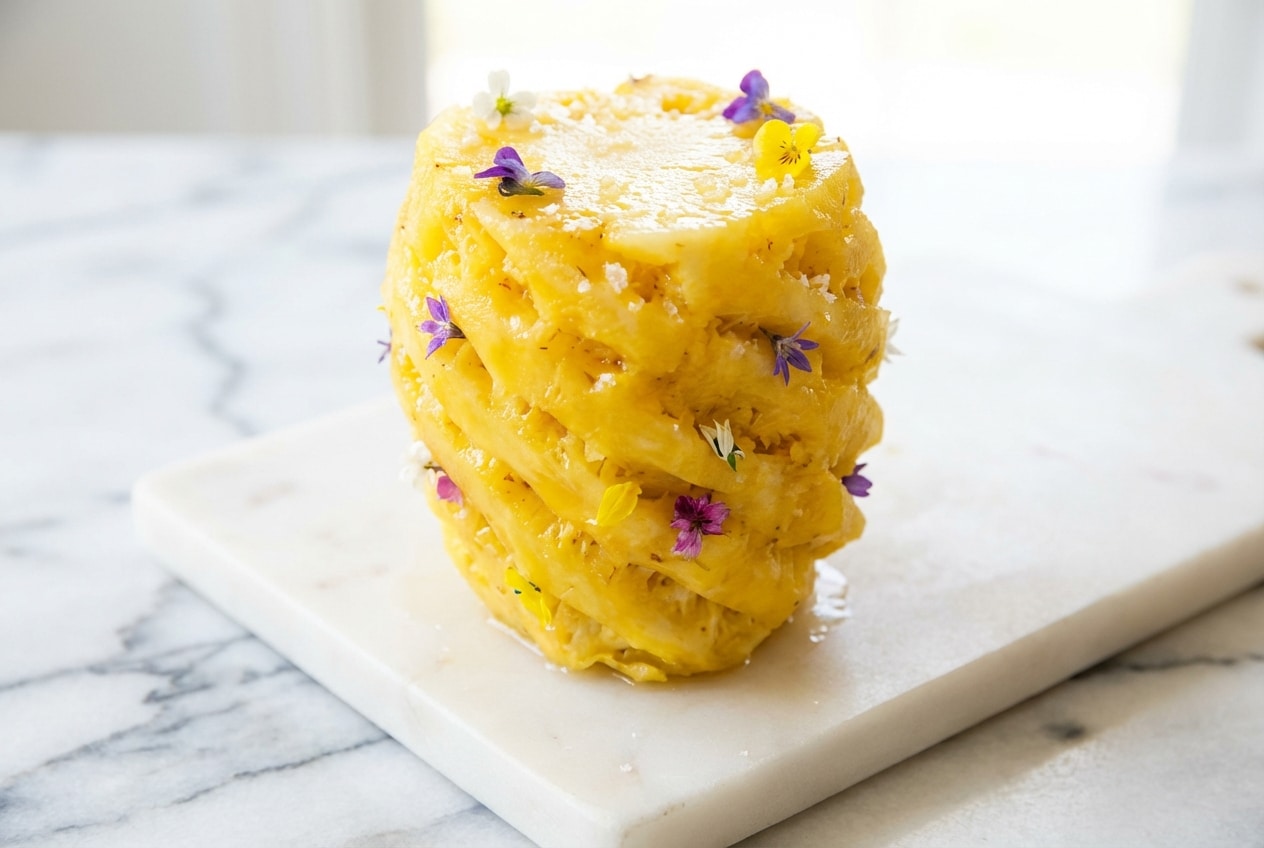
My first whole pineapple in a tiny apartment kitchen felt like a dare, spiky, slippery, and determined to roll right off the cutting board.
If you have ever wondered how to cut a pineapple without wasting the sweet outer flesh or turning it into a sticky wrestling match, you are in the right place. I will walk you through a clean, safe method that gives you beautiful pieces for snacking, grilling, and smoothies, plus one simple saltwater trick that makes every bite taste brighter.
Why You’ll Love This Method
Saltwater Bloom Benefit: In my kitchen, a quick light brine wakes up the flavor, like the pineapple “opens” and tastes sweeter even before it hits the plate.
No More Tongue Burn: That prickly feeling comes from bromelain and fruit acids, and this method helps make pineapple much more comfortable to eat.
Zero Waste Mindset: The pineapple core and crown look like scraps, but they can still earn their keep in drinks, smoothies, and even a fun regrow experiment.
Maximum Yield: Peeling thinly along the curve saves the juiciest flesh near the skin, the part I always want most.
Ingredients and Substitutions
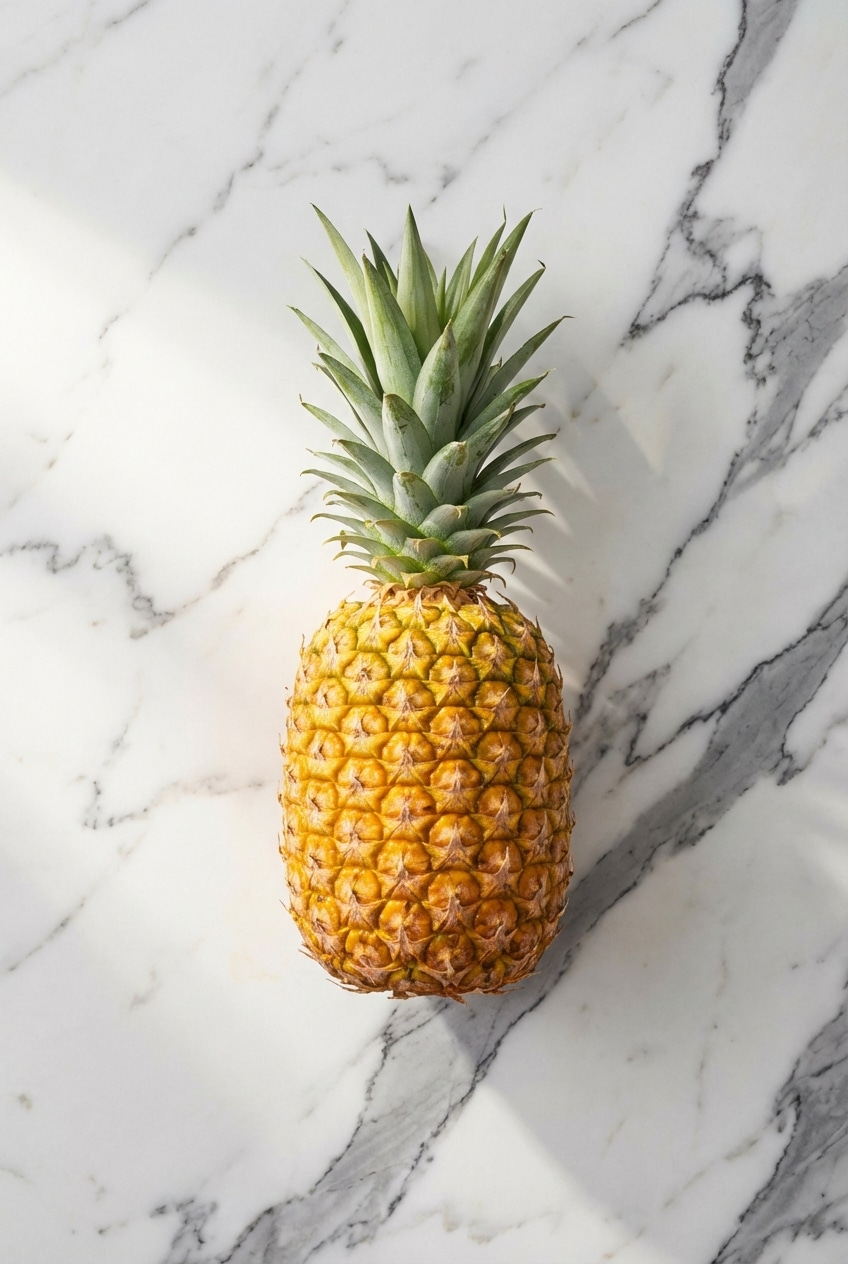
You only need one great piece of tropical fruit. When the pineapple is ripe, the cutting is easy, and the reward is that sunny, perfumed juice on your fingertips.
Ingredients
- One ripe pineapple
Ingredient Notes & Substitutions
One ripe pineapple: Choose one that smells sweet at the base, like fresh juice. If there is no aroma it was picked too early, and if it smells boozy or fermented it has gone past its best.
Saltwater soak (optional): If you like the “no tingle” effect, prepare a bowl with 2 cups of filtered water and 1/2 teaspoon of fine sea salt. I use it as a quick dip for cut pieces, especially when serving a crowd.
How to cut a pineapple
Set Up a Safe, Stable Base
- Set your cutting board down so it will not skate around, a damp towel underneath helps. Lay the pineapple on its side and, with a sharp chef’s knife, slice off the leafy crown plus about a half inch of the top so you expose clean flesh.
- Stand the pineapple upright on the freshly cut top, then slice off the bottom about a half inch. You are aiming for a flat “foot” so the fruit sits steady and your knife work feels controlled.
Peel Along the Natural Curve
Keep the pineapple standing upright and shave the skin from top to bottom in long strokes, following the rounded contour. Cut thinly so you do not sacrifice the sugar-rich outer edge, it is fine if the pineapple eyes remain at this stage.
Remove the Pineapple Eyes with the V-Cut Trench
- Look closely and you will spot the eyes marching in diagonal lines. Angle a paring knife and cut a shallow groove along one diagonal, then make a second angled cut to form a V trench.
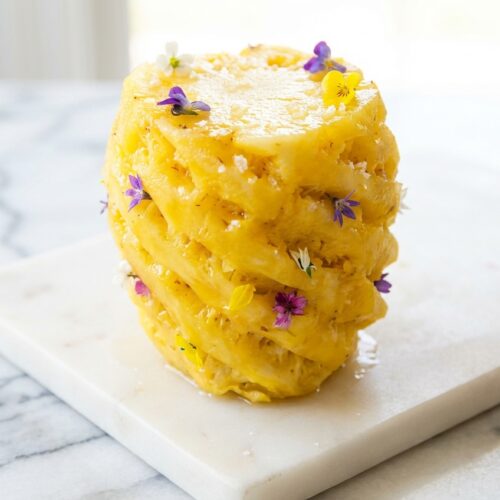
- Lift out that strip and rotate the pineapple, continuing around until the surface looks smooth and clean. You will see a pretty spiral pattern, and every bite will feel tender instead of prickly.
Choose Your Final Shape, Then Saltwater Bloom
- For rounds, lay the pineapple on its side and slice into 3/4 inch pieces. For chunks, cut the pineapple lengthwise into quarters, remove the fibrous pineapple core from each wedge, then cut into smaller pieces that fit your bowl or container.
- If using the Saltwater Bloom, submerge the cut pineapple in your light brine for 2-3 minutes. Drain well and rinse briefly with fresh water if you prefer a cleaner fruit finish, then serve while it is glossy and fragrant.
Secrets to the Perfect Pineapple Prep
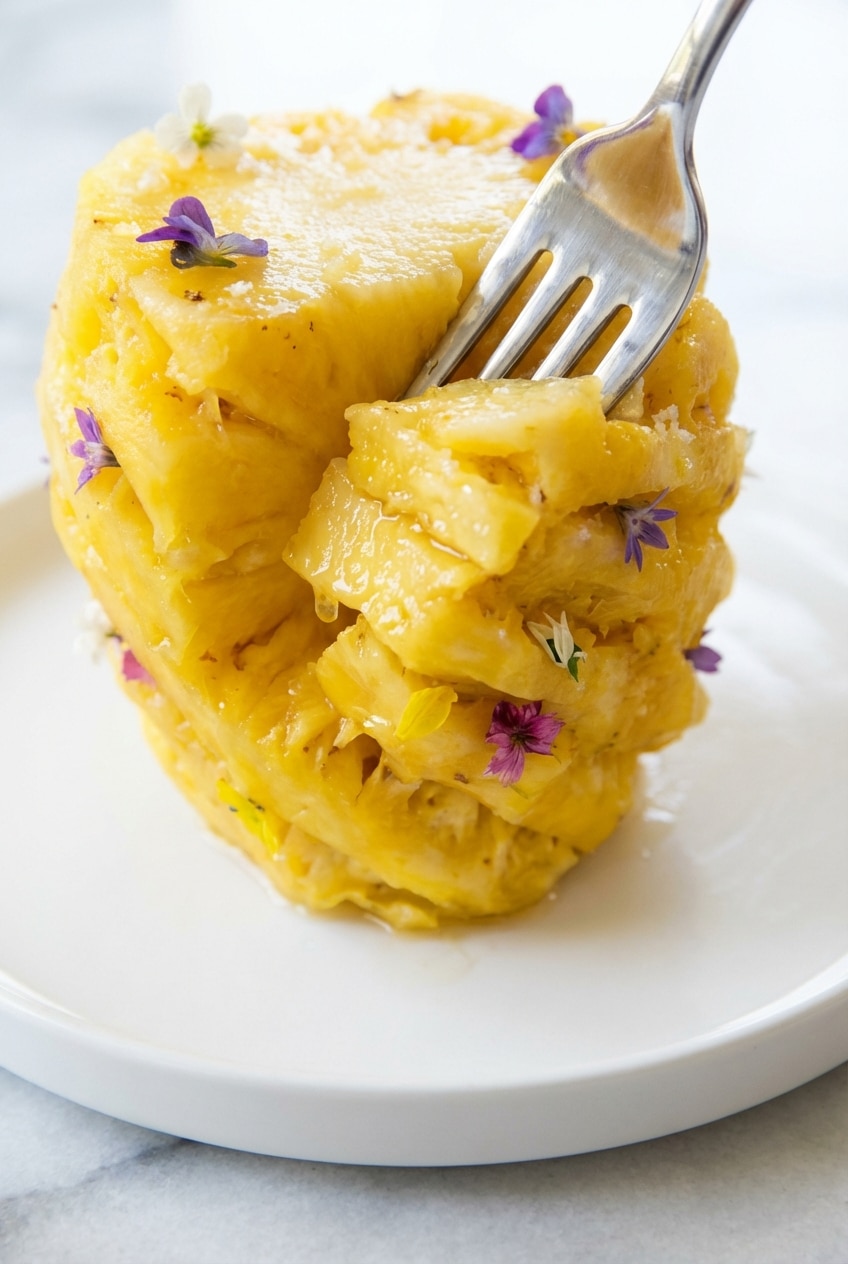
Stability is safety: Pineapple skin is waxy and the flesh is slippery, so that flat-base rule is non-negotiable. When the fruit stands upright without wobbling, your chef’s knife stays where you want it.
Knife sharpness matters: A dull blade tends to skid on the peel, and that is when accidents happen. I use a chef’s knife for the heavy cuts and a paring knife for the detail work around pineapple eyes.
Don’t toss the core: The pineapple core is high in bromelain and tastes bright, just more fibrous. Blending it into a thick breakfast is easy, and the texture disappears nicely in this smoothie bowl recipe with yogurt and fruit.
Pro Tips & Troubleshooting
Pro Tips
- The sniff test wins: Smell the bottom, it should smell like sweet tropical juice.
- Color is a hint, not a rule: A more vibrant yellow often means riper, but aroma and weight matter more.
- Heavy feels better: A pineapple that feels heavy for its size is usually juicier.
- Fridge life for whole fruit: Pineapples do not get sweeter after picking, so refrigerate if you are waiting a day or two.
- Nutrition note: Official pineapple nutrition facts show vitamin C and more.
Common Mistakes to Avoid
- Cutting too deep: Squaring off the sides wastes the sweetest outer layer, follow the curve instead.
- Leaving the eyes behind: Those little dots feel prickly, the V-cut trench method fixes that fast.
- Using a dull knife: Dull blades slip on tough peel and make you push harder.
- Skipping the flat base: If it rolls, stop and re-trim the bottom for stability.
Serving & Storage
Serving Ideas
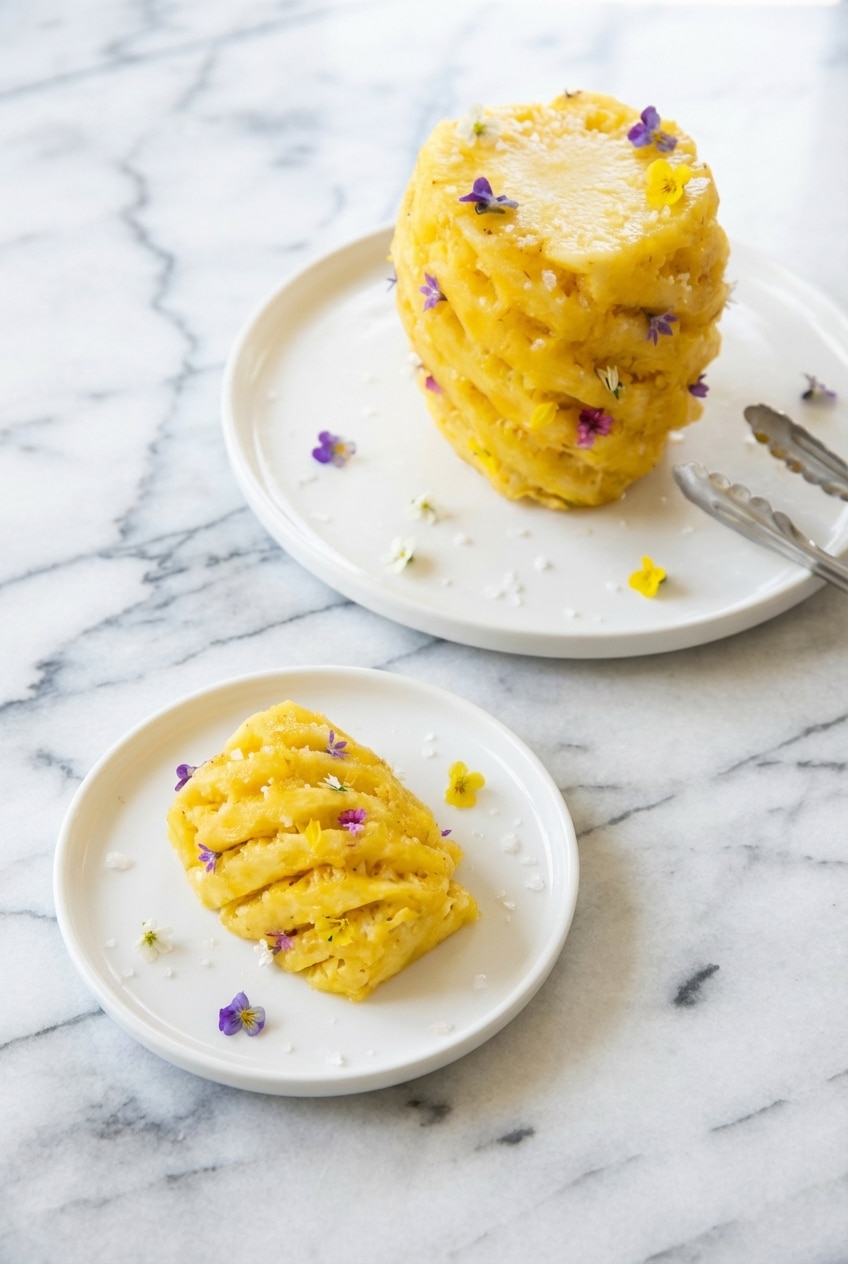
Pineapple pops: Keep the core in your rounds and they hold together beautifully. Slide in a stick and you have a clean, handheld snack that feels like summer.
Grilled perfection: Spear-cut pieces take a quick sear and smell like caramel and sunshine. A brush of honey and a pinch of cinnamon turns it into an easy dessert.
Party fruit trays: Fresh chunks stay tidy on fruit kabobs with berries and melon. The pineapple’s acid keeps everything tasting lively.
Easy pitcher moments: Pineapple rings or chunks are lovely in a family-friendly sangria with citrus and sparkling soda. The fruit perfumes the drink while you snack.
Zero-waste tepache: Clean skins and the core can be fermented into tepache, tangy, fizzy, and very worth the jar space.
Storage & Make-Ahead
Refrigeration: Store cut pineapple in an airtight container for up to 5 days. Keep it in the coldest part of the fridge so the pieces stay crisp and juicy.
Freezing: Freeze chunks on a baking sheet first, then bag them once firm. They keep up to 6 months and blend into smoothies like little tropical ice cubes.
How To Cut A Pineapple Perfectly

Equipment
- Chef’s knife
- Paring knife
- Cutting board
- Damp towel
- large bowl
Ingredients
- 1 ripe pineapple
Instructions
Set Up a Safe, Stable Base
- Place a damp towel under your cutting board to prevent it from sliding. Lay the pineapple on its side and use a sharp chef’s knife to slice off the leafy crown plus about half an inch of the top to expose the flesh.
- Stand the pineapple upright on the freshly cut top and slice off the bottom about half an inch. This creates a flat foot so the fruit sits steady and your knife work remains controlled.
Peel Along the Natural Curve
- While the pineapple is standing upright, shave the skin from top to bottom in long strokes. Follow the rounded contour of the fruit and cut thinly to save the sugar-rich outer flesh.
Remove the Pineapple Eyes
- Identify the diagonal lines of the pineapple eyes. Use a paring knife to cut a shallow V-shaped groove along one diagonal row, then make a second angled cut to lift out the prickly strip.
- Continue this process around the entire pineapple until the surface is smooth, clean, and shows a spiral pattern.
Shape and Saltwater Bloom
- For rounds, lay the pineapple on its side and slice into 3/4 inch pieces. For chunks, cut the pineapple lengthwise into quarters, remove the fibrous core from each wedge, and cut into smaller pieces.
- Submerge the cut pieces in a light brine of 2 cups water and 1/2 teaspoon fine sea salt for 2 to 3 minutes. Drain well and rinse briefly with fresh water to enjoy a brighter, sweeter flavor without the mouth tingle.
Notes
Nutrition
Conclusion
Once you learn how to cut a pineapple with a steady base and that V-cut spiral, the whole fruit stops feeling intimidating and starts feeling like a bargain. When I add the quick Saltwater Bloom soak, the flavor pops and the bite feels gentler on the tongue.
Cut one this week, save the core for blending, and play with your favorite shapes. The next time you are craving something frosty, those frozen chunks are a gift in a glass.
Frequently Asked Questions
How do you pick a ripe pineapple at the grocery store?
Choose one that feels heavy for its size and smells sweet at the base. A more vibrant yellow color often signals maturity, but aroma is the best clue.
Is it better to cut a pineapple into rings or chunks?
Rings are perfect for grilling and pretty platters, especially if you plan to keep the core in as a “handle.” Chunks are the most versatile for snacking and blending, and they disappear beautifully in a tropical mango smoothie.
How do you store cut pineapple so it stays juicy?
Get it into an airtight container right away, then refrigerate. For the best texture, eat it within 3 to 5 days, since the pieces slowly soften as they sit.
What is the V-cut method for removing pineapple eyes?
The eyes sit in diagonal rows, so you remove them in long channels instead of picking them out one by one. Two angled cuts create a V trench that lifts out the prickly bits while saving most of the flesh.
Can you ripen a green pineapple on the counter?
Not really, pineapples do not get sweeter after picking, they only soften a bit. If it is under-ripe, chilling it slows decline, but it will not develop that deep honeyed aroma you want.
Why does pineapple make my tongue itch?
Pineapple contains bromelain, an enzyme that can irritate the mouth for some people, especially with very fresh fruit. The science is explained clearly in this McGill piece about how it neutralizes the bromelain enzyme sensation.