Skip to content
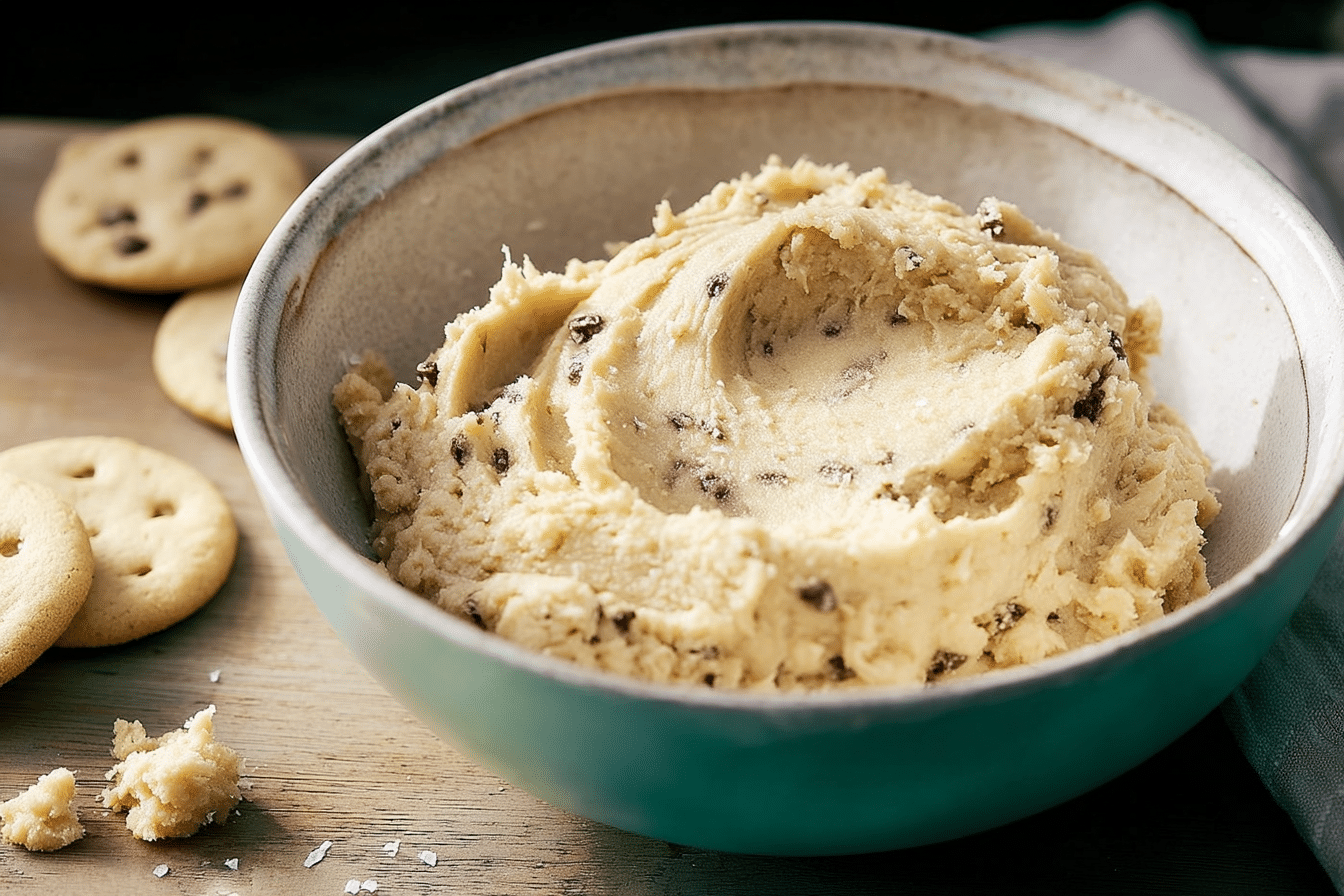
The first time I tested Edible Cottage Cheese Cookie Dough in my kitchen, I expected “healthy-ish” and got something shockingly dessert-worthy, creamy, sweet, and spoonable. The trick is treating it like real cookie dough, not just blended cottage cheese with mix-ins.
This guide shows you exactly how to make it smooth and dough-like, plus my favorite gourmet upgrade, browned butter aroma with a pinch of flaky sea salt. If you love no-bake snacks that still feel like a treat, you are in the right place.
Why You’ll Love This Recipe
Gourmet cookie dough flavor: Browning butter creates those deep, nutty notes from the Maillard reaction, and when you blend it into the cottage cheese base with a pinch of flaky sea salt, the whole bowl tastes intentionally “bakery,” not just “protein snack.”
High-protein, no-bake comfort: Between cottage cheese and whey protein, this is a satisfying dessert or snack that comes together fast, no oven, no eggs, no chilling required to make it safe to eat.
Sweet-salty balance: Maple syrup and vanilla extract bring warmth and sweetness, then flaky sea salt tightens everything up so the chocolate chips pop instead of getting lost.
Easy to customize: You can keep it gluten-free with almond flour, lean keto-friendly (option) with sugar-free maple syrup, or change the mix-ins to match what you have.
It’s a “why didn’t I do this sooner” tweak: I discovered the browned-butter step while trying to make cottage cheese taste like actual cookie dough, and it instantly stopped tasting “diet” to me.
Ingredients and Substitutions
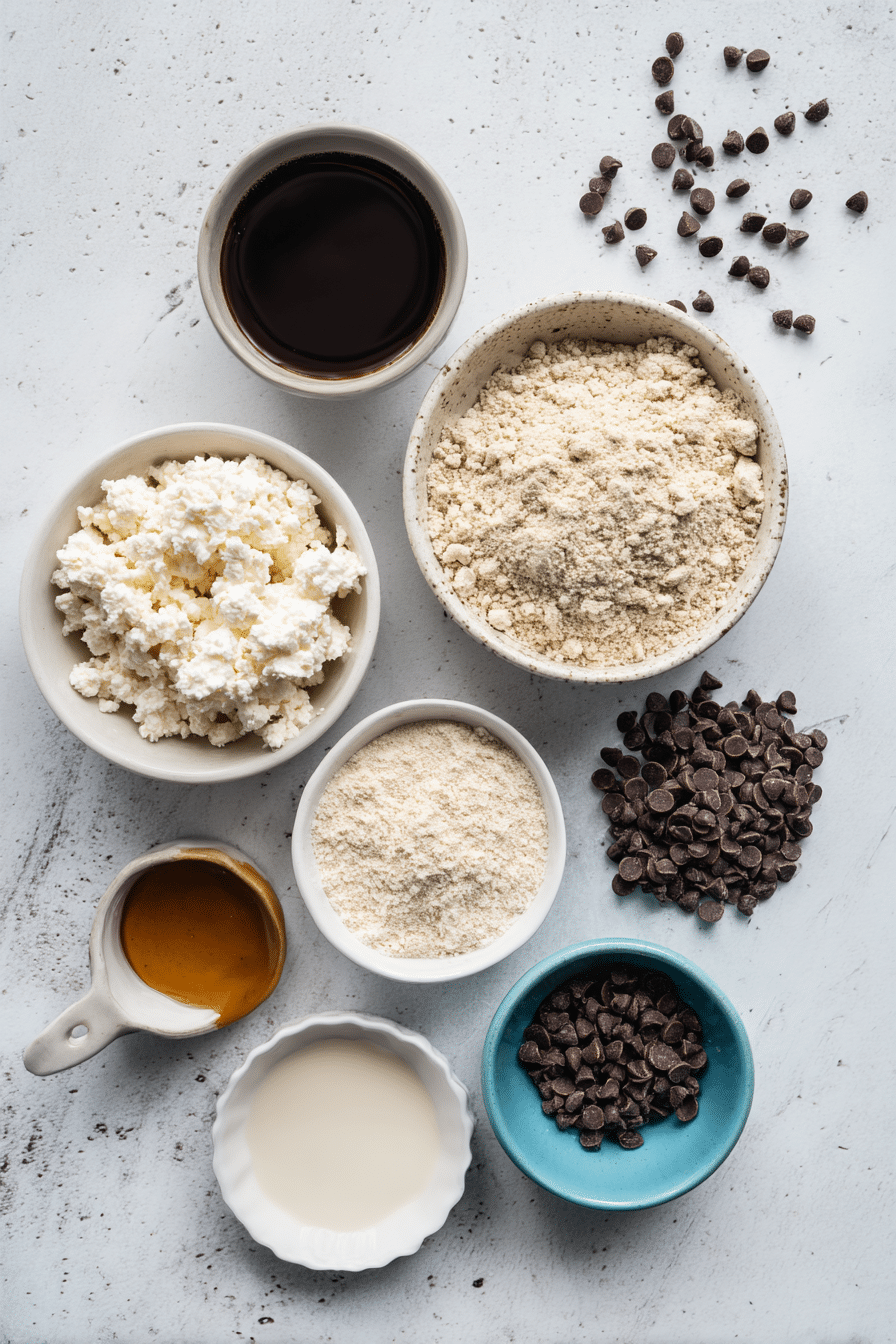
This short list is doing a lot of work, creamy cottage cheese for the base, almond flour for dough texture, whey protein for structure, and chocolate chips for that classic edible cookie dough bite.
Ingredients
- 1 cup 4% cottage cheese
- 3 tablespoons maple syrup
- 1 teaspoon vanilla extract
- 1-1/2 cups almond flour
- 1/4 cup vanilla-flavored whey protein powder
- 1/2 cup miniature semisweet chocolate chips
Ingredient Notes & Substitutions
1 cup 4% cottage cheese: Use 4% for the creamiest, most dessert-like texture, lower-fat styles tend to blend thinner and can taste a bit sharper. It is also the main protein backbone of the dough, so I do not skip it.
1-1/2 cups almond flour: Almond flour gives a tender, “real cookie dough” feel and keeps the recipe gluten-free. For a nut-free option, oat flour can work, and coconut flour can work too but it thickens aggressively, so add it gradually and expect a denser dough.
3 tablespoons maple syrup: Maple syrup keeps the sweetness smooth and adds a cozy flavor that plays well with browned butter and vanilla. You can swap in honey or agave nectar, and for keto-friendly (option), use sugar-free maple syrup and taste as you go.
1/4 cup vanilla-flavored whey protein powder: Vanilla whey protein supports a thick, scoopable texture and a classic cookie dough vibe. Different protein powders absorb differently, so if you use plant-based protein powder, expect to adjust thickness with a little more flour or a tiny splash of milk. If you are curious about the general benefits of whey protein, it can help you choose what fits your routine.
1/2 cup miniature semisweet chocolate chips: Mini chips distribute better, so every bite gets chocolate without needing a huge handful. You can also try cacao nibs, dairy-free chocolate chips, white baking chips, dried fruit, or chopped nuts for different textures.
How to Make Edible Cottage Cheese Cookie Dough
Prepare the Cottage Cheese Base
- Place cottage cheese, maple syrup and vanilla extract in a blender, then puree until the mixture is completely smooth and glossy, with no visible curds, it should look like a thick, creamy batter.
- Transfer the smooth mixture to a large mixing bowl, then stir in almond flour and protein powder until it shifts from creamy to dough-like and starts holding soft scoops.
Add the Mix-ins
- Fold in chocolate chips gently so they stay evenly dispersed, you want little dots of semi-sweet chocolate throughout, not clumps at the bottom.
Chill and Store
- Store refrigerated in an airtight container so it stays fresh and thick, and if the surface looks a touch glossy after sitting, just give it a quick stir before digging in.
Solving Common Challenges & Customizing Your Dough
How to safely use regular flour: Almond flour is fine to eat as-is, but if you decide to use all-purpose flour, heat-treat it first for safety. Spread the flour on a sheet pan and bake at 350°F until it reaches 165°F, then cool completely before mixing, this is especially important because CDC warnings about consuming raw dough and flour highlight that raw flour can carry harmful bacteria.
If your dough is runny: Cottage cheese varies a lot in moisture, and that can make the blended base looser. Stir in a bit more almond flour or a small spoonful of protein powder, mix, then wait 2 minutes, both ingredients hydrate as they sit and often tighten the texture without over-thickening.
If your dough is too thick or chalky: This usually happens when a protein powder is extra absorbent or coconut flour is used. Loosen it with a tiny splash of milk, or even a teaspoon of maple syrup, mixing thoroughly between additions so you do not overshoot.
Yield, and why swaps change calorie density: Expect roughly about 2 1/2 to 3 cups of finished dough, depending on how thick your blended base is and how your protein powder behaves. Ingredient swaps can shift calorie density quickly, almond flour and chocolate chips are more calorie-dense than oat flour or dried fruit, and sugar-free sweeteners can lower total sugar but not always total calories depending on what else changes.
Pro Tips & Troubleshooting

Pro Tips
- Blend until absolutely smooth: The blender is the make-or-break tool here, keep going until there are zero cottage cheese curds, because any graininess reads louder once you add flour.
- Do the browned butter twist on purpose: Brown butter separately until it smells nutty and looks amber, then mix it in with a pinch of flaky sea salt before you blend, it brings that deep cookie dough flavor through Maillard reaction browning.
- Sweetness is adjustable: If you like it sweeter, add a little more maple syrup, or a spoonful of brown sugar if that is your style, then blend again to keep it silky.
- Stir before eating: After chilling, give the dough a quick stir to reincorporate anything that settled so every scoop tastes the same.
- Choose 4% cottage cheese: It consistently gives the creamiest, most “real dessert” mouthfeel.
Common Mistakes to Avoid
- Stopping the blender too soon: If you can see or feel curds, you will end up with a curd-like texture that never really becomes cookie dough.
- Using raw grain-based flour: If you use regular flour, heat-treat it first, raw flour is not considered safe to eat, and it is one of the easiest mistakes to avoid.
- Expecting it to bake like cookies: This is an edible, no-bake dough, not a cookie recipe, if you want a baked treat, try traditional butter cookies for baking instead.
- Leaving it out too long: Because it is dairy-based, do not let it sit at room temperature for extended periods, portion what you want, then return the container to the fridge.
Serving & Storage
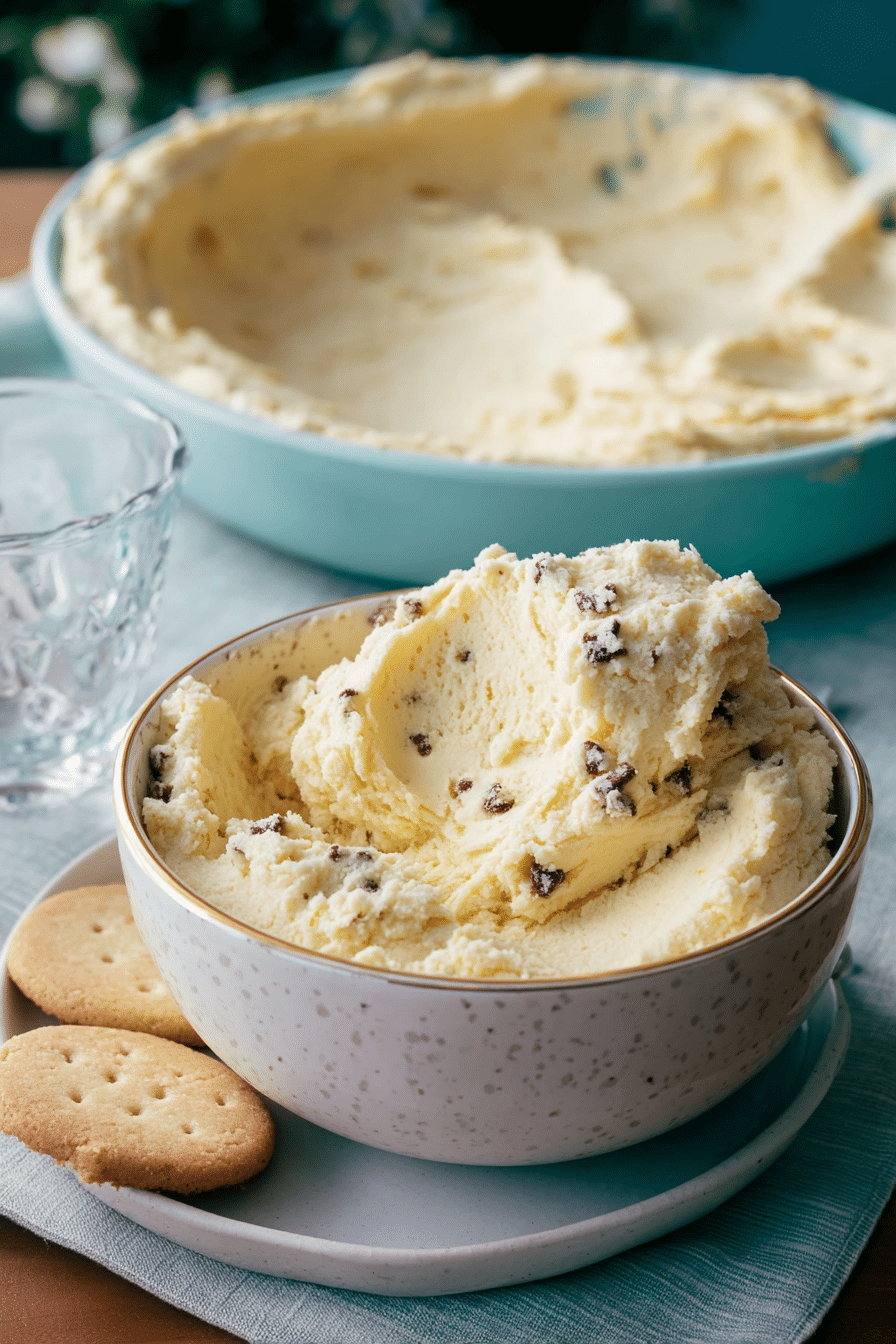
Serving Ideas
Grab a spoon and eat it straight, it is genuinely satisfying as a high-protein dessert or afternoon snack.
Roll it into bite-sized balls for easy portion control, then chill them so they stay firm. If you like that vibe, you will probably also love creative ideas like our peanut butter balls for another snackable, poppable treat.
Layer it into a parfait with yogurt, fruit, and granola, it turns “cookie dough” into a breakfast-meets-dessert situation in the best way.
For more ways to use what is in your fridge, browse more delicious and healthy cottage cheese recipes and turn that tub into something fun all week long.
Storage and Make-Ahead
Refrigerator: Store in an airtight container in the refrigerator for 5 to 7 days, and stir before serving for the best texture.
Freezing: Freeze in a sealed container or portion into balls first, then freeze on a lined tray until firm and transfer to a freezer bag. Thaw overnight in the fridge for the most consistent texture, or let a portion sit for 10 to 15 minutes for a scoopable, ice-cream-like feel.
Room temperature limits: Treat this like any dairy-based snack, keep it chilled as much as possible, and only leave it out briefly while serving. For extra peace of mind, follow dairy food safety and storage guidelines to keep flavor and freshness at their best.

Easy Edible Cottage Cheese Cookie Dough

Equipment
- Blender
- Large Mixing Bowl
- Spoon or Spatula
- Airtight container
Ingredients
- 1 cup 4% cottage cheese
- 3 tablespoons maple syrup
- 1 teaspoon vanilla extract
- 1-1/2 cups almond flour
- 1/4 cup vanilla-flavored whey protein powder
- 1/2 cup miniature semisweet chocolate chips
Instructions
Prepare the Cottage Cheese Base
- Place cottage cheese, maple syrup, and vanilla extract in a blender, then puree until completely smooth and glossy with no visible curds (it should look like a thick, creamy batter).
- Transfer to a large mixing bowl, then stir in almond flour and protein powder until dough-like and it starts holding soft scoops.
Add the Mix-ins
- Fold in the chocolate chips gently so they stay evenly dispersed.
Chill and Store
- Store refrigerated in an airtight container. If the surface looks a touch glossy after sitting, give it a quick stir before serving.
Notes
Nutrition
Conclusion
This Edible Cottage Cheese Cookie Dough is proof that a no-bake, high-protein snack can still taste like a real dessert. The browned butter plus flaky sea salt twist is the little chef move that makes the maple, vanilla, and chocolate chips feel rich and grown-up.
Try it once as written, then make it yours with different sweeteners and mix-ins. If you come up with a combo you love, share it, I am always looking for the next great variation.
FAQ
Can you bake edible cottage cheese cookie dough?
No, this recipe is designed to be eaten as a no-bake edible cookie dough, so it will not bake like a traditional cookie dough. If you want a no-bake cookie-style treat instead, try other no-bake cookie variations like banana bread cookies.
How long can I store cottage cheese cookie dough in the refrigerator?
Keep it in an airtight container in the fridge for 5 to 7 days. Stir before eating, since some separation can happen as it sits.
What are the best substitutions for dietary needs (e.g., nut-free, dairy-free, keto)?
Nut-free: swap almond flour for oat flour, and consider sunflower butter as a mix-in. Dairy-free: use dairy-free chocolate chips and a dairy-free protein powder, but note the base is cottage cheese, so a true dairy-free version needs a different foundation. Keto-friendly (option): choose sugar-free maple syrup and low-carb chocolate chips, and consider coconut flour added gradually for thickness.
Why is blending cottage cheese important for this recipe?
Blending turns cottage cheese from curdy to silky, which is what makes the final dough taste like cookie dough instead of a lumpy dip. If you stop early, the texture stays grainy no matter how well you stir in the dry ingredients.
What are some creative ways to serve cottage cheese cookie dough?
Eat it by the spoonful, roll it into protein balls, or layer it into a yogurt parfait with fruit and granola. You can also change the vibe with mix-ins like cacao nibs, dried fruit, nuts, or white baking chips.
Can I use regular flour in edible cookie dough, and how?
Yes, but heat-treat it first for safety. Bake it spread on a sheet pan at 350°F until it reaches 165°F, cool completely, then use it in place of almond flour, do not use raw flour in edible dough.