Skip to content
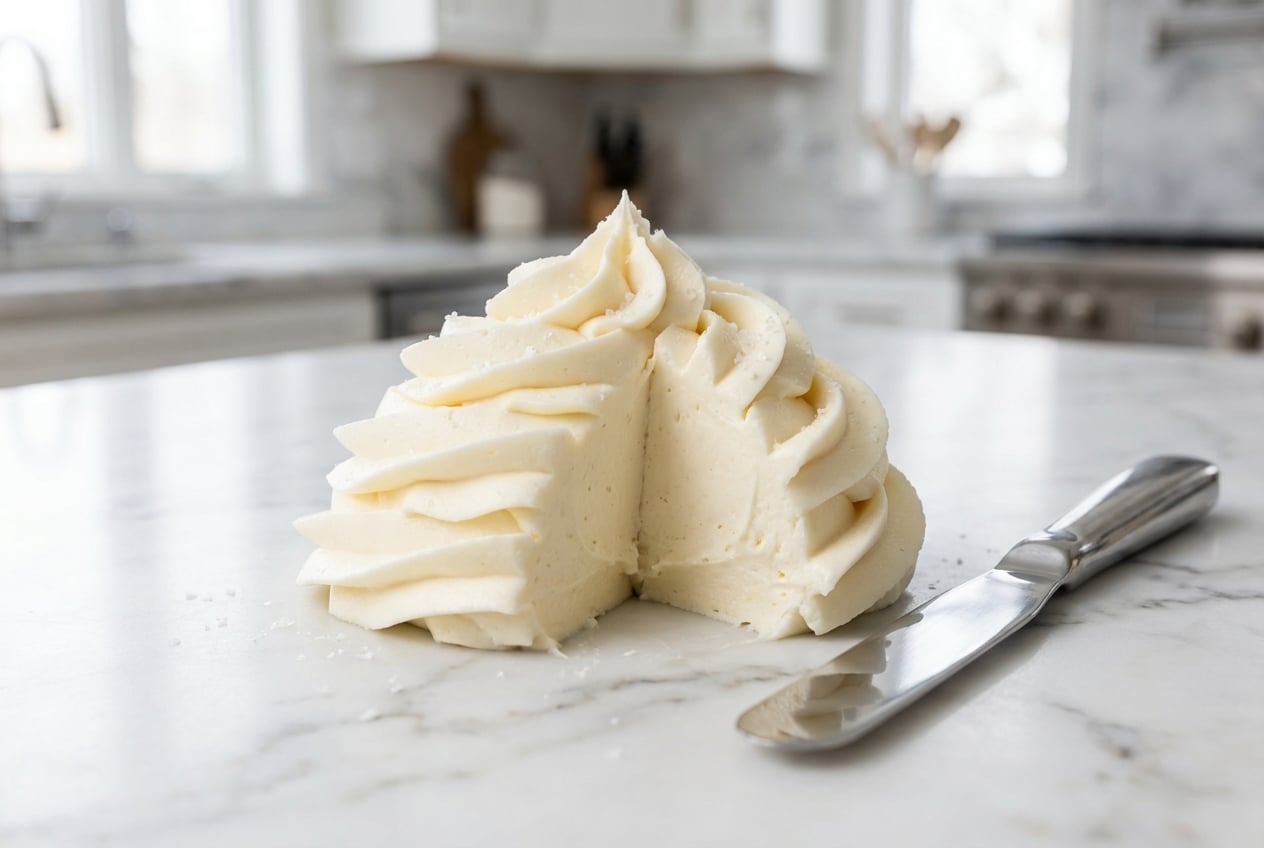
I have made a lot of American buttercream in my kitchen, and the same problems pop up again and again. It can taste cloyingly sweet, or it goes soft right when you need clean swirls and sharp edges.
This butter cream frosting recipe fixes both issues with a few technique tweaks that boost aeration and a simple stabilizing twist for a more dependable crusting buttercream. You will end up with a fluffy, bakery-style frosting that spreads smoothly, pipes neatly, and holds its shape when the room is warm.
Why You’ll Love This Recipe
Less Sweet, More Balanced: I add 1/2 teaspoon fine sea salt, and it immediately calms the sugar rush from 4 cups of confectioners’ sugar without making the frosting taste salty.
The Secret Twist: 1 tablespoon meringue powder is my favorite “professional” add-in because it stabilizes the emulsion and helps the buttercream crust lightly, which makes it easier to handle once piped.
Decorator-Friendly Texture: Using a paddle attachment keeps the frosting velvety instead of bubbly, so your borders look smooth and your swirls hold their definition longer.
Party-Proof in Warm Weather: In my US summers, this version stays reliable on layered cakes, including my heavier bakes like this Oreo cake recipe when I need clean slices and sturdy edges.
Ingredients and Substitutions
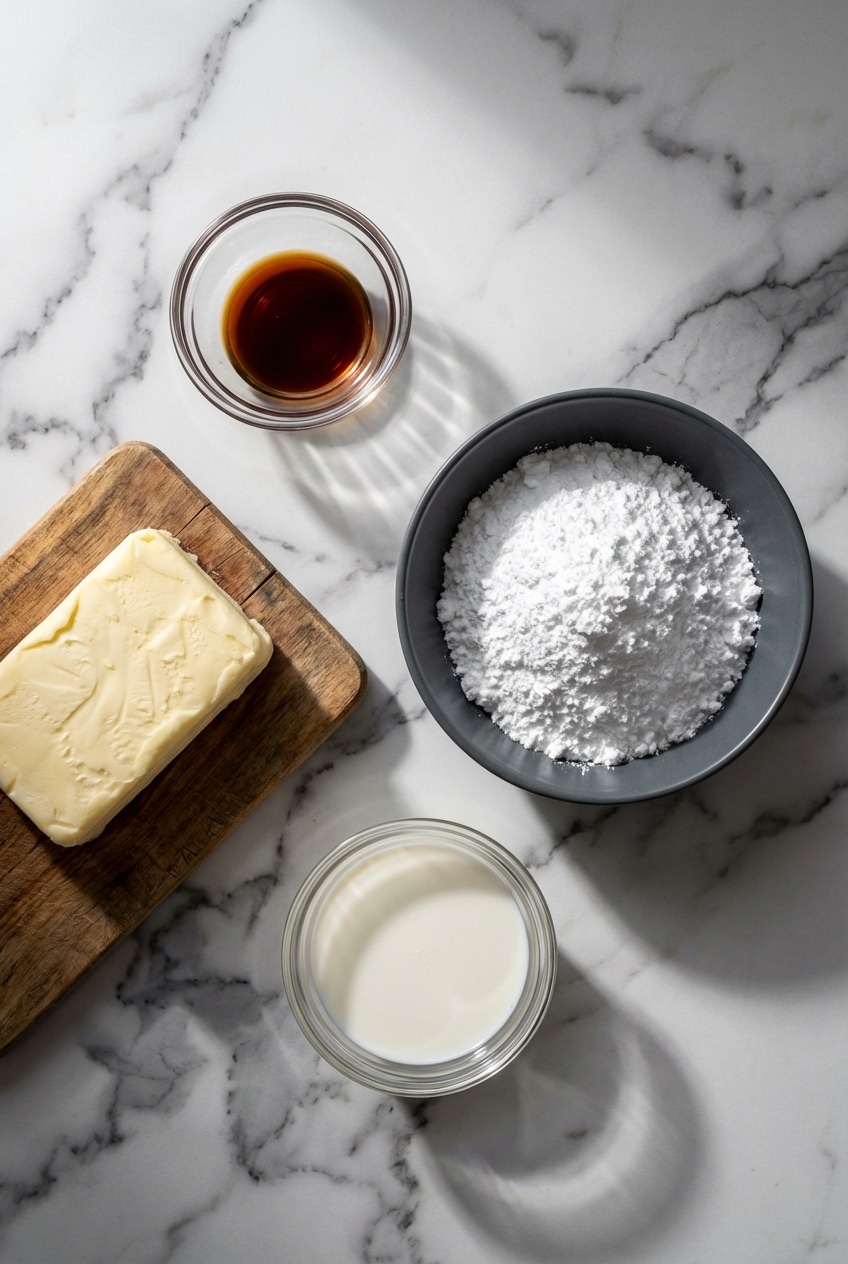
These four ingredients create a classic American buttercream, then technique does the rest. Your main goals are a smooth finish, a stable structure, and a vanilla-forward flavor that does not taste flat.
Ingredients
- 1 cup Butter, slightly softened (We use Salted Sweet Cream Butter)
- 2-3 teaspoons Vanilla Extract
- 1 pound Powdered Sugar (or 4 cups)
- 1-2 tablespoons Milk (as needed)
Ingredient Notes & Substitutions
Butter: “Slightly softened” is the whole game here, I aim for 60 to 67°F so it creams pale without turning oily. If you only have unsalted butter, it still works, just add a pinch of extra salt to keep the flavor from tasting one-note.
Powdered Sugar: Confectioners’ sugar made from cane tends to dissolve more smoothly, while beet sugar can leave a faint graininess in buttercream. If your sugar looks lumpy, sifting it before mixing makes the texture noticeably silkier.
Vanilla Extract: Pure vanilla extract gives the richest flavor, especially when the frosting is the star. Clear vanilla keeps the frosting whiter, which is helpful for wedding-style piping and bright colors.
Milk: Milk is there for texture control, not flavor, so add it only when the frosting feels dry or crumbly. Heavy cream can replace milk for a richer mouthfeel and a more stable, bakery-style finish.
How to Make butter cream frosting recipe
Cream the base
- Add the “slightly softened” Butter (somewhere in between straight out of the refrigerator and room temperature) to the mixing bowl along with the Vanilla Extract.
- Mix the Butter and Vanilla together until they are fully combined (about 2 minutes on medium speed.) You want the Vanilla to fully meld with the Butter to get the best-flavored frosting possible. The butter should look lighter and a bit whipped, not glossy or melted.
- Scrape the sides of the bowl down before moving on to the next step of the recipe.
Add the sugar without a mess
- Measure 1 pound of Powdered Sugar. If you don’t have a food scale, the equivalent is 4 cups.
- Add the Powdered Sugar to the mixing bowl.
- Start your mixer (or electric beater) on the lowest setting. Keep on low until the butter and sugar are incorporated (about 30 seconds). Stop the mixer and scrape down the sides of the bowl. Increase the mixer speed to medium-high and mix for 30-45 more seconds until the frosting starts to be light and fluffy. A paddle attachment is ideal here because it smooths the frosting without whipping in big air pockets.
Adjust, then taste for the final finish
- If the frosting is still dry or crumbly, add 1 teaspoon of Milk and mix again.
- Taste your frosting! You are trying to determine if the consistency is correct or if it needs a tiny bit more Vanilla Extract. Depending on how it tastes, you will take the next step. If the frosting has the right taste but is too thick, add some Milk and mix again to check to see if it is now the right consistency. How much milk? That depends on the state of your frosting. A good rule of thumb is to add the milk a teaspoon at a time.
The Science of Perfect Buttercream
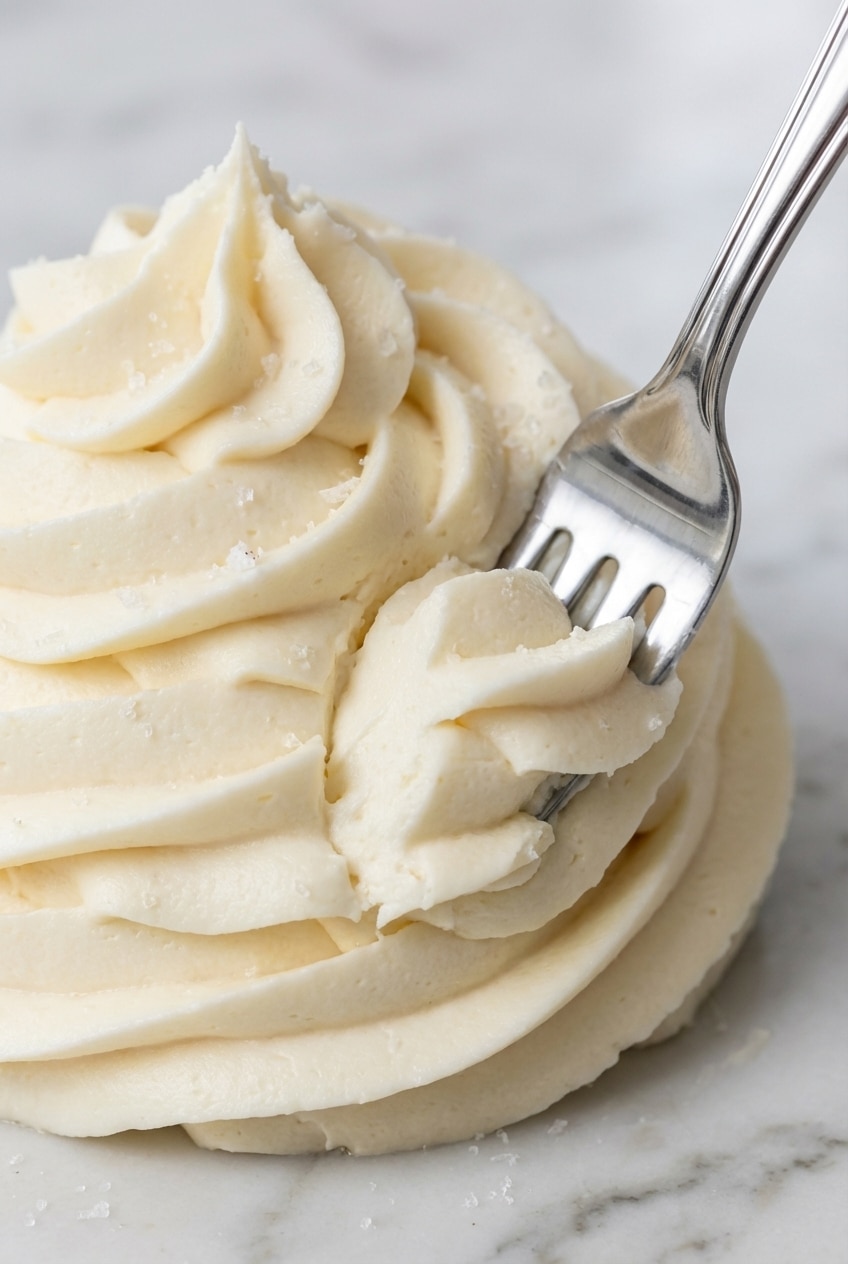
Temperature Matters: The 60-67°F Rule
Butter that is too cold will not cream smoothly, and butter that is too warm turns greasy and slack. The sweet spot is the temperature of ‘slightly softened’ butter (60-67°F).
At that range, you can build structure through aeration, and the sugar dissolves into a stable, pipeable emulsion. Once butter crosses into “oily,” it cannot trap air the same way, and the frosting can look shiny and loose.
Choosing Your Tool: Paddle vs. Whisk
A paddle attachment creates a tighter, smoother emulsion that spreads cleanly on cakes. A whisk can over-aerate, which looks fluffy at first but often leaves visible holes in piped flowers and ridged swirls.
If you only have a hand mixer, keep your mixing times the same and finish by pressing the frosting with a spatula to knock out big bubbles.
Buttercream Varieties: American vs. Swiss vs. Italian
- American buttercream: Butter plus confectioners’ sugar, fastest and easiest for beginners, naturally sweet, and can form a light crust.
- Swiss meringue buttercream: Egg whites and sugar warmed, then whipped and finished with butter, less sweet and very silky, more time and temperature-sensitive.
- Italian meringue buttercream: Hot sugar syrup whipped into egg whites, then butter added, ultra-smooth and stable, but the most technical.
This recipe keeps the simplicity of American buttercream, and the small addition of meringue powder helps it behave more like a decorator’s frosting without the full meringue process.
Pro Tips & Troubleshooting
Pro Tips
- Whip the butter alone for 5 minutes before adding sugar for maximum aeration, then proceed with the recipe as written.
- Use a rubber spatula to hand-beat the frosting at the very end to press out large air bubbles for a smoother finish.
- If you want a richer, more stable texture, swap milk for heavy cream and add it slowly.
- For high elevations, a small sugar reduction can help if it feels heavy, the High-altitude adjustment commonly suggests decreasing sugar slightly.
Common Mistakes to Avoid
- Using cold butter, it leaves lumps that powdered sugar cannot fully smooth out.
- Using beet-based powdered sugar, it can read as grainy even after mixing.
- Over-softening butter in the microwave, once it is oily the structure collapses.
- Adding too much liquid at once, it can loosen the emulsion and make the frosting slippery.
Serving & Storage
Serving Ideas
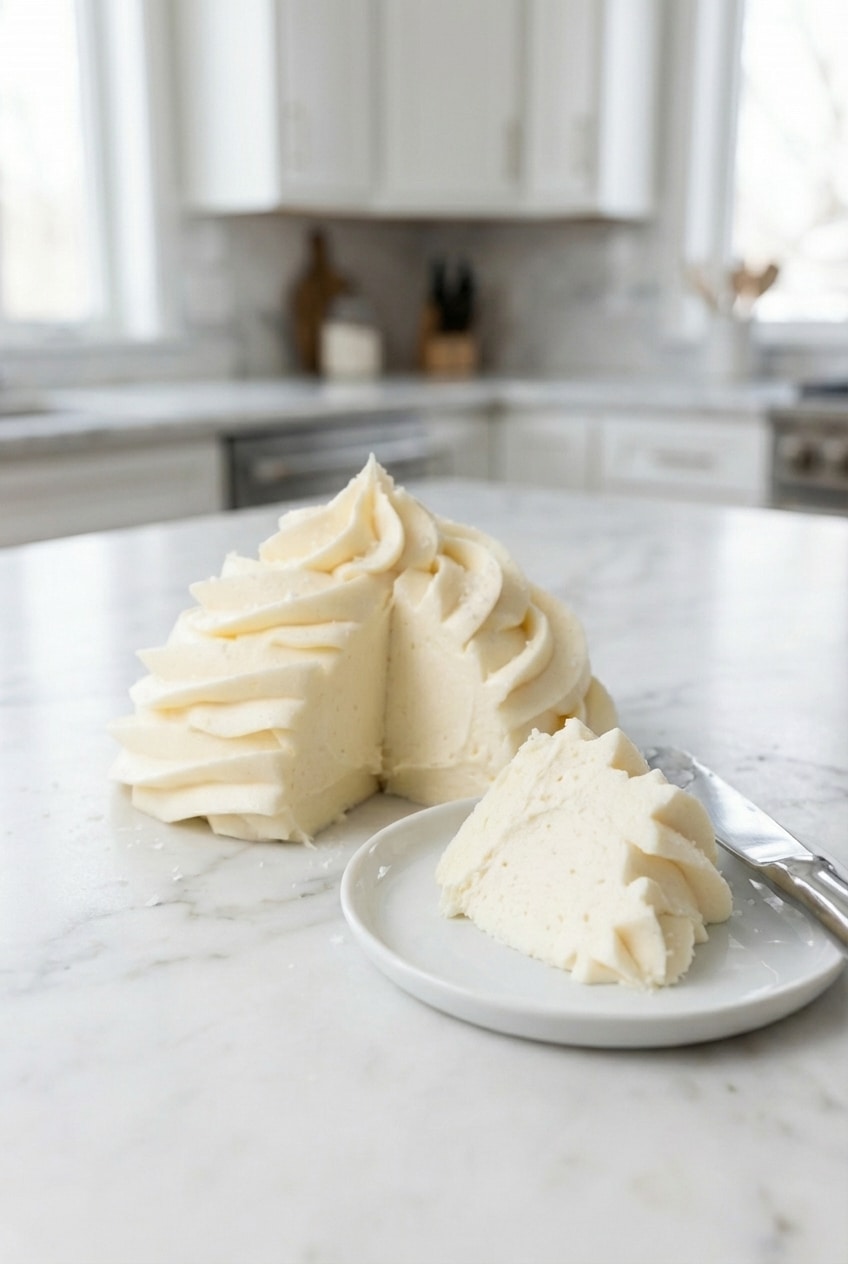
A 1M Open Star tip gives classic bakery swirls with crisp ridges and height. This vanilla-forward frosting also tastes especially good on chocolate layers, because the bitterness balances the sweetness.
On cupcakes, the texture pipes tall and clean, and it pairs perfectly with this vanilla cupcake recipe when you want a simple, crowd-friendly dessert.
For filled cakes, use this buttercream as a dam around the edge, then spoon in fruit or curd. A homemade filling like this strawberry jam recipe gives you a bright contrast and helps keep layers from sliding.
Storage and Make-Ahead
Room Temperature: Because this is a crusting buttercream, it can sit out for a while during decorating and serving, as long as the room is cool and the cake is not in direct sun or heat.
Refrigeration: Store in an airtight container for up to 2 weeks. Let it come back toward room temperature, then re-whip briefly with the paddle to restore the fluffy texture.
Freezing: Freeze for up to 3 months in a tightly sealed container. Thaw overnight in the fridge, bring to cool room temperature, then re-whip to bring back the smooth, spreadable finish.
Best butter cream frosting recipe

Equipment
- Stand mixer or electric hand mixer
- Mixing Bowl
- Paddle attachment
- Rubber spatula
- Measuring cups and spoons or food scale
Ingredients
- 1 cup Butter, slightly softened (We use Salted Sweet Cream Butter)
- 2-3 teaspoons Vanilla Extract
- 1 pound Powdered Sugar (or 4 cups)
- 1-2 tablespoons Milk (as needed)
- 1/2 teaspoon Fine sea salt
- 1 tablespoon Meringue powder
Instructions
Cream the base
- Add the slightly softened butter to the mixing bowl along with the vanilla extract.
- Mix until fully combined (about 2 minutes on medium speed), until the butter looks lighter and a bit whipped (not glossy or melted).
- Add the fine sea salt and meringue powder, then mix briefly just until incorporated.
- Scrape down the sides of the bowl.
Add the sugar without a mess
- Measure 1 pound of powdered sugar (or 4 cups if you don’t have a food scale).
- Add the powdered sugar to the mixing bowl.
- Start the mixer on the lowest setting and mix on low until incorporated (about 30 seconds). Stop and scrape down the bowl. Increase to medium-high and mix for 30–45 seconds more until the frosting starts to look light and fluffy.
Adjust, then taste for the final finish
- If the frosting is dry or crumbly, add 1 teaspoon of milk and mix again.
- Taste and adjust with a tiny bit more vanilla extract if needed. If it tastes right but is too thick, add milk a teaspoon at a time, mixing after each addition, until the consistency is correct.
Notes
Nutrition
Conclusion
The combination of fine sea salt and meringue powder turns a classic into a more balanced, more stable frosting that still feels nostalgic and buttery. When you nail the butter temperature, everything else falls into place.
If you bake with it, save a slice-worthy photo and share your decorations, it is a fun way to track your piping progress. This buttercream also plays well with bold cake flavors, especially cookies-and-cream layers like my Oreo cake recipe.
FAQ
How do I fix grainy buttercream?
Graininess usually comes from the powdered sugar, especially beet-based confectioners’ sugar, or butter that was too cold to cream smoothly. Let the butter sit until slightly softened, sift the sugar next time, and mix until the frosting turns visibly velvety.
How long can buttercream sit out at room temperature?
This version is designed to be more stable and lightly crusting, so it tolerates sitting out during decorating and serving in a cool room. In warm conditions, keep the cake out for the shortest practical time and refrigerate when you are done serving.
Can you freeze buttercream frosting?
Yes, freeze it for up to 3 months in an airtight container. Thaw in the fridge, then bring it close to room temperature and re-whip to restore the fluffy structure.
What is the difference between frosting and icing?
Frosting is thick, fluffy, and spreadable, designed to hold swirls and layers. Icing is thinner and more fluid, usually poured or drizzled to set in a smooth sheen.
How do I make my buttercream stiff enough for piping roses?
Use slightly softened butter, keep the milk minimal, and mix until the emulsion looks dense and smooth. If it still feels too soft, incorporate a bit more powdered sugar, and the stabilizing effect of meringue powder also helps piping hold its shape.
How do I make it pure white?
Clear vanilla helps prevent a beige tint, and mixing longer with a paddle can lighten the appearance through aeration. A tiny drop of purple food coloring can also neutralize yellow tones without making the frosting look lavender.