Skip to content

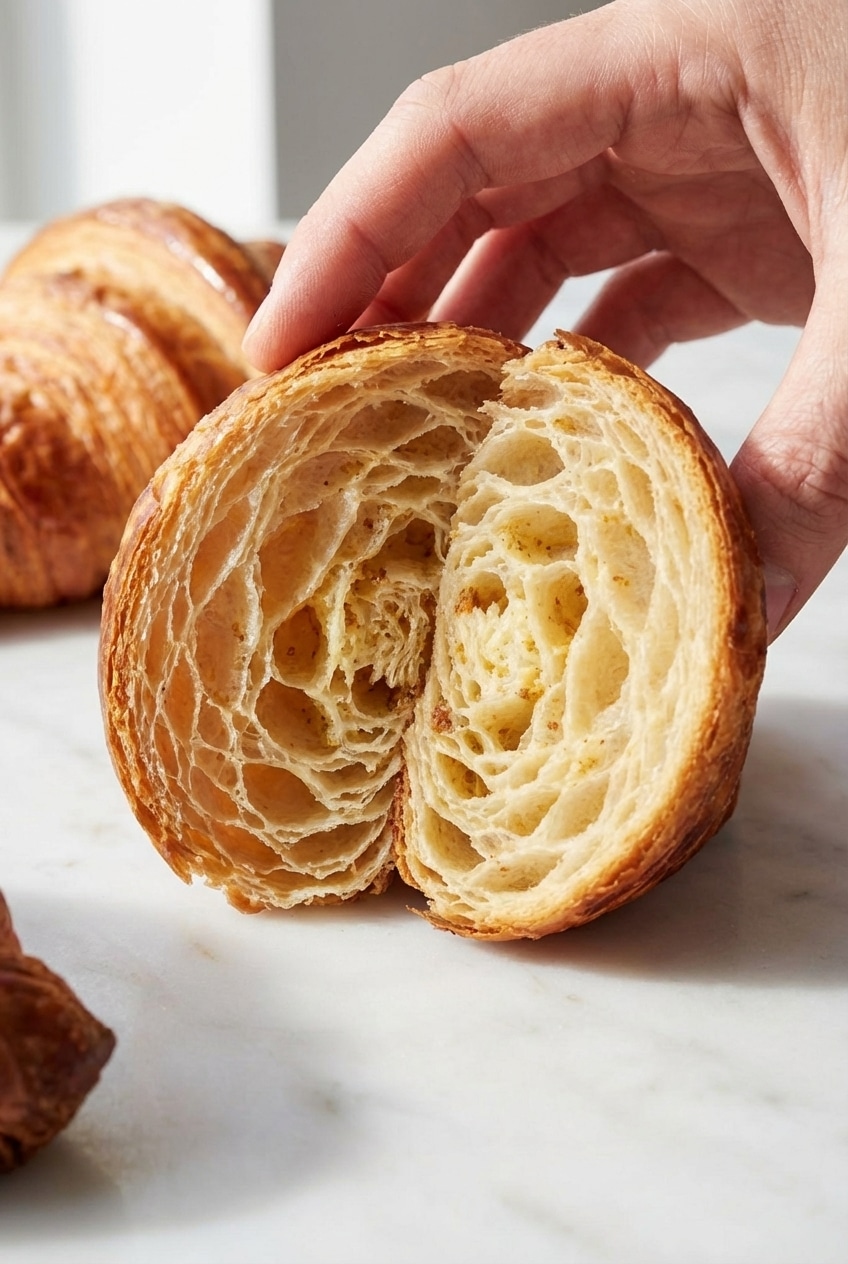
The first time a homemade croissant truly worked in my kitchen, I heard it before I tasted it, that quiet crackle as the crust shattered, followed by the smell of toasted butter rising from the honeycomb crumb.
This Croissant Recipe is my gold standard for weekend baking, built for home ovens and real schedules. Croissants are famously fussy, but once you understand lamination temperature and timing, the process becomes calm and repeatable, especially with my chef’s secret: a cold-infused brown butter (beurre noisette) twist in the butter block.
Why You’ll Love This Recipe
Brown Butter Depth: By browning about one quarter of the beurrage, I get a nutty, Maillard reaction aroma that makes the dough taste buttery, not floury.
Shatter and Honeycomb: This method balances a crisp shell with an airy, layered interior, because the détrempe develops strength while the butter stays in distinct sheets.
Reliable Lamination: The timeline is built around chilling and brief freezes, so the butter stays firm but pliable and you avoid the heartbreak of butter leakage.
Ingredients and Substitutions
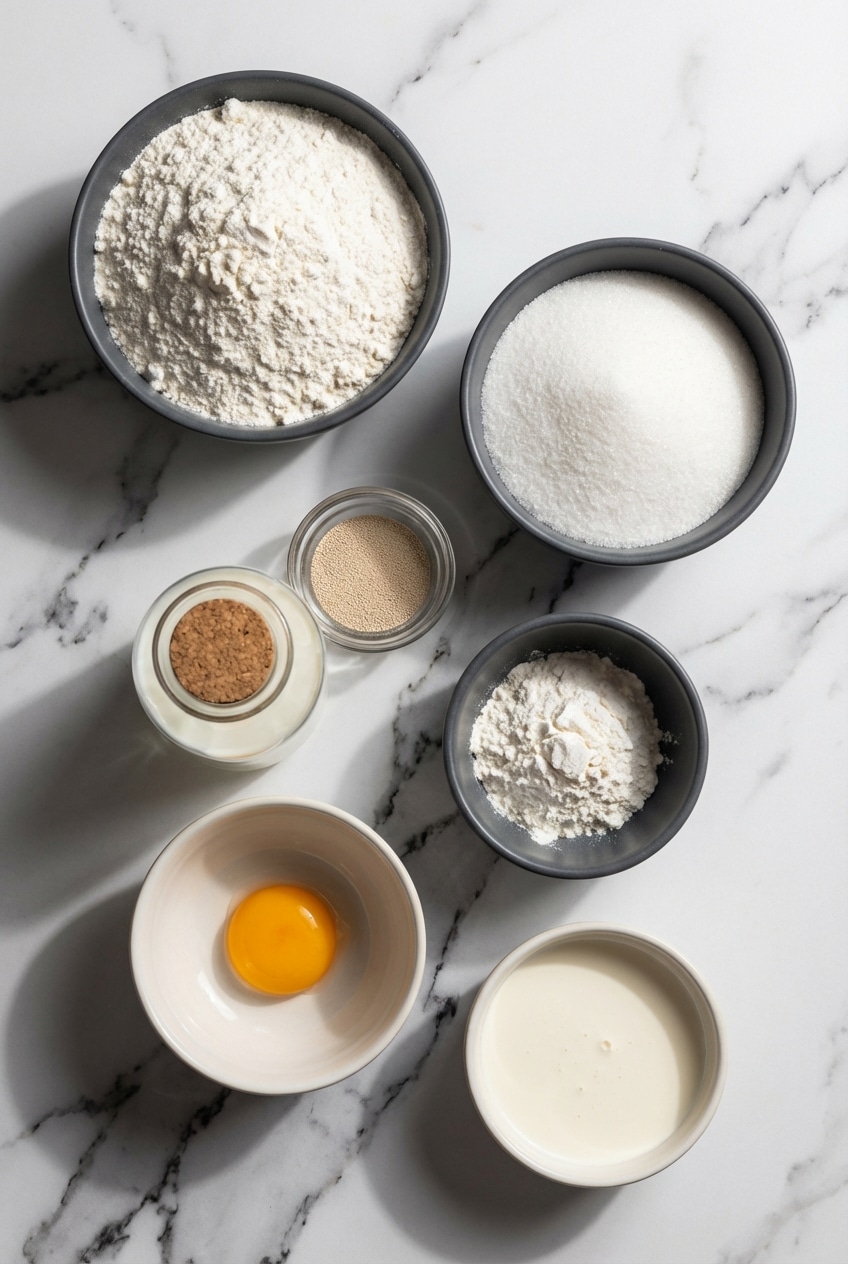
These are classic viennoiserie ingredients, but each one has a job. The flour builds gluten development, the milk and sugar tenderize, and the butter block creates the flaky layers that define a true croissant.
Ingredients
For the Détrempe (dough):
- 4⅔ cups/605 grams all-purpose or bread flour, plus more for dusting
- ⅓ cup/66 grams granulated sugar
- 1 tablespoon plus ½ teaspoon/12 grams kosher salt
- 2¼ teaspoons/7 grams active dry yeast
- ¾ cup plus 2 tablespoons/214 grams water, at room temperature
- ½ cup/120 grams whole milk, at room temperature
- ¼ cup/57 grams unsalted butter, cut into ½-inch pieces, chilled
For the Butter Block and Assembly:
- 1½ cups/340 grams unsalted European or European-style butter (3 sticks), chilled
- All-purpose flour, for rolling
- 1 large egg yolk
- 1 tablespoon heavy cream
Ingredient Notes & Substitutions
European-style butter: This recipe rewards European-style butter (think Kerrygold or Plugra) because the higher fat content laminates more cleanly and leaks less. Butter is legally defined as at least 80 percent by weight of milkfat, and that extra fat above the minimum is exactly what makes beurrage behave.
Cold-infused brown butter twist: To add the beurre noisette note without changing moisture, I brown about one quarter of the butter for the block, cool it completely, then chill it back down so it is firm again before combining with the remaining cold butter. If it goes in warm or greasy, it will smear during lamination and blur the layers.
All-purpose vs bread flour: All-purpose flour works, but bread flour gives a bit more structure, which helps the honeycomb crumb stand tall. If your kitchen runs warm or you tend to roll aggressively, bread flour is a little more forgiving.
Active dry yeast: Before you commit to a 24-hour croissant timeline, I like to confirm the yeast is alive by dissolving a pinch in a little of the room-temperature water and waiting a few minutes for light foam. No bubbles usually means it is time to replace the yeast.
How to Make Croissant Recipe
Day 1: Mix the Détrempe and Cold Ferment
- Twenty-four hours before serving, combine the flour, sugar, salt, and active dry yeast in a stand mixer bowl fitted with the dough hook. Make a well, add the water and milk, then mix on low until a tight, smooth dough forms around the hook, about 5 minutes, cover with a damp towel, and rest 10 minutes.
- Mix again on medium-low and add the chilled butter pieces all at once, then continue mixing, scraping once or twice, until the dough becomes very smooth and stretchy and not sticky, 8 to 10 minutes.
- Shape into a ball seam-side down, slash a deep “+” into the top, then return it to the bowl slash-side up. Cover with plastic wrap and let rise until about 1½ times larger, 45 minutes to 1 hour, then refrigerate at least 4 hours and up to 12.
Make the Butter Block, Then Enclose and Laminate
- While the dough chills, form the butter block: place the butter sticks on parchment, fold into a packet, and beat with a rolling pin into a pliable layer. Rewrap into a neat 8-inch square packet with clean right angles, roll to fill the packet evenly, then refrigerate the butter block until needed.
- Eighteen hours before serving, flatten the chilled dough into a rough square no larger than 8 inches, then wrap it between two perpendicular sheets of plastic wrap and roll it into an 8-inch square with straight sides. Freeze for 20 minutes.
- Roll the dough into a 16-inch-long by 8-inch-wide rectangle, keeping edges as straight as you can and brushing away excess flour so nothing interferes with lamination.
- Place the butter on the dough so both feel similarly firm, with the dough slightly colder than the butter, then invert the butter block onto the center. Fold the overhanging dough over the butter to enclose it, pinch all seams closed, dust underneath, and rotate 90 degrees so the seam runs vertically.
- Beat and roll the packet into a 24-inch-long, ¼-inch-thick slab, lifting and dusting as needed to prevent sticking. Trim the short ends to square the rectangle and pop any air bubbles with a tester or paring knife tip.
- Do a double turn (book fold): fold both short ends toward the center leaving an ⅛-inch gap, then fold the slab in half along that gap. Wrap tightly, flatten slightly if needed, freeze 15 minutes, then refrigerate 1 hour.
- Let the dough sit out 5 minutes, then roll into a long, narrow ⅜-inch-thick slab, brushing off excess flour. Do a simple turn (letter fold) into thirds, wrap tightly, freeze 15 minutes, then refrigerate 1 hour.
- Rest 5 minutes, then roll into a 14-by-17-inch slab, brush off flour, wrap tightly, freeze 20 minutes, and chill overnight (8 to 12 hours).
Day 2: Shape, Steam-Proof, Egg Wash, and Bake
- Four and a half hours before serving, set racks in the upper and lower thirds of the oven. Simmer a skillet of water, place it on the oven floor, and close the door to create a humid proofing environment.
- Line two rimmed baking sheets with parchment. Let the dough sit out 5 minutes, unwrap, and if needed roll back to 17-by-14 inches, then brush off flour thoroughly. Trim to a 16-inch-long rectangle, cut into four 4-by-14-inch rectangles, then cut each into two long triangles for 8 total, trimming the short ends slightly so both long sides match.
- Shape each croissant: gently tug the base corners to widen to about 3 inches, then tug from midway down to the tip to lengthen and thin. Roll from the base with light pressure, keep the tip centered, and set each crescent on the tip, spacing four per sheet, then loosely cover with plastic wrap.
- Three and a half hours before serving, the oven should feel humid but not hot. Proof at 70 to 75 degrees until doubled, extremely puffy, and delicately jiggly when the pan is shaken, 2 to 2½ hours.
- Chill the proofed croissants uncovered in the refrigerator for 20 minutes while heating the oven. Remove the skillet, then heat the oven to 375 degrees.
- Whisk the egg yolk and heavy cream until completely smooth, then brush only the smooth surfaces of the crescents, avoiding the cut layered sides.
- Bake for 20 minutes, then rotate the sheets and switch racks, and bake until deeply browned, another 10 to 15 minutes. Cool completely on the baking sheets so the layers set and stay crisp.
The Physics of Lamination & Storage
Double Turn vs. Single Turn Physics
A simple turn folds the dough in thirds, so it creates 3 stacked sections per turn. A double turn folds four sections like a book, creating 4 sections per turn.
What matters is how layers multiply as you go: start with one butter sheet, then after a double turn you have 4 butter layers, and after the simple turn you get 12. In practice, trimming, rolling, and edge compression change the count slightly, but this combo reliably builds a honeycomb crumb without making layers so thin they fuse.
I also notice dough tension matters as much as math, because a tight, rounded slab resists expansion and you lose lift. Keeping straight edges, brushing off flour, and using gentle rolling pressure protects the lamination you worked for.
Long-Term Dough Storage & High-Altitude Adjustments
Freezing the laminated “book” works beautifully when life interrupts the schedule. Wrap the dough tightly in plastic, then freeze for up to 2 weeks, and thaw overnight in the refrigerator before rolling, cutting, and shaping.
At high elevation, fermentation and proofing can move faster than you expect, and over-expansion can weaken structure. Colorado State’s extension notes that High altitude has its most pronounced effect on the rising time of bread, so I often shorten the room-temperature rise and keep the dough colder.
If your détrempe feels tight and dry in a very arid climate, a tiny increase in water can help, but go slowly so the dough stays firm. If the dough balloons too quickly, slightly reducing yeast is usually safer than warming the kitchen.
Pro Tips & Troubleshooting
Pro Tips
- The jiggle test: When the tray is gently shaken, properly proofed croissants wobble like Jell-O, and that delicate puffiness is your best insurance against butter leakage.
- Trim the edges: Squaring the slab and trimming folded edges releases tension, helping the dough expand evenly instead of twisting or tearing.
- Pizza cutter hack: A wheel cutter slices cleanly without dragging, which keeps exposed layers from sealing shut.
- Match butter and dough firmness: Dough slightly colder than the butter block gives you crisp layers instead of shattered butter shards or smeared butter paste.
- Gluten structure matters: The same strength-building ideas show up in French bread, where controlled mixing and shaping improve lift.
Common Mistakes to Avoid
- Proofing too warm: Above 85°F, butter starts melting before baking, and once it leaks out you cannot recover flake or volume.
- Crushing layers with pressure: Rolling should push forward and back rather than pressing down hard, because compression turns lamination into a bready interior.
- Rushing the proof: Under-proofed croissants bake up tight, then the butter boils out and pools on the pan.
- Salted butter: Extra moisture and brittleness make the butter block harder to roll smoothly and can encourage cracking.
Serving, Storage & Reheating

How to Serve Your Croissants
Croissants are at their peak within 1 to 2 hours, when the crust still has that loud shatter and the crumb is steamy and aromatic. A spoonful of homemade strawberry jam tastes especially good against the toasted brown-butter notes.
For a classic feel, I love a café au lait alongside, or a thin swipe of whipped honey butter. If you want shine without heaviness, a very light apricot glaze gives a bakery finish.
Storing and Reheating for Crispness
Once fully cooled, store croissants loosely covered at room temperature for a day, or freeze in an airtight bag for longer. The microwave softens the crust and makes the interior rubbery, so I skip it.
To revive crispness, reheat at 350°F for 5 to 8 minutes, until the exterior feels dry and crackly again. If reheating from frozen, add a few extra minutes and keep an eye on color.
For fermentation benchmarks, the Home Baking Association lists a Recommended temperature of dough after mixing/kneading, which helps explain why warm dough can overproof before lamination is stable.
Creative Variations
Pain au chocolat is an easy next step, roll rectangles instead of crescents and tuck in two chocolate batons. Day-old croissants also make excellent almond croissants, split, soak lightly, fill with frangipane, then rebake until toasty.
For a savory route, a thin slice of ham and Gruyère rolled inside turns this into a brunch centerpiece. A Parisian-style spread also pairs nicely with a delicate crepe recipe when you are feeding a crowd.

Ultimate Croissant Recipe

Equipment
- Stand mixer with dough hook
- Rolling Pin
- Parchment Paper
- Plastic wrap
- Two rimmed baking sheets
- Skillet (for simmering water)
- Pastry brush
Ingredients
For the Détrempe (dough):
- 4⅔ cups all-purpose or bread flour 605 grams, plus more for dusting
- ⅓ cup granulated sugar 66 grams
- 1 tablespoon kosher salt plus ½ teaspoon/12 grams
- 2¼ teaspoons active dry yeast 7 grams
- ¾ cup water plus 2 tablespoons/214 grams, at room temperature
- ½ cup whole milk 120 grams, at room temperature
- ¼ cup unsalted butter 57 grams, cut into ½-inch pieces, chilled
For the Butter Block and Assembly:
- 1½ cups unsalted European or European-style butter 340 grams (3 sticks), chilled
- All-purpose flour for rolling
- 1 large egg yolk
- 1 tablespoon heavy cream
Instructions
Day 1: Mix the Détrempe and Cold Ferment
- Twenty-four hours before serving, combine the flour, sugar, salt, and active dry yeast in a stand mixer bowl fitted with the dough hook. Make a well, add the water and milk, then mix on low until a tight, smooth dough forms around the hook, about 5 minutes. Cover with a damp towel, and rest 10 minutes.
- Mix again on medium-low and add the chilled butter pieces all at once. Continue mixing, scraping once or twice, until the dough becomes very smooth and stretchy and not sticky, 8 to 10 minutes.
- Shape into a ball seam-side down, slash a deep “+” into the top, then return it to the bowl slash-side up. Cover with plastic wrap and let rise until about 1½ times larger, 45 minutes to 1 hour, then refrigerate at least 4 hours and up to 12.
Make the Butter Block, Then Enclose and Laminate
- While the dough chills, form the butter block: place the butter sticks on parchment, fold into a packet, and beat with a rolling pin into a pliable layer. Rewrap into a neat 8-inch square packet with clean right angles, roll to fill the packet evenly, then refrigerate the butter block until needed.
- Eighteen hours before serving, flatten the chilled dough into a rough square no larger than 8 inches, then wrap it between two perpendicular sheets of plastic wrap and roll it into an 8-inch square with straight sides. Freeze for 20 minutes.
- Roll the dough into a 16-inch-long by 8-inch-wide rectangle, keeping edges as straight as you can and brushing away excess flour so nothing interferes with lamination.
- Place the butter on the dough so both feel similarly firm, with the dough slightly colder than the butter, then invert the butter block onto the center. Fold the overhanging dough over the butter to enclose it, pinch all seams closed, dust underneath, and rotate 90 degrees so the seam runs vertically.
- Beat and roll the packet into a 24-inch-long, ¼-inch-thick slab, lifting and dusting as needed to prevent sticking. Trim the short ends to square the rectangle and pop any air bubbles with a tester or paring knife tip.
- Do a double turn (book fold): fold both short ends toward the center leaving an ⅛-inch gap, then fold the slab in half along that gap. Wrap tightly, flatten slightly if needed, freeze 15 minutes, then refrigerate 1 hour.
- Let the dough sit out 5 minutes, then roll into a long, narrow ⅜-inch-thick slab, brushing off excess flour. Do a simple turn (letter fold) into thirds, wrap tightly, freeze 15 minutes, then refrigerate 1 hour.
- Rest 5 minutes, then roll into a 14-by-17-inch slab, brush off flour, wrap tightly, freeze 20 minutes, and chill overnight (8 to 12 hours).
Day 2: Shape, Steam-Proof, Egg Wash, and Bake
- Four and a half hours before serving, set racks in the upper and lower thirds of the oven. Simmer a skillet of water, place it on the oven floor, and close the door to create a humid proofing environment.
- Line two rimmed baking sheets with parchment. Let the dough sit out 5 minutes, unwrap, and if needed roll back to 17-by-14 inches, then brush off flour thoroughly. Trim to a 16-inch-long rectangle, cut into four 4-by-14-inch rectangles, then cut each into two long triangles for 8 total, trimming the short ends slightly so both long sides match.
- Shape each croissant: gently tug the base corners to widen to about 3 inches, then tug from midway down to the tip to lengthen and thin. Roll from the base with light pressure, keep the tip centered, and set each crescent on the tip, spacing four per sheet, then loosely cover with plastic wrap.
- Three and a half hours before serving, the oven should feel humid but not hot. Proof at 70 to 75 degrees until doubled, extremely puffy, and delicately jiggly when the pan is shaken, 2 to 2½ hours.
- Chill the proofed croissants uncovered in the refrigerator for 20 minutes while heating the oven. Remove the skillet, then heat the oven to 375 degrees.
- Whisk the egg yolk and heavy cream until completely smooth, then brush only the smooth surfaces of the crescents, avoiding the cut layered sides.
- Bake for 20 minutes, then rotate the sheets and switch racks, and bake until deeply browned, another 10 to 15 minutes. Cool completely on the baking sheets so the layers set and stay crisp.
Notes
Nutrition
Conclusion
The brown butter twist is small, but it changes everything, deeper aroma, richer flavor, and a croissant that tastes as professional as it looks. Give yourself the 24-hour rhythm, keep everything cold, and you will pull a tray of shatteringly crisp viennoiserie from your home oven.
If you bake them, I would love to hear whether you got that honeycomb crumb, and what you paired them with. Weekend projects like this get easier every time, because your hands learn the feel of good lamination.
FAQ
How do I prevent the butter from leaking out in the oven?
Focus on proofing fully and not rolling the dough too thin. When croissants are properly proofed, very puffy and jiggly, the layers have room to expand without forcing butter out.
What is the best temperature for proofing croissants?
Keep the proofing environment at 70 to 75°F, humid but not hot. Warmer than that risks melting the butter before baking, which destroys lamination.
Can I make the dough ahead of time and freeze it?
Yes, freezing the laminated dough “book” is the most reliable option. Wrap it tightly and freeze up to 2 weeks, then thaw overnight in the refrigerator before rolling, cutting, shaping, and proofing.
Why are my croissants bready and dense inside?
The most common causes are under-proofing and crushing the layers during rolling. Give the dough the full proofing time until it jiggles, and use a light touch with the rolling pin.
Is European butter really necessary for croissants?
It is strongly recommended because the higher fat and lower water content laminates more cleanly and reduces butter pooling. If you only have standard butter, the process can still work, but temperature control becomes even more important.