Skip to content
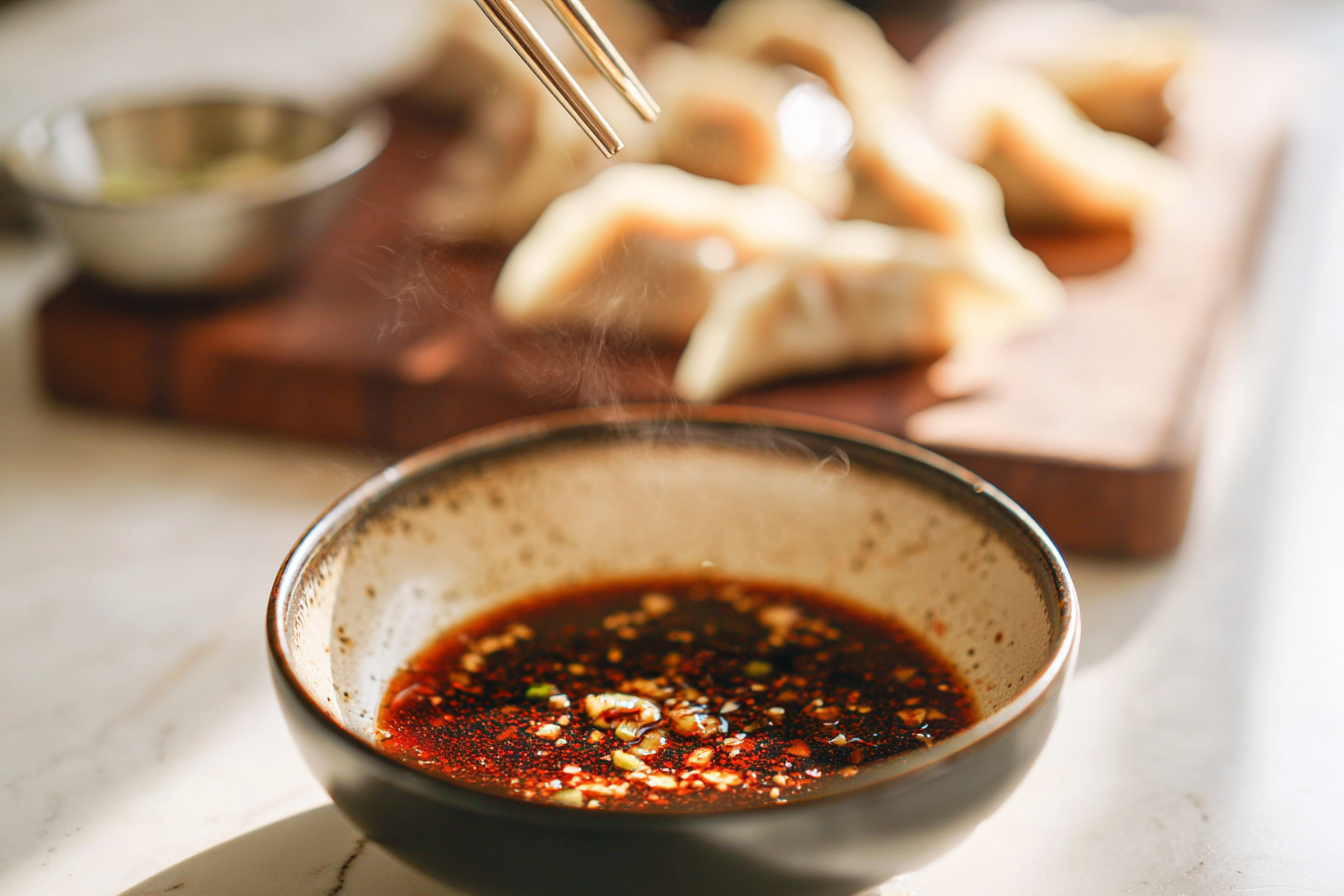
If you have ever sat down with a plate of hot dumplings and only had plain soy sauce, you know something is missing. A great dumpling sauce should be tangy, savory, a little sweet and spicy, with fresh aromatics that make every bite pop.
This dumpling sauce comes together in under 5 minutes and is perfect for potstickers, gyoza, wontons, and any dumpling night. I will show you the base recipe plus how to customize it so it tastes like your favorite restaurant dipping sauce, every single time.
Why You’ll Love This Recipe
Fresh Aromatic Twist: Instead of relying only on pantry ingredients, this dumpling sauce gets a boost from 1/2 teaspoon of freshly grated ginger and 1 teaspoon of finely minced scallion whites, which add brightness and that restaurant-style aroma.
Ready in 5 Minutes: You genuinely just stir everything together, so it is weeknight friendly yet impressive enough for a dumpling party or dim sum style spread.
Perfectly Balanced Flavor: The combo of soy sauce, rice vinegar, sugar, chili oil, sesame oil, and garlic hits savory, tangy, sweet, nutty, and spicy notes so the sauce never tastes flat or only salty.
Infinitely Customizable: You can dial up the heat, soften the tang, or make it gluten free, and I will walk you through exactly how I tweak it depending on whether I am serving potstickers, gyoza, or wontons.
Real Kitchen Tested: I discovered the ginger and scallion tweak after chasing my favorite dumpling dipping sauce from a local Chinese spot, and it is the tiny change that makes this homemade sauce taste truly special.
Ingredients and Substitutions
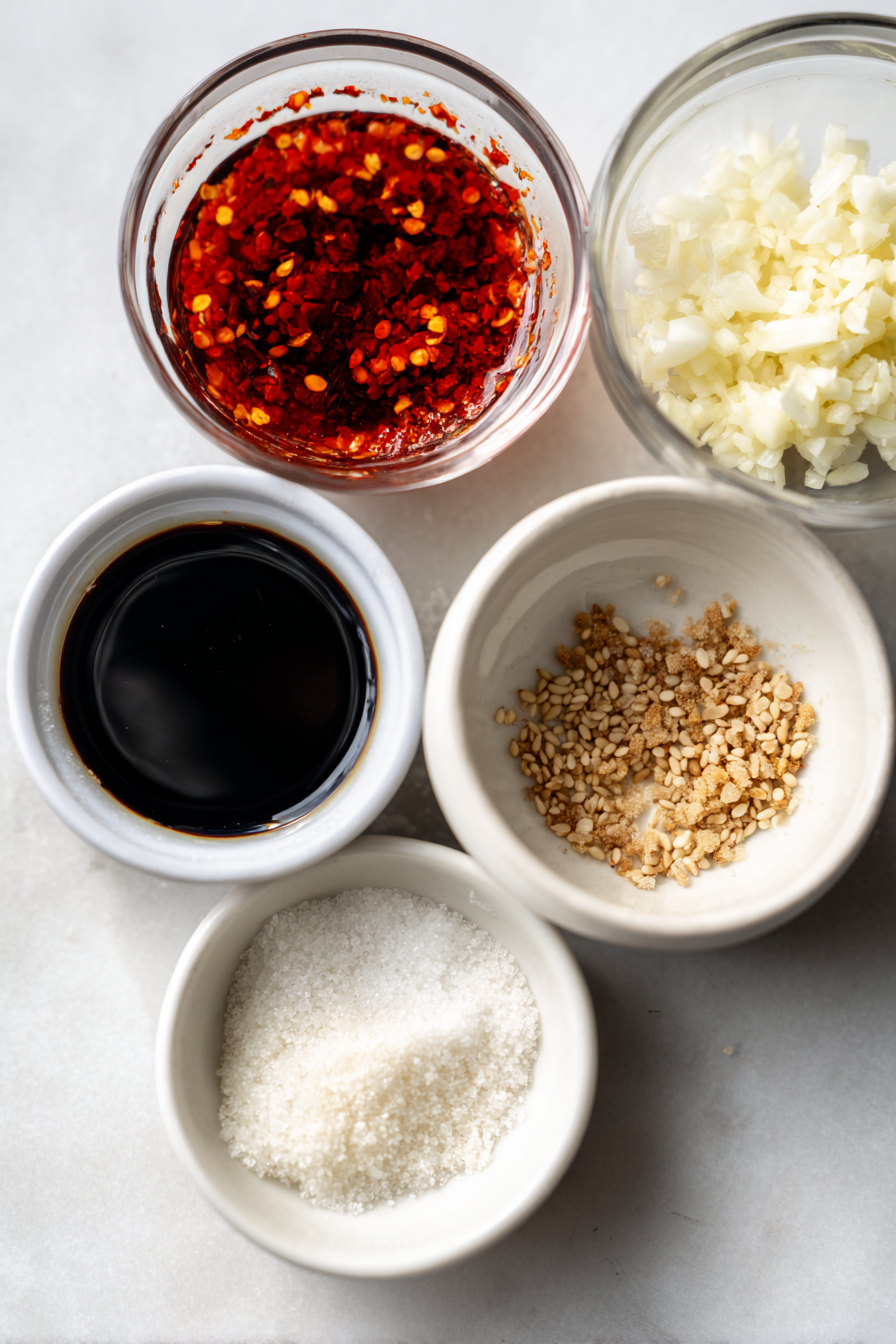
These simple pantry staples build a dumpling dipping sauce that is savory, tangy, slightly sweet, and lightly spicy, with layers of nuttiness from sesame and a fragrant punch from garlic.
Ingredients
- 1 teaspoon sugar
- 1 tablespoon hot water
- 2 tablespoons soy sauce
- 1 teaspoon rice vinegar
- 1 teaspoon chili oil
- 1 teaspoon garlic (minced)
- 1 teaspoon toasted sesame seeds
- ½ teaspoon sesame oil
Ingredient Notes & Substitutions
Soy Sauce: All purpose soy sauce is the classic base for dumpling sauce, but I recommend a low sodium version so you can better control saltiness and the overall balance of the dip.
For a Gluten-Free Sauce: Tamari can be substituted for soy sauce in a 1:1 ratio, which keeps the same deep umami flavor while making the dumpling sauce suitable for a gluten free diet.
Vinegar: Rice vinegar brings a clean and gentle tang that lets the soy and sesame shine, while Chinese black vinegar, also called Chinkiang vinegar, gives a deeper, malty complexity if you want a more old school Northern Chinese flavor.
Chili Oil: Standard chili oil adds a smooth, fragrant heat to the sauce, but if you like more texture and visual appeal you can swap in a chili crisp instead for crunchy bits of chili and aromatics.
Fresh Aromatics: The unique twist in this recipe is stirring in 1/2 teaspoon of grated ginger and 1 teaspoon of minced scallion whites, which makes the sauce taste fresher, more vibrant, and closer to what you get at your favorite dumpling spot.
How to Make dumpling sauce
Mix the Base
- Dissolve the sugar in the hot water. Add the sugar and hot water to a small bowl and stir until the liquid looks clear and there are no visible granules, which prevents a gritty texture and slightly softens the sharp bite of the raw garlic you will add next.
Build the Flavor
- Then add soy sauce, rice vinegar, chili oil, minced garlic, sesame seeds, and sesame oil. For the best flavor and texture, grate the garlic on a microplane so it almost melts into the liquid, creating a smooth, aromatic dumpling dipping sauce.
Finish and Serve
- Stir to combine. Mix until everything looks evenly blended and the sesame seeds are dispersed, then let the sauce sit at room temperature for 5 to 10 minutes so the flavors can meld and the aromatics perfume the liquid.
- Serve with freshly cooked dumplings and enjoy! Spoon into small dipping bowls and pair with hot potstickers, steamed gyoza, or crispy wontons while the sauce is still fragrant.
How to Customize Your Dumpling Sauce
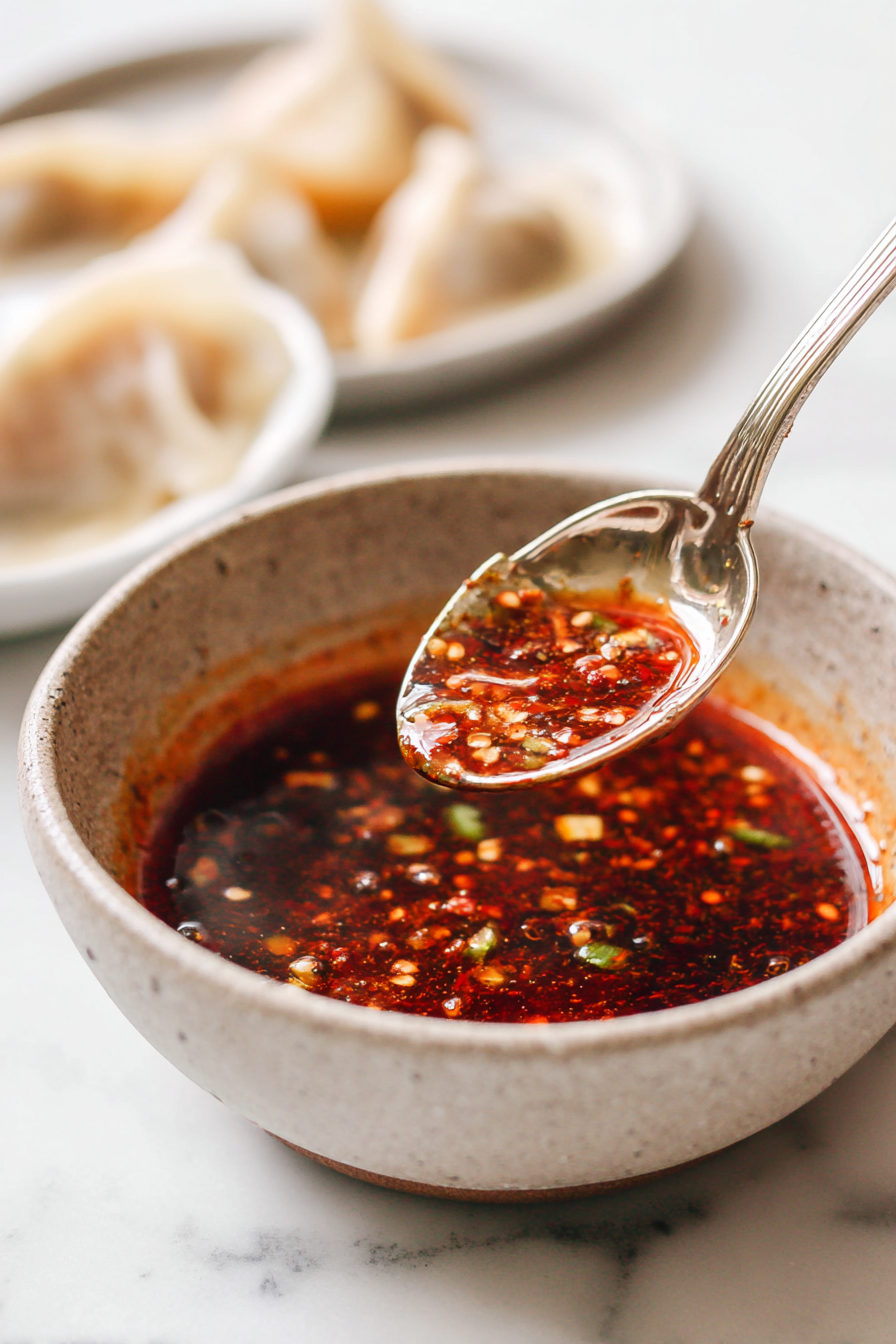
If It Is Too Salty
If your dumpling sauce tastes too salty, whisk in a little more rice vinegar to brighten it or add a small pinch of extra sugar to soften the edges, tasting as you go.
If It Is Too Tangy or Sour
If the vinegar is overpowering, balance it with a bit more soy sauce or tamari and a touch more sugar until the savory notes come back to the front.
If It Is Too Sweet
If the sauce leans too sweet, counter it with a splash more soy sauce for salt and umami, plus a few extra drops of vinegar to sharpen the flavor.
Adjusting the Spice Level
For a non spicy version, simply omit the chili oil so the sauce stays savory and kid friendly.
For mild heat, use half the chili oil, and for an extra spicy dumpling sauce, add more chili oil or stir in a pinch of red pepper flakes or a spoonful of chili crisp.
A Deeper Look at Key Ingredients
What is Chinese Black Vinegar?
Chinese black vinegar, often labeled Chinkiang vinegar, has a malty, slightly sweet flavor and is less sharply acidic than rice vinegar, which makes dumpling sauce taste deeper and more complex rather than just sour.
If you are curious about how it is made and used in Chinese cuisine, What is Chinese Black Vinegar? offers a helpful overview of its unique profile.
Chili Oil vs. Chili Crisp
Chili oil is an infused oil that mainly brings heat and aroma, so it keeps the texture of the sauce smooth and glossy.
Chili crisp includes crunchy chili flakes, fried garlic, and other bits suspended in oil, which gives the dumpling dipping sauce a chunkier texture, more visual interest, and pops of flavor in every bite, as detailed in guides like Chili Oil vs. Chili Crisp.
The Role of Fresh Aromatics
Fresh ginger and scallions are the secret to making this homemade sauce taste like it came from a good dumpling house, since their volatile oils add brightness that pantry ingredients alone cannot match.
Stirring in that 1/2 teaspoon of grated ginger and 1 teaspoon of minced scallion whites right before serving keeps the flavors vivid and helps cut through the richness of pork filled dumplings or crispy potstickers.
Pro Tips & Troubleshooting
Pro Tips
- Make the sauce ahead of time and let it rest for 15 to 30 minutes, or even a few hours in the fridge, so the flavors deepen and meld.
- Use a microplane to grate garlic and ginger so they fully incorporate into the dumpling sauce without leaving harsh, chunky bits.
- Toast your own sesame seeds in a dry pan over medium heat for 1 to 2 minutes, stirring constantly, until golden and fragrant for a nuttier, more intense flavor.
- Hot water is key because it dissolves the sugar completely and helps create a silky, non gritty sauce that clings nicely to dumplings.
Common Mistakes to Avoid
- Using only soy sauce as a dip results in a one dimensional, overly salty flavor, so always include vinegar, a bit of sugar, aromatics, and sesame for balance.
- Not dissolving the sugar fully leaves a sandy texture at the bottom of the bowl, so stir until the mixture looks completely clear before adding the rest of the ingredients.
- Skipping aromatics like garlic, ginger, or scallions makes the sauce taste flat and lifeless compared to the dynamic dipping sauces you find in Chinese cuisine.
Serving & Storage
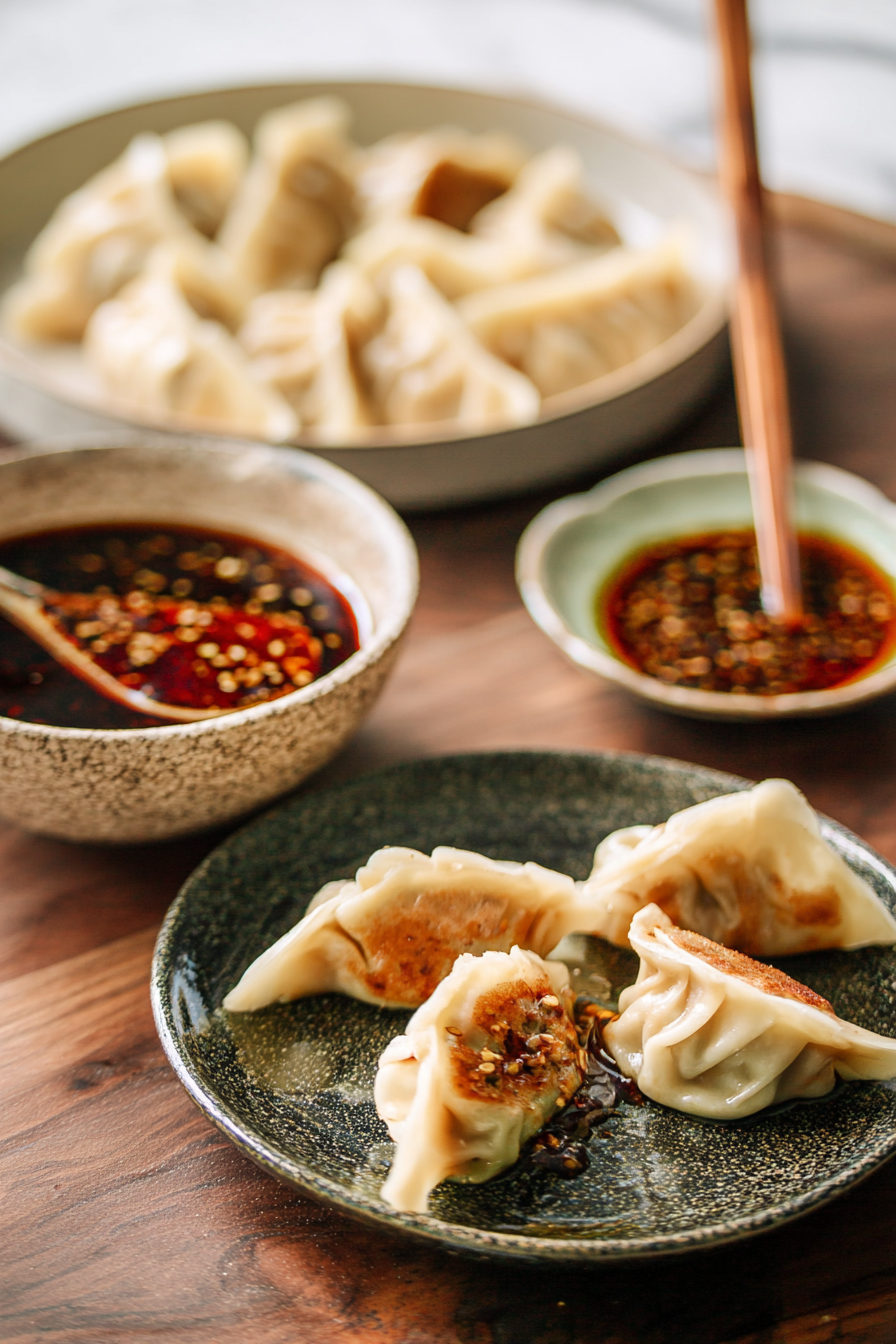
Serving Ideas
Classic pairings include potstickers, Japanese gyoza, Chinese wontons, spring rolls, and pretty much any steamed or pan fried dumpling you love.
This dumpling sauce is also fantastic drizzled over deconstructed dishes like this quick egg roll in a bowl recipe so you get all the flavor without deep frying.
Beyond dumplings, try it as a drizzle over noodles, a quick marinade for tofu, a punchy dressing for cucumber salad, or a flavor booster for plain rice or steamed vegetables.
It is also a great gateway into other Asian condiments, and you can round out your sauce toolkit with recipes like our versatile homemade stir-fry sauce for fast weeknight meals.
Storage and Make-Ahead Instructions
Store leftover dumpling sauce in a small jar or airtight container in the refrigerator to keep the aromatics fresh and the flavors bright.
It will keep for up to 1 week in the fridge, although the ginger and scallions taste best within the first 2 to 3 days, and guidance on safely storing the sauce in the refrigerator supports keeping garlic based sauces chilled.
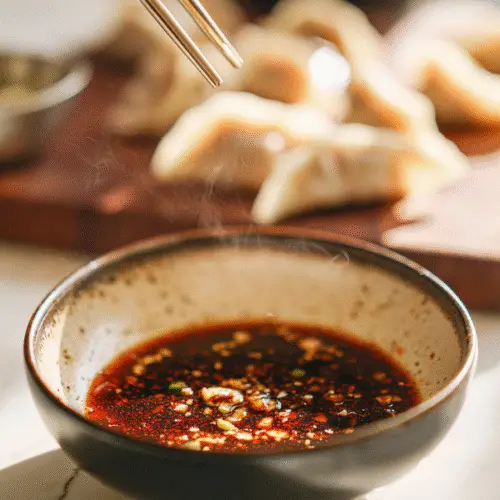
Best Homemade Dumpling Sauce
Equipment
- Small bowl
- Whisk or spoon
- Microplane (optional, for garlic/ginger)
Ingredients
- 1 teaspoon sugar
- 1 tablespoon hot water
- 2 tablespoons soy sauce low sodium recommended
- 1 teaspoon rice vinegar
- 1 teaspoon chili oil or chili crisp
- 1 teaspoon garlic finely minced or grated
- 1 teaspoon toasted sesame seeds
- ½ teaspoon sesame oil
- ½ teaspoon freshly grated ginger optional, but recommended
- 1 teaspoon finely minced scallion whites optional, but recommended
Instructions
Mix the Base
- In a small bowl, combine the sugar and hot water. Stir until the sugar is completely dissolved and the liquid is clear.
Build the Flavor
- To the bowl, add the soy sauce, rice vinegar, chili oil, minced garlic, toasted sesame seeds, sesame oil, grated ginger, and minced scallion whites.
Finish and Serve
- Stir everything together until well combined. For best results, let the sauce sit at room temperature for 5 to 10 minutes to allow the flavors to meld.
- Serve immediately with your favorite dumplings, potstickers, or wontons.
Notes
Nutrition
Conclusion
This 5 minute dumpling sauce turns a simple plate of potstickers or gyoza into something that tastes like a night out, with almost no effort.
The fresh ginger and scallion twist adds a vibrant, restaurant quality finish that you can easily tweak to match your taste and heat level.
Once you mix it up a couple of times, you will be able to customize it by feel, so do not be afraid to experiment with vinegar, spice, and aromatics.
If you try this recipe, be sure to leave a rating and comment below!
FAQ
What is the best vinegar for dumpling sauce: rice vinegar or black vinegar?
Rice vinegar is best if you want a clean, light tang that lets the soy sauce and sesame flavors shine, while Chinese black vinegar is ideal when you prefer a deeper, slightly sweet, malty flavor in your dumpling sauce.
How can I make this sauce less salty?
To make the sauce less salty, dilute the saltiness by adding a little more rice vinegar or water and a pinch of sugar, and next time start with a low sodium soy sauce or tamari.
How long can I store homemade dumpling sauce?
You can store this homemade dumpling sauce in an airtight container in the refrigerator for up to 1 week, though the fresh ginger and scallions taste brightest within the first 2 to 3 days.
What is the difference between chili oil and chili crisp in this recipe?
Chili oil is a smooth infused oil that mainly adds heat and aroma, while chili crisp includes crunchy chili flakes, fried garlic, and other bits, giving the sauce more texture and bursts of flavor.
Can I make this dumpling sauce gluten-free?
Yes, you can make it gluten free by using tamari in place of soy sauce in equal amounts, and resources like Tamari can be substituted for soy sauce explain why tamari is usually the safer choice for gluten free diets.
What else can you use dumpling sauce for besides dumplings?
Use it as a dip for spring rolls, a drizzle over noodles or rice bowls, a quick marinade for tofu, or a tangy dressing for cucumber salads and steamed vegetables.
What is the difference between dumpling sauce and just soy sauce?
Dumpling sauce is soy sauce elevated with vinegar, sugar, chili oil, garlic, sesame oil, and sometimes fresh aromatics, so it tastes balanced, complex, and clingy, while plain soy sauce is mostly salty and one dimensional.