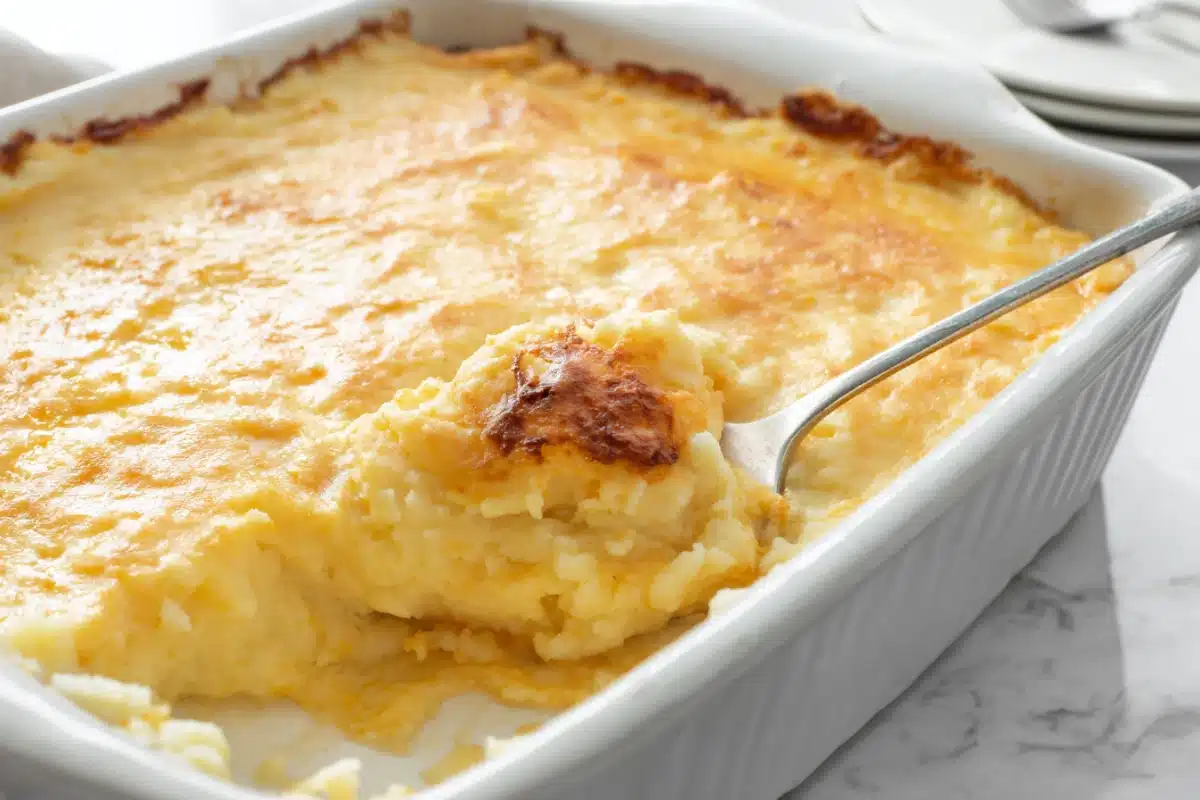
If you are in charge of potatoes this year, this creamy mashed potato casserole is your secret weapon. It has everything you love about classic mashed potatoes, just baked into a cozy, golden-topped casserole that can be made ahead without turning dense or dry. This mashed potato casserole is rich, tangy, and lightly garlicky, with just enough herbs to taste special without fighting the gravy.
Best part? It is actually designed to be made ahead, so you get silky potatoes on the table with way less same day stress. Once you try it this way, plain mashed potatoes might feel like a downgrade.
Why You Will Love This Mashed Potato Casserole
- Make ahead friendly for busy holidays and big dinners
- Ultra creamy mashed potato base with a lightly crisp, buttery top
- Gentle garlic and herbs for flavor that does not overpower gravy
- Simple ingredient list with realistic supermarket staples
- Easy to reheat in the oven or microwave without sacrificing texture
Ingredients and Substitutions
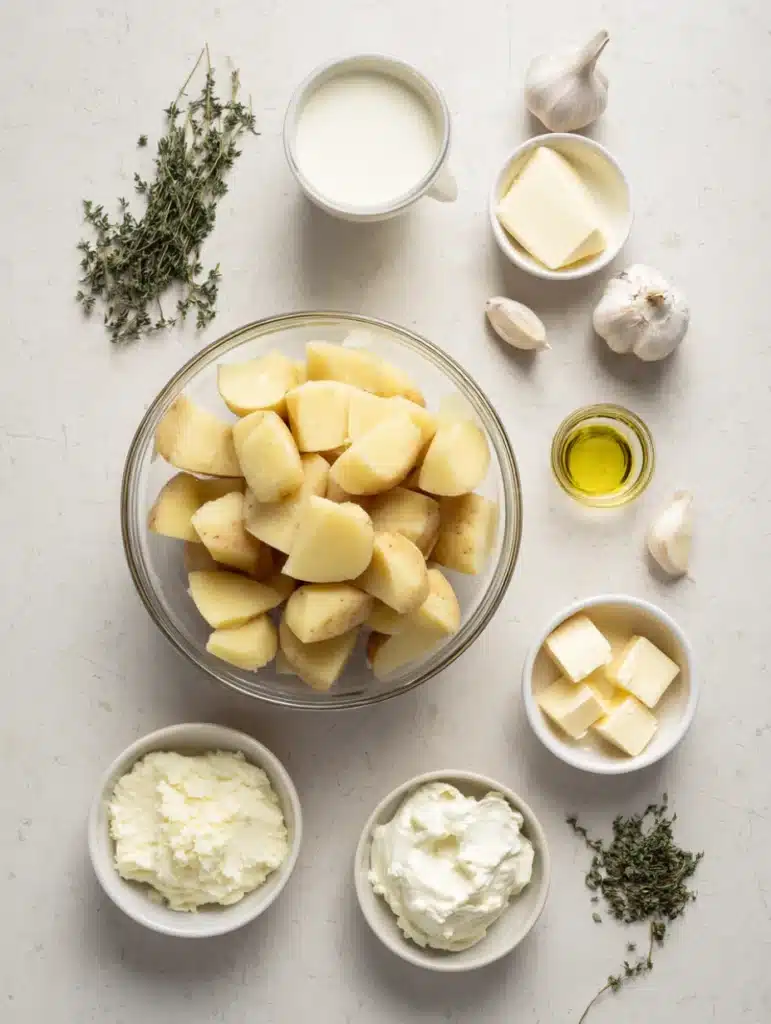
Here is everything you need to make this creamy mashed potato casserole. Stick to the amounts for the base recipe, then tweak with the substitution tips if needed.
Ingredients
- 3 pounds small russet potatoes, peeled and cut into 3 inch chunks
- 1 tablespoon kosher salt
- 6 whole garlic cloves, peeled
- 1 whole bay leaf
- 4 (3 inch) thyme sprigs
- 1 (8 ounce) package cream cheese, at room temperature
- 6 tablespoons unsalted butter, at room temperature
- 1 cup sour cream, full fat
- 3/4 to 1 cup whole milk, warmed
- Kosher salt, to taste
- Freshly ground black pepper, to taste
- 2 tablespoons unsalted butter, cut into bits and chilled
Key ingredients for creamy mashed potatoes
- Russet potatoes: Their high starch content gives you fluffy, smooth mash that can handle all the dairy without getting heavy.
- Garlic, bay leaf, and thyme: These simmer in the cooking water so the potatoes soak up subtle flavor from the inside out. The result is savory but not aggressively garlicky.
- Cream cheese, sour cream, and butter: This trio is what makes the casserole decadent and stable. Cream cheese adds body, sour cream adds tang, and butter makes everything velvety.
- Whole milk: Warmer milk blends in more easily and keeps the mash smooth rather than pasty.
Easy substitutions and dietary tweaks
- Potatoes: You can swap part of the russets for Yukon Golds if you like a slightly more buttery, dense texture. Try half and half if you are experimenting for the first time.
- Dairy swaps:
- Use full fat Greek yogurt in place of part of the sour cream for a slightly lighter tang.
- If you need to cut back on richness, reduce the cream cheese by a couple of tablespoons and add a splash more warm milk.
- Use full fat Greek yogurt in place of part of the sour cream for a slightly lighter tang.
- Vegetarian: The base recipe is already vegetarian. Just keep an eye on toppings you serve it with if you build a whole menu around it.
- Salt and pepper: Since the potatoes are salted twice, season gradually and taste as you go.
Flavor boosters you can add
Want to nudge the flavor in a different direction? Try one of these ideas.
- Stir in a spoonful of roasted garlic for a deeper, sweeter garlic flavor.
- Fold in finely chopped fresh chives, parsley, or extra thyme after mashing.
- Add a pinch of smoked paprika or cayenne if your crowd likes a little heat.
- Sprinkle the top with grated Parmesan or sharp cheddar before baking for a slightly more cheesy crust.
How to Make Mashed Potato Casserole (Step by Step)
Prep and cook the potatoes
- Generously butter a shallow 2 1/2 quart gratin dish or baking dish and set it aside. This keeps the potatoes from sticking and adds flavor around the edges.
- Place the peeled and chopped russet potatoes in a large pot. Cover with cold water by about 2 inches so they cook evenly from the inside out. Add the kosher salt, whole garlic cloves, bay leaf, and thyme sprigs.
- Bring the pot to a boil over high heat, then reduce the heat so it stays at a gentle simmer. Partially cover and cook until the potatoes are just tender when pierced with a knife, about 20 minutes. They should hold their shape and not fall apart.
- Drain the potatoes very well, then let them stand in the warm pot or colander until they steam dry and the edges look a bit chalky, about 3 minutes. This step drives off excess moisture so the casserole bakes up creamy, not watery. Discard the bay leaf and thyme stems.
Mash and build the creamy base
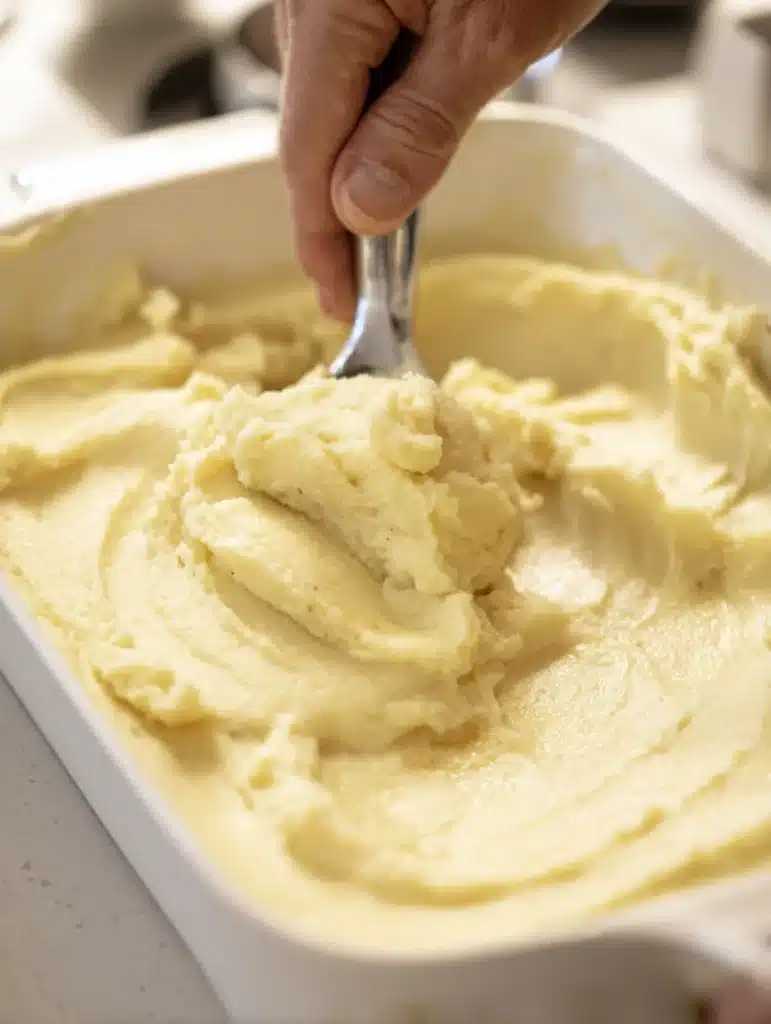
- While the potatoes are still hot, press them and the cooked garlic through a food mill or potato ricer into a large bowl. If you do not have either, mash them as smoothly as you can with a hand held potato masher. Avoid anything with a motor like a mixer, which can quickly turn potatoes gluey.
- Add the room temperature cream cheese, room temperature butter, sour cream, and 3/4 cup of the warmed whole milk to the hot potatoes. Stir gently but thoroughly until the mixture is smooth and fluffy. At this stage the mash should be slightly softer than you want at serving time, since it will firm up in the fridge.
- Taste and season with more kosher salt and freshly ground black pepper. Give it another brief stir so the seasoning is evenly distributed, but stop before the potatoes start to feel stretchy.
Assemble, chill, and bake the casserole
- Scrape the mashed potatoes into the prepared baking dish, smoothing the surface with a spatula or the back of a spoon.
- Dot the top evenly with the chilled butter bits so they melt over the surface in the oven and help with browning.
- Let the casserole cool completely at room temperature. Cover tightly with plastic wrap and refrigerate overnight or for up to 2 days. The rest time helps the flavors meld and makes day of cooking much easier.
- When you are ready to bake, preheat the oven to 350°F. Take the casserole out of the fridge and let it stand at room temperature for about 30 minutes so it is not fridge cold all the way through.
- Remove the plastic wrap and bake the mashed potato casserole until the top is golden brown and the potatoes are heated all the way to the center, about 1 hour. The edges should be bubbling and the middle should feel hot when you insert a knife. Serve warm.
Expert Tips and Troubleshooting
How to avoid gummy or gluey potatoes
The biggest mashed potato heartbreak is that stretchy, gluey texture. That usually happens when potatoes are overworked or when the wrong tool is used.
- Always start the potatoes in cold water so they cook evenly.
- Use a food mill, ricer, or basic hand masher instead of an electric mixer.
- Mash while the potatoes are still hot and add the dairy gently instead of whipping it in.
If your potatoes already feel a little gummy, you can sometimes rescue the texture by gently folding in a splash of warm milk and a bit more melted butter, then stopping as soon as things smooth out.
For more background on how potato starch behaves and why texture changes so fast, it can be helpful to read a detailed overview of potato nutrition and structure in everyday diets.
Keeping the casserole moist and creamy
This recipe is built to stay creamy, but a few habits help:
- Make sure you do not skimp on the fat. Cream cheese, sour cream, and butter are what keep things lush.
- Do not bake the casserole uncovered for much longer than the recipe time, or the top can dry out before the center is hot.
- If you are reheating leftovers, cover the dish loosely with foil for most of the time so the moisture stays inside, uncovering at the very end if you want the top to freshen up.
If you like to dig deeper into the nutrients in your ingredients, you can explore the official USDA FoodData Central database for potatoes.
Make ahead timing and food safety
Because this mashed potato casserole is meant to be made in advance, good storage habits matter.
- Cool the assembled casserole completely before refrigerating. Putting it in the fridge while still hot can cause condensation and soggy texture.
- Do not leave the cooked potatoes at room temperature for more than 2 hours before chilling or baking.
- When you reheat, make sure the center is piping hot.
If you want to understand more about handling potato dishes safely, check out practical guidance on safe storage and handling for cooked potatoes at home.
Serving, Storage, and Freezing
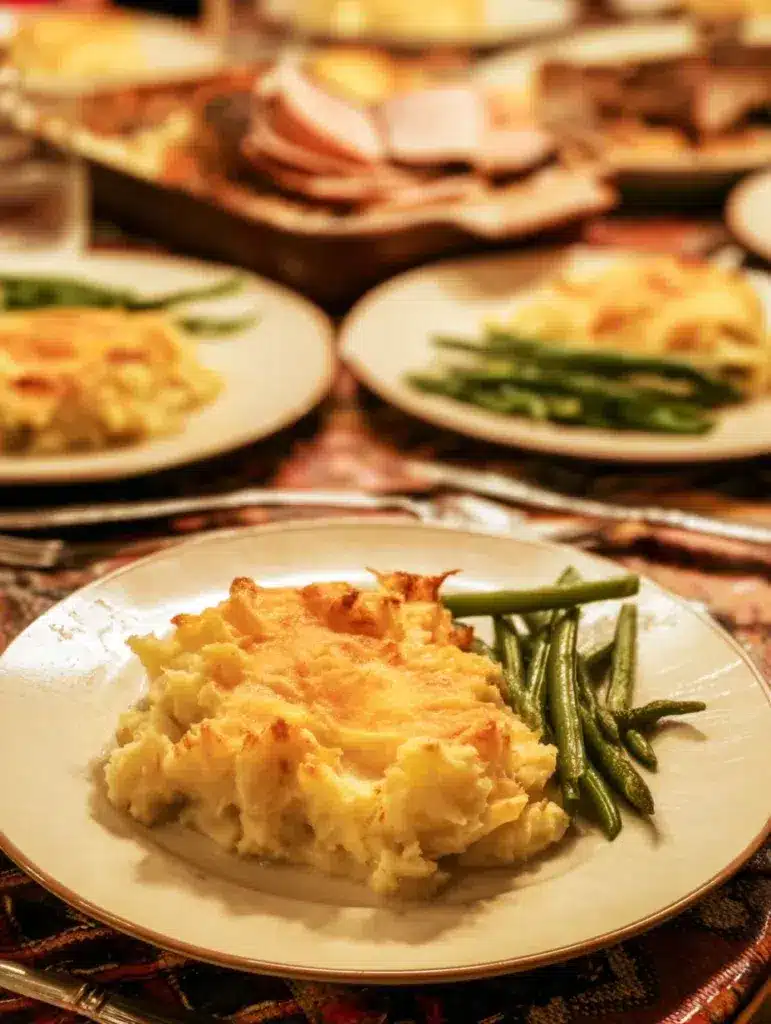
What to serve with mashed potato casserole
This creamy mashed potato casserole plays nicely with almost any main dish that would usually get mashed potatoes or stuffing. It is especially at home on a holiday table with roasted turkey, gravy, and a few bright vegetable sides.
For menu inspiration, you can look at a handy collection of Thanksgiving side dishes that steal the spotlight, then plug this casserole into the mix.
It also works for Sunday roast dinners, potlucks, and any night you want a big comforting side that feeds a crowd.
Fridge storage and reheating
- Fridge: Store leftovers in an airtight container in the refrigerator for up to 4 days.
- Oven reheat: Transfer to a baking dish, cover loosely with foil, and reheat at 325 to 350°F until hot in the center. Remove the foil at the end if you want the top to crisp up again.
- Microwave reheat: For busy days, reheat in the microwave in 1 minute bursts, stirring between intervals until hot. The top will not brown in the microwave, but the texture stays pleasantly creamy.
When you are reheating any potato dish, treat it the same way you would other perishable leftovers. If something smells off or has been left out too long, it is better to toss it than risk it.
Can you freeze mashed potato casserole?
Yes, this casserole freezes better than classic stovetop mash. Let the baked casserole cool completely, then wrap it tightly and freeze in the baking dish or in smaller portions. For best texture, use within 2 to 3 months.
To reheat from frozen, thaw in the refrigerator overnight, then bake covered at 350°F until hot, uncovering near the end if you want to refresh the crust.
Variations and Flavor Twists
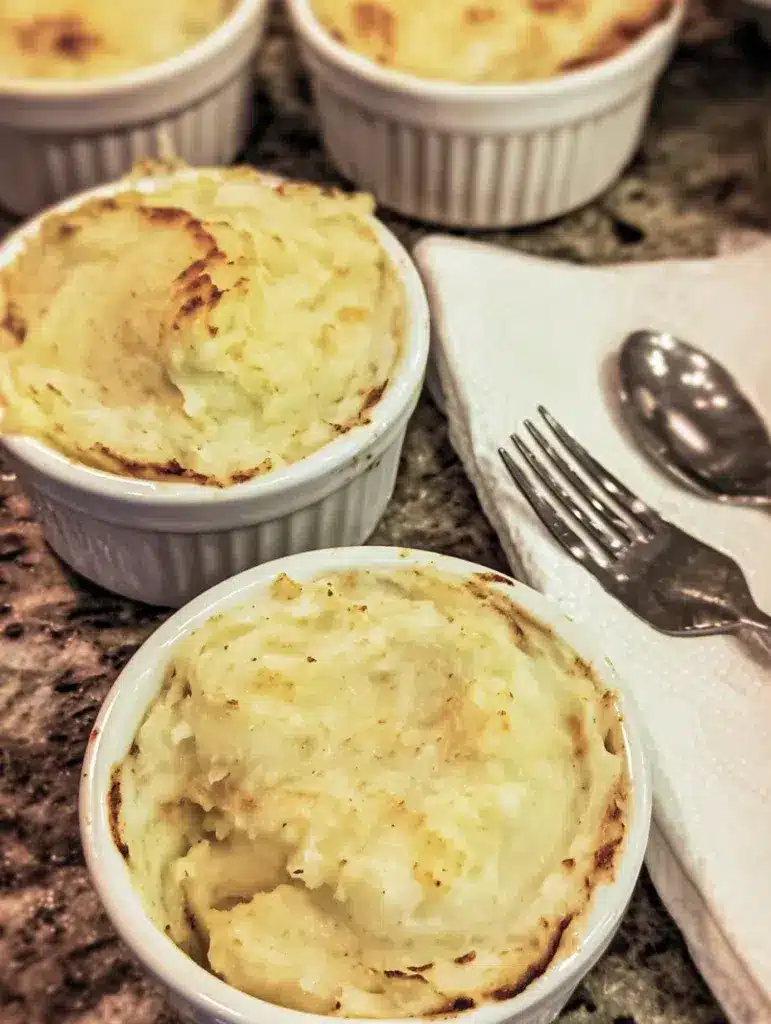
Fully loaded mashed potato casserole
If your crowd loves a loaded baked potato vibe, turn this into a full loaded version:
- Stir shredded cheddar into the mashed potatoes before they go into the dish.
- Scatter more cheese, crumbled cooked bacon, and sliced green onions over the top before baking.
- Finish with a spoonful of sour cream and extra chives when serving.
You can also pair it with a sweeter option like a sweet potato casserole with pecans for the holidays so guests can choose their favorite style.
Lighter or vegetarian friendly twist
Want something a bit lighter without losing comfort points?
- Swap part of the sour cream for full fat Greek yogurt.
- Reduce the cream cheese slightly and add a splash more warm milk until the texture feels right.
- Keep the base vegetarian and offer crispy mushroom or onion toppings instead of bacon.
For another potato based side that fits special occasions, you might enjoy a rustic but elegant Passover friendly potato pie baked in a casserole dish.
Herb and garlic showstopper
If herbs are your thing, lean into the bay and thyme already in the recipe. Add chopped fresh chives, parsley, or additional thyme leaves to the mash before baking and sprinkle a little more on top after it comes out of the oven.
This version looks beautiful on the table and adds a fresh note that balances all the richness.
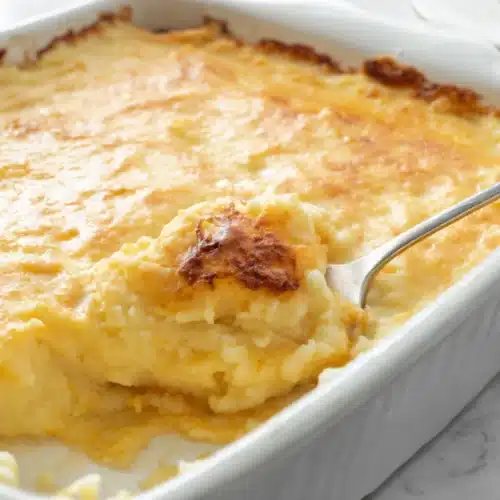
Creamy Mashed Potato Casserole

Equipment
- Large Pot
- Colander
- Food mill or potato ricer
- Potato masher
- Large Mixing Bowl
- 2 1/2 quart baking dish
Ingredients
Mashed Potato Casserole
- 3 pounds small russet potatoes peeled and cut into 3 inch chunks
- 1 tablespoon kosher salt
- 6 whole garlic cloves peeled
- 1 bay leaf whole
- 4 thyme sprigs about 3 inches long each
- 1 package cream cheese 8 ounces, at room temperature
- 6 tablespoons unsalted butter at room temperature
- 1 cup sour cream full fat
- 3/4 to 1 cup whole milk warmed
- kosher salt to taste
- freshly ground black pepper to taste
- 2 tablespoons unsalted butter cut into bits and chilled
Instructions
- Generously butter a shallow 2 1/2 quart gratin or baking dish and set it aside so the mashed potato casserole releases easily and develops flavorful edges as it bakes.
- Place the peeled and chopped russet potatoes in a large pot and cover with cold water by about 2 inches. Add the kosher salt, peeled garlic cloves, bay leaf, and thyme sprigs. Bring to a boil, then reduce the heat, partially cover, and simmer until the potatoes are just tender when pierced with a knife, about 20 minutes. Drain very well, then let the potatoes steam dry until the edges look slightly chalky, about 3 minutes. Discard the bay leaf and thyme stems.
- While the potatoes are still hot, press them and the cooked garlic through a food mill or potato ricer into a large bowl. If you do not have one, mash the potatoes as smoothly as possible with a hand held potato masher, avoiding any electric tools that can overwork the starch.
- Add the cream cheese, room temperature butter, sour cream, and 3/4 cup of the warmed whole milk to the hot potatoes. Stir gently until the mixture is smooth and fluffy, adding a little more warm milk if needed so the texture is slightly looser than you want at serving time. Season to taste with additional kosher salt and freshly ground black pepper.
- Scrape the mashed potatoes into the prepared baking dish and smooth the top with a spatula. Dot the surface evenly with the chilled butter bits. Let the casserole cool completely at room temperature, then cover tightly with plastic wrap and refrigerate overnight or for up to 2 days.
- When ready to bake, preheat the oven to 350°F. Remove the casserole from the refrigerator and let it stand at room temperature for about 30 minutes. Uncover and bake until the top is golden brown and the potatoes are heated through to the center, about 1 hour. Serve the mashed potato casserole warm.
Notes
Nutrition
Conclusion
This creamy mashed potato casserole gives you everything you want from classic mashed potatoes and then some. It is rich, smooth, and gently flavored with garlic and herbs, all tucked under a buttery, golden surface that looks impressive without demanding any last minute fuss.
Because it is designed to be made ahead and reheated, it is the kind of side dish that actually makes holidays and big gatherings easier instead of more stressful. Once you see how calmly this comes together on the big day, you might decide it is your new default way to serve mashed potatoes any time you are feeding a crowd.
FAQ
1. Can I make mashed potato casserole ahead of time?
Yes, this recipe is meant to be made ahead. You can assemble the casserole, cool it completely, cover it tightly, and refrigerate it for up to 2 days before baking. Let it sit at room temperature for about 30 minutes, then bake until the center is hot and the top is golden.
2. Can I freeze mashed potato casserole?
You can freeze this casserole after baking and cooling completely. Wrap it very well in the baking dish or portion it into smaller containers. Thaw overnight in the refrigerator, then reheat covered in the oven until steaming hot in the middle.
3. How do I reheat mashed potato casserole so it stays creamy?
For the best texture, reheat in the oven covered loosely with foil so the top does not dry out while the center warms up. Remove the foil at the very end if you want to refresh the crust. For single servings, the microwave works fine as long as you reheat in short bursts and stir between them.
4. What are the best potatoes for mashed potato casserole?
Starchy potatoes like russets are ideal here because they mash smoothly and absorb dairy easily. You can mix in some Yukon Golds if you like a slightly denser, more buttery texture, but avoid using only waxy potatoes because they can turn heavy or gluey when mashed.
5. Can I make this without sour cream or cream cheese?
You can, but the texture and flavor will change a bit. Replace sour cream with full fat Greek yogurt and use extra butter and milk to make up for the cream cheese. Aim for the same loose, creamy texture before baking so the casserole does not dry out.
6. Can I use leftover mashed potatoes instead of cooking potatoes from scratch?
Yes, leftover mashed potatoes can be turned into a casserole. Warm them slightly, stir in some cream cheese, sour cream, and extra melted butter until they are creamy and spreadable, then place them in a buttered dish, dot with butter, and bake until hot and golden.
Have more questions about this mashed potato casserole? Ask in the comments!