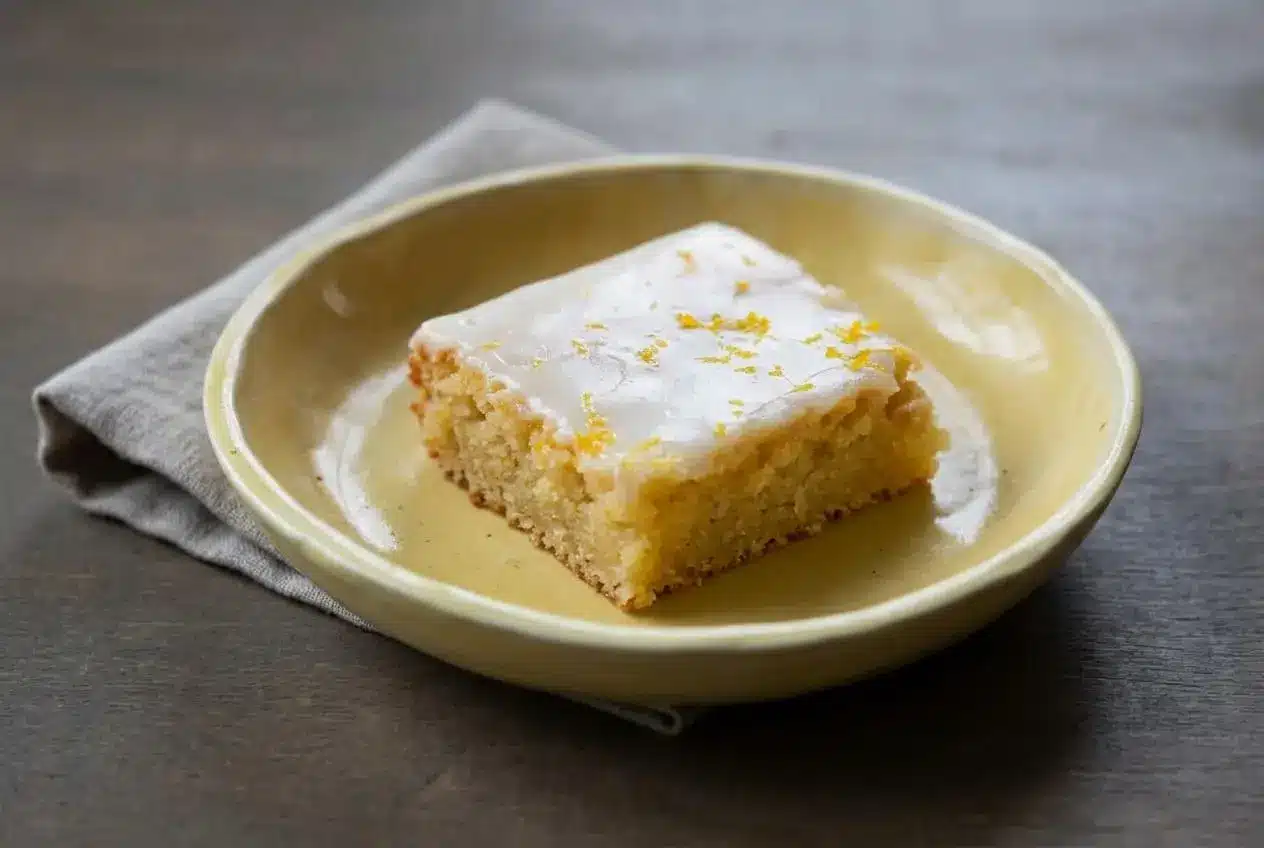
Lemon brownies are buttery, chewy dessert bars flavored with lemon zest, juice, and extract instead of cocoa. This scratch version uses one bowl for the batter and finishes with a glossy white chocolate lemon glaze for a rich, bright citrus bite.
The fragrance starts before the mixer does. Rub fresh zest into sugar, and the mixture turns pale yellow, feels like damp sand, and smells intensely lemony. That small step gives these bars their citrus character without adding more liquid.
You get a dense brownie-style crumb rather than a fluffy lemon cake, with sweet white chocolate balancing the tart juice. The batter takes 10 minutes to prepare, but allow time for cooling and setting before slicing. The edges tell you when to stop.
Zest the lemons before juicing them, and take only the colored peel, leaving the bitter white pith behind.
Why You Will Love These Lemon Brownies and How They Differ From Lemon Bars
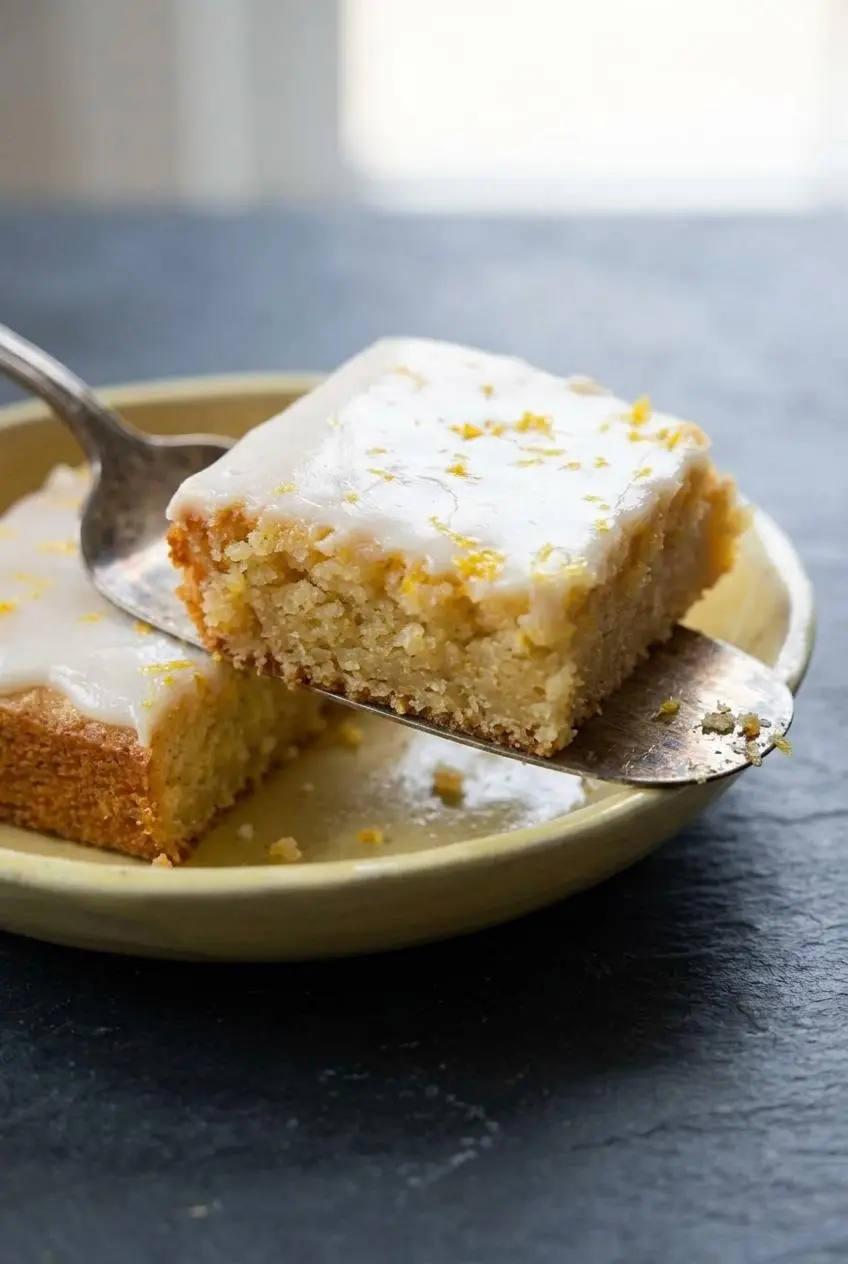
These bars deliver a chewy citrus bite without making a separate crust or custard. Mix the batter in one bowl with a hand mixer, bake it in an 8×8-inch pan, then prepare the topping in a small bowl.
The name describes the texture: rich, compact, and tender, with enough structure to hold a neat square. There’s no cocoa in the batter, although the glaze does contain white chocolate. Its sweetness rounds out the lemon rather than competing with it.
Lemon Brownies vs. Lemon Bars vs. Lemon Blondies
- Lemon brownies: A single baked layer with a dense, fudgy crumb and a glazed surface.
- Lemon bars: A shortbread crust topped with a separate, soft lemon egg custard.
- Lemon blondies: A closely related bar whose name overlaps with lemon brownies, though traditional blondies often feature brown sugar and a more caramel-like flavor.
If you prefer a creamy layer rather than a chewy crumb throughout, lemon cream cheese bars offer another citrus dessert option.
Key Ingredients and the Role Each One Plays
Lemon zest supplies aroma, juice adds tartness, and extracts deepen the flavor without much liquid. Butter and eggs give the bars richness, flour provides structure, and white chocolate creates a sweet topping that balances the citrus.
- 1 ¼ ((272g) cup granulated sugar
- 2 tablespoons lemon zest, (from about 2 lemons)
- ¾ (170g) cup unsalted butter, softened
- 1 teaspoon vanilla extract
- 1 teaspoon lemon extract
- 2 tablespoons lemon juice
- 2 large eggs
- 1 ¼ (162.5) cup all-purpose flour
- ¾ teaspoon baking powder
- ½ teaspoon kosher salt
White Chocolate Lemon Glaze
- ¾ (113g) cup white chocolate, roughly chopped
- 2 tablespoons lemon juice
- ¼ teaspoon lemon extract
- Pinch kosher salt
- 1 tablespoon lemon zest, for garnish
Fresh zest and granulated sugar: Rubbing them together releases aromatic oils from the peel and distributes them through the sugar. This builds lemon flavor without changing the batter’s moisture balance. Keep the zest fine so it spreads evenly instead of gathering into clumps.
Lemon juice and extract: Juice brings acidity, while extract reinforces the aroma. Use the measured amounts rather than pouring in extra juice for stronger flavor, which can loosen the batter. Freshly squeezed juice works especially well because you already need the lemons for zest; bottled juice can taste different, but it isn’t automatically bitter or metallic.
Softened butter: The butter should yield when pressed but still hold its shape. That consistency allows it to blend with the lemon sugar during creaming. Melted butter won’t behave the same way, so avoid substituting it directly.
Eggs, flour, and baking powder: Eggs bind the batter, flour gives the bars enough structure to slice, and baking powder supplies a little lift. The goal is a tender, close crumb, not a tall cake.
White chocolate: Chopped white chocolate melts with lemon juice into the topping. Keeping it in the glaze preserves the lemon-forward batter while adding a rich finish. Vanilla softens the citrus edge, and salt balances the sweetness in both layers.
I rub the zest into the sugar until it looks pale yellow and smells floral, rather than stopping as soon as the two look mixed.
How to Make the Lemon Brownies Step by Step
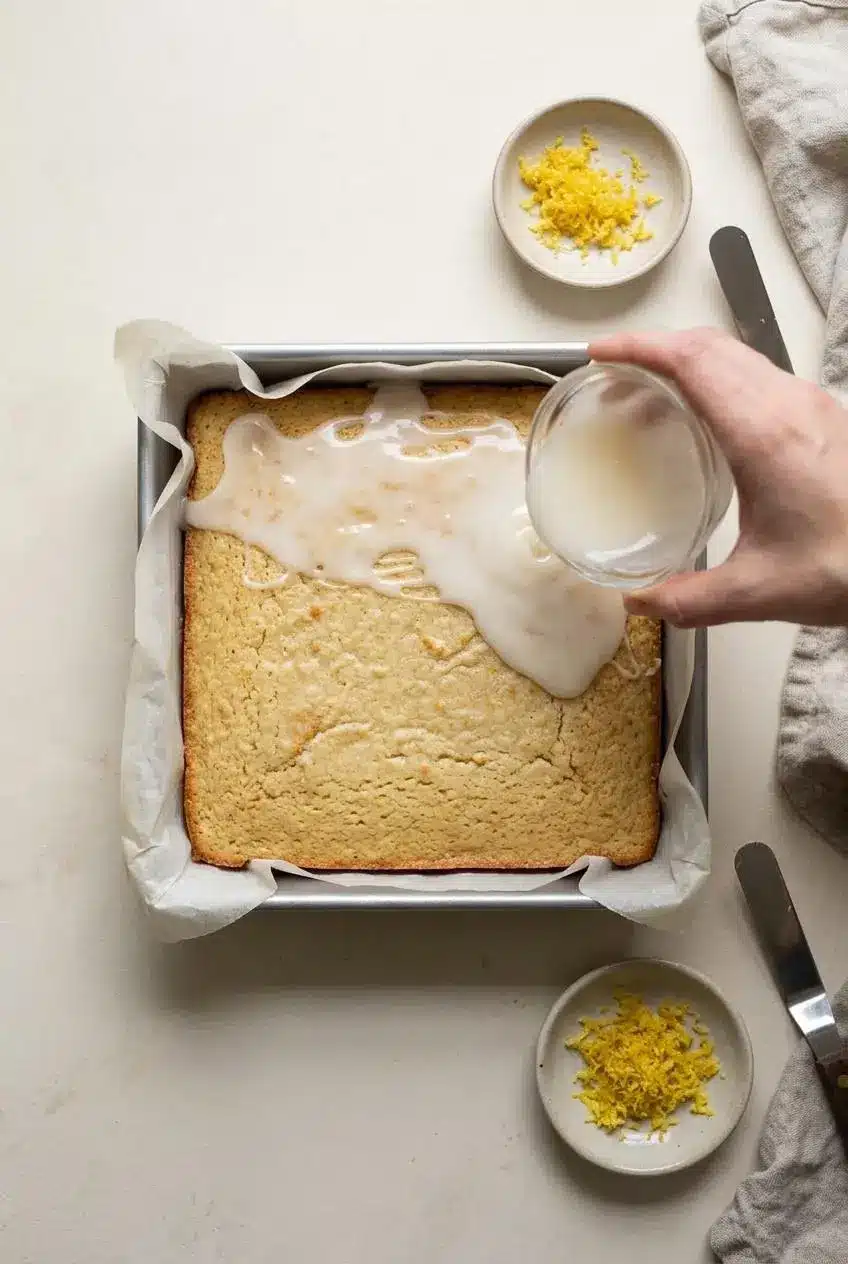
Plan on 10 minutes of prep, 25 minutes of baking, and 1 hour 10 minutes total, including cooling and glaze setting. The pan yields 9 slices. Have an electric hand mixer and an 8×8-inch baking dish ready.
To Make the Brownies
- Heat the oven to 350°F, grease an 8×8-inch pan, and press a strip of parchment across the bottom and up two opposite sides, leaving overhang.
The paper should sit flat against the greased pan, with exposed ends that will help lift out the baked bars. - Work the lemon zest into the granulated sugar with your fingertips in a large mixing bowl.
Stop when the sugar feels damp and sandy, takes on a pale yellow color, and gives off a strong citrus fragrance. - Beat the softened butter, vanilla extract, and lemon extract into the lemon sugar with a hand mixer on medium speed for about 1 minute.
The mixture should become lighter and fluffy, with no large pieces of butter remaining. - Mix in the lemon juice and eggs briefly at medium speed until incorporated.
A slightly grainy or curdled appearance can occur at this stage and should become more uniform when the flour joins the mixture. - Mix in the flour, baking powder, and salt on low just until combined, transfer the batter to the prepared pan, bake for 25 minutes, and let it cool for about 15 minutes.
Look for lightly golden edges and a clean toothpick from the center, rather than waiting for deep browning that can dry out the crumb.
To Make the White Chocolate Lemon Glaze
- Meanwhile, heat the chopped white chocolate with the lemon juice in a small microwave-safe bowl in 20-second intervals until melted, stir together, then incorporate the lemon extract and salt.
The mixture should look smooth and glossy; a double boiler provides an alternative if you don’t have a microwave. - Cover the cooled bars with the glaze, gently tilt the pan to distribute it, scatter the garnish zest over the surface, and leave the topping to set for at least 20 minutes before cutting.
A settled glaze should form a distinct layer over the bars rather than disappearing into a hot crumb.
Use the cooling time as a checkpoint, too. If the surface still feels hot, let it cool further before adding the topping. Cooling and setting are part of the recipe, not spare time to skip when dessert looks tempting.
Expert Tips and Troubleshooting Common Mistakes
A fudgy bar should feel rich and tender, not dry or rubbery. Flour measuring, mixing, and oven cues make the biggest difference.
- Dry or hard bars: Scooping flour directly with the measuring cup can pack it tightly. Fluff the flour, spoon it into the cup, and level the top rather than pressing it down.
- Tough crumb: Extended mixing after adding flour develops more gluten. Use low speed and stop once no dry streaks remain.
- Overbaked edges: Deep golden color isn’t the goal. Use the stated bake time together with the edge color and center toothpick test.
- Unexpected texture: Keep the white chocolate in the glaze rather than melting it into the batter, which changes the balance of sugar and fat.
Why Does the Batter Look Curdled?
Lemon juice and eggs can temporarily disrupt the creamed butter mixture, leaving small buttery specks. This doesn’t necessarily mean anything has gone wrong. Add the dry ingredients as directed and mix gently; the batter should become more cohesive.
Don’t beat it aggressively to chase a perfectly smooth appearance before adding flour. Extra mixing isn’t a useful fix here.
How to Fix a Runny or Melted Glaze
- Too runny: Let the white chocolate glaze cool slightly before adjusting it, since it thickens as it cools. If it remains thin, blend in additional melted white chocolate gradually.
- Too thick: Warm the glaze gently first. If necessary, stir in lemon juice sparingly until it flows, avoiding a large splash.
- Soaking into the bars: The surface was likely too hot. Let the bars cool further before adding any remaining topping; glaze already absorbed into the crumb won’t lift back out.
Easy Variations and Glaze Swaps
Change the finish or citrus for a different flavor while keeping these optional ideas separate from the ingredient list above.
A little full-fat sour cream is an optional experiment for a tangier, softer crumb, though it changes the batter’s moisture balance. Stick with the listed ingredients when you want the texture described here.
A cake mix shortcut uses lemon cake mix, eggs, melted butter, and lemon juice, but it needs its own proportions rather than a direct substitution in this batter. If you have a box to use, lemon cake mix cookies are another dedicated option.
Classic 2-Ingredient Powdered Sugar Lemon Glaze
For a sharper icing without white chocolate, whisk fresh lemon juice gradually into powdered sugar. Stop when the icing falls from the whisk in a thick ribbon and slowly levels out.
Add more powdered sugar if it becomes watery, or a little more juice if it won’t spread. Apply it to cooled bars and let the surface set before slicing.
Lime Brownies and Scaling for a 9×13-Inch Pan
- Lime: Replace the lemon zest and juice with equal amounts of fresh lime zest and juice; omit the lemon extract if you don’t want mixed citrus flavors.
- Orange: Use equal amounts of orange zest and juice for a sweeter, less tart variation, again considering whether you want the lemon extract’s flavor.
- Larger batch: Double the ingredients for a 9×13-inch pan, but don’t assume the baking time will be identical; judge by lightly golden edges and a clean center toothpick.
Serving Suggestions and Storage
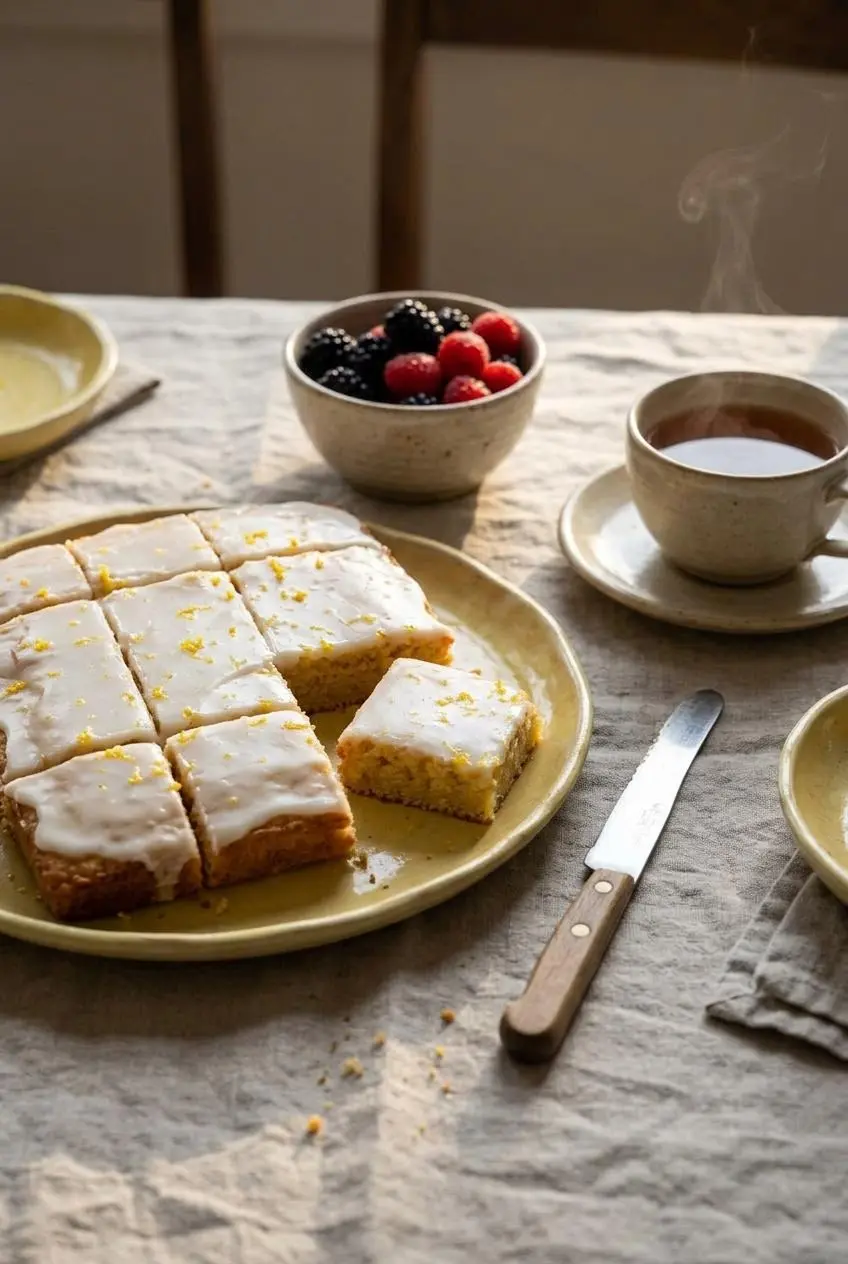
Let the topping set before lifting the slab from the pan with the parchment overhang. For neater squares, chill the bars until firm, then use a warm knife and wipe the blade between cuts. A clean blade keeps white chocolate streaks from dragging across the cut edges.
Serve at room temperature for a softer bite, or chilled if you prefer a firmer texture. Fresh berries add a tart, juicy contrast to the sweet glaze, while hot lemon ginger tea makes a warming pairing.
Let the bars cool completely before closing them in an airtight container. Refrigerate covered leftovers as a cautious storage choice, and keep them in a single layer where possible so the topping stays neat. If you need to stack them, separate the layers with parchment.
When serving chilled bars, remove the portions you need rather than repeatedly moving the entire container between cold and warm conditions. Keep the remaining bars covered to protect them from drying out and absorbing refrigerator odors.
Conclusion
Fresh lemon oils, buttery batter, and a glossy white chocolate topping give these bars their bright flavor and rich, chewy bite. Rubbing the zest into the sugar is the small step that makes the aroma shine.
Keep the mixing gentle once flour goes in, and give the bars time to cool before glazing. Try the tangier powdered sugar finish when you want a change, then slice once the topping has settled.
Frequently Asked Questions
Why Are These Called Lemon Brownies When There Is No Chocolate in Them?
The name refers to their dense, rich, brownie-like chew rather than cocoa. Butter, sugar, eggs, and flour create the bar structure, while lemon supplies the main flavor. This version does contain white chocolate in its glaze.
What Is the Difference Between Lemon Brownies and Lemon Bars?
Lemon brownies have one baked, fudgy layer topped with glaze. Traditional lemon bars have two distinct layers: a shortbread crust and a soft lemon egg custard filling.
Can I Make Lemon Brownies Using Lemon Cake Mix?
Yes, cake mix versions combine lemon cake mix with eggs, melted butter, and lemon juice. Use a formula designed for that shortcut rather than replacing the flour here with cake mix, which already contains sugar and leavening.
Why Did My Lemon Brownies Turn Out Hard or My Glaze Stay Runny?
Hard bars often result from excess flour, prolonged mixing, or overbaking. A runny glaze may need cooling, may contain too much juice, or may have gone onto bars that were still hot. Check those causes before adding more ingredients.
How Do I Store Lemon Brownies So the Glaze Stays Neat?
Let the glaze set, then place the cooled bars in a covered container, preferably in a single layer. Keep leftovers refrigerated, and use parchment between layers if stacking is necessary.
Lemon Brownies

Equipment
- 8×8-inch Baking Dish
- Electric hand mixer
Ingredients
- 1 ¼ ((272g) cup granulated sugar
- 2 tablespoons lemon zest (from about 2 lemons)
- ¾ (170g) cup unsalted butter softened
- 1 teaspoon vanilla extract
- 1 teaspoon lemon extract
- 2 tablespoons lemon juice
- 2 large eggs
- 1 ¼ (162.5) cup all-purpose flour
- ¾ teaspoon baking powder
- ½ teaspoon kosher salt
White Chocolate Lemon Glaze
- ¾ (113g) cup white chocolate roughly chopped
- 2 tablespoons lemon juice
- ¼ teaspoon lemon extract
- Pinch kosher salt
- 1 tablespoon lemon zest for garnish
Instructions
To Make the Brownies
- Heat the oven to 350°F, grease an 8×8-inch pan, and press a strip of parchment across the bottom and up two opposite sides, leaving overhang. The paper should sit flat against the greased pan, with exposed ends that will help lift out the baked bars.
- Work the lemon zest into the granulated sugar with your fingertips in a large mixing bowl. Stop when the sugar feels damp and sandy, takes on a pale yellow color, and gives off a strong citrus fragrance.
- Beat the softened butter, vanilla extract, and lemon extract into the lemon sugar with a hand mixer on medium speed for about 1 minute. The mixture should become lighter and fluffy, with no large pieces of butter remaining.
- Mix in the lemon juice and eggs briefly at medium speed until incorporated. A slightly grainy or curdled appearance can occur at this stage and should become more uniform when the flour joins the mixture.
- Mix in the flour, baking powder, and salt on low just until combined, transfer the batter to the prepared pan, bake for 25 minutes, and let it cool for about 15 minutes. Look for lightly golden edges and a clean toothpick from the center, rather than waiting for deep browning that can dry out the crumb.
To Make the White Chocolate Lemon Glaze
- Meanwhile, heat the chopped white chocolate with the lemon juice in a small microwave-safe bowl in 20-second intervals until melted, stir together, then incorporate the lemon extract and salt. The mixture should look smooth and glossy; a double boiler provides an alternative if you don’t have a microwave.
- Cover the cooled bars with the glaze, gently tilt the pan to distribute it, scatter the garnish zest over the surface, and leave the topping to set for at least 20 minutes before cutting. A settled glaze should form a distinct layer over the bars rather than disappearing into a hot crumb.