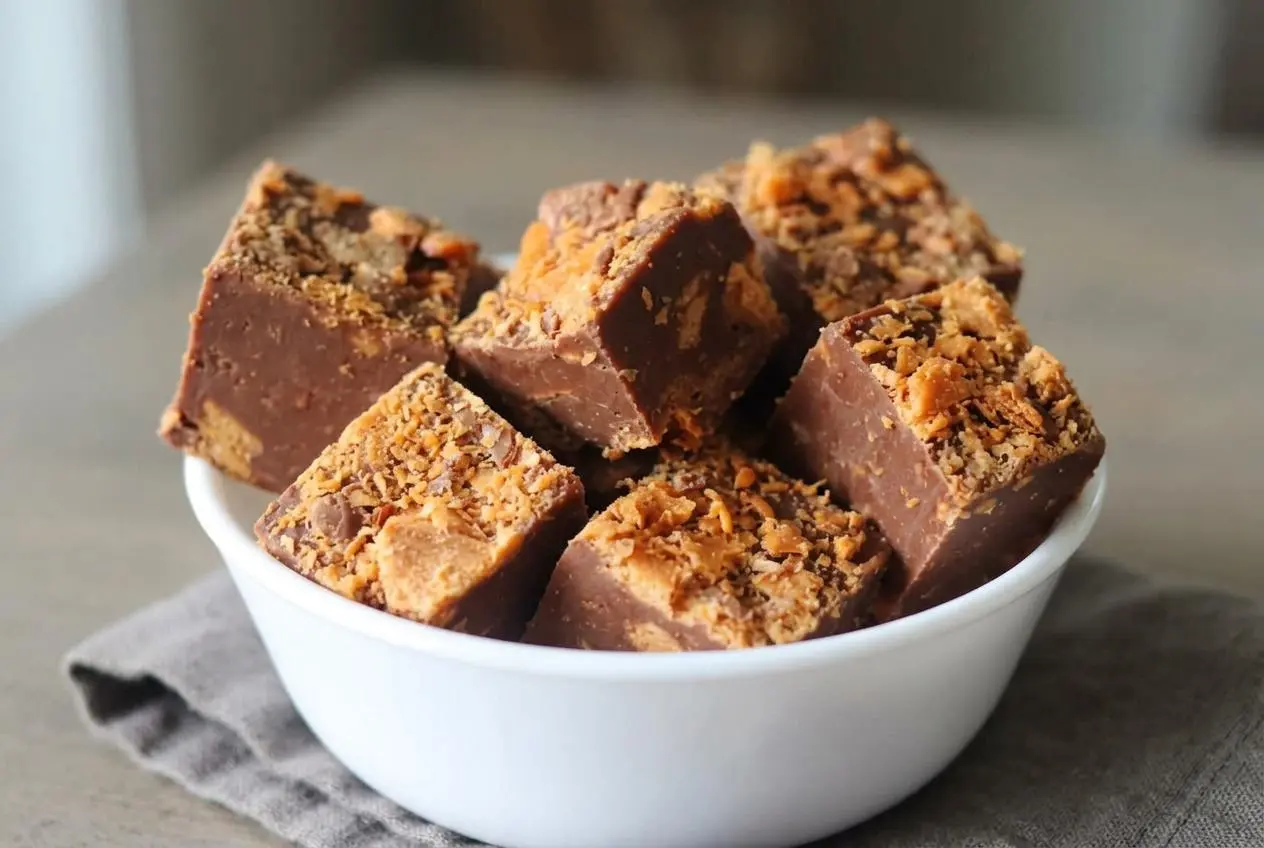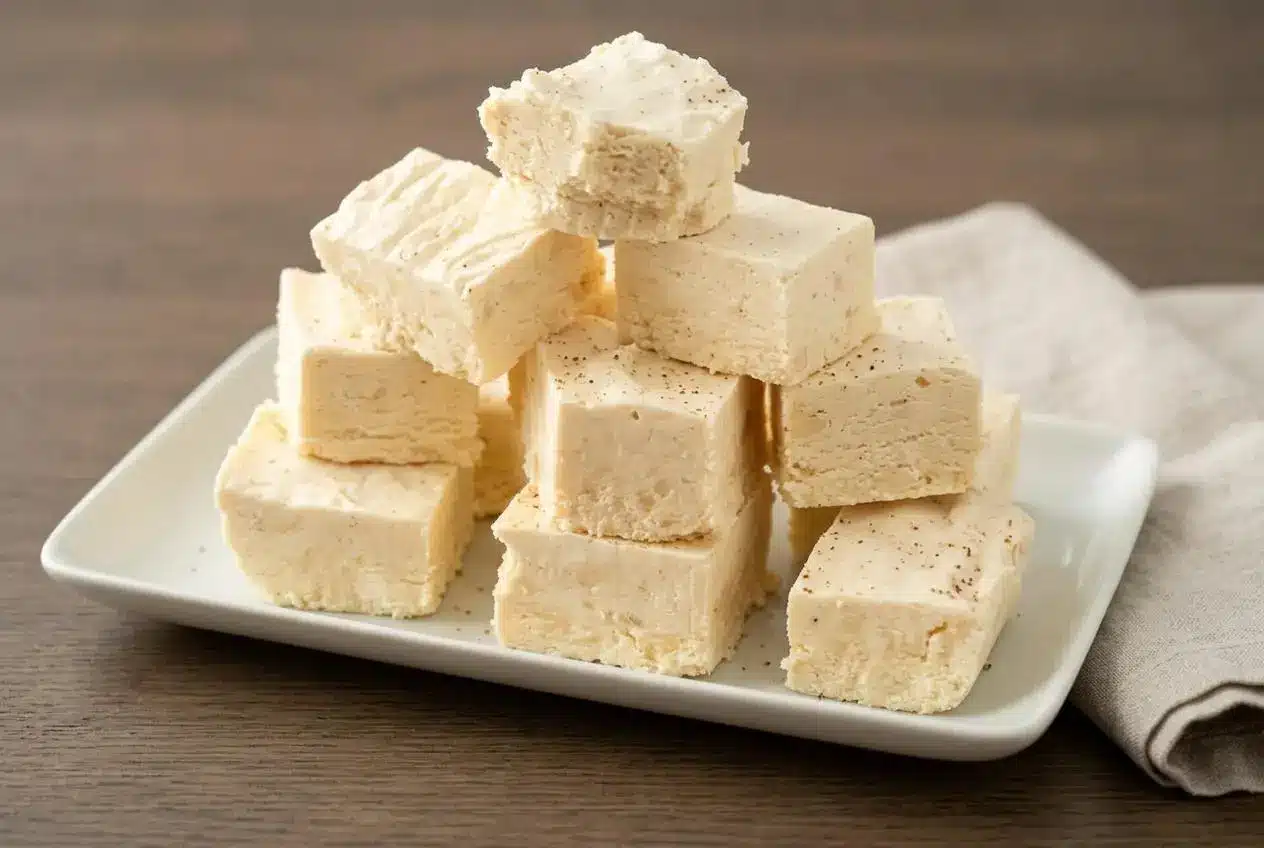
Homemade eggnog fudge turns real eggnog, butter, sugar, white chocolate, marshmallow creme, rum extract, and nutmeg into creamy holiday candy. Cook the eggnog syrup to 230°F, mix in the remaining ingredients off the heat, then chill until firm enough to slice.
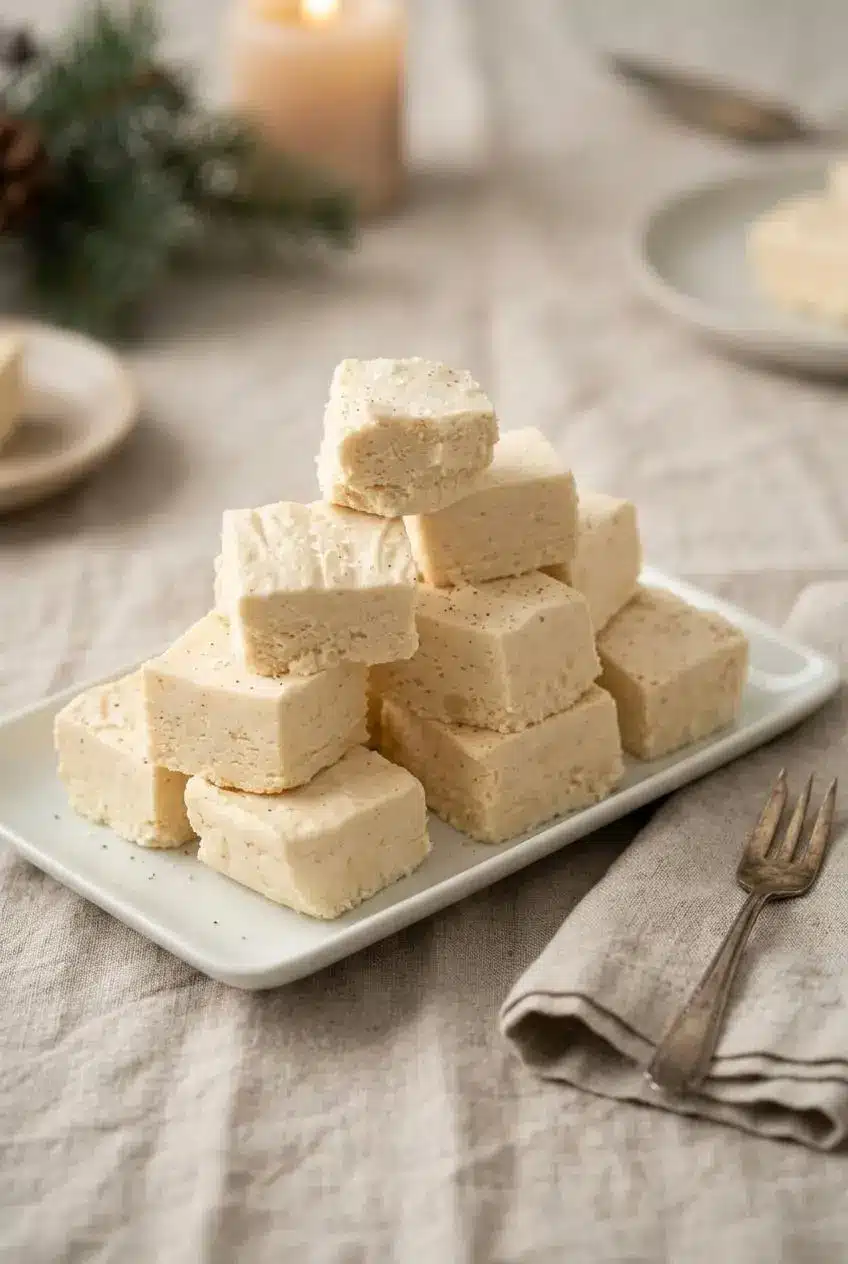
This eggnog fudge tastes like a rich holiday custard in candy form, with white chocolate rounding out the eggnog and freshly grated nutmeg adding a warm, fragrant finish.
It takes about 20 minutes of hands-on work, followed by cooling and an overnight chill. That makes it a useful choice for holiday trays when you can give it time to set. The little nutmeg flecks make every bite.
Measure everything before turning on the burner, especially the chocolate and marshmallow creme, because the off-heat mixing moves quickly.
Key Ingredients and Smart Substitutions
Eggnog supplies moisture and custard flavor, butter adds richness, and sugar builds the candy’s structure. White chocolate and marshmallow creme give it body and creaminess, while nutmeg, rum extract, and salt round out the flavor.
- 2 cups granulated sugar
- ½ cup unsalted butter
- ¾ cup eggnog
- 10 ½ ounces white chocolate chips
- 7 ounces marshmallow creme
- ½ teaspoon nutmeg (plus more for sprinkling on top of fudge)
- ½ teaspoon rum extract (or rum emulsion)
- pinch salt
Choose full-fat traditional eggnog. Its richness gives the fudge a fuller custard flavor. Light and dairy-free products vary in their water content and thickeners, so they aren’t dependable one-for-one choices here.
Read the white chocolate label. Look for cocoa butter in the ingredients, whether you choose chips or finely chopped baking bars. White baking chips aren’t always white chocolate. Candy melts use a different fat blend and can change both the flavor and set, so avoid substituting them in this recipe.
Marshmallow creme helps keep the sugar texture smooth and makes this style of fudge more forgiving than traditional beaten fudge. Use the spreadable creme, not whole marshmallows, which don’t measure or behave the same way.
Freshly grated nutmeg has a particularly fragrant, woody warmth. Jarred ground nutmeg works with the listed measurement, too. There’s no need to invent a conversion ratio; use the measured amount and keep the finishing sprinkle light.
- Rum extract or emulsion: gives the candy its familiar eggnog-style aroma.
- Vanilla extract: offers an optional, mellower custard flavor.
- Eggnog extract: can reinforce the seasonal flavor, but check its label because strength varies by product.
I prefer to grate whole nutmeg just before measuring it so its fragrance reaches the warm fudge rather than fading on the cutting board.
How to Make Eggnog Fudge Step by Step
Have an 8-inch square baking dish, parchment, a medium saucepan, a wooden spoon, and a candy thermometer ready. The recipe yields 24 squares; the center needs its full chill before you cut them.
- Fit parchment into an 8-by-8-inch dish, snipping the corners and overlapping the resulting flaps while leaving enough paper above the sides to grip.
The paper should sit against the bottom and corners without bulky folds that press into the candy. - Heat the butter, granulated sugar, and eggnog together in a medium saucepan over medium heat, stirring continuously until boiling.
The butter should disappear into the mixture as bubbles spread across the surface. - Cook to 230°F with a candy thermometer in place, moving a wooden spoon across the bottom continuously during the approximately 8 to 10 minutes of cooking.
Look for steady bubbling and a thick, pale syrup with a molasses-like flow. - Take the pan off the burner and promptly work in the white chocolate and measured nutmeg until no unmelted chocolate remains.
The residual heat melts the chocolate, though the mixture may briefly look stiff rather than silky. - Beat in the marshmallow creme and rum extract until the mixture looks uniform.
The texture should become smoother as a warm, rum-scented custard aroma rises from the pan. - Transfer the warm candy to the parchment-lined dish and finish the surface with a sprinkle of nutmeg.
The mixture should settle into a thick layer with evenly scattered spice on top. - Leave the pan at room temperature for about 1 hour, then refrigerate overnight for 7 to 8 hours.
The center should feel firm rather than yielding like a thick sauce before slicing. - Lift the chilled slab onto a cutting board with the parchment overhang and divide it into 24 squares using a sharp chef’s knife.
The pieces should hold their edges, and smaller cuts are fine for bite-sized portions. - Keep leftover pieces refrigerated for up to 3 weeks.
A tightly closed container helps protect the firm texture and keeps the surface from drying out.
Use the thermometer reading as the cooking target rather than extending the boil to match the clock. Burner strength and saucepan shape affect how quickly the mixture gets there. Once you remove the pan from the heat, keep the chocolate, creme, and extract additions moving so the candy remains workable.
Pro Tips and Fudge Troubleshooting
The most useful habits are steady stirring, accurate measurement, and patience with chilling. Don’t try to compensate for a rushed boil by simply leaving the finished fudge in the refrigerator longer.
How to Test Fudge Without a Candy Thermometer
A cold-water test gives you a hands-on consistency check when you don’t have a thermometer, although a thermometer makes this recipe easier to repeat accurately.
- Fill a glass with ice-cold water and drop a tiny spoonful of the boiling syrup into it.
- Let the sample cool in the water before touching it. Never touch syrup directly from the saucepan.
- Gather the cooled sample between your fingers. Look for a soft, pliable, doughy ball that holds together but flattens easily.
- If the sample disperses and won’t gather, continue cooking and test again with a fresh sample.
The thickening syrup and steady bubbles offer supporting clues, but appearance alone can mislead you. Don’t replace the thermometer target with a guessed standard candy-stage temperature; this marshmallow-and-white-chocolate formula has its own cooking target.
How to Keep Eggnog Fudge From Being Gritty or Soft
- Brown specks or a scorched smell: dairy solids can catch on the bottom. Stir across the whole pan bottom and into its corners rather than tracing circles only in the center.
- Grainy texture: undissolved sugar or unwanted crystallization can leave a sandy bite. Keep stirring as the mixture heats, measure carefully, and avoid scraping dried sugar from high on the saucepan walls into the candy.
- Dry-looking chocolate mixture: don’t stop after the chocolate addition. Work in the marshmallow creme as directed; it usually brings the mixture together without extra liquid.
- Soft squares: undercooking or cutting before the center sets can leave weak edges. Reach the cooking target and allow the full overnight chill.
- Changing the sugar: reducing granulated sugar changes the sugar-to-liquid balance. Powdered sugar also behaves differently and may contain starch, so neither is a dependable adjustment.
Easy Variations and Flavor Options
Keep flavor changes separate from changes to the candy’s structure. Extract choices are more straightforward than replacing sugar or marshmallow creme.
For a larger holiday tray, a doubled batch can go into a 9-by-13-inch pan. A single batch in a 9-inch square pan makes thinner pieces than the specified 8-inch pan. With a larger batch, watch the thermometer rather than assuming the cooking time will double.
No-Marshmallow Sweetened Condensed Milk Method
A condensed milk version is a separate shortcut, not a direct substitution in the stovetop instructions. It relies on melted chocolate and concentrated milk rather than boiling granulated sugar.
For that style, gently melt finely chopped white chocolate with sweetened condensed milk and eggnog over low heat, or microwave at 70% power, stirring between heating intervals. Mix in nutmeg and extract, transfer to a lined pan, and chill until firm.
Use proportions written specifically for condensed milk fudge. Don’t add condensed milk to the quantities above or simply omit the marshmallow creme; the extra moisture changes the set.
Browned Butter and Flaky Salt
For an optional nutty flavor, lightly brown the unsalted butter before adding the sugar and eggnog. Stop at golden flecks and a toasted aroma, not dark brown solids. Browning removes some moisture, so this variation may produce a slightly different texture.
A tiny finishing pinch of flaky sea salt alongside the nutmeg adds contrast to the sweet white chocolate. For another flavor on the candy tray, pair these squares with classic rocky road fudge.
How to Slice and Store Eggnog Fudge
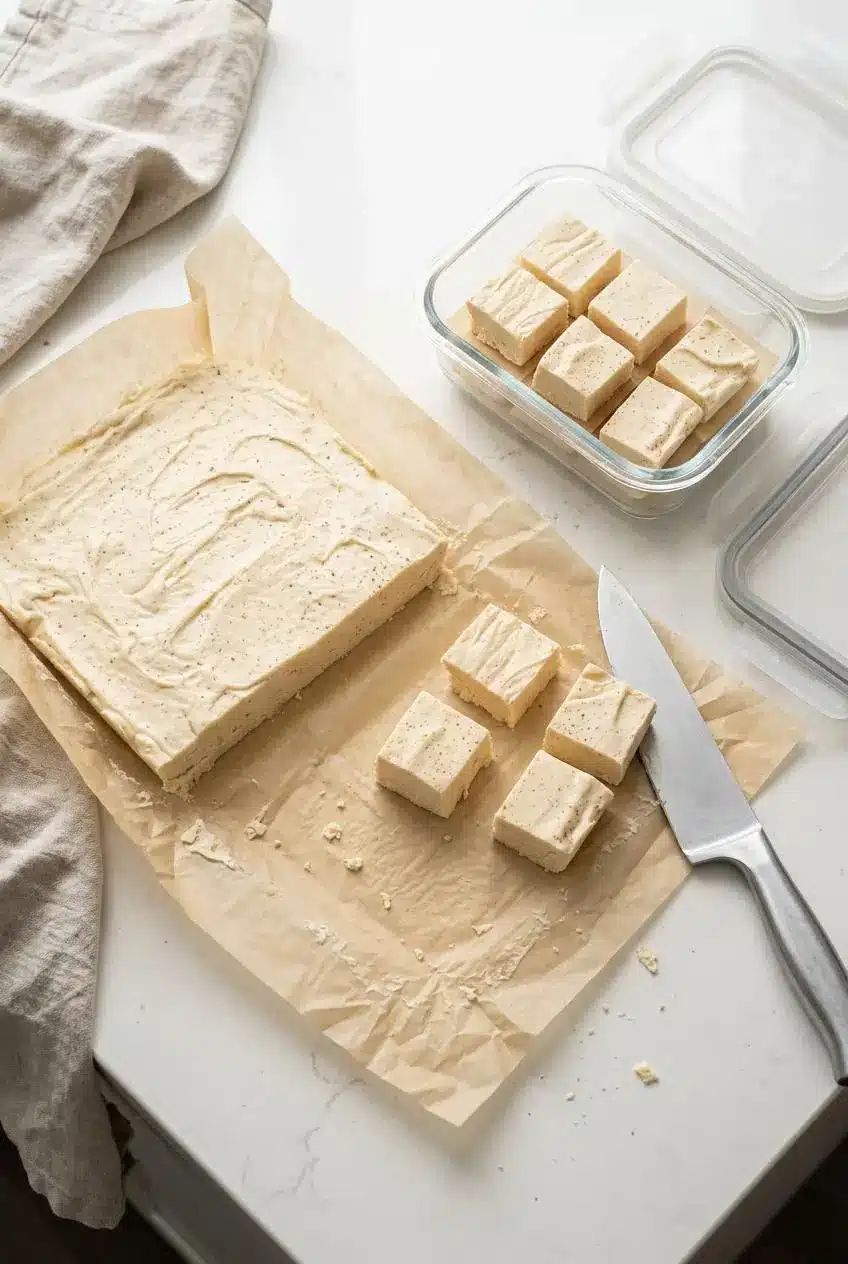
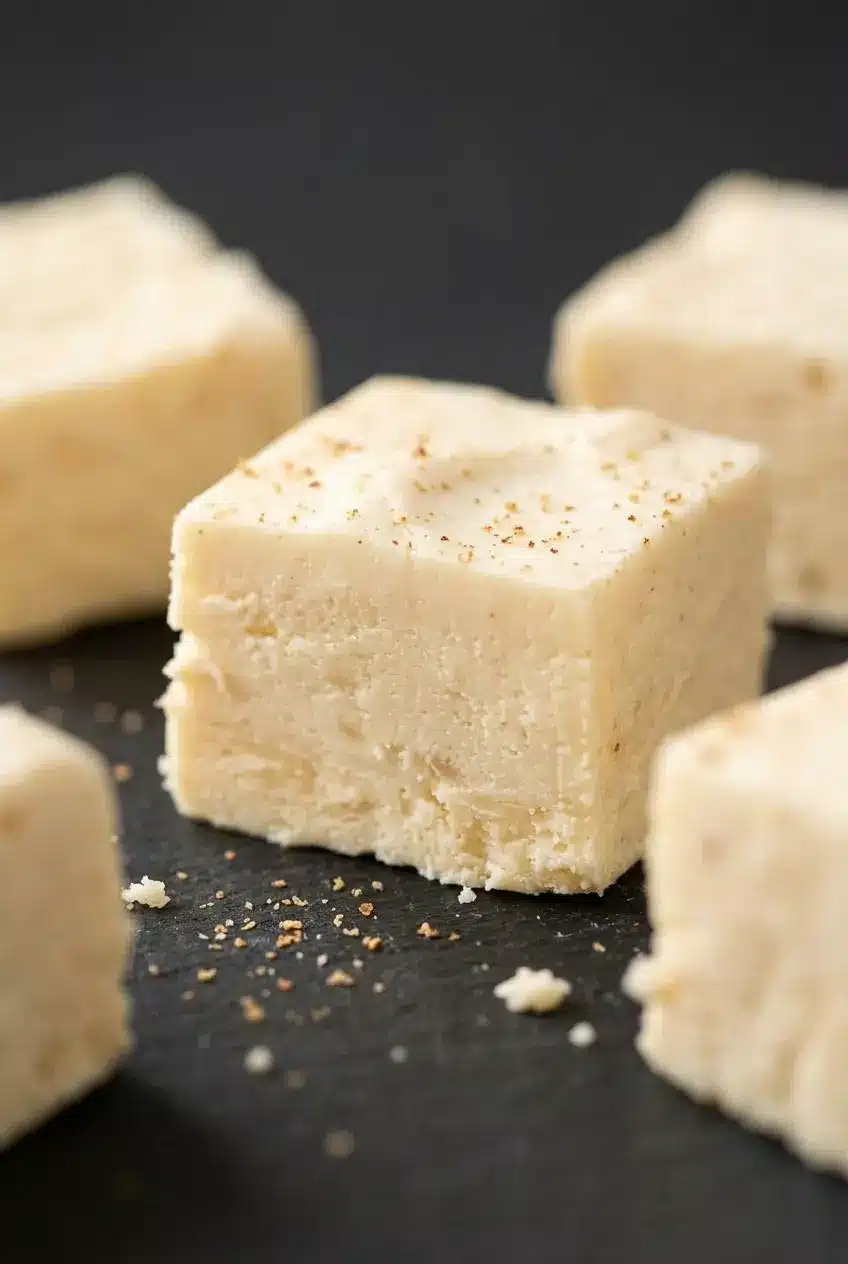
Cut the fudge while chilled for the neatest edges. Lift with both sides of the parchment sling, then peel the paper away from the slab before cutting.
Wipe a sharp chef’s knife with a warm, damp cloth between cuts, then dry the blade so water doesn’t collect on the candy. Divide into 24 squares, or make 48 smaller bites for a crowded dessert platter.
Store the pieces in an airtight container in the refrigerator, with parchment between stacked layers. Keep gift tins chilled until handing them over, and tell recipients to refrigerate them. Don’t assume a covered box makes this dairy-containing candy suitable for extended room-temperature storage.
- Arrange bite-sized squares alongside spiced eggnog cookies on a Christmas dessert platter.
- Pack chilled pieces into parchment-lined tins for neighbors or teachers.
- Serve chilled, or let individual portions soften slightly before enjoying them with hot coffee or espresso.
Conclusion
This fudge brings together creamy white chocolate, eggnog custard flavor, and warm nutmeg in a sliceable holiday treat. Careful stirring and a full overnight chill do the most work for its texture.
Keep the classic rum-extract flavor, or try the optional browned butter and salt finish for a nuttier contrast. Cut small squares and keep the rest chilled for the next dessert tray.
Frequently Asked Questions
Can I Make Eggnog Fudge Without Marshmallow Creme?
Yes, with a separate condensed milk formula. Melt white chocolate with sweetened condensed milk and eggnog gently, add nutmeg and extract, then chill. Don’t replace the marshmallow creme directly in the quantities listed here.
Do You Have to Refrigerate Eggnog Fudge?
Keep this fudge refrigerated in an airtight container for a firm texture. Bring out portions for serving, and keep gift boxes chilled until delivery rather than treating them as shelf-stable candy.
What if I Do Not Have a Candy Thermometer?
Use the cold-water test described above. A cooled syrup sample should gather into a soft, pliable ball that flattens easily. Cool the sample completely before checking it with your fingers.
Can I Reduce the White Sugar or Use Powdered Sugar Instead?
Neither change is recommended. Reducing the sugar alters the balance that helps the candy set, while powdered sugar behaves differently. Choose a formula designed for those changes rather than adjusting this one.
Why Did My Eggnog Fudge Turn Out Gritty or Too Soft?
Grittiness can come from undissolved sugar or unwanted crystallization. Soft fudge may reflect undercooking, ingredient substitutions, or insufficient chilling. Check your measurements, chocolate label, cooking target, and chilling time before making the next batch.
Eggnog Fudge

Equipment
- 1 Medium saucepan 2 quart
- 1 wooden spoon
- 1 8 inch by 8 inch baking dish
- 1 Parchment Paper
- Candy thermometer
- Sharp chef’s knife
Ingredients
- 2 cups granulated sugar
- ½ cup unsalted butter
- ¾ cup eggnog
- 10 ½ ounces white chocolate chips
- 7 ounces marshmallow creme
- ½ teaspoon nutmeg plus more for sprinkling on top of fudge
- ½ teaspoon rum extract or rum emulsion
- pinch salt
Instructions
- Fit parchment into an 8-by-8-inch dish, snipping the corners and overlapping the resulting flaps while leaving enough paper above the sides to grip. The paper should sit against the bottom and corners without bulky folds that press into the candy.
- Heat the butter, granulated sugar, and eggnog together in a medium saucepan over medium heat, stirring continuously until boiling. The butter should disappear into the mixture as bubbles spread across the surface.
- Cook to 230°F with a candy thermometer in place, moving a wooden spoon across the bottom continuously during the approximately 8 to 10 minutes of cooking. Look for steady bubbling and a thick, pale syrup with a molasses-like flow.
- Take the pan off the burner and promptly work in the white chocolate and measured nutmeg until no unmelted chocolate remains. The residual heat melts the chocolate, though the mixture may briefly look stiff rather than silky.
- Beat in the marshmallow creme and rum extract until the mixture looks uniform. The texture should become smoother as a warm, rum-scented custard aroma rises from the pan.
- Transfer the warm candy to the parchment-lined dish and finish the surface with a sprinkle of nutmeg. The mixture should settle into a thick layer with evenly scattered spice on top.
- Leave the pan at room temperature for about 1 hour, then refrigerate overnight for 7 to 8 hours. The center should feel firm rather than yielding like a thick sauce before slicing.
- Lift the chilled slab onto a cutting board with the parchment overhang and divide it into 24 squares using a sharp chef’s knife. The pieces should hold their edges, and smaller cuts are fine for bite-sized portions.
- Keep leftover pieces refrigerated for up to 3 weeks. A tightly closed container helps protect the firm texture and keeps the surface from drying out.