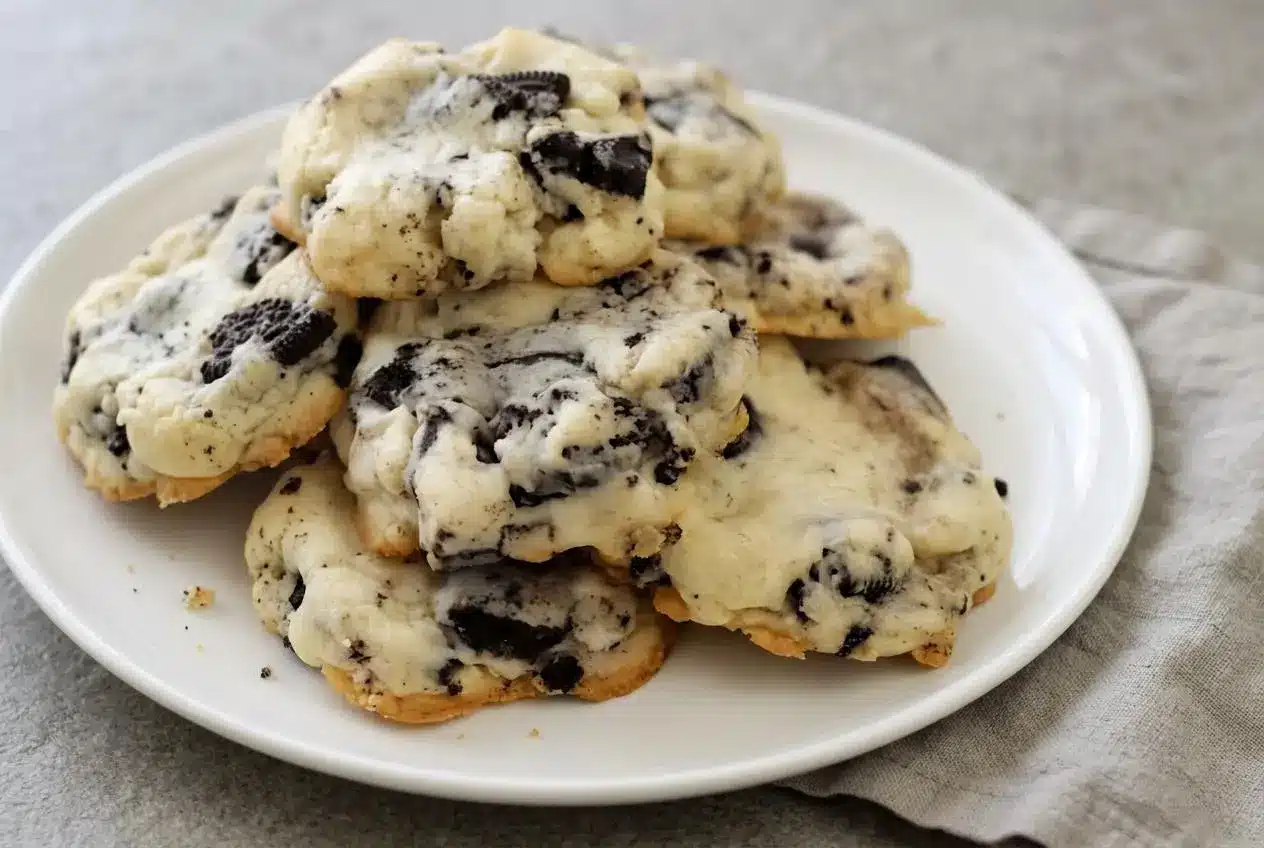
Oreo cheesecake cookies are soft, eggless cookies made with cream cheese, butter, sugar, flour, and crushed Oreos. A 1-hour chill helps the dough hold its shape, while a brief bake leaves lightly golden edges and tender, tangy centers.
These oreo cheesecake cookies bring cheesecake flavor into a handheld cookies-and-cream treat. Real cream cheese adds a gentle tang, and chunky chocolate sandwich cookies break up the soft dough with chocolatey bites.
You won’t need eggs, baking powder, or baking soda. The mixing and chilling do the work, with about 7 minutes of prep before the dough rests. Watch the edges, not the tops. The centers should stay pale.
Soften the butter until it yields to gentle pressure but still holds its shape; glossy, partially melted butter is too warm.
Ingredients Explained by Role
Cream cheese brings tang and moisture, butter adds richness, sugar supports sweetness and texture, flour gives the cookies structure, and coarse Oreo pieces supply chocolate flavor and contrasting crunch.
- 4 oz cream cheese (softened)
- 8 tablespoons unsalted butter (softened)
- ¾ cup granulated sugar
- 1 cup + 2 tablespoons all purpose flour
- 12 Oreo cookies (coarsely crushed)
Cream cheese: Choose full-fat block cream cheese rather than whipped cream cheese or a spreadable tub product. Spreads can have different moisture levels and formulations, making this dough less predictable. The block should feel soft enough to beat smoothly, without cold lumps that remain visible after mixing.
Butter and sugar: Softened butter blends with the cream cheese and traps some air as you beat in the sugar. That aeration helps keep the cookies from feeling heavy. Granulated sugar gives a straightforward sweetness that lets the cream cheese tang come through. Melted butter won’t hold air in the same way.
Flour: All-purpose flour supplies the structure that holds the rich dough together. Measure it without packing it into the cup. Too much flour can make the cookies dry and dense, while prolonged mixing after adding it can make them tougher. This dough doesn’t need eggs or chemical leaveners to produce its tender, compact texture.
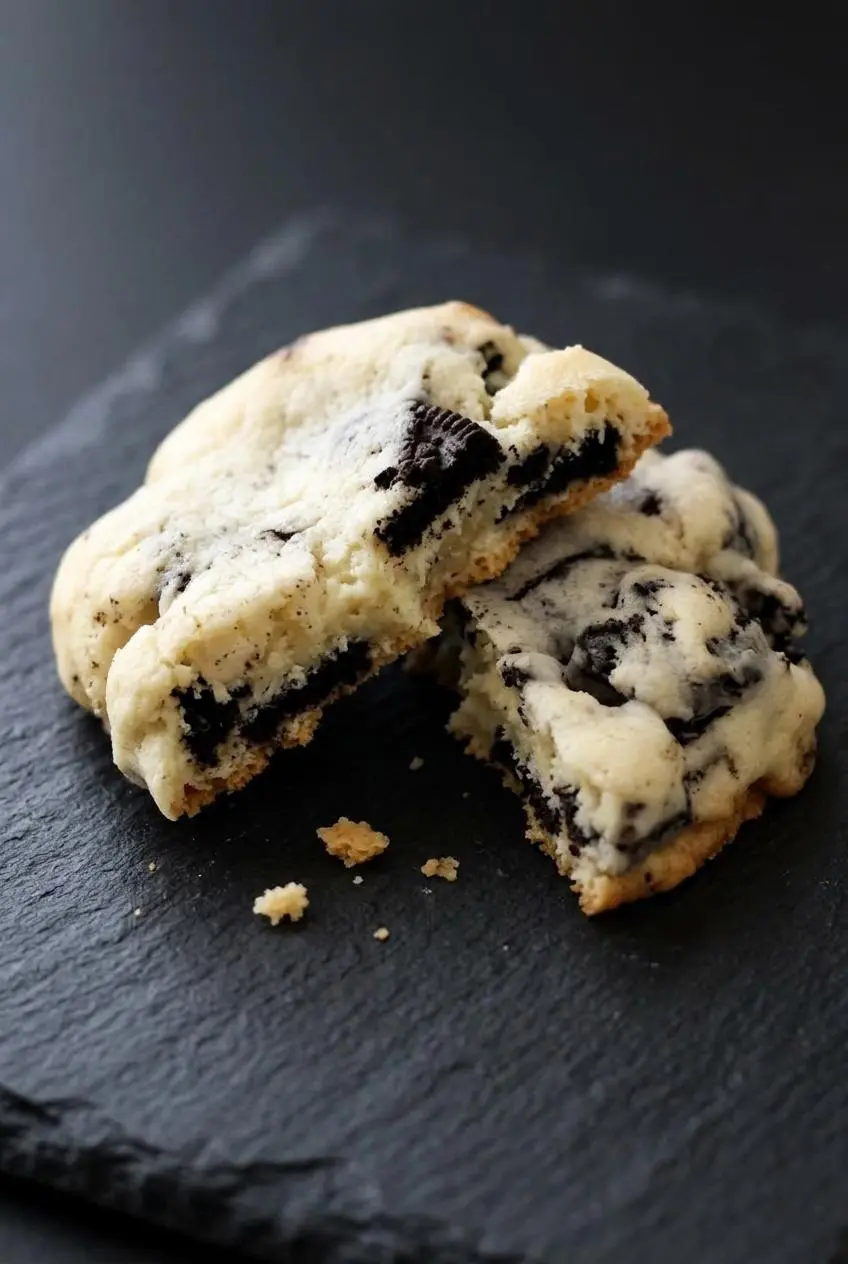
Oreos: Use the whole sandwich cookies, filling included. Break them into irregular chunks, roughly quarters rather than powder. Fine crumbs distribute chocolate throughout the dough and turn it gray; larger pieces leave distinct chocolate pockets against the pale cream cheese dough.
I’d break the Oreos by hand rather than crush them with a rolling pin, keeping chunky pieces for more noticeable crunch.
How to Make Oreo Cheesecake Cookies
Make the dairy mixture smooth before adding flour, then handle the finished dough gently. This batch yields 12 cookies, with 13 minutes of baking and a total time of about 1 hour 20 minutes, including the chill.
- Use a hand mixer or stand mixer to smooth the cream cheese in a large bowl, then work in the softened butter for about 1 minute.
The mixture should look creamy and uniform, without separate butter streaks or firm cream cheese lumps. - Beat the granulated sugar into the dairy mixture until it becomes noticeably lighter and fluffy.
A pale, aerated appearance signals that the butter mixture has incorporated air rather than simply blended together. - Work in the flour gradually on low speed, switching to a spatula as needed and stopping when no dry patches remain.
The dough will feel stiff and slightly sticky, so avoid continuing to beat it once it comes together. - Distribute the Oreo chunks through the dough with gentle folding strokes, cover the bowl with plastic wrap, and refrigerate for 1 hour or overnight.
The chilled dough should feel firmer and hold a mound rather than slump loosely from the spatula. - Set the oven to 350°F and prepare a baking sheet with parchment paper or a silicone baking mat.
The lined surface should lie flat so the dough portions sit evenly on the sheet. - Divide the cold dough into 12 portions with a spoon or cookie scoop, space them apart on the prepared sheet, press them slightly flatter with your palm, and bake for 12 to 13 minutes.
Look for lightly golden bottom edges and pale, softly puffed centers rather than browned tops. - Allow the cookies to firm briefly on the baking sheet, then lift them carefully onto a wire rack to cool before serving.
They should support their own weight when moved, with centers that remain tender as they cool.
Begin checking at the earlier end of the baking range. Dark cookie chunks can make browning harder to judge, so look at the exposed dough near the bottom edge. A fully browned top isn’t the goal.
Keep the portions similar in size and thickness. A large mound beside a small, flat portion won’t bake at the same pace, even on the same sheet. Slight flattening helps the centers and edges finish more evenly without turning the dough into thin disks.
Expert Tips and Troubleshooting
Most texture problems start with warm dairy, rushed chilling, or mixing the cookie pieces too aggressively. Fix those details before changing the ingredient ratios.
Why Chilling the Dough Is Non-Negotiable
Butter and cream cheese make a rich dough that softens readily. Refrigeration firms the fats before the cookies enter the oven, helping them retain thickness instead of spreading immediately across the parchment.
Chilling also makes the sticky dough easier to portion. Don’t judge its final consistency while it’s freshly mixed. A soft dough that seems difficult to scoop may become much more manageable after its required rest.
Use a cool baking sheet, too. Placing cold dough on a hot pan starts melting the underside before baking begins. If you bake in batches, keep the remaining dough covered in the refrigerator while the sheet cools.
How to Prevent Flat or Gray Cookies
- Flat, spreading cookies: Melted butter, tub cream cheese, or insufficient chilling can leave the dough too loose. Use softened block dairy and complete the chill rather than adding extra flour as a first fix.
- Gray dough: Fine Oreo dust and prolonged mixing smear chocolate crumbs throughout the mixture. Fold coarse chunks in last and stop once they’re distributed; for more visible pieces, reserve some chunks from the measured cookies to press onto the tops.
- Dry centers: Waiting for the tops to brown can take the cookies past their soft-center stage. Check the bottom edges and remove the sheet when those edges turn lightly golden.
- Cookies breaking during transfer: Freshly baked centers are delicate. Let the cookies gain enough structure on the sheet to lift cleanly, then move them with a broad spatula.
Delicious Variations and Substitutions
Keep the five-ingredient version as your starting point, then choose an optional change that suits the flavor or texture you want. Changing several ingredients at once makes the result harder to predict.
Bakery-Style Brown Sugar and Sea Salt Upgrade
- Light brown sugar: Use it instead of granulated sugar for a deeper molasses flavor and a potentially softer, chewier texture; expect a darker dough rather than the pale classic version.
- Vanilla extract: Add a splash to the wet mixture for a warmer aroma that rounds out the cream cheese tang.
- Flaky sea salt: Finish the warm baked cookies with a light pinch to contrast with the sweet filling and chocolate pieces.
If that sweet-and-salty direction appeals to you, salted caramel cheesecake cookies offer another way to enjoy a tangy cream cheese cookie.
Oreo Flavor Swaps and Mix-Ins
- Golden, Mint, or Peanut Butter Oreos: Replace the classic cookies with a flavor you enjoy, keeping the pieces coarse.
- White chocolate chips or chopped chocolate: Fold them in with the cookie chunks for extra sweetness or a stronger chocolate flavor, keeping additions modest so the dough can hold together.
- Salted butter: Substitute it for the unsalted butter; the saltiness will vary by brand, so consider skipping an optional salt finish.
- Gluten-free baking flour: Try a blend labeled for replacing all-purpose flour in cookies, and use gluten-free sandwich cookies as well; texture may differ.
- Cake flour: It can produce a more delicate, tender cookie, but it won’t behave exactly like all-purpose flour.
Make-Ahead and Storage
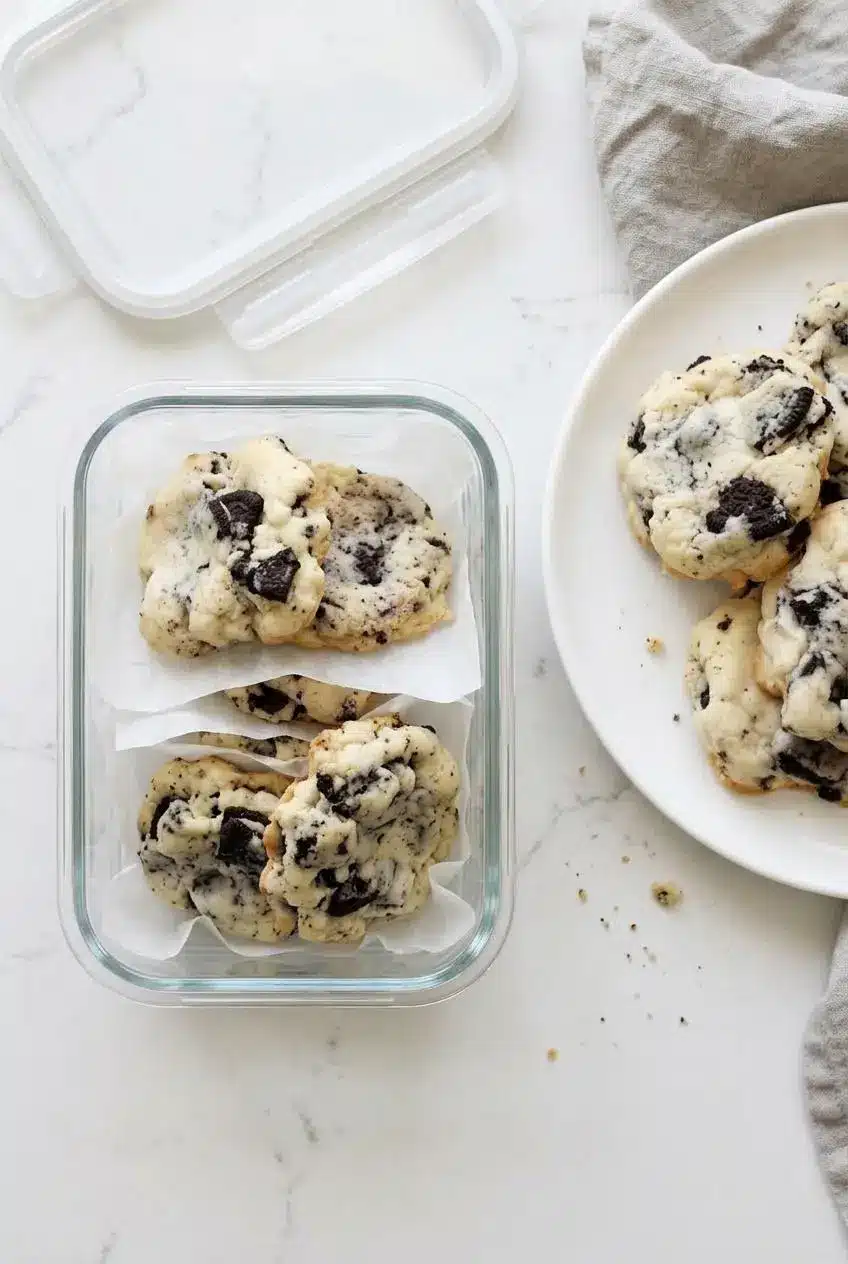
You can cover the mixed dough and refrigerate it overnight before baking. Keep the bowl tightly covered to prevent the surface from drying out, then portion the firm dough when you’re ready to bake.
Let baked cookies cool before packing them into an airtight container. Trapped warmth creates condensation, which can make the surfaces damp and soften the Oreo pieces. Separate stacked layers with parchment to reduce sticking and protect the tender centers.
For a cautious storage approach, keep the cooled cookies covered in the refrigerator rather than treating them as a long-lasting countertop bake. Their texture will feel firmer when chilled. The dough’s supported overnight preparation window does not establish a shelf life for the baked cookies, so avoid planning extended storage around that timing.
Serving Suggestions
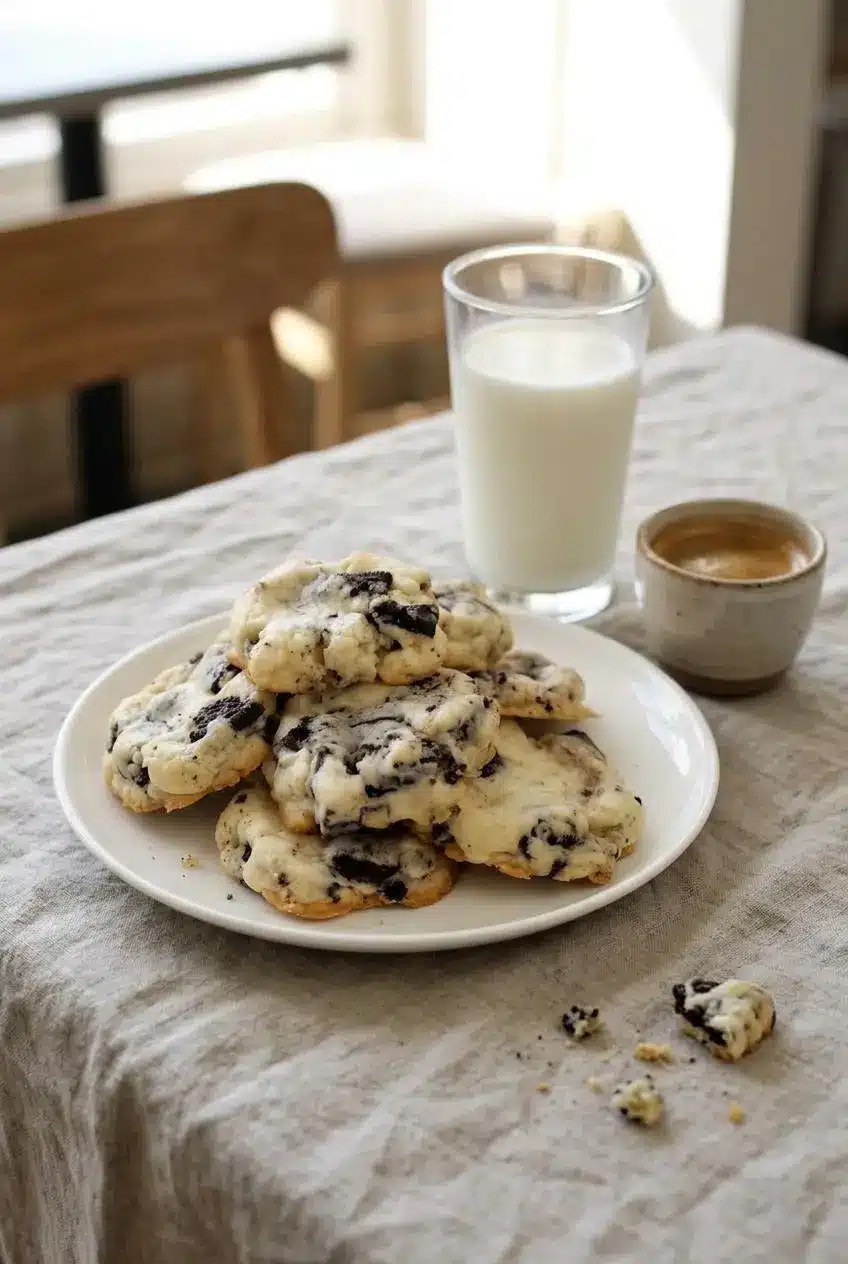
Give the cookies enough cooling time to hold together, then choose a serving style that suits the occasion.
- Afternoon treat: Pair a slightly cooled cookie with cold milk or hot espresso to contrast with its rich, sweet center.
- Party dessert: Sandwich vanilla bean ice cream between two completely cooled cookies and serve immediately.
- Cookie platter: Arrange them beside classic shortbread cookies for a buttery contrast to the chunky cookies-and-cream flavor.
Conclusion
These eggless cookies combine real cream cheese tang with chocolate cookie chunks in a soft, tender bite. Full-fat block cream cheese and a thorough dough chill make the biggest difference.
Start with the classic version, then try vanilla or a light flaky salt finish another time. Keep an eye on those golden edges, and give the delicate centers time to settle.
Frequently Asked Questions
What Are the Ingredients for 5-Ingredient Oreo Cheesecake Cookies?
You need 4 oz softened cream cheese, 8 tablespoons softened unsalted butter, ¾ cup granulated sugar, 1 cup plus 2 tablespoons all-purpose flour, and 12 coarsely crushed Oreo cookies. Choose full-fat block cream cheese for this dough.
Why Did My Oreo Cheesecake Cookies Spread Too Much?
The dough may have been too warm, the butter may have melted, or the cream cheese may have been a spreadable tub product. Use softened block dairy, complete the required chill, and scoop onto a cool baking sheet.
How Should I Store Oreo Cheesecake Cookies?
Cool them completely, then place them in a tightly closed container with parchment between stacked layers. Refrigerate them as a cautious storage choice and follow the handling advice above.
Can I Use Salted Butter or Cake Flour in This Recipe?
Salted butter can replace unsalted butter and add a pleasant contrast to the sweet Oreos. Cake flour is an optional substitution for a more delicate crumb, though the texture may differ from the all-purpose flour version.
Do Cheesecake Oreos Exist?
Cheesecake-flavored Oreo varieties have appeared as limited editions, so availability varies. You don’t need them here: classic Oreos provide the chocolate cookie pieces, while real cream cheese gives the dough its cheesecake flavor.

Oreo Cheesecake Cookies

Equipment
- large bowl
- cling wrap
- Baking Sheet
- Parchment Paper
- baking mat
- cookie rack
- Hand mixer
- Stand mixer
- Cookie Scoop
Ingredients
- 4 oz cream cheese (softened)
- 8 tablespoons unsalted butter (softened)
- ¾ cup granulated sugar
- 1 cup + 2 tablespoons all purpose flour
- 12 Oreo cookies (coarsely crushed)
Instructions
- Use a hand mixer or stand mixer to smooth the cream cheese in a large bowl, then work in the softened butter for about 1 minute. The mixture should look creamy and uniform, without separate butter streaks or firm cream cheese lumps.
- Beat the granulated sugar into the dairy mixture until it becomes noticeably lighter and fluffy. A pale, aerated appearance signals that the butter mixture has incorporated air rather than simply blended together.
- Work in the flour gradually on low speed, switching to a spatula as needed and stopping when no dry patches remain. The dough will feel stiff and slightly sticky, so avoid continuing to beat it once it comes together.
- Distribute the Oreo chunks through the dough with gentle folding strokes, cover the bowl with plastic wrap, and refrigerate for 1 hour or overnight. The chilled dough should feel firmer and hold a mound rather than slump loosely from the spatula.
- Set the oven to 350°F and prepare a baking sheet with parchment paper or a silicone baking mat. The lined surface should lie flat so the dough portions sit evenly on the sheet.
- Divide the cold dough into 12 portions with a spoon or cookie scoop, space them apart on the prepared sheet, press them slightly flatter with your palm, and bake for 12 to 13 minutes. Look for lightly golden bottom edges and pale, softly puffed centers rather than browned tops.
- Allow the cookies to firm briefly on the baking sheet, then lift them carefully onto a wire rack to cool before serving. They should support their own weight when moved, with centers that remain tender as they cool.