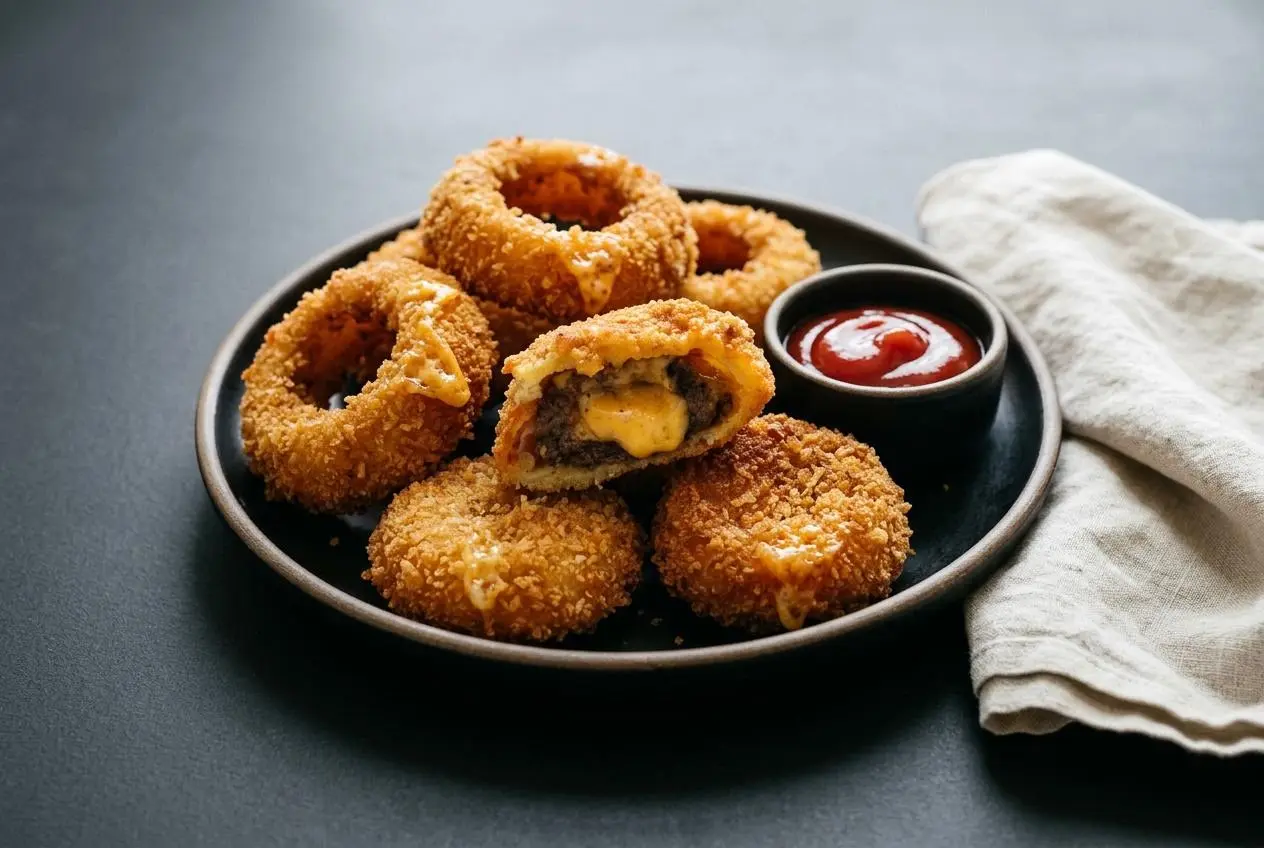
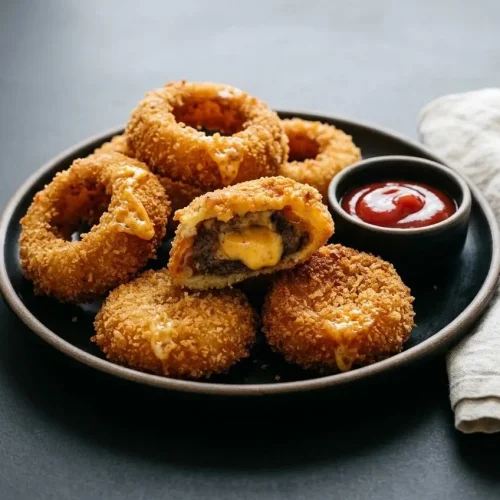
Cheeseburger onion rings combine thick white onion slices, seasoned ground beef, and cheddar tucked inside a double panko coating. Fry them until deeply golden, then check the beef with a thermometer before serving for a crunchy exterior and gooey cheese center.
These cheeseburger onion rings bring the crunch of an onion ring and the savory bite of a cheeseburger into one stuffed snack. The onion holds everything together while the beef surrounds a pocket of cheddar.
They fit right into a game-day spread or casual snack dinner, especially with a tangy dipping sauce. The important trick is keeping the beef layers thin enough to cook before the coating gets too dark. Start with the right ring.
Separate the onion rings gently, and set aside oversized outer rings rather than filling them with extra beef.
Key Ingredients and Why Each One Matters
Beef provides the savory filling, cheddar adds richness, and white onion supplies structure and sweetness. Seasonings flavor the meat, while flour, eggs, and panko build the crisp coating; frying oil browns it, and ketchup adds tangy balance.
- 1 lb ground beef
- 1 teaspoon salt
- ½ teaspoon pepper
- 1 teaspoon onion powder
- ¼ lb cheddar cheese, cut into 1-inch (2 cm) squares
- 1 large white onion
- 1 cup flour
- 5 eggs, beaten
- 3 cups panko breadcrumbs
- oil, for frying
- ketchup
Choose rings by diameter, not just slice thickness. Cut the large white onion into ½-inch-thick slices, then select small to medium rings with enough room for the cheese and a surrounding layer of beef. Giant outer rings need much more filling, which makes their centers slower to cook.
Keep the cheddar centered. Squares cut from a block are easier to enclose than loose shreds. Leave beef around every edge of the cheese so it doesn’t touch the onion or peek through the top. The beef seal, rather than the breading alone, helps contain the melted cheddar.
Give each coating layer a job. Flour helps the beaten egg cling to the moist filling and onion. Egg anchors the panko, and the second egg-and-panko pass fills thin spots and builds a sturdier crust. Shake away loose flour so it doesn’t form dry pockets under the coating.
Salt, pepper, and onion powder season the beef throughout. Mix until they’re evenly distributed without repeatedly squeezing the meat into a dense paste.
I’d sort out the medium onion rings before stuffing so the beef layers stay as uniform as possible.
How to Make Cheeseburger Onion Rings Step by Step
Plan on 30 minutes of prep and about 6 minutes of frying, for a listed total of 36 minutes. Ring size and batch cooking can extend that estimate, so use the clock as a guide rather than proof of doneness.
- Bring the frying oil to 350°F (180°C) in a pot over medium heat.
Use an oil thermometer to check the temperature rather than judging it by surface movement. - Work the salt, pepper, and onion powder evenly through the ground beef in a bowl.
The finished mixture should have seasoning distributed throughout, without large pockets of spice. - Remove the onion skin, cut ½-inch (1-centimeter) slices, and gently separate the layers into individual rings.
Choose small to medium rings that can hold the cheddar without requiring a thick mound of beef. - Spread a spoonful of seasoned beef across the bottom opening of an onion ring.
Press it against the inside edge so the onion supports a continuous layer of filling. - Nestle a cheddar square into the middle, then cover it with another spoonful of beef.
Flatten the top and join the beef layers firmly around the cheese, leaving no exposed edges or openings into the pocket. - Fill the remaining suitable rings using the same beef-cheese-beef arrangement.
Keep their surfaces level with the onion edges so the filling has a consistent thickness. - Arrange separate bowls of flour, beaten eggs, and panko in that order.
Keep the coatings apart so the flour stays loose and the crumbs remain easy to press onto the rings. - Dust each stuffed ring with flour, tap away the excess, and coat it with egg, panko, egg again, and a final layer of panko.
The finished coating should cover both faces and the outer onion edge without bare patches. - Lower the coated rings carefully into the oil and fry for 5–6 minutes, maintaining the frying temperature.
Look for a deep golden-brown crust and verify that the thickest beef portion reaches 160°F before serving. - Lift the cooked rings onto paper towels to absorb surface oil, then serve with ketchup.
The crust should feel crisp, with melted cheddar enclosed inside the cooked beef.
Check the ground beef’s minimum internal temperature of 160°F with a food thermometer. Aim the probe into the thickest beef portion rather than only the melted cheese; crust color doesn’t establish whether the meat is done.
Common Mistakes and Pro Tips for Perfect Rings
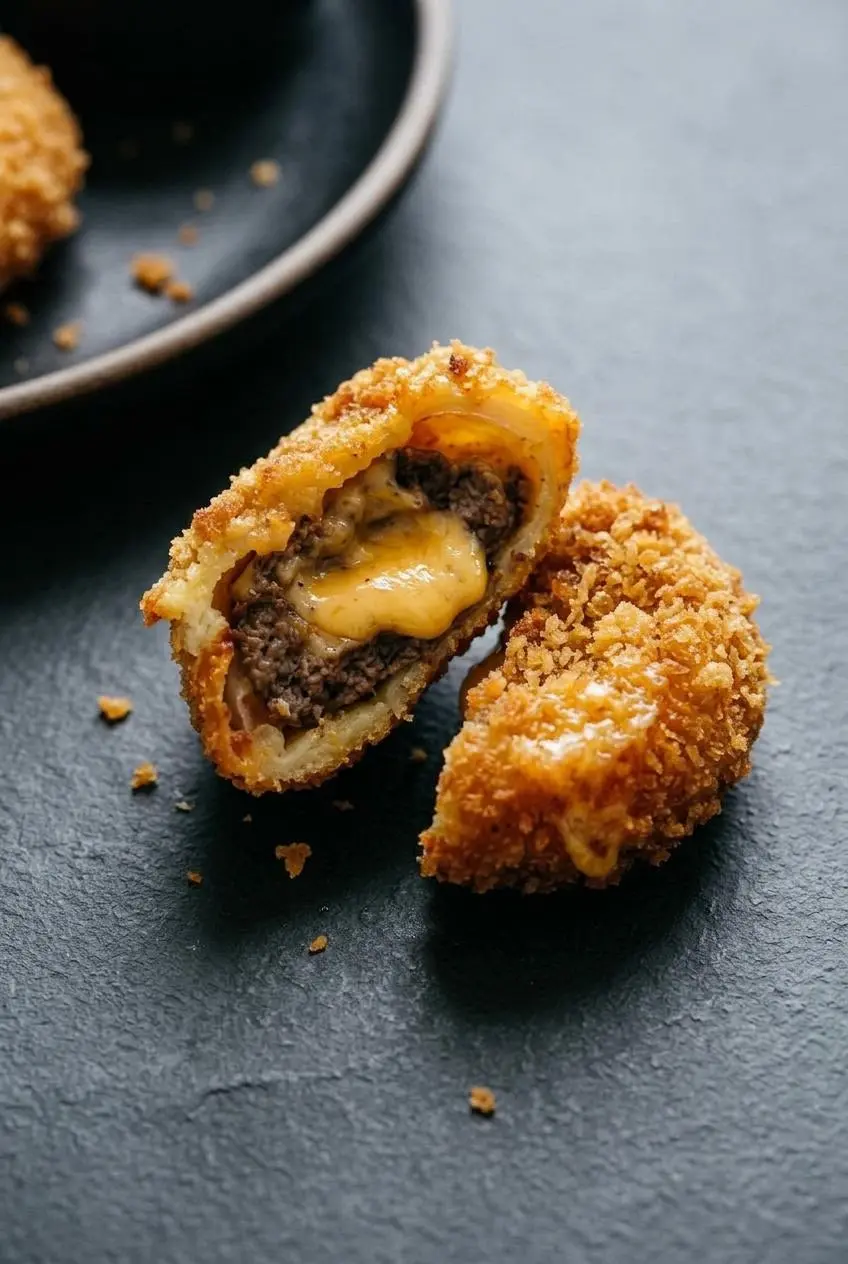
A dark crust with an undercooked center usually means the filling is too thick or the oil is too hot. More frying isn’t always the best fix once the panko has already browned.
- Raw beef in the middle: Oversized rings hold too much filling for the listed frying time. Choose smaller rings and press the beef flat rather than building a dome above the onion.
- Panko darkens too quickly: Oil above the recipe’s frying temperature can brown the coating before heat reaches the center. Reduce the heat and monitor the oil between batches.
- Brown crust, unfinished filling: Transfer the rings to a baking sheet and continue cooking in the oven, checking the beef with a thermometer. Don’t keep deep-frying an already dark coating while waiting for the center.
- Cheese leaks: Gaps between the beef layers let melted cheddar escape and oil enter the pocket. Press the filling together around every side of the cheese before breading.
- The onion splits: Choose an intact replacement when possible, or secure the split with a wooden toothpick before stuffing. Keep track of every toothpick and remove it before serving.
- The filling slumps during coating: As an optional handling adjustment, refrigerate the assembled rings until firmer before breading. Chilling helps them hold their shape, but it doesn’t replace checking doneness.
- The breading station gets clumpy: Use a deeper container for eggs and a wider dish for panko. Keep one hand for wet coating and the other for dry coating to reduce buildup on your fingers.
Leave room around the rings in the pot rather than crowding them together. Crowding makes the oil temperature harder to control and makes delicate rings more difficult to lift out.
Save oversized, unfilled onion layers for classic crispy onion rings instead of trying to use up extra beef inside them.
Air Fryer, Oven, and Bacon-Wrapped Variations
These optional approaches change the crust and cooking pace, so don’t carry the deep-frying time over to another appliance.
- Deep frying: Produces the most evenly browned panko coating, but needs close attention to oil temperature.
- Air frying: Uses circulating hot air and an oiled coating, with enough space around each ring for browning.
- Oven baking: Suits a batch spread across a baking sheet and gives you room to monitor larger rings.
- Bacon wrapping: Replaces the crumb coating with smoky, rendered bacon and an optional BBQ glaze.
Air Fryer Cheeseburger Onion Rings
Prepare and double-bread the rings as directed, then coat both sides with cooking oil spray. Arrange them in a single layer with space between them. Use a medium-high setting appropriate for your appliance, turn them carefully as they brown, and continue until the beef reaches the doneness target above.
Expect cooking to take longer than the brief deep-frying step. Pale, dry panko patches need more even oil coverage, not simply more heat. There isn’t a fixed air-fryer time here because ring diameter, filling thickness, and appliance performance vary.
Oven-Baked Burger Stuffed Onion Rings
Set the breaded rings on a wire rack over a baking sheet, or use a parchment-lined sheet within the parchment’s heat limits. Lightly spray the coating with oil and leave space between the rings.
Bake in a preheated oven until the coating crisps and the beef reaches the thermometer target. Turn rings on a lined sheet if their undersides need more browning. Use the same approach to finish fried rings whose crusts browned before their centers cooked through.
Bacon-Wrapped BBQ Cheeseburger Onion Rings
For this optional version, omit the flour, eggs, and panko coating. Wrap the stuffed onion rings snugly with thin-cut bacon, keeping the beef enclosed and the bacon ends tucked underneath.
Bake, grill over indirect heat, or smoke until the beef reaches the doneness target and the bacon cooks through and renders. Brush with BBQ sauce near the end so its sugars don’t scorch before the filling cooks. Bacon color alone isn’t a doneness check for the beef.
For another cheese-centered option, try mozzarella stick onion rings, which offer a different filling with a similarly crunchy coating.
Best Dipping Sauces and Serving Ideas
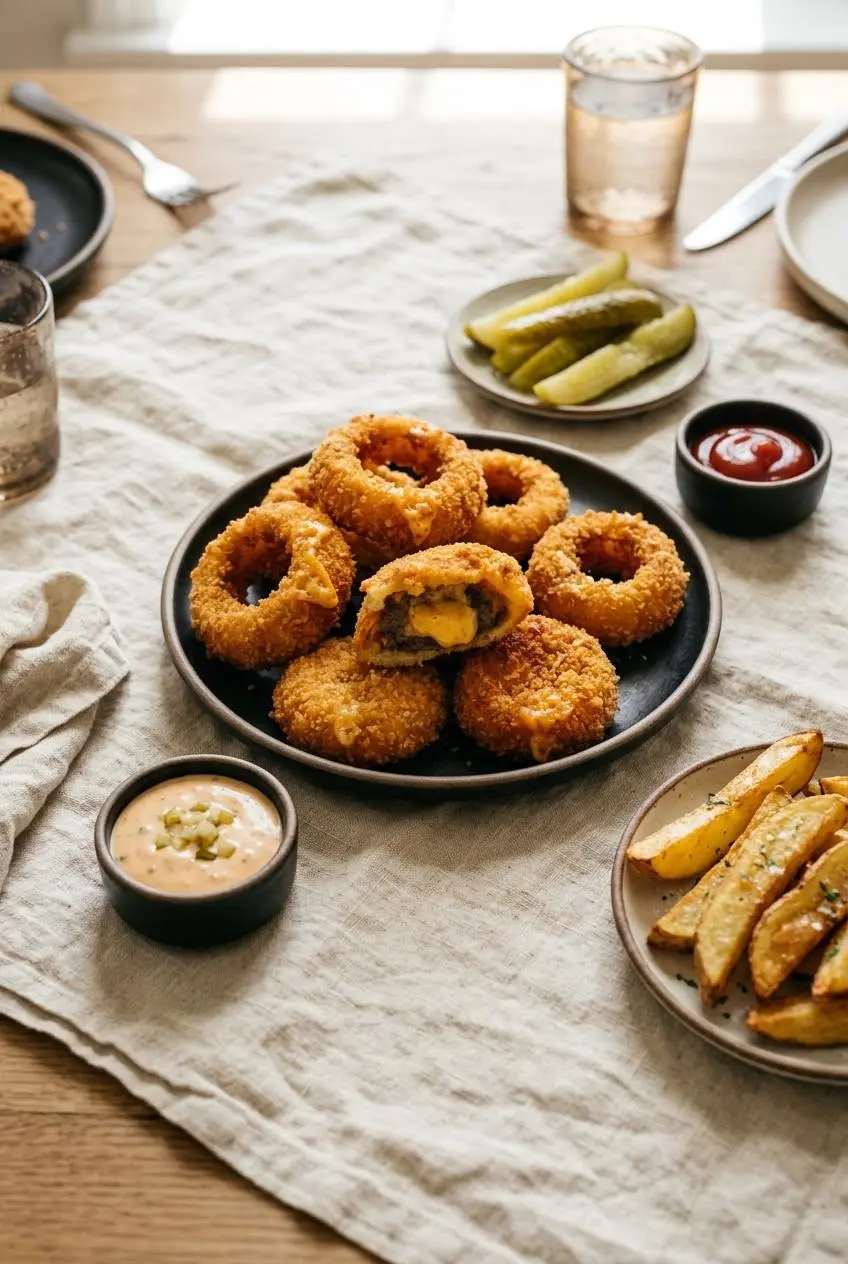
Serve the rings hot with dips alongside, rather than poured over the crust. Ketchup works well, but a tangy burger sauce adds pickle crunch and mustard sharpness.
- Stir mayonnaise and ketchup together for a creamy, lightly sweet starting point.
- Add yellow mustard for tang and finely diced pickles for texture.
- Finish with a pinch of garlic or onion seasoning, then taste and adjust the balance.
Keep the pickles finely chopped so the sauce clings to each bite. If it’s too sharp, add more mayonnaise; if it tastes flat, a little more mustard or pickle brings it back into balance.
Smoky BBQ sauce and spicy ranch make good alternatives for a game-day platter. Add dill pickle spears and crispy steak fries for a burger-inspired spread, keeping the sauces in separate bowls so everyone can choose.
Make-Ahead, Storage, and Reheating Guide
Organize your prep before handling the beef: cut the cheddar, separate suitable onion rings, and arrange the breading dishes. Keep perishable ingredients refrigerated while you finish setting up, and wash hands and surfaces after contact with raw beef or egg.
For the most predictable crust, bread and cook the rings as part of the same cooking session. Keep ketchup and other dipping sauces separate from the rings, both when serving and when packing leftovers.
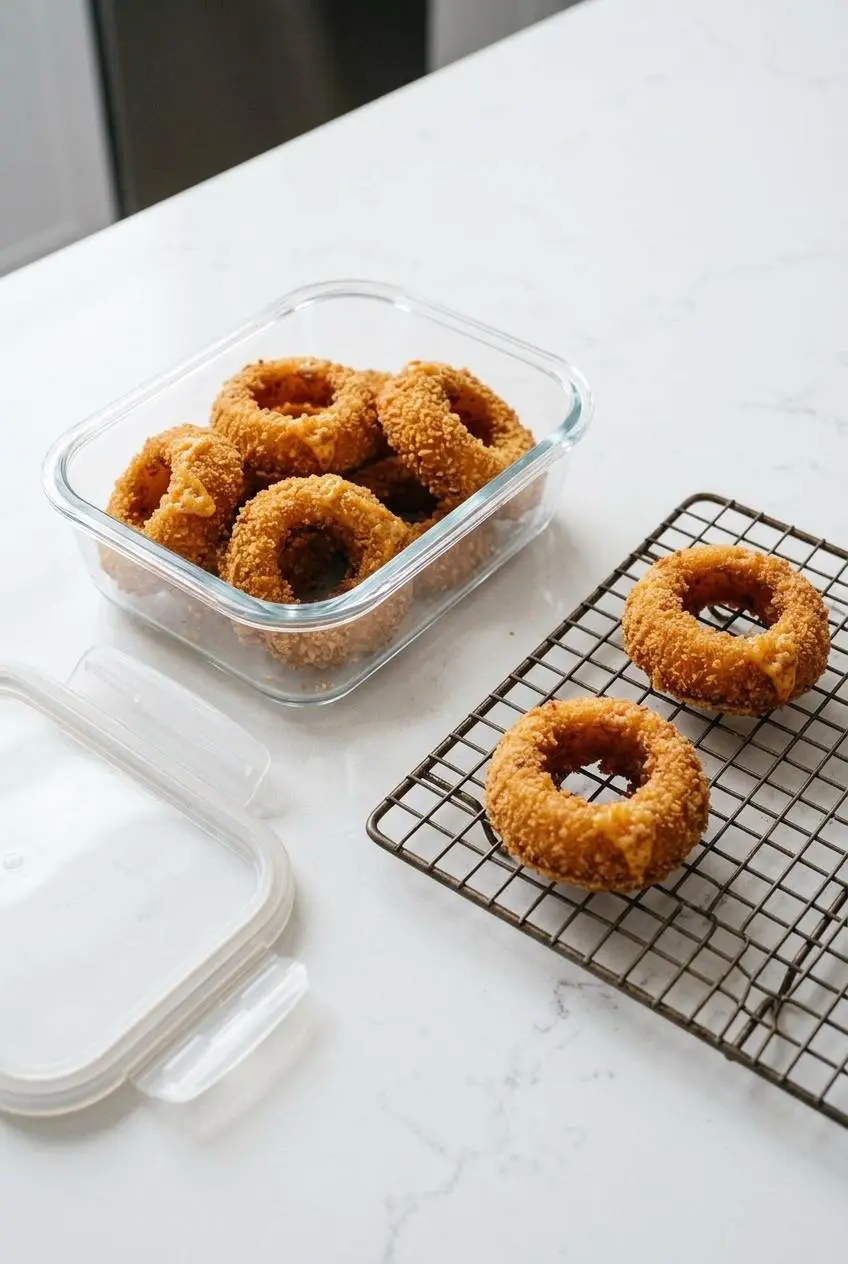
Refrigerate cooked leftovers promptly in a covered container. Avoid stacking warm rings tightly together, since trapped steam softens the panko. Pack them in a shallow layer when possible, and keep them chilled rather than leaving the platter out between servings.
For reheating, use an oven or air fryer with the rings spaced apart so hot air can reach the coating. Heat the filling thoroughly as the exterior regains its crunch. The microwave can warm the center, but it tends to leave the breading soft rather than crisp.
Conclusion
Crunchy panko, savory beef, and melted cheddar give these stuffed onion rings their appeal. Choosing medium rings and sealing the filling carefully matter more than fitting in extra meat.
Keep the thermometer nearby, serve the dipping sauce on the side, and enjoy them while the coating is crisp. A little care during stuffing pays off in every cheesy bite.
Frequently Asked Questions
How Do You Keep Cheeseburger Onion Rings From Being Raw in the Middle?
Use small to medium onion rings and avoid thick, domed beef layers. Maintain the specified oil temperature, check the beef with a thermometer, and finish browned rings in the oven if the filling needs more cooking.
Can You Make Cheeseburger Onion Rings in an Air Fryer or Oven?
Yes. Spray the double-breaded coating with oil, leave space around the rings, and cook until the crust browns and the beef reaches the doneness target given above. Don’t use the deep-frying time as an appliance cooking time.
What Size Onion Rings Work Best for Stuffing With Burger Meat?
Choose small to medium rings from ½-inch-thick onion slices. They should hold the cheddar with beef surrounding it, without requiring an oversized mound of filling. Skip rings that are too narrow to enclose the cheese.
Can You Organize the Prep Before Cooking?
Yes. Cut the cheese, separate the onion rings, and set up the coating dishes before mixing and handling the beef. Keep perishable ingredients chilled, then assemble, bread, and cook during the same cooking session for the most predictable result.
Cheeseburger Onion Rings

Equipment
- Pot
- bowl
- Paper towel
Ingredients
- 1 lb ground beef
- 1 teaspoon salt
- ½ teaspoon pepper
- 1 teaspoon onion powder
- ¼ lb cheddar cheese cut into 1-inch (2 cm) squares
- 1 large white onion
- 1 cup flour
- 5 eggs beaten
- 3 cups panko breadcrumbs
- oil for frying
- ketchup
Instructions
- Bring the frying oil to 350°F (180°C) in a pot over medium heat. Use an oil thermometer to check the temperature rather than judging it by surface movement.
- Work the salt, pepper, and onion powder evenly through the ground beef in a bowl. The finished mixture should have seasoning distributed throughout, without large pockets of spice.
- Remove the onion skin, cut ½-inch (1-centimeter) slices, and gently separate the layers into individual rings. Choose small to medium rings that can hold the cheddar without requiring a thick mound of beef.
- Spread a spoonful of seasoned beef across the bottom opening of an onion ring. Press it against the inside edge so the onion supports a continuous layer of filling.
- Nestle a cheddar square into the middle, then cover it with another spoonful of beef. Flatten the top and join the beef layers firmly around the cheese, leaving no exposed edges or openings into the pocket.
- Fill the remaining suitable rings using the same beef-cheese-beef arrangement. Keep their surfaces level with the onion edges so the filling has a consistent thickness.
- Arrange separate bowls of flour, beaten eggs, and panko in that order. Keep the coatings apart so the flour stays loose and the crumbs remain easy to press onto the rings.
- Dust each stuffed ring with flour, tap away the excess, and coat it with egg, panko, egg again, and a final layer of panko. The finished coating should cover both faces and the outer onion edge without bare patches.
- Lower the coated rings carefully into the oil and fry for 5–6 minutes, maintaining the frying temperature. Look for a deep golden-brown crust and verify that the thickest beef portion reaches 160°F before serving.
- Lift the cooked rings onto paper towels to absorb surface oil, then serve with ketchup. The crust should feel crisp, with melted cheddar enclosed inside the cooked beef.