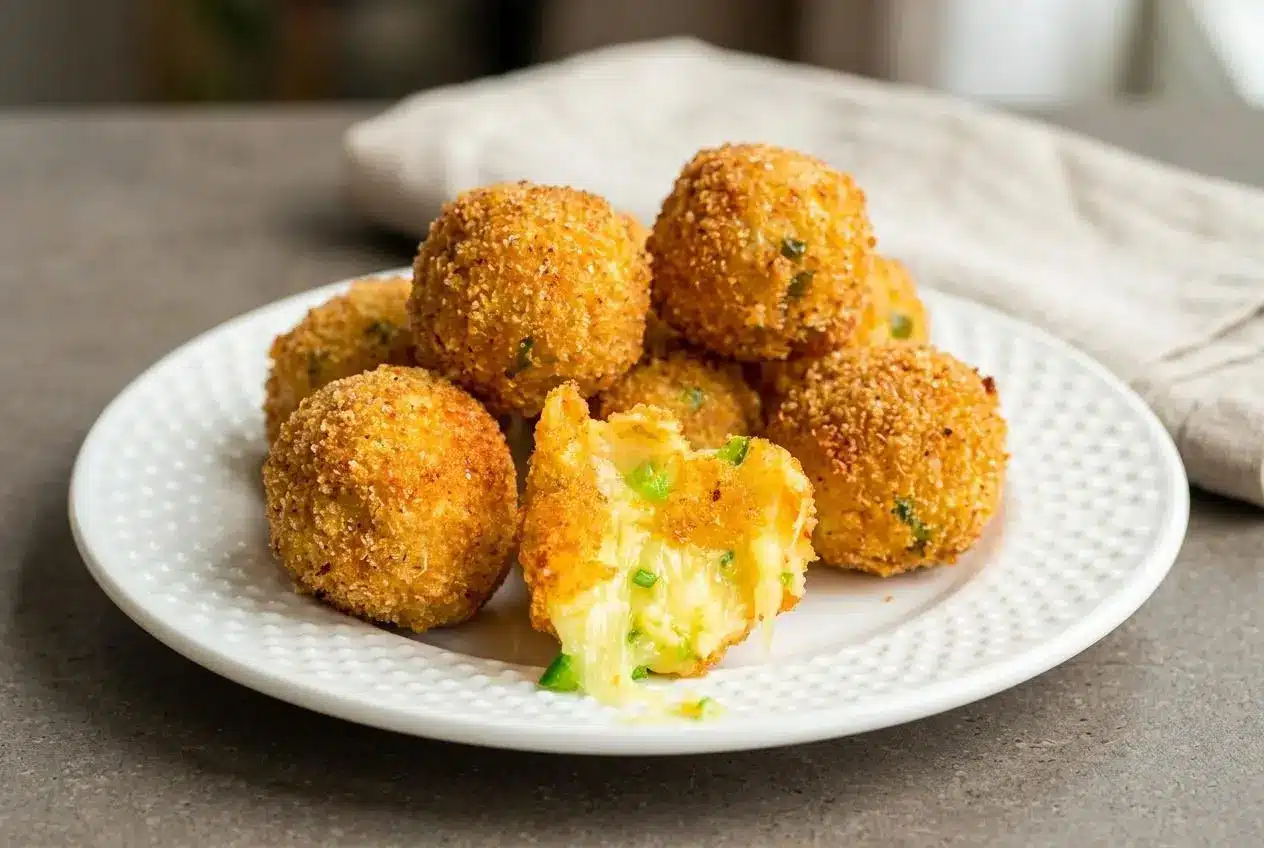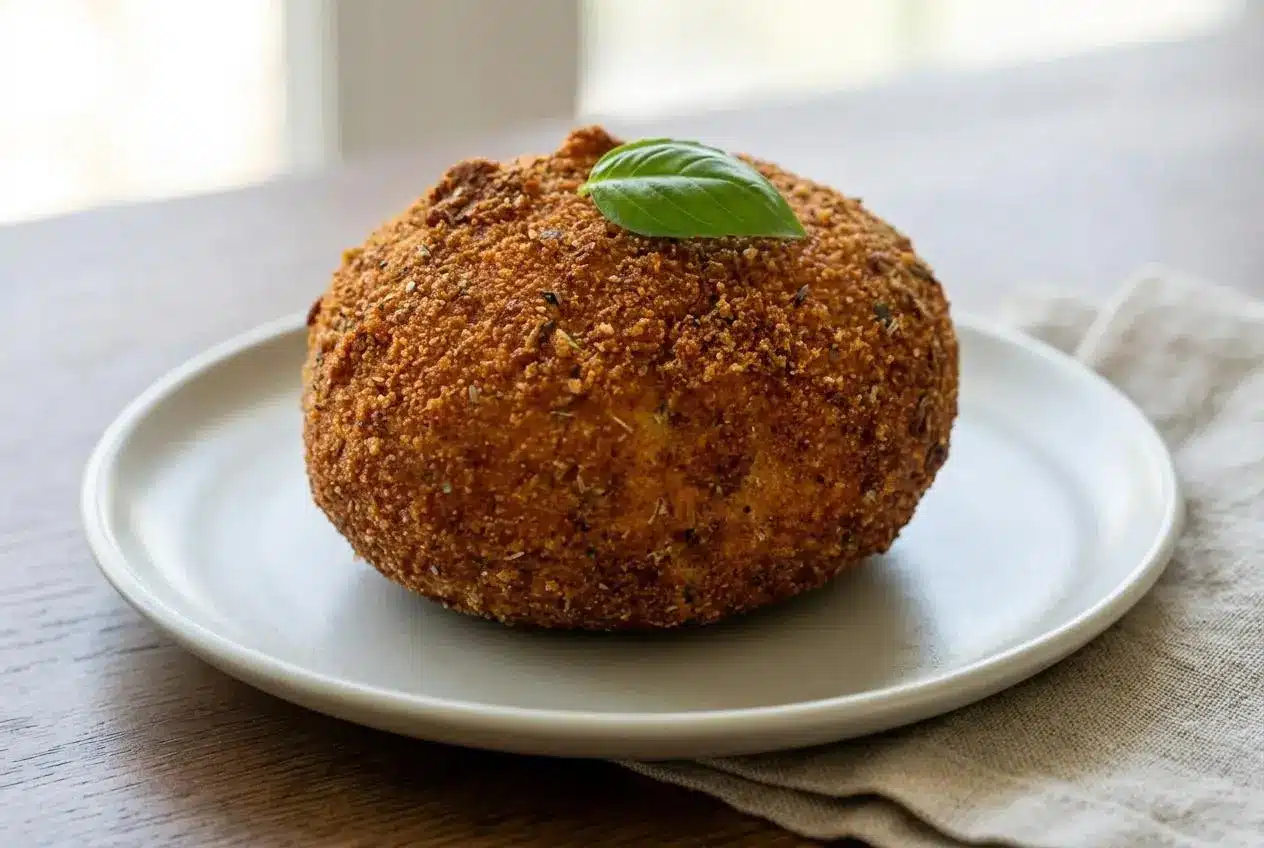
Fried burrata is fresh burrata cheese coated in flour, egg, and seasoned breadcrumbs, then fried at 325°F for 2 to 3 minutes. The crust turns golden and crisp while the delicate cheese inside becomes warm and creamy.
A whole ball of fried burrata makes a shareable appetizer with a satisfying contrast: savory breadcrumbs outside and soft stracciatella inside. Cut through the shell, and the creamy filling spreads onto the plate, ready for scooping.
The trick is gentle handling, complete breadcrumb coverage, and steady oil temperature. You don’t need to squeeze the cheese into submission. A careful coating does the work. That first crisp bite is worth the care.
Set a slotted spoon and a paper towel-lined plate beside the stove before heating the oil.
What Makes Fried Burrata So Special
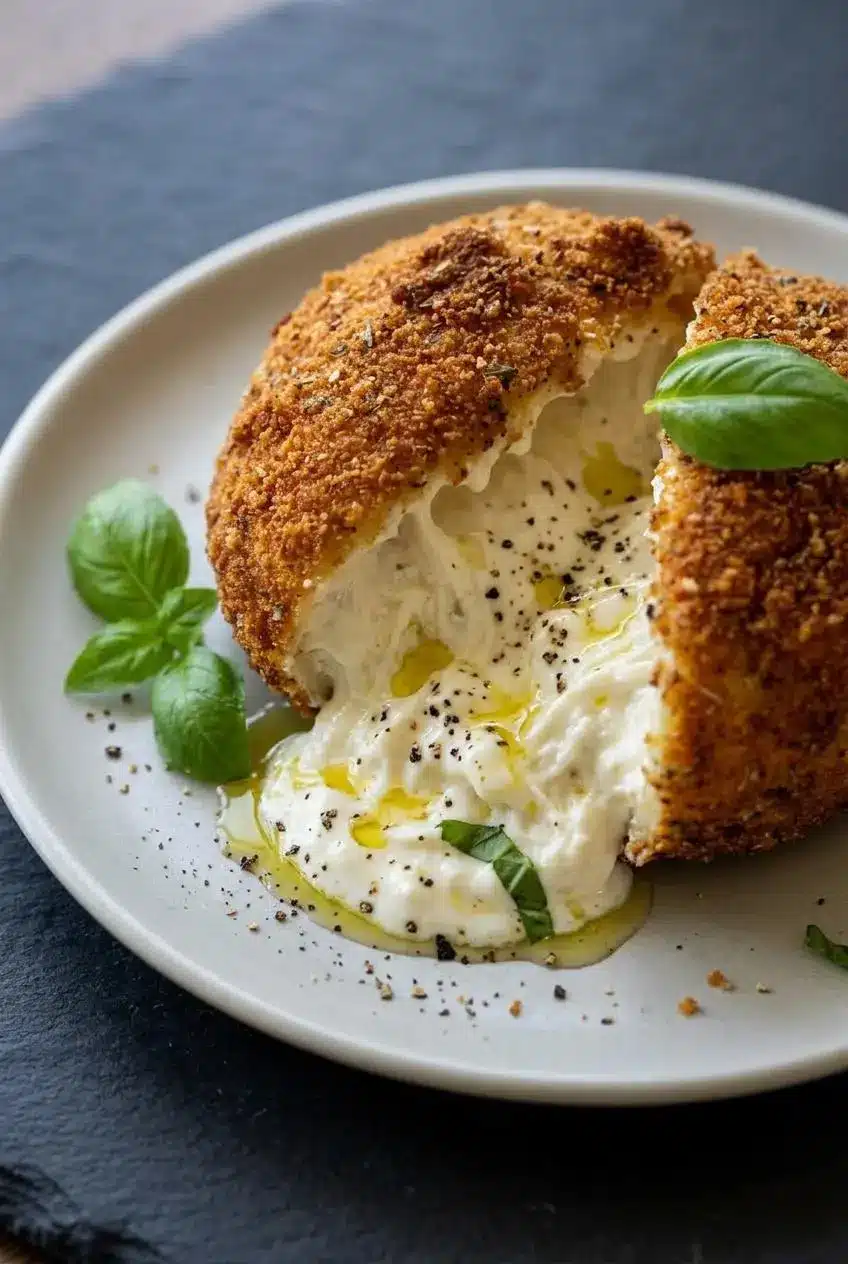
Burrata brings mild, milky flavor and buttery richness; the garlic-seasoned shell adds the savory crunch it lacks on its own. Quick frying warms the filling while keeping the outer mozzarella pouch intact enough to hold its shape.
Unlike a chilled fresh burrata appetizer, this version relies on temperature and texture contrast. Serve it promptly, before steam from the warm cheese softens the crust. Have the bread, sauce, and plates ready before you start frying.
Ingredients and Their Roles
Burrata supplies the creamy center, flour and egg help the coating adhere, and seasoned breadcrumbs build the crisp shell. Garlic powder adds savory aroma, frying oil browns the crust, and basil brings freshness to balance the rich cheese.
- 2 burrata balls
- ½ cup seasoned breadcrumbs
- ¼ tsp garlic powder
- ¼ cup flour
- 1 large egg
- oil for frying
- basil for garnish
Burrata: The outside is a pouch of fresh mozzarella. Inside sits stracciatella, a mixture of mozzarella shreds and cream. Keep the balls whole and handle them gently, especially around the gathered top.
The breading: Flour takes up surface moisture and gives the beaten egg something to grip. Egg then binds the seasoned crumbs to the cheese. Garlic powder distributes evenly through the coating without adding pieces that could brown unevenly.
Oil and basil: Neutral vegetable or canola oil keeps the flavor focused on the cheese and garlicky crust. Fresh basil adds a fragrant finish after frying.
I’d blot the burrata gently with paper towels rather than rub it, so the flour sticks evenly without clumping or tearing the skin.
How to Make Fried Burrata Step by Step
Keep the cheese supported throughout breading and frying. A saucepan, thermometer, and slotted spoon or spider give you more control than trying to grip a soft burrata ball with tongs.
- Arrange three bowls for dredging, placing flour in one, breadcrumbs in another, and the egg in the third, then beat the egg.
The egg should look uniform enough to coat the cheese evenly. - Stir the garlic powder through the breadcrumbs.
The seasoning should disappear into the crumbs without visible clumps. - Cover each burrata ball with flour, then egg, then breadcrumbs, supporting it in one palm while applying crumbs with the other hand.
Use light pressure so the delicate pouch keeps its rounded shape. - Inspect the coating and repeat the egg-and-breadcrumb layers wherever coverage looks thin or crumbs will not adhere.
The finished surface should feel evenly crumbed, with no slick, damp patches showing through. - Fill a suitable saucepan with 3 to 4 inches of oil, deep enough to cover the burrata, and heat it to 325°F using a thermometer.
Leave ample space above the oil for bubbling when the cheese enters. - Ease the burrata into the oil with a slotted spoon and fry for 2 to 3 minutes, lifting it after the first minute to inspect the crust.
If it already looks too dark, hold it out of the oil while the temperature drops before returning it. - Lift out the burrata when the exterior is golden, checking the result by about 3 minutes.
The shell should look crisp, with the cheese warmed inside rather than spilling into the saucepan. - Transfer the fried cheese to the paper towel-lined plate to drain.
The surface should lose its excess oil while the breadcrumb shell stays intact.
Finish with fresh basil, freshly cracked pepper, and a drizzle of olive oil, and offer crusty bread alongside. Keep these finishing touches ready so the cheese reaches the table warm.
Expert Tips and Troubleshooting for Leak-Free Burrata
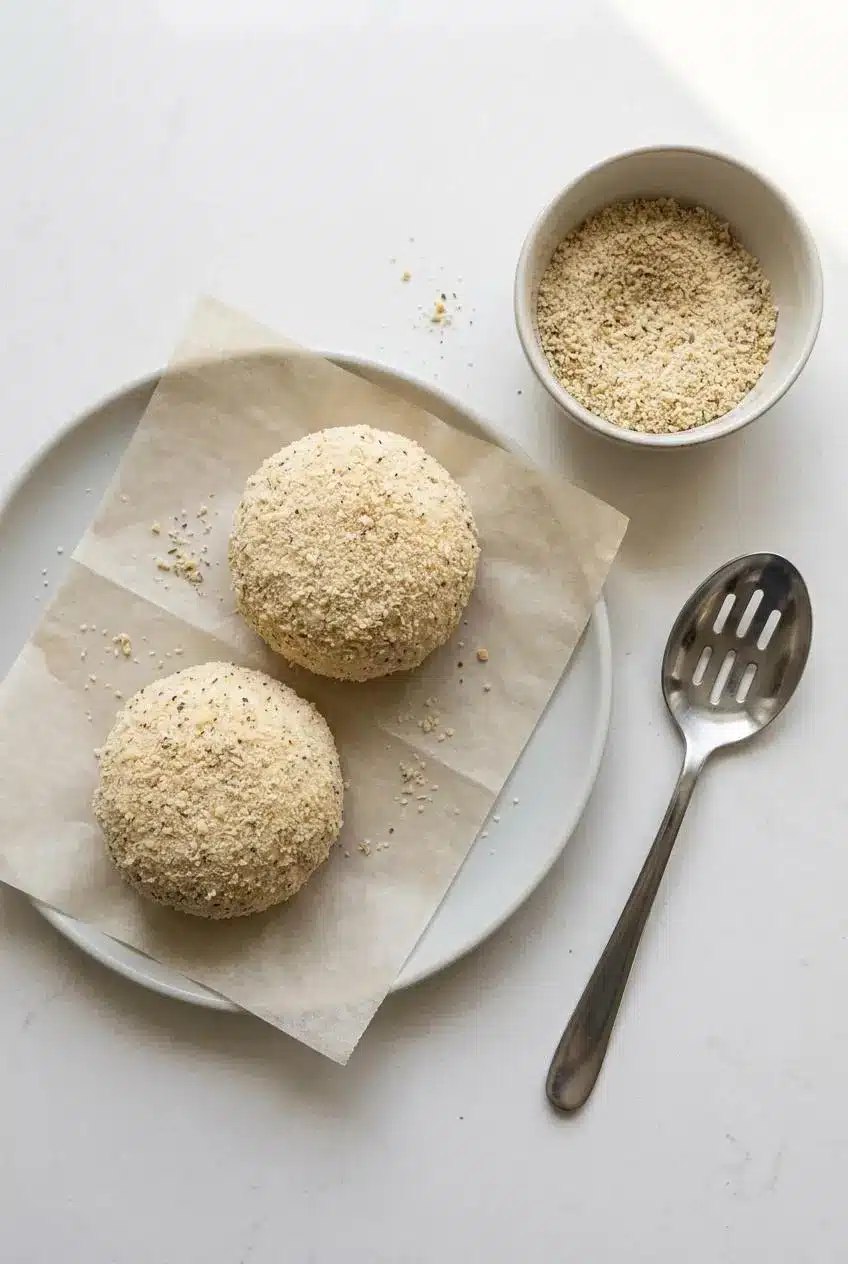
An intact pouch and an even coating help limit leaks. Breading can protect delicate cheese, but it cannot reliably repair a burrata ball that has already split open.
The Double-Breading and Chilling Secret
- Blot away brine: Surface moisture encourages flour to clump and can leave the coating loose. Use gentle pressure with paper towels.
- Seal thin spots: A second pass through egg and breadcrumbs helps cover exposed areas, particularly around the gathered top.
- Keep the cheese chilled: Leave burrata refrigerated until you’re ready to work with it, rather than letting it soften on the counter.
- Support, don’t squeeze: Cradle the cheese during coating and use a slotted spoon or spider for transferring it.
Judge the coating by touch as well as appearance. It should feel crumb-covered all around, without slippery patches beneath your fingers. Press lightly; compacting the crumbs hard can damage the cheese underneath.
Troubleshooting Common Frying Mistakes
- Cheese leaks: A torn pouch or uncovered patch may have opened in the oil. Lift the ball out carefully rather than pressing or turning it repeatedly.
- The crust browns too quickly: The oil may be too hot. Check the thermometer and let the temperature fall before continuing.
- Breading falls off: A wet surface, missed flour layer, or rough handling can weaken adhesion. Dry thoroughly and avoid gripping the ball with tongs.
- The crust stays pale: Adding cheese lowers the oil temperature. Let the oil recover before frying the next ball instead of sharply increasing the heat.
- The coating becomes soggy: Excess oil or sauce covering the crust can soften it. Drain promptly and add sauce at serving time.
A steady sizzle is a useful cue, but bubbling alone cannot tell you the oil temperature. Keep using the thermometer.
Delicious Variations and Air Fryer Option
Keep coating changes optional, and remember that a different shell can behave differently around such delicate cheese.
Panko vs Seasoned Breadcrumbs vs Wonton Wrappers
- Seasoned breadcrumbs: Their finer texture creates close coverage and distributes savory seasoning across the shell.
- Panko: Larger flakes give a lighter, more irregular crunch, but need careful attention around gaps and folds.
- Wonton wrappers or phyllo: These create a pastry-style shell rather than a breadcrumb crust; seams need careful sealing, so they aren’t a direct swap in the method above.
- Parmesan and lemon zest: As an optional breadcrumb addition, grated Parmesan brings savory depth while lemon zest adds brightness without extra liquid.
If you choose unseasoned panko, expect a milder coating than the seasoned crumbs used here. Avoid adding extra salt automatically, especially if you also include Parmesan.
How to Make Crispy Burrata in an Air Fryer
For an optional air fryer adaptation, cover the cheese completely with a double egg-and-crumb coating and spray the exterior evenly with cooking oil. Dry patches tend to remain pale rather than developing an even crust.
Give each ball space in the basket and monitor it closely as the coating turns golden. Lift it out gently as soon as the shell crisps, stopping if the cheese begins to escape. Air fryers differ, so the deep-frying time above is not an air fryer cooking schedule.
Best Sauces and Serving Suggestions
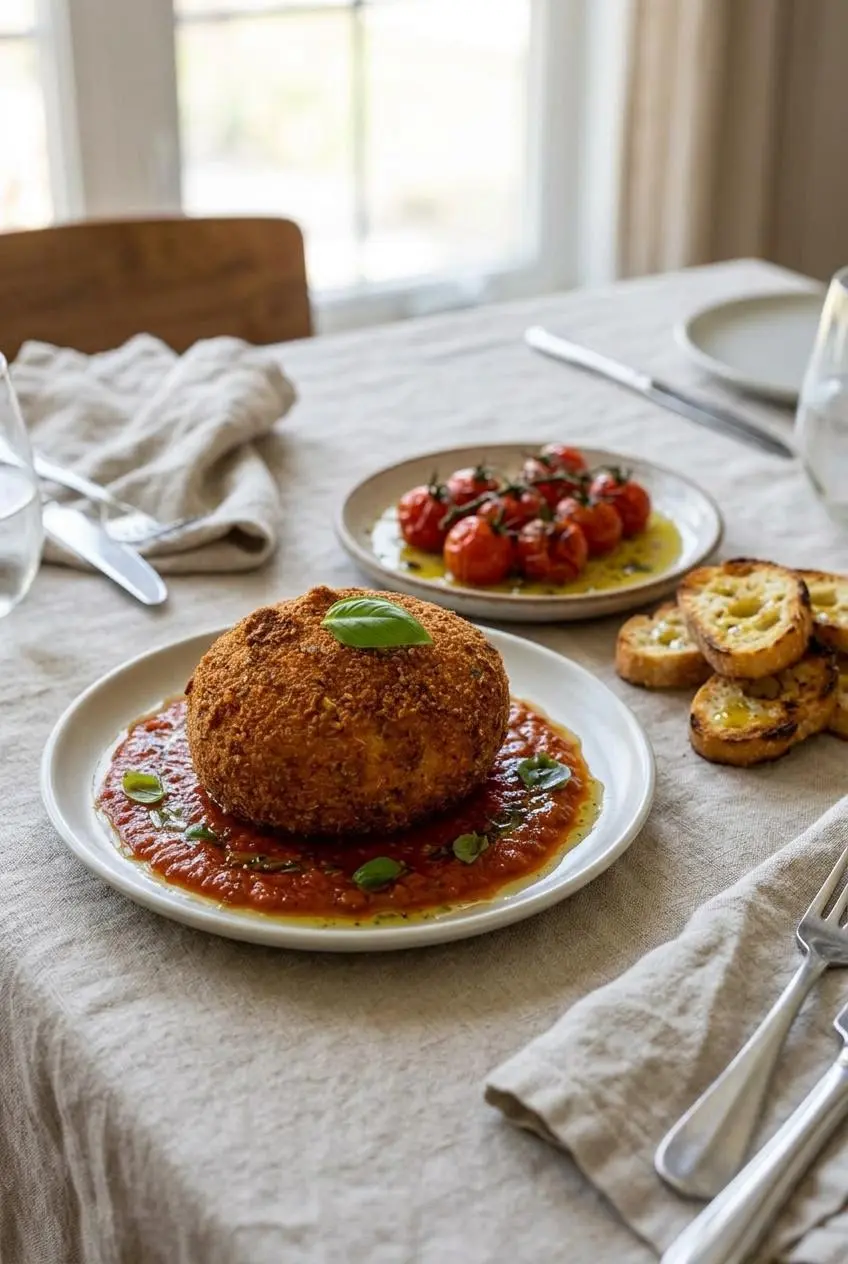
Choose something acidic, peppery, or spicy to balance the creamy filling. Serve sauces underneath or alongside the burrata rather than pouring them over the crisp top.
Warm Spicy Marinara and Romesco Sauces
Warm marinara makes a familiar pairing, with tomato acidity cutting through the richness. For more heat, choose a tomato sauce seasoned with crushed red pepper.
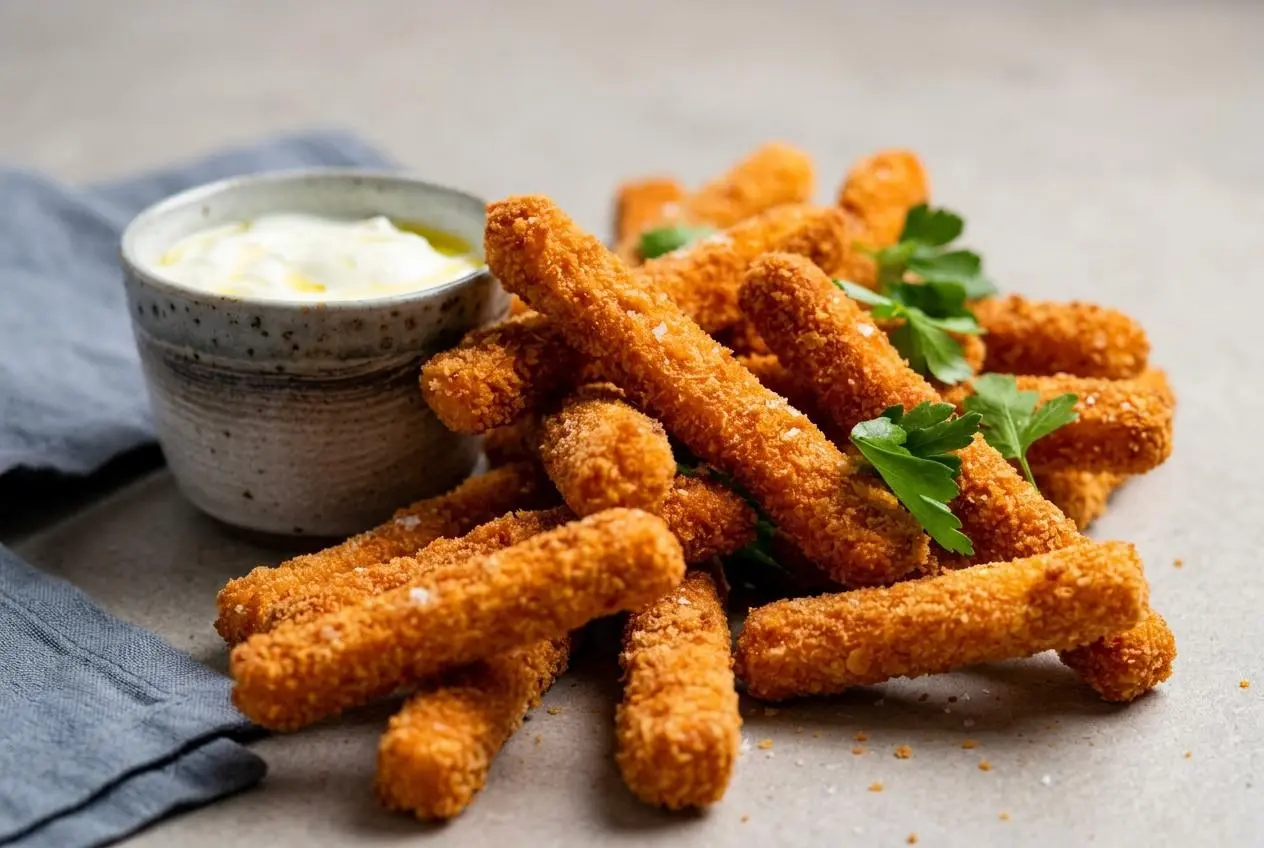
Roasted red pepper and almond romesco offers a nuttier alternative. Spoon a pool onto the plate, then place the drained cheese on top just before serving. For a larger appetizer spread, crispy fried zucchini can share the dipping sauce.
Fried Burrata Salad and Crostini Platter Ideas
For a salad, set the warm cheese over peppery arugula dressed with lemon juice and olive oil. A restrained drizzle of balsamic glaze adds sweetness without overwhelming the greens.
For a platter, arrange crostini or crusty bread beside prosciutto, roasted cherry tomatoes, or fresh figs. Leave room around the burrata so everyone can scoop up the creamy center after cutting it open. Fresh basil works with either serving style.
Make-Ahead, Storage, and Reheating Guide
Save the breading and frying for close to serving, when you can give the delicate cheese your attention. To streamline preparation, arrange the dredging bowls, measure the garlic powder, and set out the draining plate while keeping the burrata refrigerated.
If you have leftovers, refrigerate them promptly in a covered container, separate from sauce and dressed greens. The crust will lose some crunch as moisture moves outward from the filling.
For texture, an oven or air fryer is preferable to a microwave. Reheat gently and watch closely, removing the cheese once warmed through before the pouch splits. Microwaving tends to soften the coating and can heat the filling unevenly. Add fresh basil and other finishing touches after reheating.
Conclusion
The appeal is that first cut through a golden shell into warm, creamy cheese. Complete breadcrumb coverage, gentle handling, and steady oil temperature give you the best chance of keeping that contrast intact.
Start with the seasoned coating, then try Parmesan and lemon zest when you want a brighter finish. Have the bread ready and enjoy it while the crust still crunches.
Frequently Asked Questions
How Do You Keep Burrata From Bursting When Frying?
Blot the cheese dry, cover every exposed patch with egg and breadcrumbs, and handle it with a slotted spoon. Keep the oil at the temperature in the method rather than turning up the heat to hurry browning.
Can You Make Fried Burrata in an Air Fryer?
Yes, as an optional adaptation. Double-coat the cheese, spray the exterior evenly with oil, and monitor closely until golden. Don’t apply the deep-frying time to an air fryer.
Do You Need to Chill Burrata Before Frying?
Keep burrata refrigerated until you’re ready to coat it. This method does not require an additional chilling stage; careful breading and gentle handling remain essential.
Can I Bread Burrata Ahead of Time for a Party?
For the most predictable coating, bread it close to frying. Prepare the dredging station and serving accompaniments first, keeping the cheese refrigerated until you’re ready to begin.
Fried Burrata

Equipment
- Saucepan
- Thermometer
- Slotted spoon
- spider
Ingredients
- 2 burrata balls
- ½ cup seasoned breadcrumbs
- ¼ tsp garlic powder
- ¼ cup flour
- 1 large egg
- oil for frying
- basil for garnish
Instructions
- Arrange three bowls for dredging, placing flour in one, breadcrumbs in another, and the egg in the third, then beat the egg. The egg should look uniform enough to coat the cheese evenly.
- Stir the garlic powder through the breadcrumbs. The seasoning should disappear into the crumbs without visible clumps.
- Cover each burrata ball with flour, then egg, then breadcrumbs, supporting it in one palm while applying crumbs with the other hand. Use light pressure so the delicate pouch keeps its rounded shape.
- Inspect the coating and repeat the egg-and-breadcrumb layers wherever coverage looks thin or crumbs will not adhere. The finished surface should feel evenly crumbed, with no slick, damp patches showing through.
- Fill a suitable saucepan with 3 to 4 inches of oil, deep enough to cover the burrata, and heat it to 325°F using a thermometer. Leave ample space above the oil for bubbling when the cheese enters.
- Ease the burrata into the oil with a slotted spoon and fry for 2 to 3 minutes, lifting it after the first minute to inspect the crust. If it already looks too dark, hold it out of the oil while the temperature drops before returning it.
- Lift out the burrata when the exterior is golden, checking the result by about 3 minutes. The shell should look crisp, with the cheese warmed inside rather than spilling into the saucepan.
- Transfer the fried cheese to the paper towel-lined plate to drain. The surface should lose its excess oil while the breadcrumb shell stays intact.