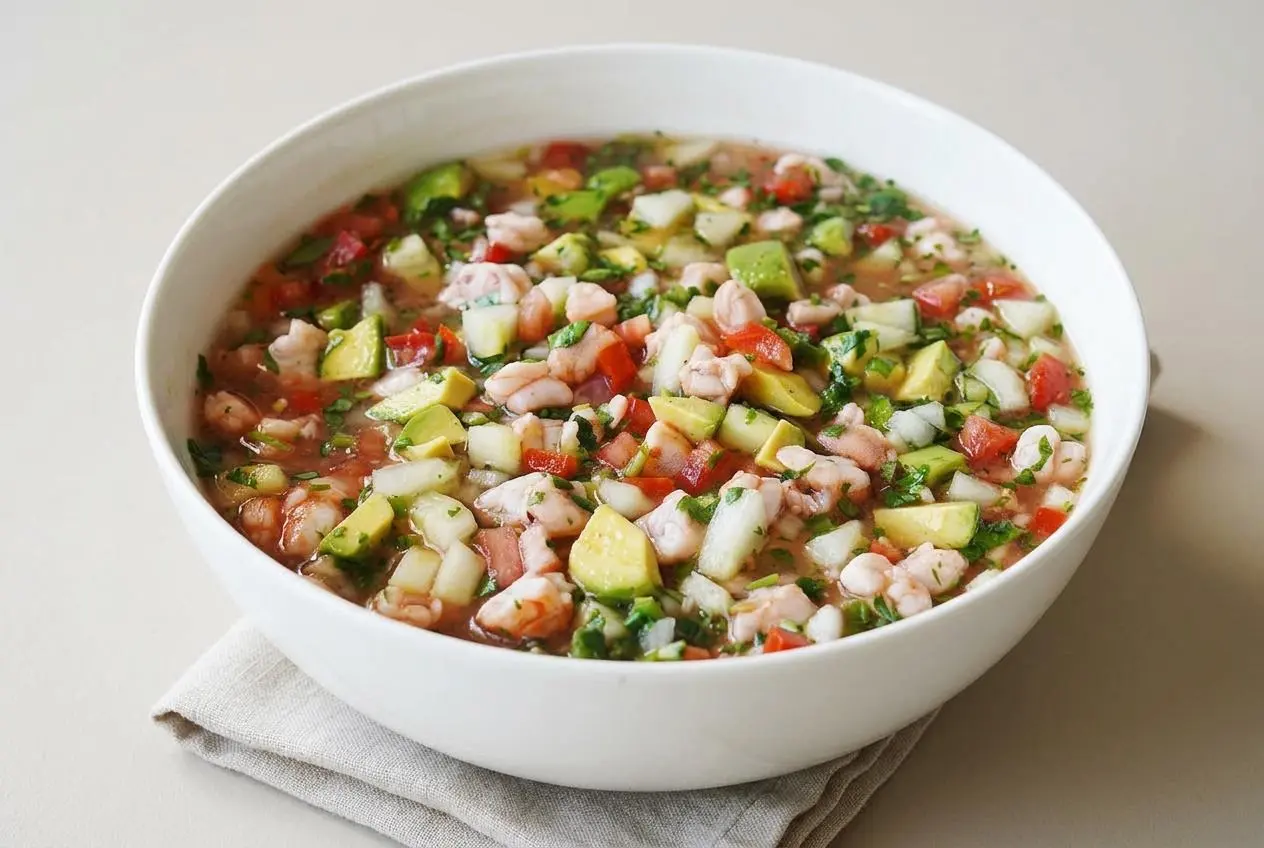
Shrimp ceviche is a chilled Latin American dish of diced shrimp cured in fresh lime juice until firm and opaque, then tossed with crisp vegetables, cilantro, tomato juice, and avocado.
This shrimp ceviche recipe brings cool cucumber crunch, citrusy shrimp, savory Clamato, and creamy avocado into one bright bowl. It is especially welcome when the weather calls for something fresh rather than heavy.
Fresh lime aroma and a crisp bite make every scoop feel lively. The key is keeping the shrimp tender.
Choose limes that feel heavy for their size and give slightly when pressed, since they usually yield more juice.
Key Ingredients and Authentic Regional Additions
Each ingredient contributes a distinct job: lime firms the shrimp, vegetables add crunch and color, tomato juice creates a savory broth, and avocado brings creamy contrast.
- 1 lbs raw shrimp (frozen or fresh) (peeled and deveined )
- Lime Juice – about 5 limes or more as needed
- 1 cucumbers – diced into small chunks
- ⅓ white medium onion
- 2 small tomatoes – diced into small chunks
- 2 serrano or jalapeño peppers (or one of each) (finely chopped – seeds optional)
- ⅓ cup of fresh cilantro (finely chopped)
- 1 cup of clamato juice or V8 tomato juice
- Salt & Pepper to taste
- 1 Avocado (diced into small chunks)
- Ketchup according to taste (optional)
Freshly squeezed lime juice matters here. Its sharp, clean flavor lets the shrimp taste bright, while bottled juice can taste flat or slightly bitter. Use enough juice to cover every shrimp piece, because exposed pieces will cure unevenly.
Medium or large peeled, deveined shrimp are easiest to dice into consistent pieces. Aim for similarly sized cuts so the lime reaches the shrimp at the same pace. If using frozen shrimp, thaw it fully before cutting, then keep it cold while working.
English or Persian cucumbers stay particularly crisp because they contain fewer watery seeds. A crisp white onion gives a clean, sharp bite; if it tastes aggressively pungent, rinse the chopped onion briefly in cold water and drain it well. Roma-style tomatoes are a good choice when available because their flesh holds together better than very juicy tomatoes.
Serrano peppers bring lively heat, while jalapeños offer a gentler warmth. Cilantro lifts the savory tomato juice, and Clamato or V8 gives the finished ceviche a lightly brothy texture. Taste cautiously before adding salt, especially if serving with salty chips or crackers.
I fold the diced avocado in at the last moment, using a light hand so the creamy cubes stay intact instead of disappearing into the juices.
How to Make Shrimp Ceviche
The method is mostly about even cutting, full lime coverage, and patient chilling. Keep the vegetables separate while the shrimp cures so their crunch stays sharp and the avocado remains neat.
- Dice the peeled and deveined shrimp into small, even pieces and transfer them to a glass or plastic container.
Similar-sized pieces cure more evenly and prevent a mix of firm shrimp and translucent centers. - Pour in the lime juice and turn the shrimp until every piece is submerged, adding more juice if needed.
The shrimp should sit beneath the citrus rather than peeking above the surface. - Cover the container and refrigerate the shrimp for at least three hours.
By the end of the cure, the shrimp should look pink, firm, and milky opaque instead of gray and translucent. - Combine the cucumber, onion, tomatoes, peppers, cilantro, and avocado in a separate bowl, then chill the mixture.
Keeping the vegetables cold helps them retain their crisp texture until assembly. - Stir the cured shrimp with the chilled vegetables, Clamato juice or V8 tomato juice, salt, and pepper.
Mix until the juices lightly coat the ingredients, then taste before adding more seasoning. - Serve the ceviche with tostadas, saltines, or tortilla chips, adding ketchup to individual portions if desired.
The best texture is cold, juicy, crunchy, and creamy in the same bite.
Avoid vigorous stirring after the avocado goes in. If the ceviche seems watery, spoon it onto tostadas with a slotted spoon and offer the flavorful juices alongside it.
The Science of Citrus Curing and Food Safety
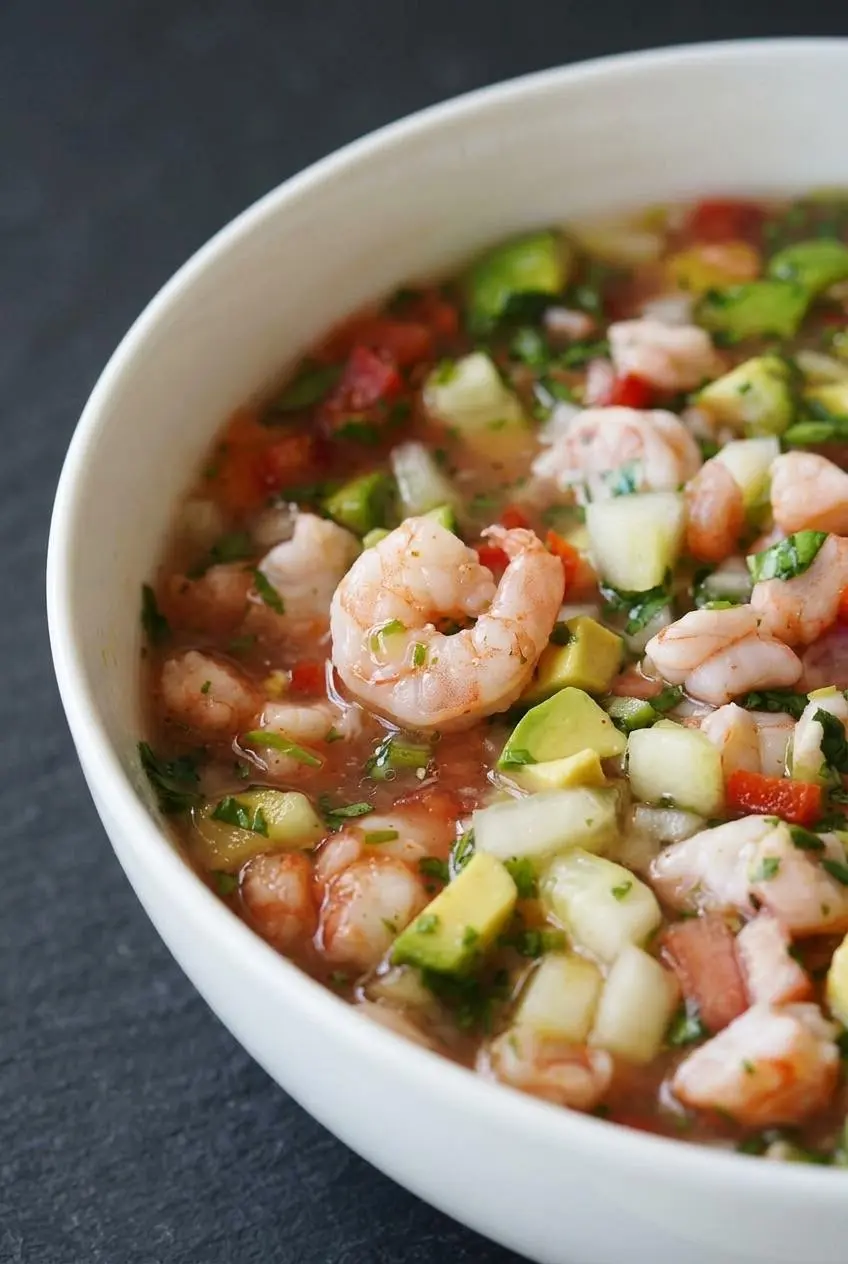
Lime juice changes shrimp dramatically, but it is different from heat cooking. Keep the shrimp refrigerated throughout the curing process, use clean equipment, and start with shrimp that has been handled and chilled carefully.
How Acid Denaturation Works
Citric acid alters the shrimp’s protein structure, changing its texture from soft and translucent to firmer, pinker, and opaque. That transformation is why ceviche looks cooked even though it has not been heated.
For tender shrimp, watch the texture rather than leaving it in lime for far longer than needed. Properly cured shrimp feels springy and moist. Shrimp that stays submerged in strong citrus too long can become chalky, dry, and rubbery because the proteins tighten excessively.
Citrus does not provide the same protection as thorough heat cooking. Raw or undercooked seafood dishes, including ceviche, can carry a higher foodborne illness risk, particularly for older adults and others who need extra caution with raw seafood. Raw and undercooked seafood can carry a higher foodborne illness risk, so a poached option can be a practical choice.
If you enjoy working with delicate seafood, a classic fish ceviche follows the same citrus-curing principle, though thinner white fish pieces change texture more quickly than shrimp.
Quick Poaching Method for Cautious Cooks
For a heat-cooked version, bring salted water to a boil and add the diced raw shrimp for 60 to 90 seconds. Move the shrimp immediately into an ice bath, then drain and pat it dry before tossing it with lime juice for 15 minutes.
The ice bath stops the residual heat so the shrimp stays juicy rather than overcooking. The lime still adds the familiar ceviche flavor, but the shrimp will have a more traditionally cooked texture and a milder citrus cure.
Choosing the Right Non-Reactive Vessel
Use glass, ceramic, or food-grade plastic for the lime cure. These materials keep the citrus flavor clean and bright. Avoid aluminum or copper bowls, which can react with acidic juice and leave a metallic taste in the ceviche.
A wide, shallow container works especially well because it gives the shrimp an even layer in the lime juice. Crowd the shrimp too deeply and some pieces may take longer to cure than others.
Storage and Make-Ahead Guidelines
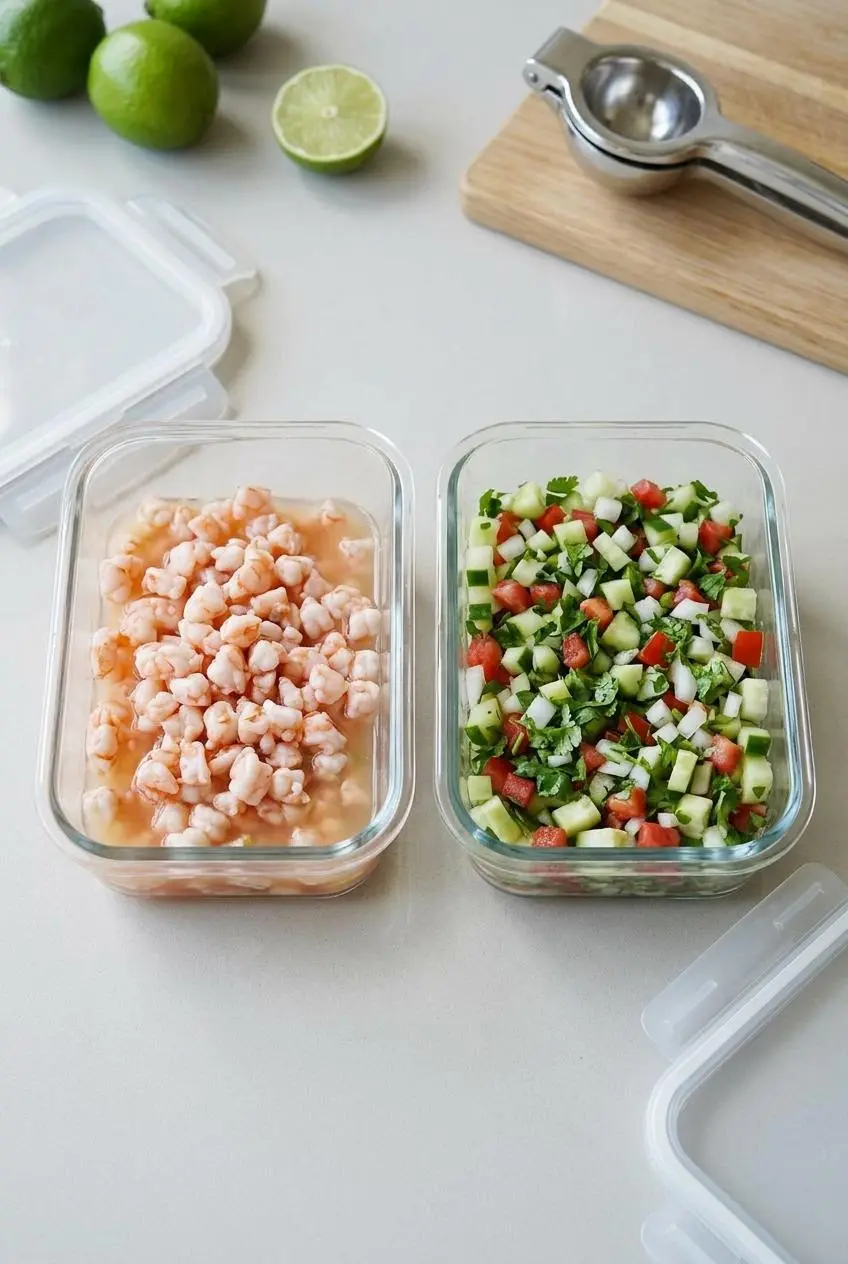
Ceviche tastes best when the vegetables are crisp and the shrimp remains tender, so it is best enjoyed promptly after assembling. Keep finished ceviche tightly covered in a glass container in the refrigerator and serve it well chilled.
For a gathering, prepare the cucumber, onion, tomatoes, peppers, and cilantro separately and refrigerate them in a covered container. Cure the shrimp in lime juice in its own container, then combine the chilled components shortly before serving. Add avocado only at the end.
This approach prevents the cucumber and tomatoes from releasing too much liquid into the bowl. It also gives you control over the final seasoning, since Clamato, chips, saltines, and ketchup can all contribute salt.
If you want another chilled seafood option for a warm-weather spread, cold shrimp salad offers a different texture while keeping the menu light and refreshing.
Serving Suggestions and Delicious Variations
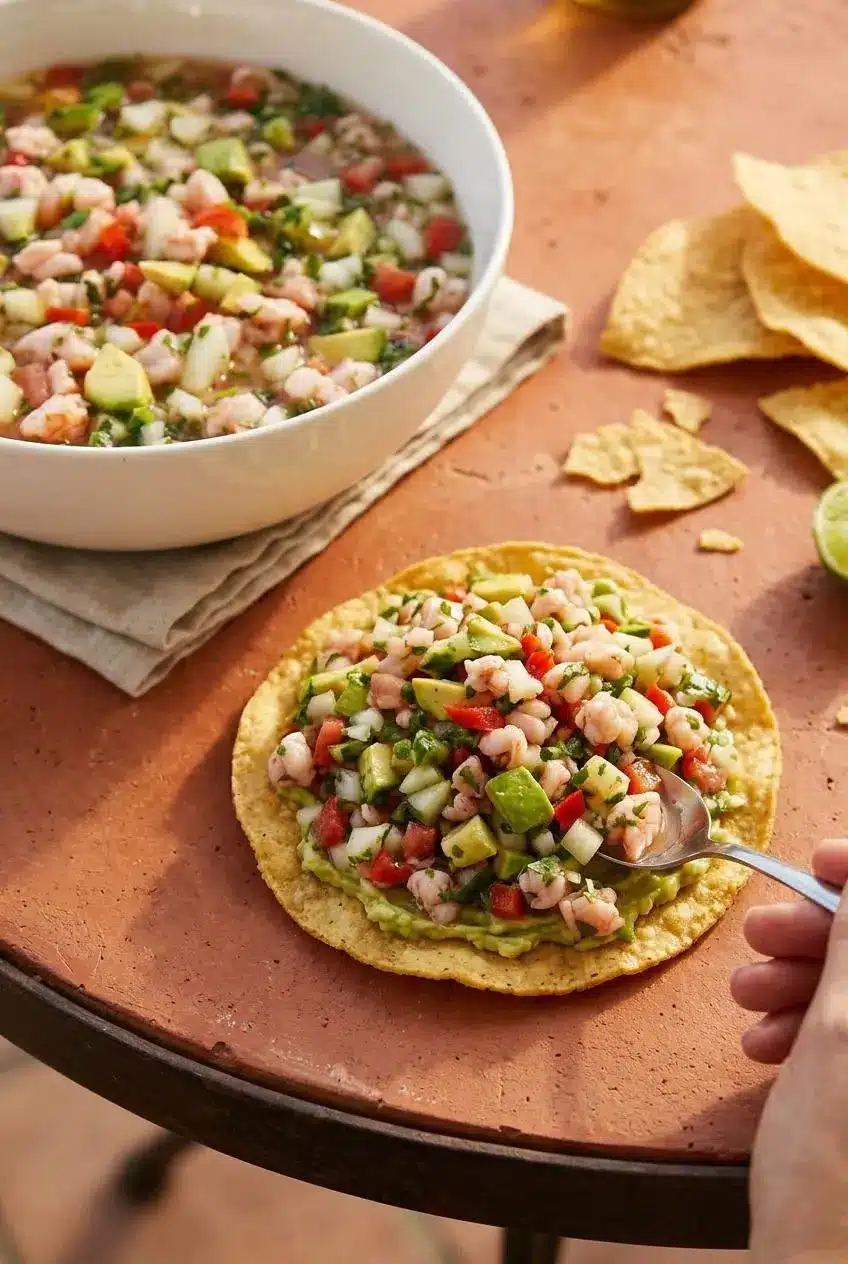
Serve the ceviche cold and let the crunchy, creamy, and citrusy elements stay distinct. These ideas are optional ways to present or change the flavor without altering the main preparation.
Classic Mexican Tostadas and Chips
For a classic tostada, spread a thin layer of mashed avocado over a crisp corn tostada, then pile on a generous spoonful of ceviche. The avocado creates a creamy barrier that helps the tostada stay crisp a little longer.
Tortilla chips and saltine crackers are equally good for scooping, especially when serving the ceviche family-style. Spoon some of the tomato-lime juices over each serving, but do not flood the chips until you are ready to eat.
Tropical Mango Shrimp Ceviche
For a sweet-spicy variation, gently fold in diced ripe mango or pineapple just before serving. The fruit softens the sharp lime flavor and pairs particularly well with serrano heat.
Keep the fruit as an optional addition rather than mixing it in early. Very ripe fruit can soften quickly and make the ceviche taste sweeter than intended.
Sonora Style Tomato Juice Variation
The Clamato or V8 in this version gives the ceviche a savory, refreshing broth that recalls northern Mexican seafood preparations. Add a little more seasoned tomato juice if you prefer a juicier bowl, then adjust salt only after tasting.
For a saucier dish with a sweeter tomato-forward character and larger shrimp, try a Mexican shrimp cocktail. Ceviche stays brighter and more citrus-led, while coctel de camarón is usually served with more tomato broth.
Conclusion
This shrimp ceviche delivers the contrast that makes chilled seafood so satisfying: tender lime-cured shrimp, crisp vegetables, savory tomato juice, and creamy avocado.
Keep the shrimp chilled in a glass dish until it turns pink and opaque, then fold in the vegetables and avocado gently. Serve it cold and enjoy every bright, crunchy scoop.
Frequently Asked Questions
Does Lime Juice Really Cook Raw Shrimp in Ceviche?
Lime juice changes the shrimp’s proteins, making the flesh firm, pink, and opaque in a process called acid denaturation. It does not heat shrimp the way boiling, sautéing, or grilling does. Keep the shrimp refrigerated while it cures, use carefully handled seafood, and choose the poached method if you prefer heat-cooked shrimp.
How Long Does Shrimp Ceviche Last in the Refrigerator?
Shrimp ceviche is at its best when enjoyed soon after it is assembled, while the cucumber stays crisp and the shrimp remains tender. Keep leftovers covered in a glass container in the refrigerator and avoid holding them longer than necessary. If the texture, aroma, or flavor seems off, discard the ceviche rather than trying to refresh it.
Can I Make Ceviche With Cooked or Frozen Shrimp?
Yes. Frozen raw shrimp works well once fully thawed and kept cold before cutting and curing. You can also use cooked shrimp. For the closest ceviche flavor, toss it in lime juice for 15 minutes before combining it with the vegetables and tomato juice.
Why Did My Shrimp Turn Rubbery in Ceviche?
Rubbery shrimp usually spent too long in the lime juice. Acid keeps tightening the shrimp’s proteins, which can push the texture from tender to dry and tough. Check for shrimp that is pink, opaque, and gently springy. Once it reaches that stage, mix in the chilled vegetables rather than continuing the citrus cure.
What Is the Difference Between Shrimp Ceviche and Mexican Shrimp Cocktail?
Shrimp ceviche is usually chopped and strongly citrus-forward, with lime-cured shrimp, crisp vegetables, and a lighter texture. Mexican shrimp cocktail, or coctel de camarón, is generally saucier and more tomato-based, often featuring whole shrimp in a seasoned broth. Both are refreshing, but ceviche has a sharper lime flavor and more crunch.
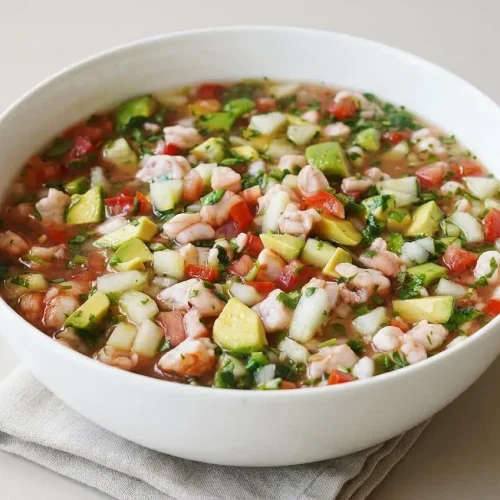
Shrimp Ceviche Recipe

Equipment
- Glass or plastic mixing container
- Citrus squeezer
- Chef knife and cutting board
Ingredients
- 1 lbs raw shrimp (frozen or fresh) (peeled and deveined )
- Lime Juice about 5 limes or more as needed
- 1 cucumbers diced into small chunks
- ⅓ white medium onion
- 2 small tomatoes diced into small chunks
- 2 serrano or jalapeño peppers (or one of each) (finely chopped – seeds optional)
- ⅓ cup fresh cilantro (finely chopped)
- 1 cup clamato juice or V8 tomato juice
- Salt & Pepper to taste
- 1 Avocado (diced into small chunks)
- Ketchup according to taste (optional)
Instructions
- Dice the peeled and deveined shrimp into small, even pieces and transfer them to a glass or plastic container. Similar-sized pieces cure more evenly and prevent a mix of firm shrimp and translucent centers.
- Pour in the lime juice and turn the shrimp until every piece is submerged, adding more juice if needed. The shrimp should sit beneath the citrus rather than peeking above the surface.
- Cover the container and refrigerate the shrimp for at least three hours. By the end of the cure, the shrimp should look pink, firm, and milky opaque instead of gray and translucent.
- Combine the cucumber, onion, tomatoes, peppers, cilantro, and avocado in a separate bowl, then chill the mixture. Keeping the vegetables cold helps them retain their crisp texture until assembly.
- Stir the cured shrimp with the chilled vegetables, Clamato juice or V8 tomato juice, salt, and pepper. Mix until the juices lightly coat the ingredients, then taste before adding more seasoning.
- Serve the ceviche with tostadas, saltines, or tortilla chips, adding ketchup to individual portions if desired. The best texture is cold, juicy, crunchy, and creamy in the same bite.