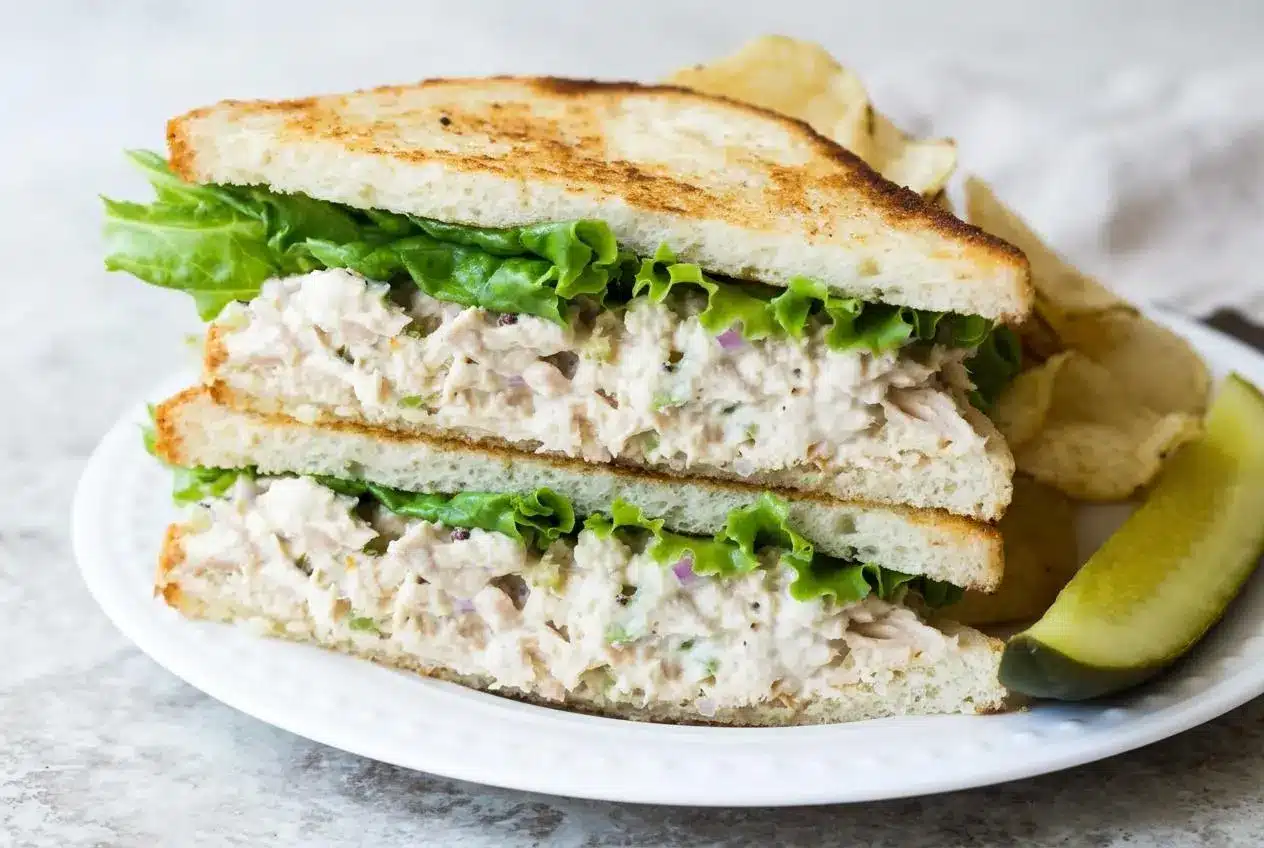
This tuna salad recipe is a creamy, crunchy classic you can make in 5 minutes with pantry staples, and it works beautifully for sandwiches, wraps, or crackers.
This is the kind of lunch recipe that earns a permanent spot in the fridge rotation. You get savory tuna, crisp celery, a little bite from red onion, and just enough relish and lemon to keep it bright.
What I like most is how easy it is to adjust the texture without changing the soul of the salad. A little chunky, extra creamy, straight from the bowl with crackers, it all works. The bowl disappears fast.
Drain the tuna really well before you start, because that one small step makes the whole salad taste richer instead of loose and watery.
Ingredients
This ingredient list is short, familiar, and very forgiving, which is exactly why this salad works so well for quick lunches.
- 4 (5-ounce) cans tuna packed in water drained
- 1 cup mayonnaise or less to taste
- 1/3 cup celery finely chopped (about 1 rib)
- 2 tablespoons red onion minced, about 2 small slices
- 2 tablespoon sweet pickle relish
- 1 tablespoon lemon juice
- 1 clove garlic minced
- salt and freshly ground black pepper
Which canned tuna gives the best texture
If you want a firmer, less mushy salad, I personally reach for solid white albacore packed in water. It stays chunkier when mixed and gives you that classic deli-style bite. Yellowfin is a nice middle ground with a milder texture, while skipjack is usually softer, stronger in flavor, and often easier on the budget. All three work here, but albacore usually gives the cleanest texture.
How much mayonnaise makes it creamy or chunkier
The mayo line gives you room to choose your own texture, and that matters more than people think. Start with less if you like distinct flakes of tuna and a lighter feel. Add more if you want the salad smoother and more scoopable for sandwiches. I usually begin modestly, stir, then decide. Chunky looks lightly coated and holds its shape. Creamier looks silkier and spreads more easily.
I’ve found that starting small is the easiest way to stay in control, especially if your relish is juicy or your tuna still holds a bit of moisture.
How to Make tuna salad recipe
I add the tuna to a medium bowl, then mix in the mayonnaise, celery, onion, relish, lemon juice, and garlic until everything is evenly combined. I like to stir gently here so the tuna keeps some texture instead of turning into paste. You want the celery and onion distributed through the bowl, with the dressing coating everything without drowning it.
I season the salad with salt and freshly ground black pepper to taste, then serve it right away or cover it and chill it until I’m ready to eat. If you’re serving it immediately, it will taste fresh and bright. If you chill it first, the flavors settle in and the salad tastes more cohesive. Both are good, but I personally love it after a short rest.
A small deli style flavor boost
If you love that old-school deli flavor, some cooks like to add 1/2 teaspoon celery salt. That’s completely optional and outside this base version, but it can give the salad a slightly deeper savory edge without changing its classic feel.
Why restaurant tuna salad tastes richer
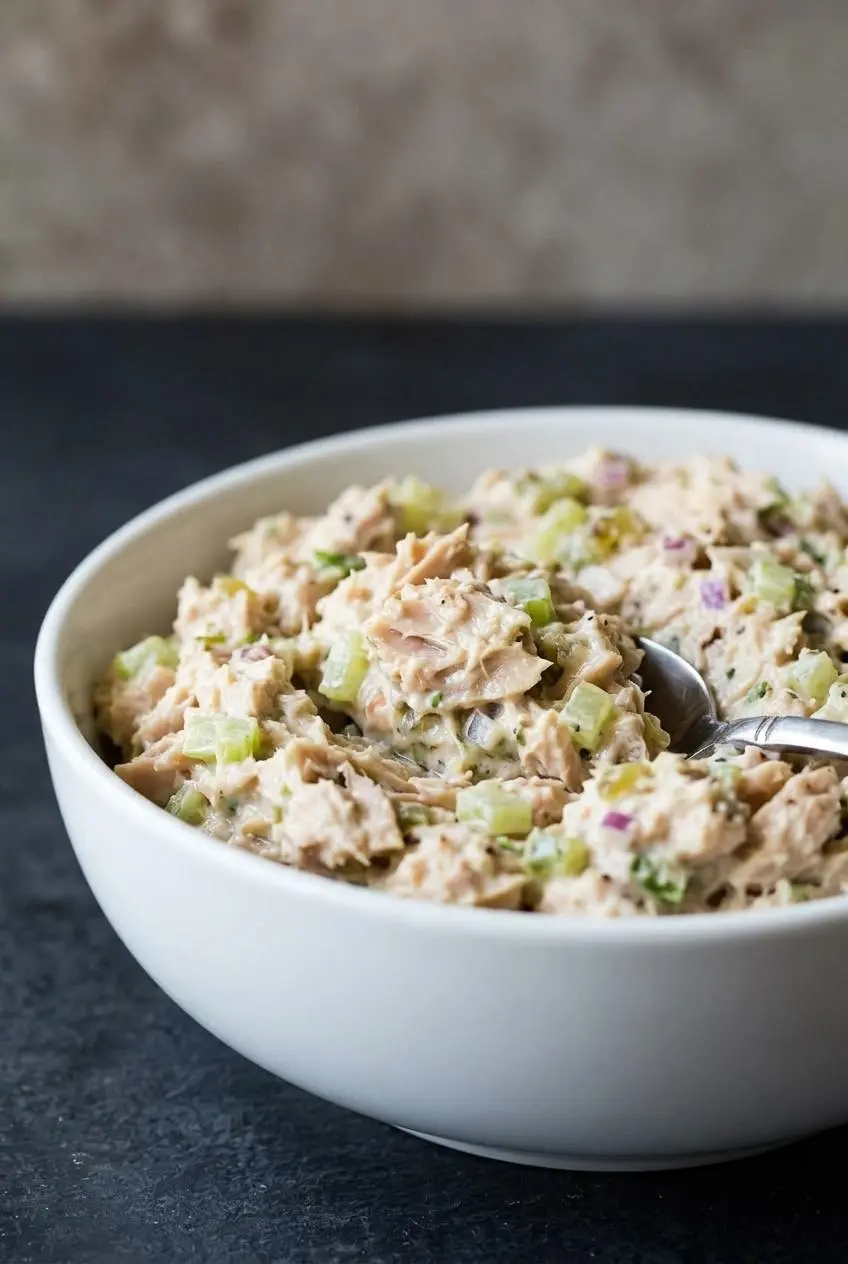
A lot of home cooks ask this, and the answer is usually texture first, seasoning second. Deli-style tuna salad often starts with very well-drained canned tuna, so the dressing clings instead of sliding off. That alone makes the salad feel richer on your tongue.
The next piece is mayo. Restaurants tend to use enough to make the salad lush, but not so much that it turns soupy. Then they season more confidently. Salt, pepper, lemon, and sometimes a little celery salt create a fuller savory flavor than plain tuna and mayo ever could.
And then there’s the chill. Even a short rest in the fridge helps the onion mellow, the garlic settle in, and the sweet relish blend into the dressing. Honestly, that quiet little pause is where the magic happens.
How to keep tuna salad from getting watery
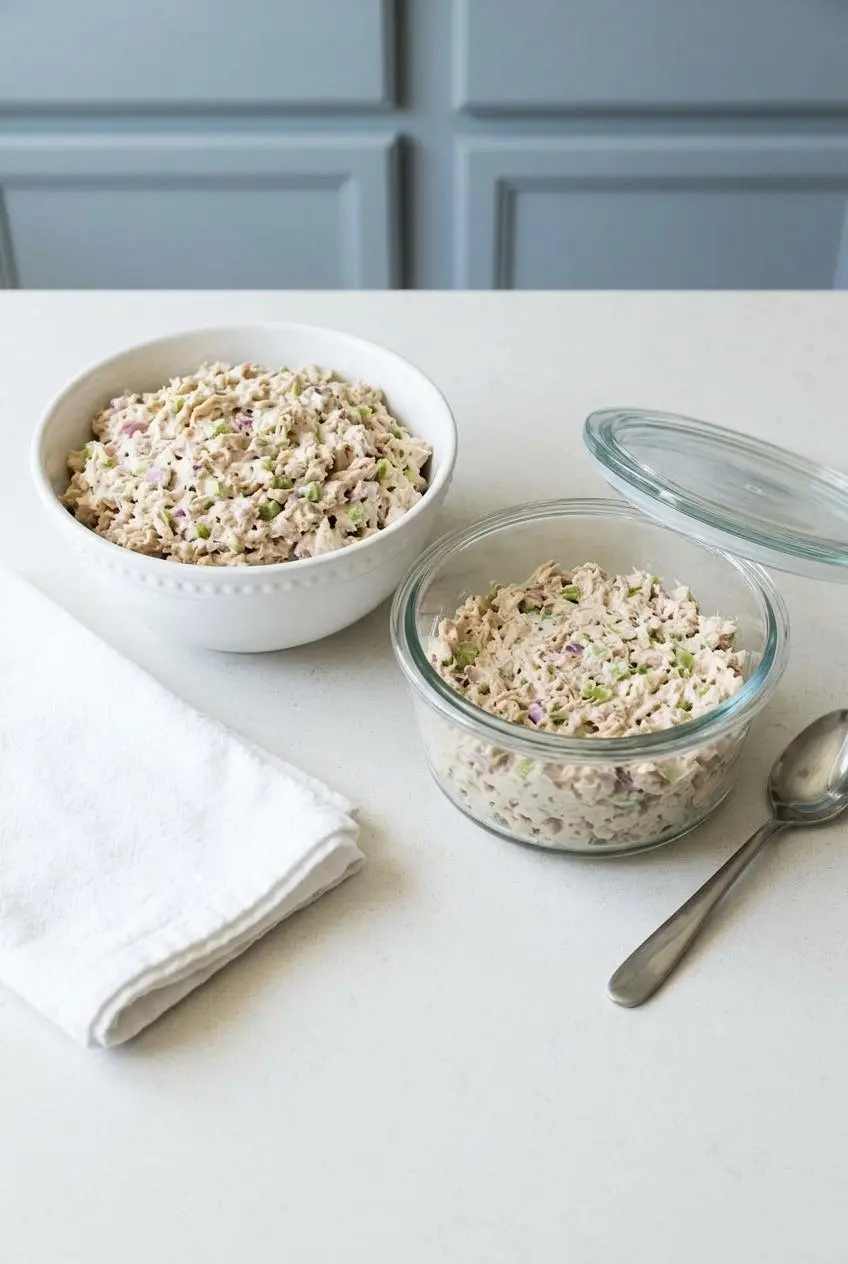
If your tuna salad turns loose or puddly, the problem usually starts before the mixing bowl. The biggest culprit is under-drained tuna. Press it well so excess liquid is gone, because watery fish will thin out the mayo fast.
The vegetables can cause trouble too. Finely chopped celery and minced onion blend better and release less obvious moisture into each bite. If your celery seems especially wet after chopping, pat it dry. Sweet relish can also add extra liquid, so this is another reason I like to start with less mayonnaise and build up only if needed.
Chilling helps the mixture firm up after stirring. If the salad already looks a little loose, give it some time in the refrigerator before you judge it. That often fixes more than people expect. If it still seems soft after chilling, the best rescue is simply using it in lettuce cups or on thick toast instead of piling it onto soft sandwich bread.
Mayo swaps that still taste good
If you want tuna salad without mayo, you’ve got good options, but each one changes the personality a bit.
Plain Greek yogurt gives you a tangier, lighter salad with a creamy texture that still feels familiar. Mashed avocado makes the salad rich and soft with a fresh, buttery finish, and if you like that direction, this mashed avocado substitute is a great example of how creamy a mayo-free salad can be. Hummus adds body and a savory, slightly earthy flavor. A vinaigrette-style dressing makes the salad looser and brighter, but it won’t have that classic creamy deli feel.
For fridge texture, Greek yogurt and hummus usually hold up best. Avocado tastes great but can darken over time. Vinaigrette is best when you want a lighter lunch and don’t mind a less traditional texture.
The best ways to serve it without a soggy lunch
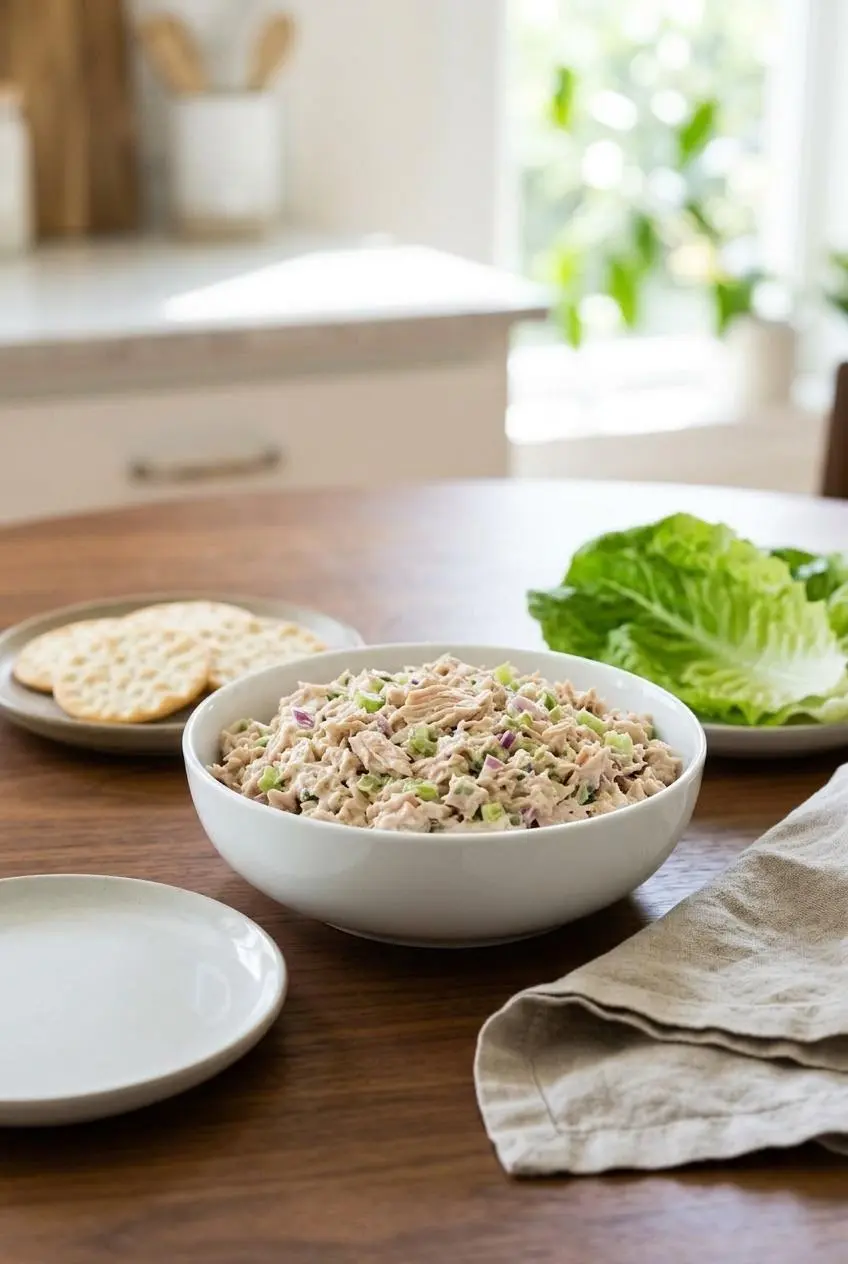
This salad is flexible, which is why it saves so many weekday lunches. Spoon it onto sandwich bread, tuck it into wraps, melt it under cheese for a tuna melt, or pile it into lettuce wraps for something crisp and cold.
It’s also great with crackers, stuffed into tomatoes, or scooped into avocado halves when you want lunch to feel a little fancier than it really is. And if you’re in a use-what-you-have mood, you can fold it into cooked pasta for a quick tuna pasta salad idea.
For meal prep, pack the tuna salad separately from bread or crackers so everything stays fresh instead of soggy by noon. For tuna melts, I like a sturdy bread that can handle the creamy filling without giving up halfway through lunch.
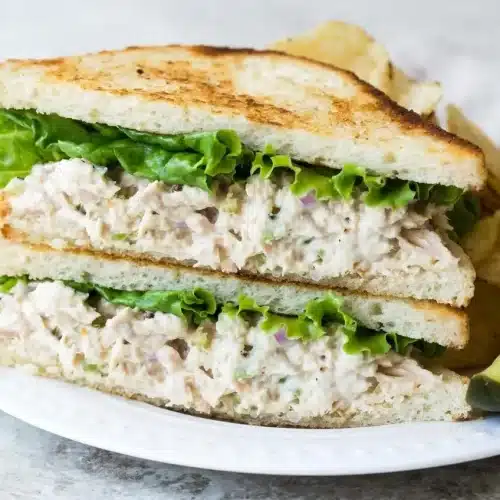
Tuna Salad Recipe

Equipment
- Medium bowl
Ingredients
- 4 (5-ounce) cans tuna packed in water drained
- 1 cup mayonnaise or less to taste
- 1/3 cup celery finely chopped (about 1 rib)
- 2 tablespoons red onion minced, about 2 small slices
- 2 tablespoon sweet pickle relish
- 1 tablespoon lemon juice
- 1 clove garlic minced
- salt and freshly ground black pepper
Instructions
- I add the tuna to a medium bowl, then mix in the mayonnaise, celery, onion, relish, lemon juice, and garlic until everything is evenly combined.
I like to stir gently here so the tuna keeps some texture instead of turning into paste. You want the celery and onion distributed through the bowl, with the dressing coating everything without drowning it. - I season the salad with salt and freshly ground black pepper to taste, then serve it right away or cover it and chill it until I’m ready to eat.
If you’re serving it immediately, it will taste fresh and bright. If you chill it first, the flavors settle in and the salad tastes more cohesive. Both are good, but I personally love it after a short rest.
Notes
Nutrition
Conclusion
This is the kind of tuna salad you can make on autopilot once you’ve done it once: creamy, crunchy, savory, and ready fast. The big win is that it tastes classic without needing a long ingredient list.
If you remember two things, drain the tuna well and add the mayonnaise to taste. And if you want a deli-style nudge, that optional celery salt is a nice little trick. Hope it becomes one of your easy lunch staples.
FAQ
What can I substitute for mayonnaise in tuna salad?
Greek yogurt is the closest swap if you still want a creamy texture, though it tastes tangier. Mashed avocado is rich and smooth, hummus gives the salad more body, and a vinaigrette makes it lighter and less creamy. Pick the one that matches how classic or how fresh you want the salad to feel.
What is the best type of tuna for tuna salad?
Solid white albacore is usually the best pick for a chunkier tuna salad because it stays firm when mixed. Skipjack is softer and more budget-friendly, while yellowfin lands somewhere in the middle. Water-packed tuna keeps the flavor cleaner here, and oil-packed tuna can work too, though it may need less mayo.
How long can I store homemade tuna salad in the refrigerator?
Stored in an airtight container and refrigerated promptly, homemade tuna salad is generally good for 3 to 4 days. For best texture, it’s usually nicest in the first couple of days. Give it a quick stir before serving if it settles. For general food safety guidance, keep tuna salad cold and don’t leave it out for more than 2 hours.
What are the best things to add to a classic tuna salad?
For richness, chopped hard-boiled eggs are a popular add-in. For crunch, diced apple or bell pepper work well. Dill pickles change the flavor from sweet to more savory, and fresh herbs like dill or chives brighten the whole bowl. Just keep additions small so the tuna still leads.
How do I prevent my tuna salad from becoming watery?
Drain the tuna very well, chop the vegetables finely, and start with less mayo than you think you need. If the salad still seems loose, chill it before serving so it can firm up. That simple pause helps a lot.
Is tuna salad better with sweet or dill relish?
It depends on the style you want. Sweet relish gives the salad that classic deli-style flavor with a little sweetness, while dill relish tastes sharper and more savory. Both work nicely with lemon and onion, so this one really comes down to personal taste.