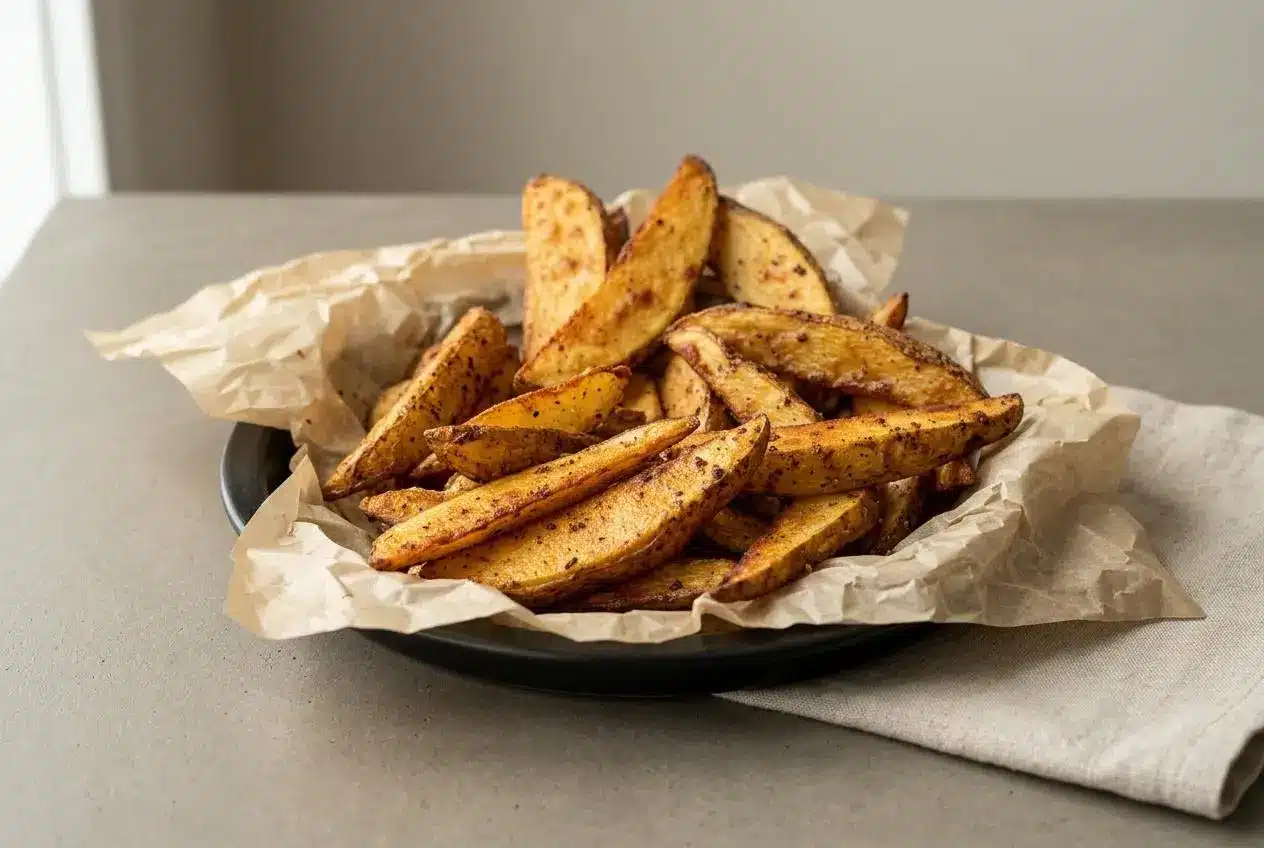
Thick-cut Russet potato wedges become crisp and blistered outside with soft, fluffy centers when roasted at 425°F in a single layer. A light coating of oil, paprika, and steak seasoning delivers steakhouse-style flavor without deep frying.
These steak fries bring together a golden crust and steamy baked-potato interior in 45 minutes. The key is keeping the wedges even, dry, and well spaced.
They’re hearty enough for dinner, yet easy enough for a weeknight side. That first crunchy edge is worth the wait.
Set the oven rack in the middle position so the wedges brown steadily without scorching at the tips.
What Are Steak Fries and Why Cut Thickness Matters
Steak fries are wide potato wedges or thick planks, cut to give you more tender potato in every bite than a skinny fry. Their broad sides brown against the pan while the thicker center softens into a fluffy, baked-potato texture.
Compared with shoestring fries, which are narrow strips designed mostly for crunch, steak fries have a sturdier bite and more contrast between the crisp exterior and soft interior. The larger cut also holds up well to ketchup, steak sauce, garlic aioli, and rich pan juices.
Steakhouses made thick-cut wedges a natural partner for grilled meat because they don’t disappear beneath a juicy steak or a bold sauce. For a thinner bistro-style side, try classic steak frites; these wedges are the heartier, more potato-forward option.
For this method, cut each potato into about 12 wedges. An 8-wedge cut creates a thicker, softer center, while 12 wedges offer more browned ridges and a better balance of crust and fluff.
Key Ingredients and the Best Potatoes for Steak Fries
Each ingredient supports a distinct part of the finished fries: Russets create a fluffy center, oil encourages browning, paprika adds warm color, and steak seasoning brings savory depth.
- 1 lb. russet potatoes
- 1 Tbsp cooking oil
- 1/2 Tbsp paprika
- 1/2 Tbsp steak seasoning
Russet potatoes supply the structure here. Their dry, starchy flesh turns tender as it roasts, while the outside has a better chance to crisp. The oil carries heat over the wedge surfaces and helps the paprika and steak seasoning cling evenly.
I leave the skins on after a thorough wash because the rough edges brown beautifully and give each wedge a little more character.
Why High-Starch Russets Excel
Russets have a high starch content and relatively low moisture, which is exactly what thick oven fries need. As the wedges roast, the starches soften and create a light, floury interior instead of a wet or gummy one.
Waxy potatoes, including many red and new potatoes, contain more moisture and hold their shape more firmly. They can roast well, but they tend to produce a denser center and less dramatic crust in this particular thick-cut style.
Selecting Oil and Seasoning for High Heat
Choose a cooking oil that handles oven heat comfortably, such as avocado oil, vegetable oil, or light olive oil. The oil should coat the wedges lightly rather than pool in the bowl, since excess oil can make the surfaces greasy before they crisp.
Paprika brings deep reddish color and a gentle smoky warmth. Steak seasoning adds salt, pepper, garlic, and savory spice, so the fries taste substantial enough to sit beside a steak without needing extra seasoning at the table.
How to Make Crispy Steak Fries in the Oven
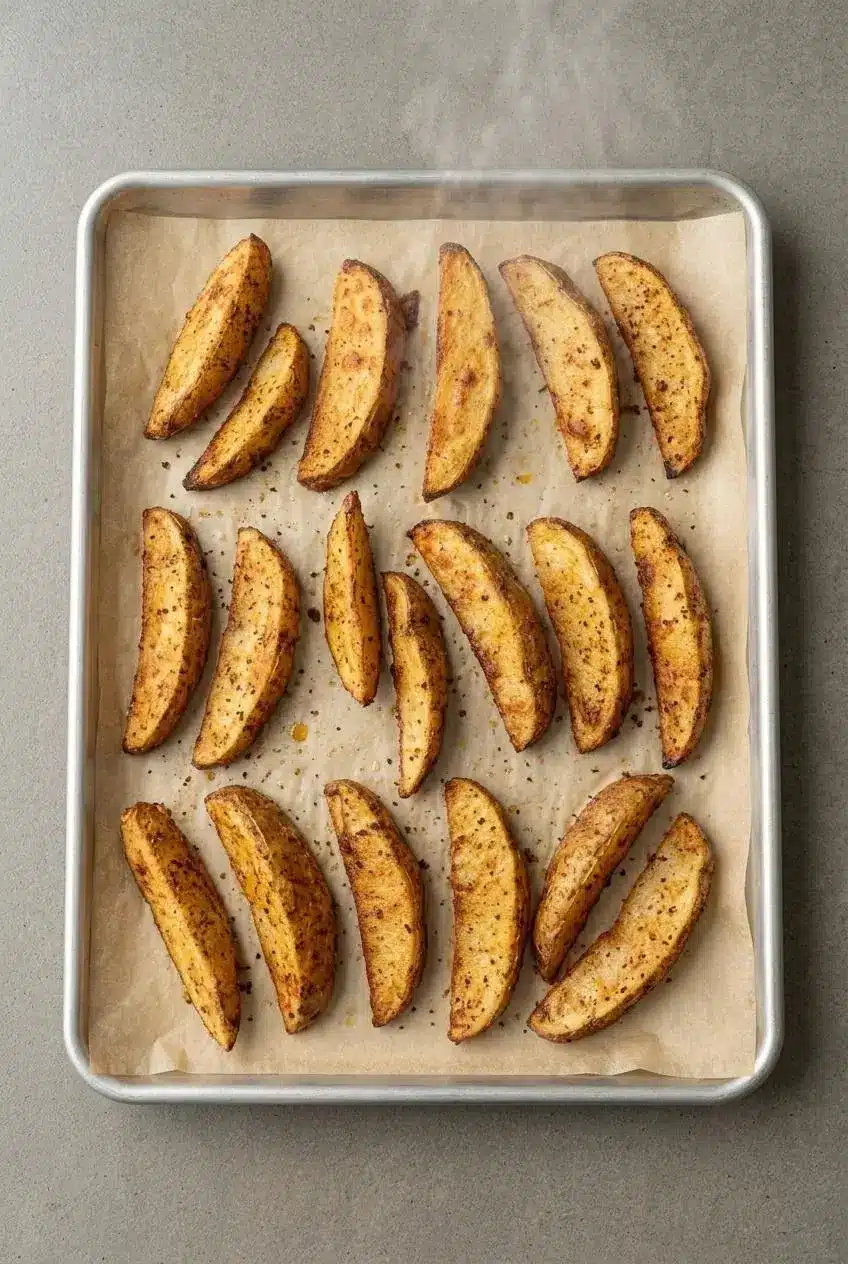
Uniform cutting and steady high heat make the difference between deeply browned wedges and unevenly cooked potatoes. Keep the wedges in one layer so hot air can reach their exposed sides.
- Heat the oven to 425°F, scrub the potatoes well, then cut each one lengthwise into quarters and divide every quarter into three wedges.
Aim for about 12 similarly sized wedges per potato so the narrow ends do not brown long before the thick centers soften. - Put the wedges in a large bowl with the cooking oil, paprika, and steak seasoning, then toss until every surface is coated.
The spices should form an even reddish layer with no dry patches hiding between the wedges. - Arrange the seasoned wedges in one layer on a parchment-lined baking sheet and roast for 35 minutes, turning them once at about the 20-minute mark.
Listen for a steady sizzle before flipping, then look for deep golden ridges and a fork that slides smoothly into the thickest piece. - Move the hot wedges to plates and serve right away.
The crust is at its best when the fries are still crackling at the edges and the centers are soft and steamy.
How to Cut Uniform Wedges
Start by placing a washed potato lengthwise on a stable cutting board. Slice it in half lengthwise, then cut each half lengthwise again to make four long quarters. Cut each quarter into three wedges, keeping the knife angle consistent as you work.
Try to give every wedge a similar thick end and narrow end. Uneven wedges are the usual reason one piece burns at the tip while another stays firm in the middle. If one wedge looks much thinner than the rest, set it near the center of the pan where it receives slightly gentler heat.
Baking and Flipping for Golden Crusts
At the 20-minute mark, the wedges should release from the parchment more easily than they did at the start. Turn each piece once, placing its paler side down so it can brown during the remaining bake time.
Don’t keep flipping after that. The contact side needs uninterrupted time to develop a crust. The fries are ready when the ridges are deeply golden, the skins look lightly blistered, and a wedge feels surprisingly light when lifted with tongs.
Pro Tips to Avoid Soggy Oven Fries
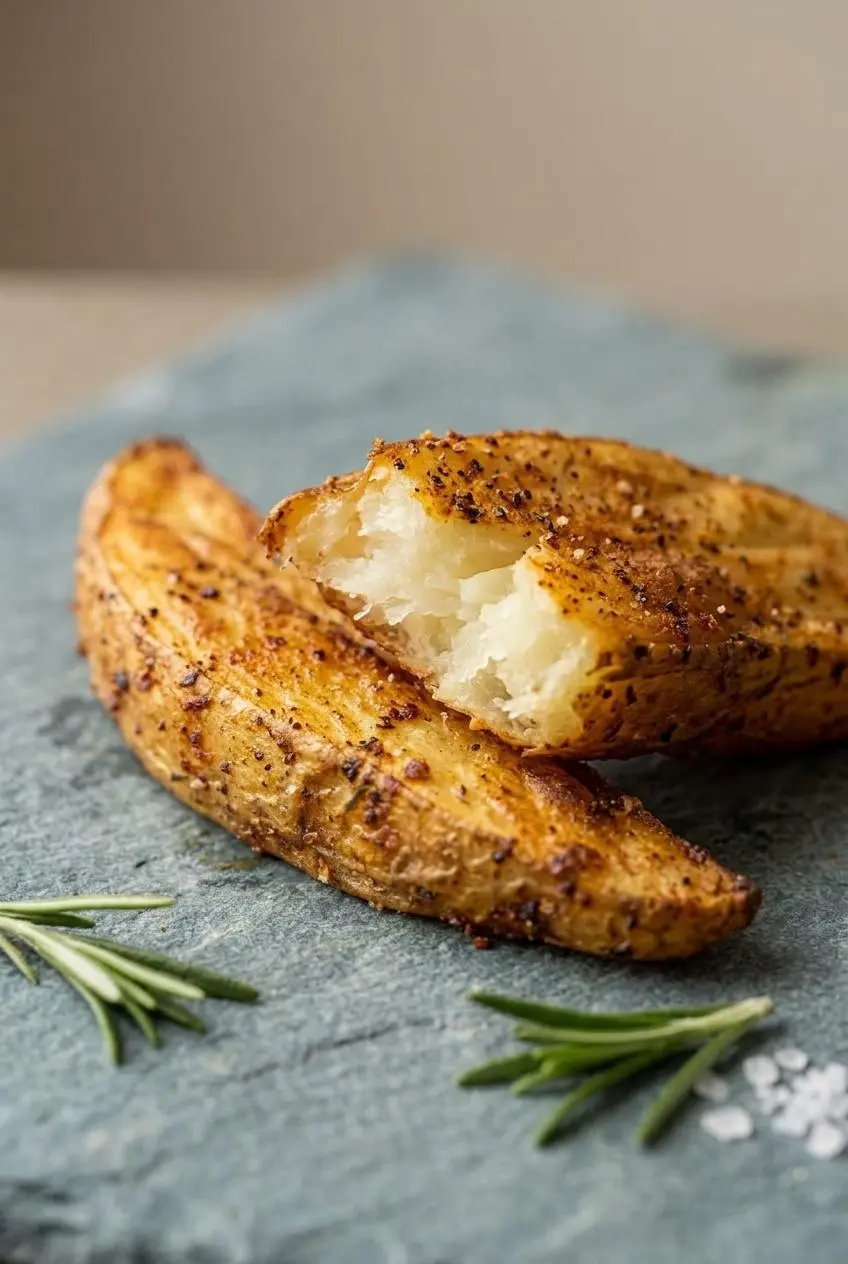
Most soft oven fries come down to moisture or crowding. These small adjustments help the wedges roast instead of steam.
- Dry the cut potatoes thoroughly: After cutting, pat the wedges with a clean kitchen towel before adding oil. Surface water creates steam, which softens the crust and can prevent seasoning from sticking.
- Give every wedge room: Leave space between the potatoes rather than letting them touch. When wedges crowd together, moisture gets trapped and the fries turn pale and limp.
- Use a hot baking sheet for more bottom crust: Preheating the sheet pan in the oven gives the potatoes immediate contact heat. Handle the hot pan carefully and arrange the wedges with enough space to keep airflow moving.
- Wait to flip: Turning too early can tear the forming crust. Let the first side brown until the wedges release easily.
- Watch thin tips near the end: If the tips darken faster than the thick centers, move the pan slightly lower in the oven for the final stretch rather than raising the heat.
Flavor Variations and Cooking Method Alternatives
The paprika and steak-seasoning version is savory and versatile, but the finished wedges also welcome a few optional finishing touches. Keep these additions outside the main method so the original flavor stays intact.
Crispy Air Fryer Steak Fries
For an air fryer version, cook the seasoned wedges in a single layer at 390°F for 18 to 22 minutes. Shake the basket halfway through so the wedges brown on multiple sides, and avoid stacking them or the crust will soften.
Thick wedges need more room than air fryer french fries, so cook in batches if needed. They’re done when the edges are blistered and the thickest pieces feel tender when pierced.
Garlic Herb and Parmesan Finish
For garlic Parmesan steak fries, toss the piping-hot baked wedges with finely grated Parmesan, minced garlic or garlic powder, and chopped fresh parsley. The residual heat wakes up the garlic and herbs without scorching them, while the cheese clings to the crisp edges.
For a spicier direction, use a Cajun-style seasoning blend or add smoked chili seasoning after baking. Choose one bold finish at a time so the potato flavor still comes through.
Serving Ideas, Dips, and Proper Reheating
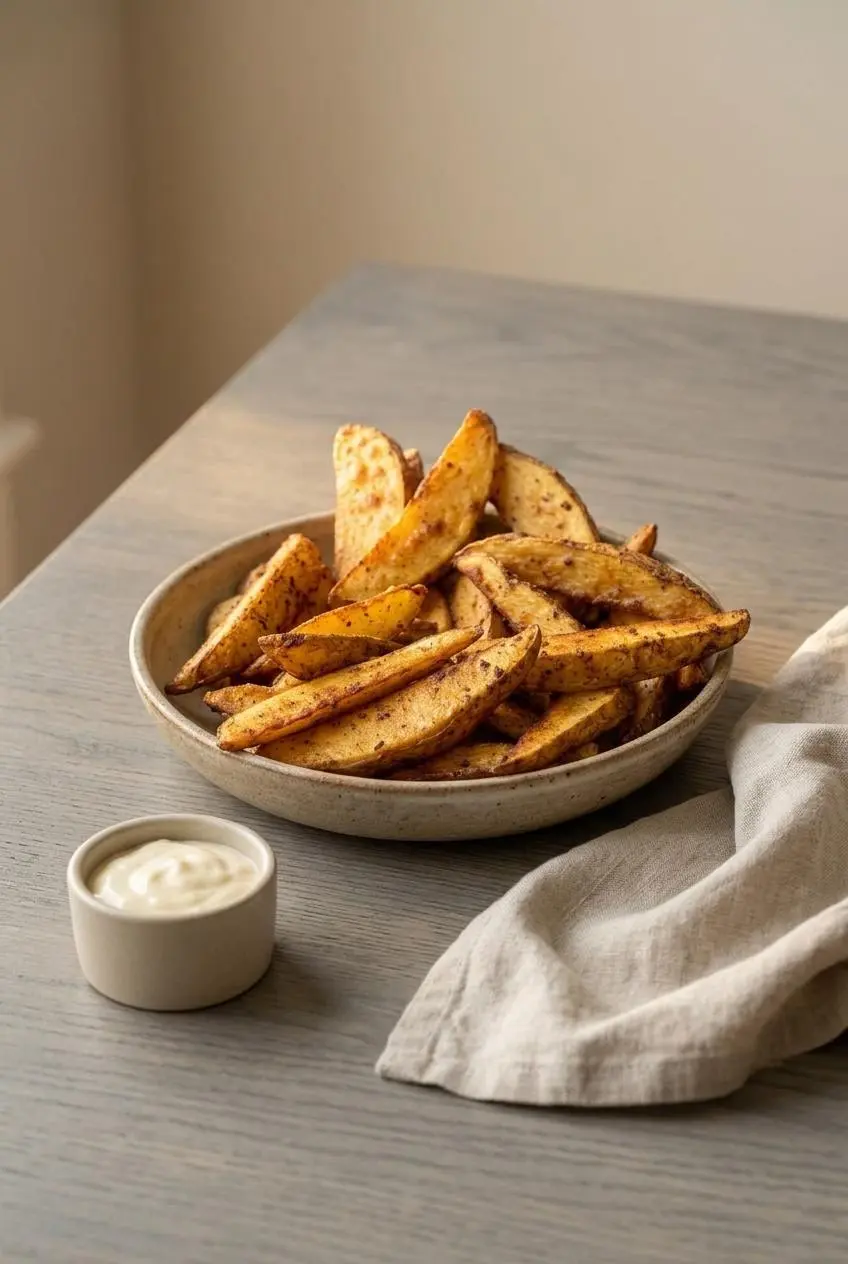
Serve these wedges with a seared steak, a smash burger, or a hearty sandwich when you want a side that can handle a full dinner plate. They pair especially well with marinated flank steak and a sharp, peppery dipping sauce.
- Steakhouse plate: Add garlic aioli, classic steak sauce, or a peppery mayonnaise for dipping.
- Burger night: Serve with comeback sauce or a tangy remoulade that cuts through the rich potato interior.
- Loaded pub-style wedges: Top hot fries with melted sharp cheddar, sliced scallions, and crumbled bacon for a shareable plate.
Let leftover wedges cool before transferring them to an airtight container and refrigerating them promptly. For food handling, cooked leftovers should be chilled within two hours, kept at 40°F or below, and used within three to four days for safe leftover storage.
Skip the microwave if you want crisp edges, since it softens the crust and can make the centers gummy. Reheat the wedges in a hot oven or air fryer in a single layer until hot throughout and crackling again.
Conclusion
Great homemade wedges come from a few reliable habits: choose Russets, dry them well, cut them evenly, and give every piece room to brown.
With a deeply golden crust, fluffy center, and savory steakhouse seasoning, these fries turn a regular dinner into something a little more satisfying.
Frequently Asked Questions
What Is the Difference Between Steak Fries and Regular French Fries?
Steak fries are much thicker than regular French fries and are usually cut into wide wedges or broad planks. They have a soft, pillowy interior like a baked potato, while thin fries focus more on an all-over crunch.
Why Are My Baked Steak Fries Soggy Instead of Crispy?
Soggy wedges usually come from surface moisture, a crowded pan, or insufficient oven heat. Dry the cut potatoes well, roast at 425°F, and leave space between the pieces so steam can escape.
Do I Need to Soak or Boil Potatoes Before Making Steak Fries?
No. This method uses raw Russet wedges, thoroughly dried and roasted at 425°F for 35 minutes. The high heat and single-layer arrangement create crisp edges while the thick centers become tender.
What Is the Best Way to Reheat Leftover Steak Fries?
Use a hot oven or air fryer and arrange the wedges in one layer so the crust can crisp again. Avoid the microwave when possible, since it tends to leave the outside limp and the potato center overly soft.
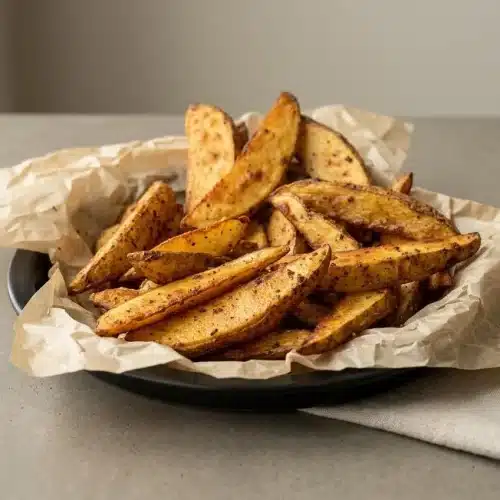
Steak Fries

Equipment
- Parchment-lined baking sheet
- large bowl
Ingredients
- 1 lb. russet potatoes
- 1 Tbsp cooking oil
- 1/2 Tbsp paprika
- 1/2 Tbsp steak seasoning
Instructions
- Heat the oven to 425°F, scrub the potatoes well, then cut each one lengthwise into quarters and divide every quarter into three wedges. Aim for about 12 similarly sized wedges per potato so the narrow ends do not brown long before the thick centers soften.
- Put the wedges in a large bowl with the cooking oil, paprika, and steak seasoning, then toss until every surface is coated. The spices should form an even reddish layer with no dry patches hiding between the wedges.
- Arrange the seasoned wedges in one layer on a parchment-lined baking sheet and roast for 35 minutes, turning them once at about the 20-minute mark. Listen for a steady sizzle before flipping, then look for deep golden ridges and a fork that slides smoothly into the thickest piece.
- Move the hot wedges to plates and serve right away. The crust is at its best when the fries are still crackling at the edges and the centers are soft and steamy.