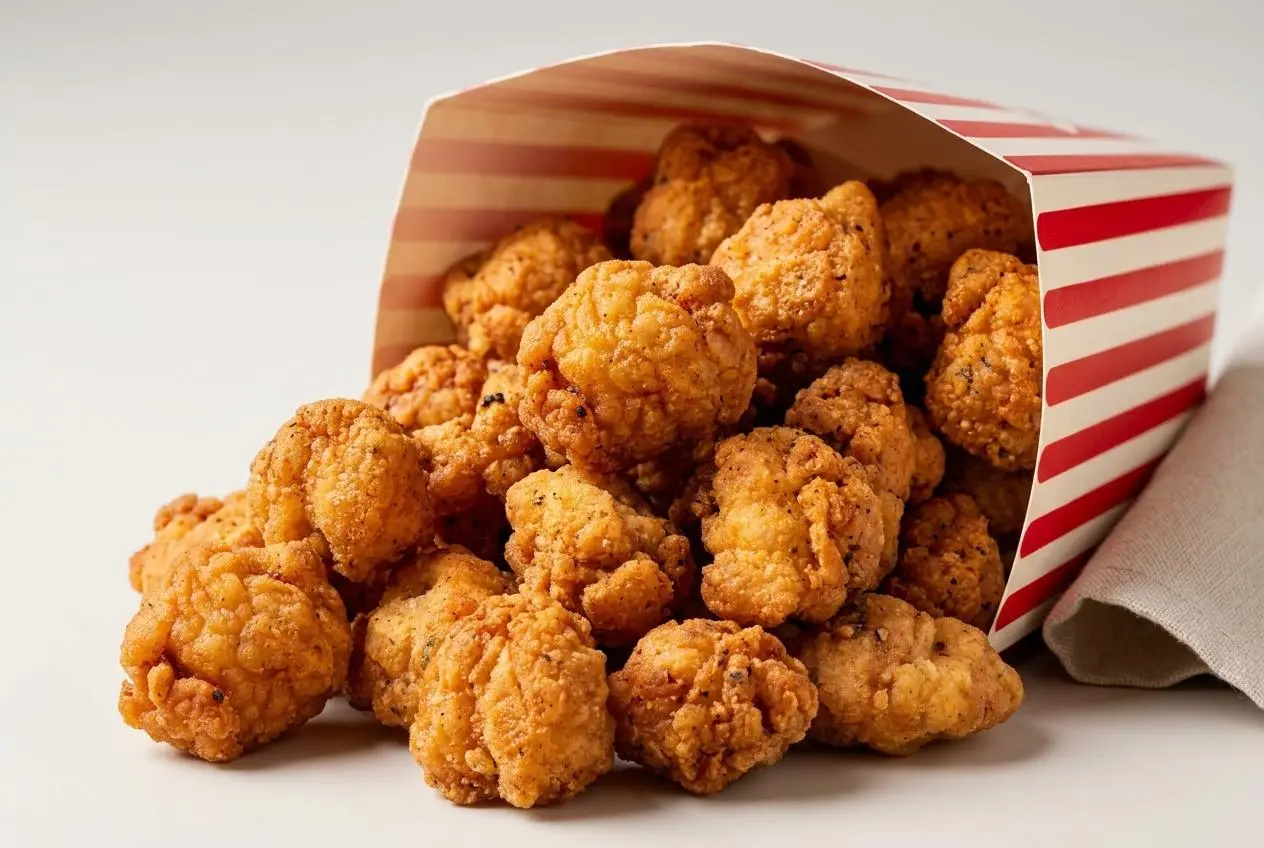
Homemade popcorn chicken uses tender bite-sized chicken cubes, a seasoned buttermilk marinade, and a flour-cornstarch coating fried at 350°F for 2 to 2.5 minutes until golden and crunchy.
This popcorn chicken delivers the savory aroma and crisp little crags you want from a fast-food-style snack, with juicy chicken tucked inside every bite.
The buttermilk keeps the chicken tender, while the seasoned coating gives it a bold, restaurant-style crunch. The clumpy breading trick makes all the difference.
Set out a wire rack before frying so each batch stays crisp instead of steaming itself soft.
Essential Ingredients and the Secret Spice Blend
Every component has a job here: the marinade brings moisture and seasoning, the egg helps the coating cling, cornstarch creates brittle crunch, and the spice blend builds warm, savory flavor.
Chicken
- 500g / 1lb chicken breast, skinless boneless, tenderloin or boneless thighs
Buttermilk marinade
- 3/4 cup buttermilk
- 1 1/2 tsp cooking salt / kosher salt
- 1 large egg (~50 – 55g, 2 oz in shell)
Popcorn Chicken Breading
- 1 1/2 cups flour, plain / all purpose
- 1/2 cup corn flour / cornstarch
KFC 11 Secret Herbs and Spices
- 1 tsp cooking salt / kosher salt
- 1/2 tsp celery salt
- 1 tsp black pepper
- 1 tsp regular paprika
- 1 tsp dried thyme, crushed with fingers to make it finer
- 1 tsp dried oregano, crushed with fingers to make it finer
- 3/4 tsp onion powder
- 2 tsp garlic powder
- 1/2 tsp mustard powder
- 1/2 tsp ginger powder
- 1/4 tsp cayenne pepper, optional
To fry
- 2 1/2 – 3 1/2 cups canola oil (2.5 cm / 1″ depth), or vegetable or peanut oil
Dipping sauce suggestions
- 1/2 batch Honey mustard dipping sauce
- Ketchup, tomato sauce, sweet and sour sauce, pink sauce, BBQ, any other dipping sauce you love!
Buttermilk gently seasons and tenderizes the chicken, while the egg gives the flour coating something to hold onto. Cornstarch makes the crust lighter and more brittle than flour alone. If you do not have buttermilk, combine 3/4 cup milk with 3/4 tsp vinegar or lemon juice and let it stand until slightly curdled.
I rub the thyme and oregano between my fingertips before adding them to the bowl because the herbs smell brighter and blend more evenly through the breading.
Chicken Breasts vs. Chicken Thighs
Boneless, skinless chicken breasts cut neatly into uniform 1/2-inch cubes, which helps them cook at the same pace. The buttermilk marinade keeps the lean meat pleasantly tender. Boneless thighs are a good alternative when you prefer richer flavor and a little more forgiveness if a batch runs slightly long.
Whichever cut you choose, keep the pieces close to the same size. Large chunks behave more like chicken nuggets and can leave the coating overdone before the center is ready.
The Magic of Cornstarch and Flour Blend
Flour creates structure, while cornstarch limits gluten development and gives the crust a lighter snap. Together, they fry into a golden shell that feels crisp rather than bready. The trick is not to keep the dry mix perfectly smooth.
Adding a little marinade to the flour makes tiny damp clusters. Those clusters stick to the chicken and become the rough, crunchy edges that make each bite especially satisfying.
The 11 Secret Herbs and Spices Breakdown
Celery salt brings that distinctive savory edge, paprika adds color and warmth, and garlic powder gives the coating its deep takeout-style flavor. Mustard powder and ginger add subtle sharpness, while thyme and oregano round out the aroma.
Keep the cayenne optional for a mild batch. For more heat, use extra cayenne in the spice mixture. Smoked paprika is another optional swap when you want a slightly woodsy warmth instead of regular paprika.
How to Make Popcorn Chicken
The key stages are marinating, building craggy flour clusters, and frying small batches without letting the oil cool down too much. A thermometer takes the guesswork out of the final step.
Marinade chicken
- Cut the chicken into 1.25 cm / 1/2″ cubes.
Keep the pieces even so they fry quickly and finish at the same time. - Whisk the buttermilk, salt, and egg in a bowl, then coat the chicken in the mixture and refrigerate for 1 hour.
The chicken should be fully coated, and do not marinate it for longer than 24 hours.
Prepare breading
- Combine the flour, corn flour / cornstarch, and all of the herbs and spices in a large bowl.
Break up any visible herb clumps so the seasoning distributes evenly. - Drizzle 3 tablespoons of the marinade over the flour mixture and rub it in with your fingertips.
The mixture should develop many small, uneven clumps rather than staying powdery smooth.
Prepare to cook
- Choose a heavy-based 20 cm / 8″ saucepan or small pot, or use a 24 cm / 9.5″ deep skillet only if you are comfortable frying in a wider pan.
A sturdy pan holds heat more steadily and gives you better control over the oil. - Heat the oven to 50°C/125°F for holding finished batches.
The low heat keeps the chicken warm without aggressively browning the crust further.
Breading
- Use one hand to lift chicken from the marinade and scatter it over the flour mixture, then use a spoon or dry hand to cover it with flour.
Keeping the wet and dry jobs separate prevents thick doughy buildup on your fingers. - Pull apart the chicken pieces, press the clumpy flour onto every surface, and shake away loose excess before arranging the pieces on a tray.
Each piece should look irregularly coated, with small crags attached rather than a smooth blanket of flour. - Just before each batch goes into the oil, toss those pieces lightly in the flour left on the tray.
Check that no pieces are stuck together, since joined pieces cook unevenly.
Frying
- Line a tray with paper towels and keep the oven at 50°C/125°F.
Have the tray ready before frying so the cooked chicken can drain without delay. - Pour oil into the pot until it reaches 2.5 cm / 1″ deep and heat it over medium-high heat to 180°C/350°F.
The oil should shimmer and give a gentle, steady bubble when the first chicken pieces enter. - Shake a small batch in a large-hole spider skimmer to remove loose flour, then lower it carefully into the oil and fry for 2 – 2.5 minutes.
Separate any pieces that touch, and look for a deep golden-tan crust and buoyant pieces floating near the surface. - Lift the chicken out with the spider skimmer and spread it across the lined tray before moving it to the warm oven.
Check a thick piece with a thermometer, since poultry should reach 165°F before serving. - Repeat with the remaining chicken, then serve while the coating is hot and crisp.
The finished bites should crackle lightly when broken open and reveal juicy chicken inside.
Mastering the Crispy Breading and Dredging Technique
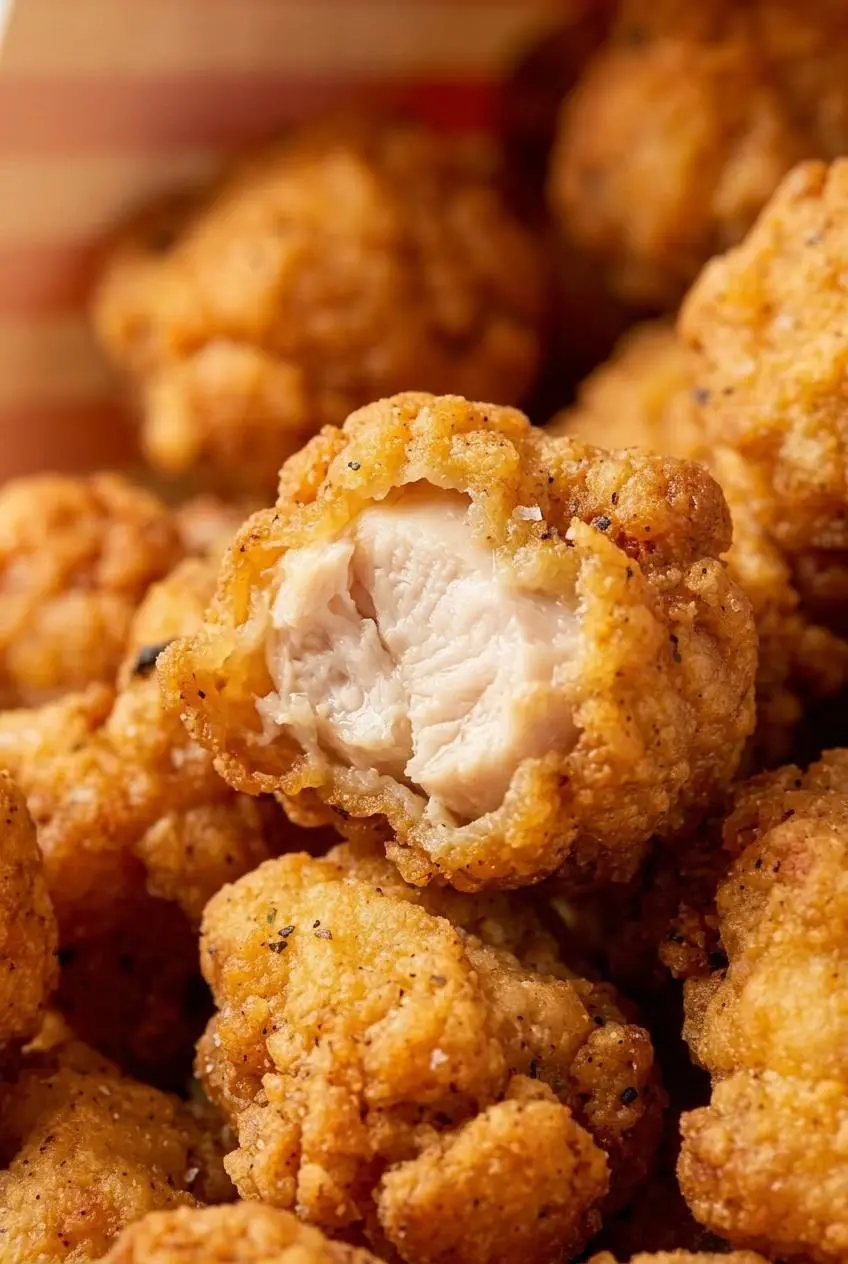
The craggy coating comes from a deliberate mess: those small flour-and-marinade clumps become crisp ridges in the oil. Skip this step and the chicken will still taste good, but the crust will be much smoother.
After mixing 3 tablespoons of marinade into the flour, use a wet hand only for transferring chicken from the bowl. Keep the other hand dry for spooning, tossing, and pressing flour onto the pieces. This two-handed rhythm keeps the coating on the chicken instead of building a glove around your fingers.
Let excess marinade drip away briefly before dredging. If the chicken arrives dripping wet, the coating can slide off in sheets. Press the flour on firmly, but do not squeeze the chicken hard enough to flatten the crisp clusters.
Air Fryer and Oven Baking Alternatives
Shallow frying gives the most classic fast-food crunch, but air frying and oven baking make a lighter version when you coat every floury patch with cooking oil spray. Expect a crisp exterior, though it will be less rugged than the fried crust.
Crispy Air Fryer Method
Arrange the breaded chicken in one layer in the air fryer basket, leaving space around each piece. Spray generously with cooking oil until no dry white flour spots remain. Cook at 400°F (200°C) for 8 to 10 minutes, shaking the basket and adding a light spray halfway through.
The pieces are ready when they look evenly golden and feel firm at the edges. Check the center of a larger bite before serving.
Oven Baked Wire Rack Technique
Set a wire rack over a rimmed baking sheet, then arrange the breaded chicken in a single layer on the rack. Spray generously with oil and bake at 400°F (200°C) for 12 to 15 minutes, until the coating is crisp and the chicken is cooked through.
The raised rack matters because hot air can circulate underneath the chicken. It prevents the bottom from sitting against moisture and turning soft.
Global Flavor Variations to Try
Keep the core method as written, then change the finish after cooking for a different direction.
- Honey smoked paprika: Toss hot fried bites with warm honey mixed with smoked paprika for a sweet, smoky finish with gentle heat.
- Taiwanese night market style: Use sweet potato starch and five-spice powder for a more delicate, crackly coating, then add fried Thai basil for an aromatic finish.
- Korean dakgangjeong style: Coat crisp chicken in a warm sweet-and-spicy gochujang glaze just before serving. For another creamy, spicy finish, try crispy bang bang chicken.
Best Homemade Dipping Sauces and Serving Ideas
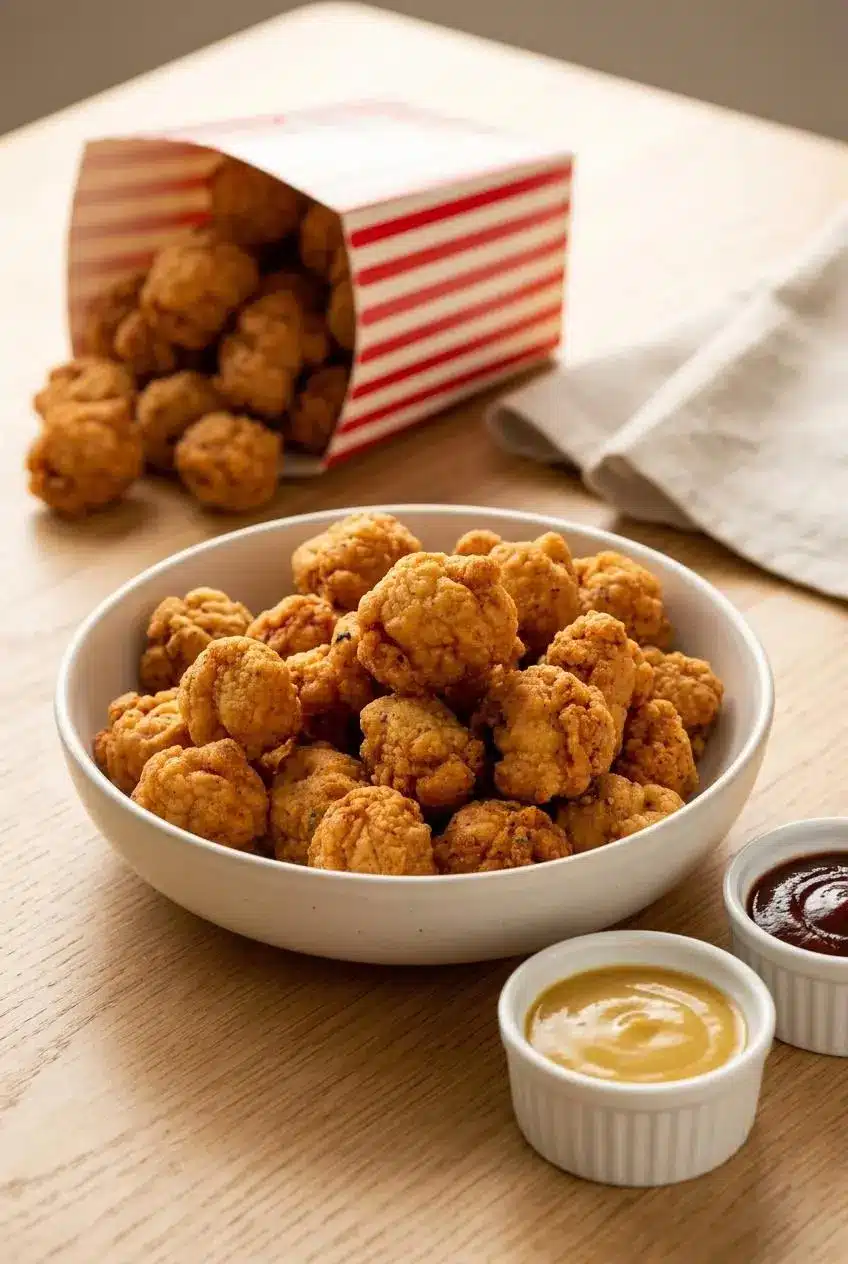
A good dip should match the chicken without covering up its seasoning. Creamy honey mustard made with Dijon mustard, mayonnaise, honey, and lemon juice is a natural choice, while smoky barbecue, garlic mayo, and sweet chili sauce all work beautifully.
- Serve the chicken in paper popcorn boxes with several dips for a game-day-style spread.
- Build comfort-food bowls with mashed potatoes, sweet corn kernels, gravy, and shredded cheddar cheese.
- Add warm bites to a fresh asian chicken salad for a cool, crunchy contrast.
- Turn leftovers into lunch with a chicken caesar wrap.
Pro Tips and Troubleshooting Common Mistakes
- Greasy coating: The oil likely cooled too much. Keep it near 350°F (180°C) and wait for the temperature to recover between batches.
- Soggy chicken: Crowding traps steam and drops the oil temperature. Fry small batches, then keep finished pieces in a single layer on a rack.
- Burnt black flecks: Loose flour is scorching in the oil. Skim crumbs with a fine-mesh strainer between batches.
- Breading falls off: Let excess marinade drip away, press the flour onto the chicken, and let the breaded pieces sit on the tray briefly so the coating can settle.
- Crust softens while waiting: Hold cooked batches on a wire rack in the 125°F (50°C) oven instead of stacking them. Steam is the enemy of crunch.
For another useful look at steady heat and batch frying, these fried chicken wings use the same practical rule: give the oil room to stay hot.
Storage and Crisp Reheating
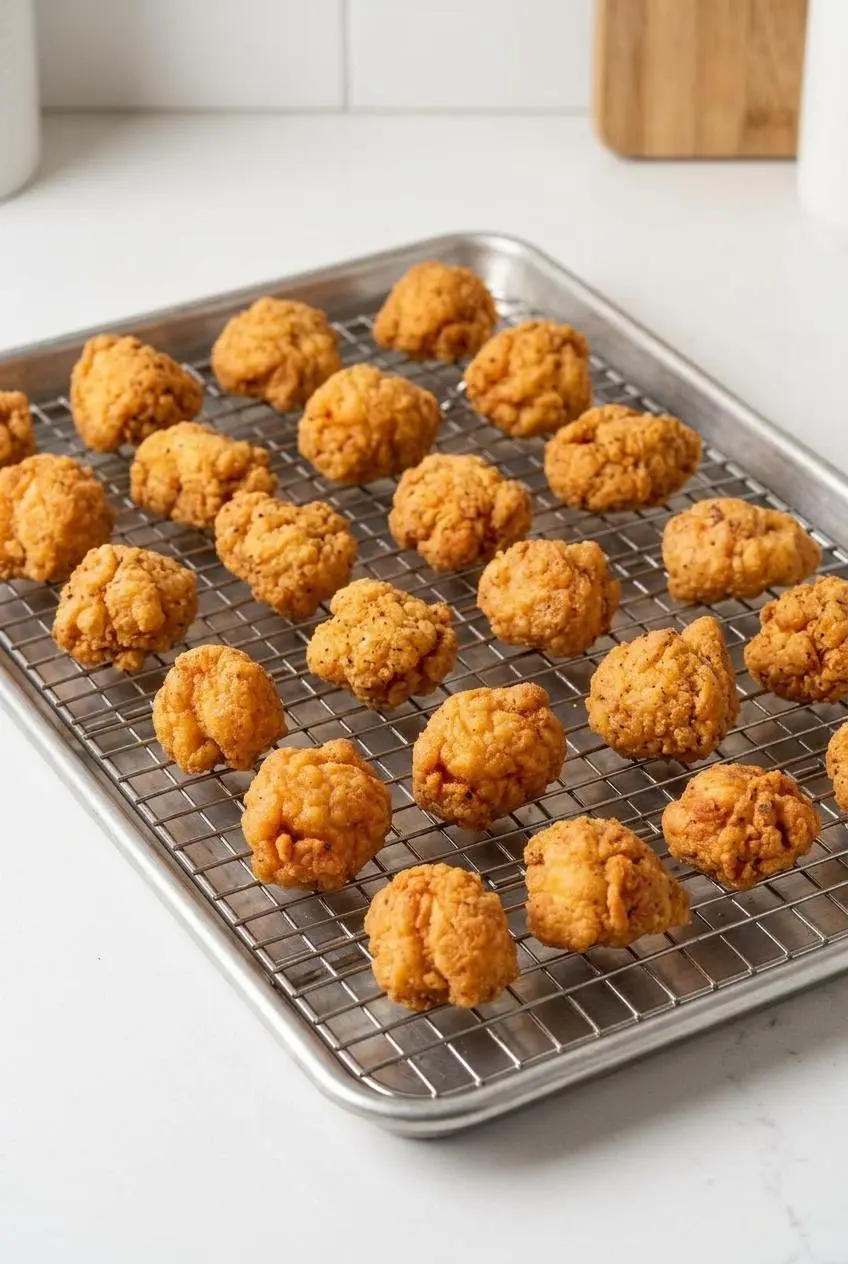
Cool leftover chicken completely, then keep it in a tightly covered container in the refrigerator. Chill leftovers promptly, and avoid sealing them while still steaming, which can soften the coating.
Keeping Leftovers Crisp
Store the chicken in a single layer when possible, with paper towel beneath it to catch excess moisture. Keep dipping sauces separate until serving so the crust does not absorb extra moisture.
For the best texture, reheat only the portion you plan to eat. The microwave warms the chicken quickly but leaves fried breading soft and chewy.
Crispy Reheating Methods That Work
Use an air fryer set to 350°F (175°C) until the coating is hot and crisp again, or place the chicken on a wire rack in a 400°F (200°C) oven. The elevated rack lets heat reach the underside rather than trapping moisture beneath the chicken.
Reheating in small batches gives the crust room to crisp. Serve immediately once the outside feels dry and crunchy again.
Conclusion
The winning combination is simple: evenly cut chicken, a seasoned buttermilk marinade, cornstarch in the coating, and oil held close to 350°F. Those little flour clusters turn into the crunchy ridges that make every bite memorable.
Serve the chicken straight from the fryer with honey mustard, barbecue sauce, or sweet chili sauce, then enjoy it while the crust is still at its loudest.
Frequently Asked Questions
What Is the Secret to Extra Crispy Popcorn Chicken?
Combine cornstarch with all-purpose flour for a lighter coating. Rub a few tablespoons of marinade into the dry mixture to make rough flour clusters, then fry small batches so the oil stays hot. Those clusters create the crisp, craggy finish.
Can I Use Chicken Thighs Instead of Chicken Breasts?
Yes. Boneless, skinless chicken thighs stay juicy and have richer flavor. Chicken breasts are easier to cut into very even 1/2-inch cubes, but either cut works well when the pieces are uniform.
How Do I Make Homemade Buttermilk if I Do Not Have Any?
Stir 3/4 teaspoon white vinegar or lemon juice into 3/4 cup milk. Let it rest for 10 minutes, until it looks slightly curdled, then use it in the marinade.
What Is the Best Way to Reheat Leftover Popcorn Chicken?
Use an air fryer or a hot oven with the chicken on a wire rack. Both methods dry and re-crisp the coating far better than a microwave, which tends to make the breading soft.
Popcorn Chicken

Equipment
- Large saucepan or pot
- Spider skimmer strainer
- Baking tray
- Food thermometer
Ingredients
Chicken
- 500 g / 1lb chicken breast, skinless boneless, tenderloin or boneless thighs
Buttermilk marinade
- 3/4 cup buttermilk
- 1 1/2 tsp cooking salt / kosher salt
- 1 large egg (~50 – 55g, 2 oz in shell)
Popcorn Chicken Breading
- 1 1/2 cups flour, plain / all purpose
- 1/2 cup corn flour / cornstarch
KFC 11 Secret Herbs and Spices
- 1 tsp cooking salt / kosher salt
- 1/2 tsp celery salt
- 1 tsp black pepper
- 1 tsp regular paprika
- 1 tsp dried thyme crushed with fingers to make it finer
- 1 tsp dried oregano crushed with fingers to make it finer
- 3/4 tsp onion powder
- 2 tsp garlic powder
- 1/2 tsp mustard powder
- 1/2 tsp ginger powder
- 1/4 tsp cayenne pepper optional
To fry
- 2 1/2 – 3 1/2 cups canola oil (2.5 cm / 1″ depth), or vegetable or peanut oil
Dipping sauce suggestions
- 1/2 batch Honey mustard dipping sauce
- Ketchup, tomato sauce, sweet and sour sauce, pink sauce, BBQ, any other dipping sauce you love!
Instructions
Marinade chicken
- Cut the chicken into 1.25 cm / 1/2″ cubes. Keep the pieces even so they fry quickly and finish at the same time.
- Whisk the buttermilk, salt, and egg in a bowl, then coat the chicken in the mixture and refrigerate for 1 hour. The chicken should be fully coated, and do not marinate it for longer than 24 hours.
Prepare breading
- Combine the flour, corn flour / cornstarch, and all of the herbs and spices in a large bowl. Break up any visible herb clumps so the seasoning distributes evenly.
- Drizzle 3 tablespoons of the marinade over the flour mixture and rub it in with your fingertips. The mixture should develop many small, uneven clumps rather than staying powdery smooth.
Prepare to cook
- Choose a heavy-based 20 cm / 8″ saucepan or small pot, or use a 24 cm / 9.5″ deep skillet only if you are comfortable frying in a wider pan. A sturdy pan holds heat more steadily and gives you better control over the oil.
- Heat the oven to 50°C/125°F for holding finished batches. The low heat keeps the chicken warm without aggressively browning the crust further.
Breading
- Use one hand to lift chicken from the marinade and scatter it over the flour mixture, then use a spoon or dry hand to cover it with flour. Keeping the wet and dry jobs separate prevents thick doughy buildup on your fingers.
- Pull apart the chicken pieces, press the clumpy flour onto every surface, and shake away loose excess before arranging the pieces on a tray. Each piece should look irregularly coated, with small crags attached rather than a smooth blanket of flour.
- Just before each batch goes into the oil, toss those pieces lightly in the flour left on the tray. Check that no pieces are stuck together, since joined pieces cook unevenly.
Frying
- Line a tray with paper towels and keep the oven at 50°C/125°F. Have the tray ready before frying so the cooked chicken can drain without delay.
- Pour oil into the pot until it reaches 2.5 cm / 1″ deep and heat it over medium-high heat to 180°C/350°F. The oil should shimmer and give a gentle, steady bubble when the first chicken pieces enter.
- Shake a small batch in a large-hole spider skimmer to remove loose flour, then lower it carefully into the oil and fry for 2 – 2.5 minutes. Separate any pieces that touch, and look for a deep golden-tan crust and buoyant pieces floating near the surface.
- Lift the chicken out with the spider skimmer and spread it across the lined tray before moving it to the warm oven. Check a thick piece with a thermometer, since poultry should reach 165°F before serving.
- Repeat with the remaining chicken, then serve while the coating is hot and crisp. The finished bites should crackle lightly when broken open and reveal juicy chicken inside.