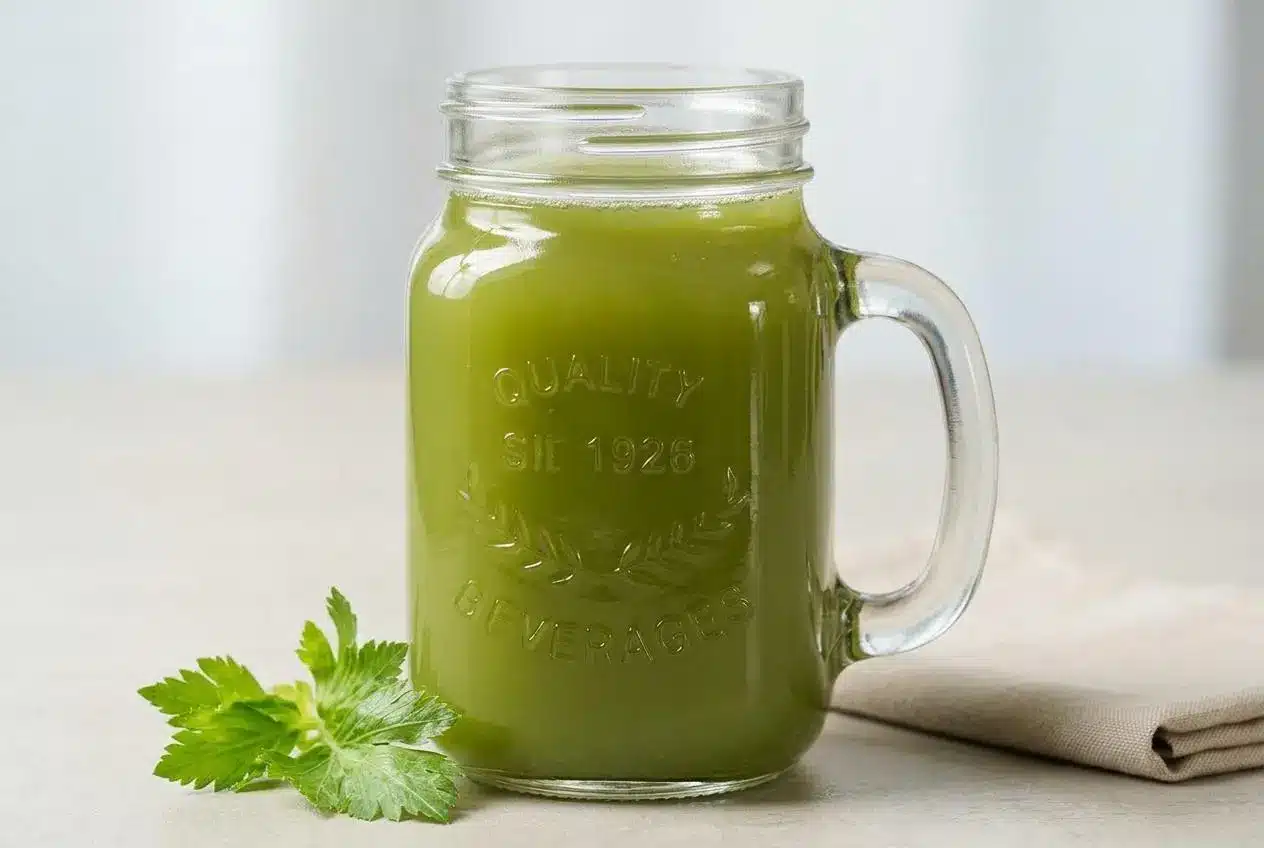
This Celery Juice Recipe is a fast way to make fresh celery juice with either a juicer or a blender. You’ll get clear prep steps, both methods, easy flavor fixes, and smart ways to use the leftover pulp.
Celery juice is a popular wellness drink, but at its core it’s simply fresh celery turned into a crisp, savory, refreshing juice. This guide keeps the process practical, approachable, and beginner-friendly.
If plain celery juice tastes a little intense at first, you’re not alone. A squeeze of lemon helps a lot.
Choose a bunch with firm stalks, bright color, and fresh-looking leaves for the cleanest flavor and the best yield.
Why You’ll Love This Celery Juice Recipe
- Two methods: You can make it with a juicer or a blender, depending on what you already own.
- No waste: The leftover celery pulp can go into soups, sauces, crackers, or the compost bin.
- Better flavor: You’ll get optional ways to soften celery’s salty, earthy edge without changing the main recipe.
- Quick prep: It takes about 8 minutes from bunch to glass.
- Helpful for beginners: The texture differences, cleanup trade-offs, and common mistakes are all covered.
Ingredients You’ll Need
Each ingredient has a job here: celery brings the fresh, savory body of the juice, while lemon can brighten the flavor and make it taste cleaner and livelier.
- 1 bunch organic celery (4 cups chopped)
- 1 lemon (optional)
Organic celery is often preferred because celery regularly appears on the Environmental Working Group’s Dirty Dozen list, but well-washed conventional celery still works if that’s what you have.
I always look for celery with tight, crisp stalks and avoid limp bunches, because older celery can taste more bitter and give you less juice.
How to Make Celery Juice (Step-by-Step)
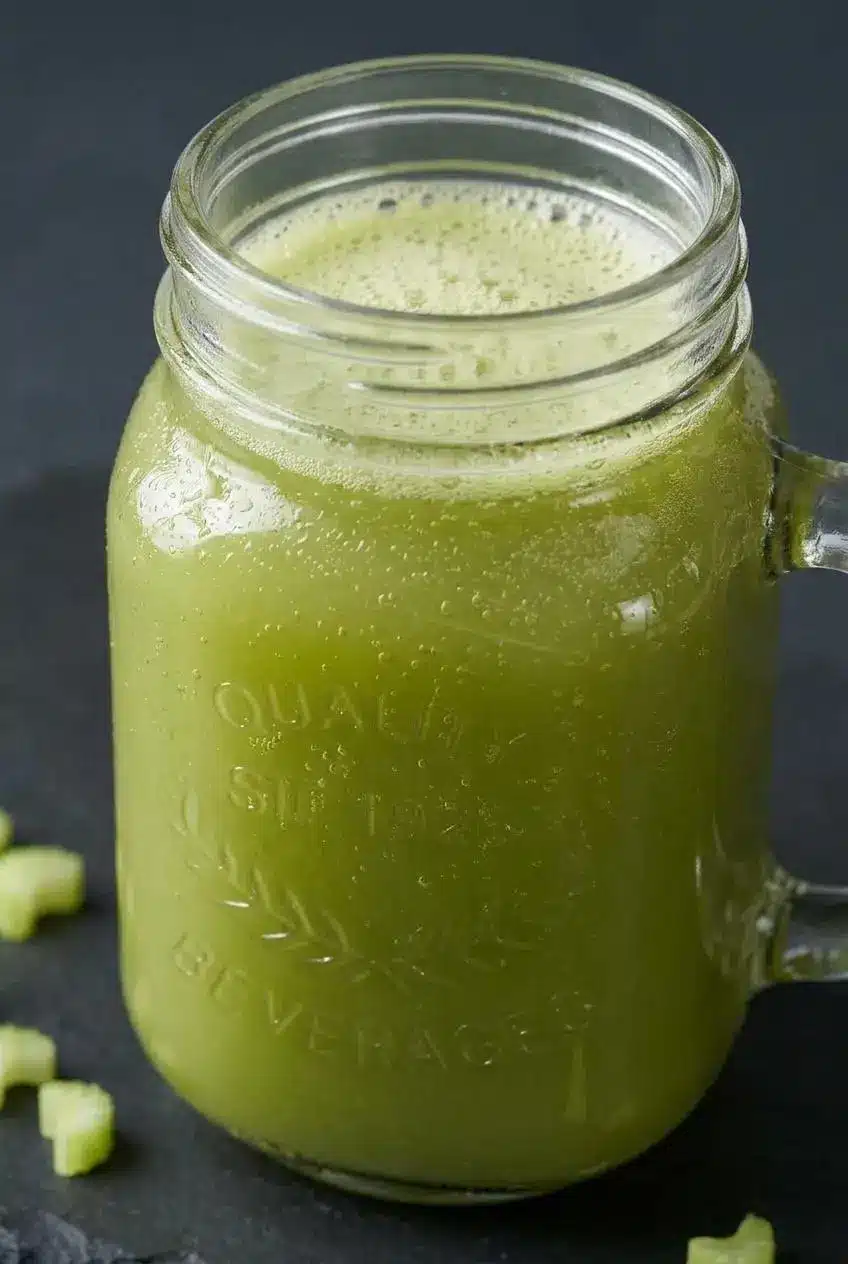
Both methods work well. A juicer gives you a smoother, higher-yield juice, while a blender is great when that’s the tool you have on hand. One large bunch usually makes about 16 oz, or 2 cups, depending on the celery and your method.
Step 1: Wash and Prep the Celery
- Cut off the root end to separate the stalks, then rinse each stalk very well under running water.
Check the inside curves where grit likes to hide, because sandy juice is a terrible surprise. - Trim away the tops and chop the stalks into 2 inch pieces.
If you remove most of the leaves, the finished juice usually tastes less bitter and a little cleaner.
Step 2: Making Juice with a Juicer
- Turn on the juicer and feed the prepared celery pieces through the chute a handful at a time.
The juice should run out pale green and fairly smooth, while the pulp comes out dry or lightly damp. - Collect the juice, then squeeze in the lemon if using.
Taste it before adding anything else so you can decide if it needs that extra brightness. - Pour and drink right away, or transfer the juice to a jar and refrigerate it.
The flavor is freshest right after juicing, with that crisp, peppery edge still intact.
Step 3: Making Juice with a Blender
- Add ¼ cup cold water to the blender, then add the chopped celery and lemon juice if using.
Starting with the water helps the blades catch the celery more easily. - Blend until the mixture looks completely broken down and smooth.
You should see a thick, frothy green puree with no large celery pieces left behind. - Set a strainer over a bowl and line it with a nut milk bag, then pour in the blended celery mixture.
This setup catches the fibrous pulp and lets the juice drip into the bowl below. - Lift the bag and squeeze firmly to press out as much liquid as possible.
A nut milk bag gives the smoothest texture, while a fine-mesh sieve may leave a little soft pulp behind. - Serve the juice immediately, or pour it into a jar and chill it for later.
Blender celery juice is often a touch cloudier than juicer-made juice, but it still tastes fresh and lively.
Juicer vs. Blender for Celery Juice: A Comparison
If you’re deciding between the two, the best choice depends on texture, cleanup, budget, and how often you make juice. Both methods can produce a healthy, refreshing drink.
| Method | Juice Yield | Texture | Cleanup Effort | Nutrient Quality | Cost of Equipment |
|---|---|---|---|---|---|
| Juicer | Usually higher | Smoother and cleaner | Depends on the machine, but parts need washing | Cold-press models are often preferred for gentler extraction, while centrifugal models are faster | Higher |
| Blender | Usually a bit lower after straining | Cloudier, sometimes slightly pulpy | Blender jar is easy, but the bag or sieve can be messier | Still nutritious, with some fine fiber often remaining after straining | Lower if you already own one |
A lot of home cooks ask whether one method is truly better. Honestly, it’s more of a trade-off. A juicer is easier if celery juice is part of your regular routine, but a blender is a perfectly workable option when you want fresh juice without buying another appliance.
Cleanup matters too. Some juicers have several parts, while a blender method adds the extra job of washing a nut milk bag or strainer. Neither is wrong. One is just less splashy.
Tips for a Better-Tasting Celery Juice
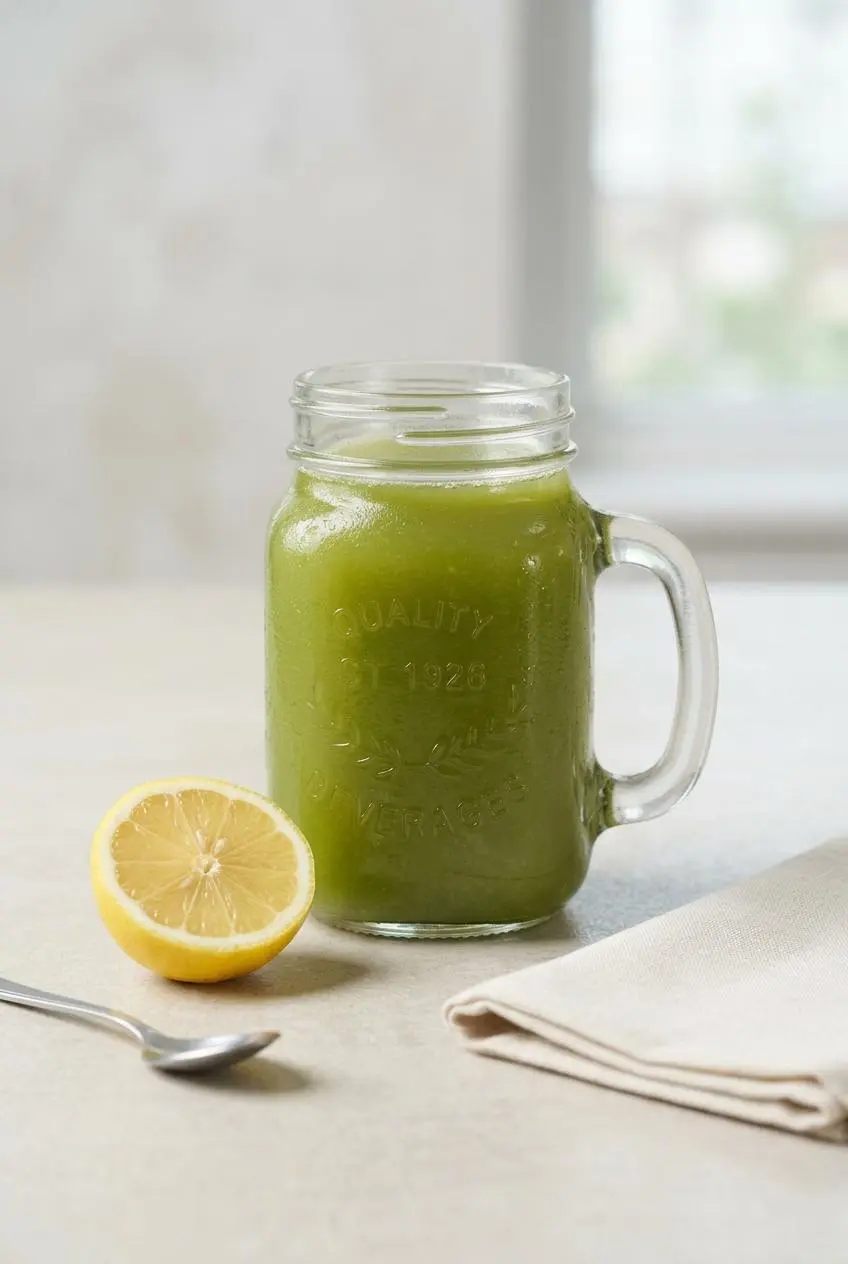
Pure celery juice has a distinct flavor: salty, peppery, earthy, and very green. If that sounds like a lot in one glass, these easy adjustments help without burying the celery flavor.
| Add-in | What It Changes | Best For |
|---|---|---|
| Lemon or lime | Brightens and sharpens the flavor | Juice that tastes flat or too savory |
| Green apple | Adds gentle sweetness | Beginners easing into celery juice |
| Fresh ginger | Brings warmth and a spicy kick | Anyone who wants more punch |
| Cucumber | Softens the flavor and makes it more refreshing | Juice that tastes too strong |
The easiest fix is fresh lemon or lime. It cuts through celery’s natural saltiness and makes the whole glass taste brighter.
If you want a softer entry point, add some green apple for sweetness or a little ginger for warmth. Both are optional, and both work especially well if plain celery juice tastes too assertive.
For first-timers, smaller servings can help. You can also dilute the juice slightly with water or cucumber juice until the flavor feels more comfortable.
| Problem | Likely Cause | Fix |
|---|---|---|
| Juice tastes bitter | Too many leaves or older celery | Trim the tops well and choose firmer, fresher stalks |
| Juice tastes too salty | That’s celery’s natural flavor coming through strongly | Add lemon, cucumber, or a little green apple |
| Juice separates in the jar | Natural settling | Shake or stir before drinking |
| Low juice yield | Dry celery or not squeezing the pulp enough | Use fresher celery and press the blender pulp firmly |
Creative Celery Juice Variations
Once you like the base version, it’s easy to branch out. These combinations keep celery at the center while changing the mood of the glass.
Celery, Apple & Ginger Juice
This is the classic beginner-friendly mix. Green apple rounds out the salty edge, and ginger adds a clean, peppery heat that makes the juice feel more lively than grassy.
Celery, Cucumber & Mint Juice
This version tastes cooler and lighter, especially on a hot day. Cucumber brings extra freshness, and mint gives the finish a clean, almost spa-water vibe, but better.
Other Flavor Combinations to Try
For a bright citrus version, blend or juice celery with orange and lemon for a fresher, fruitier profile. If you like deeper, earthier flavors, celery pairs well with beet and carrot too.
If ginger-forward wellness drinks are your thing, you may also enjoy this Jamu juice recipe on another day.
What to Do With Leftover Celery Pulp
Celery pulp is the part many people regret tossing, and fair enough. It still has flavor and can be useful in the kitchen if you treat it like a savory vegetable base instead of waste.
Stir it into soups, stews, or pasta sauce where its texture can melt in as it cooks. It would fit naturally into a pot of Cream of Celery Soup, especially if you want extra celery flavor without wasting any of the bunch.
You can also mix the pulp with seeds and seasonings, spread it thin, and bake or dehydrate it into savory crackers. It’s a good use for pulp that feels too wet for anything else.
Another easy move is to add small amounts to sautéed vegetables, veggie burgers, or broth-based dishes. And if you’re done with it, composting is still a smart finish.
Storage and Make-Ahead Tips
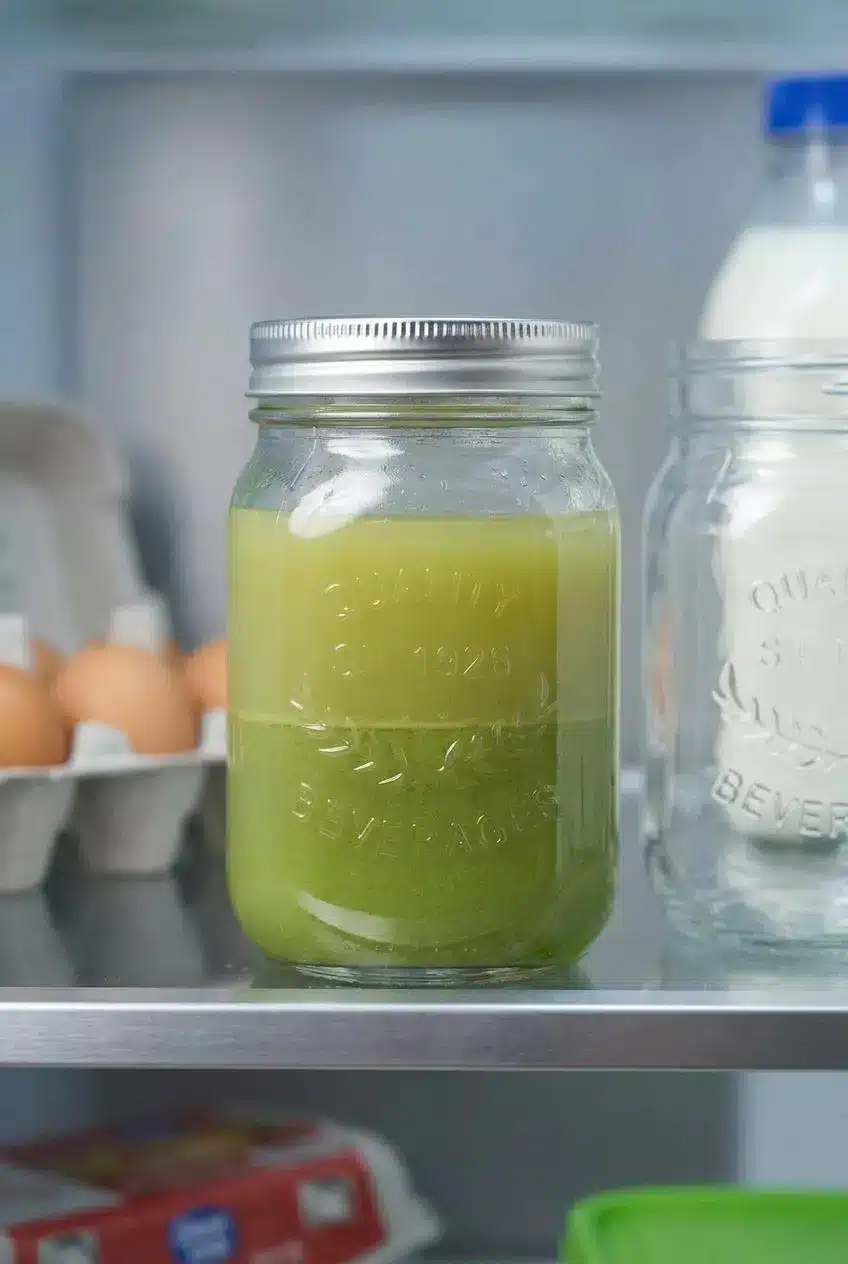
Celery juice is at its best right after you make it, when the flavor tastes brightest and the texture is most lively. If you need to hold it, pour it into an airtight glass jar and keep it chilled.
The official recipe notes support storing it in the refrigerator for up to 2 days. Separation is normal, especially with blender juice, so just shake or stir before drinking.
To keep the flavor fresher, fill the jar as full as you can so there’s less air sitting above the juice. Lemon can also help the juice taste brighter after chilling.
Celery Juice Benefits: The Science and The Hype
There’s a reason celery juice has stuck around. It’s refreshing, hydrating, and naturally rich in water, and celery also provides nutrients such as potassium and vitamin K. For many people, that’s the most grounded reason to enjoy it.
Some wellness circles make bigger claims about celery juice, especially around detoxing, inflammation, digestion, and dramatic body changes. Those ideas are popular, but they’re not all equally established. It makes more sense to think of celery juice as a fresh vegetable juice that may support hydration and nutrient intake, rather than a cure-all.
And yes, a lot of people ask about the Medical Medium angle. That routine has helped fuel celery juice’s popularity, but the strongest take is still the simplest one: fresh celery juice can be part of a balanced routine if you enjoy it and it agrees with you.
If you have a medical condition, take medication, or follow a sodium-restricted diet, it’s smart to check with a qualified health professional before making it a daily habit.
Conclusion
Fresh celery juice is easy to make at home, whether you use a juicer or a blender. Start with crisp celery, wash it well, and add lemon if you want a brighter, friendlier flavor.
The best part is that you can keep it practical from start to finish, right down to using the leftover pulp instead of tossing it. Once you find the version you like, it becomes an easy habit to keep.
Frequently Asked Questions
How long does homemade celery juice last?
It tastes best when you drink it right after making it. The official recipe allows refrigeration for up to 2 days in a tightly closed jar. Use a glass jar if possible. If it separates, shake or stir before drinking.
What are the potential side effects of celery juice?
Some people notice bloating or loose digestion, especially when they first start drinking it. Celery juice has a naturally savory profile and may be a concern for people watching sodium intake. If you have health conditions or take medication, it’s better to ask your doctor before making it a routine.
Do I have to use organic celery?
No, but many people prefer it for juicing. Celery is often highlighted for higher pesticide residue, which is why organic is commonly recommended. If you use conventional celery, wash the stalks very thoroughly before juicing.
Why not just eat whole celery instead of juicing it?
Whole celery is excellent and gives you fiber. Juicing makes it easier to consume a larger amount of celery in one sitting. The texture is also easier for some people to enjoy in liquid form.
When is the best time to drink celery juice?
Many people like it first thing in the morning on an empty stomach. A common routine is about 16 ounces before breakfast. You can also drink it whenever a cold, savory, hydrating juice sounds good.
How much juice does one bunch of celery make?
One large bunch, or about 4 cups chopped, usually yields around 16 ounces or 2 cups. The exact amount depends on how juicy the celery is. A juicer often gives a little more liquid than a blender method.
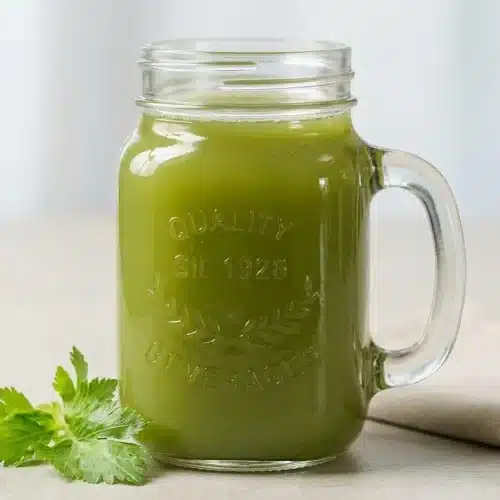
Celery Juice Recipe

Equipment
- Juicer or Blender
- Strainer
- Nut milk bag
Ingredients
- 1 bunch organic celery (4 cups chopped)
- 1 lemon optional
Instructions
Step 1: Wash and Prep the Celery
- Cut off the root end to separate the stalks, then rinse each stalk very well under running water. Check the inside curves where grit likes to hide, because sandy juice is a terrible surprise.
- Trim away the tops and chop the stalks into 2 inch pieces. If you remove most of the leaves, the finished juice usually tastes less bitter and a little cleaner.
Step 2: Making Juice with a Juicer
- Turn on the juicer and feed the prepared celery pieces through the chute a handful at a time. The juice should run out pale green and fairly smooth, while the pulp comes out dry or lightly damp.
- Collect the juice, then squeeze in the lemon if using. Taste it before adding anything else so you can decide if it needs that extra brightness.
- Pour and drink right away, or transfer the juice to a jar and refrigerate it. The flavor is freshest right after juicing, with that crisp, peppery edge still intact.
Step 3: Making Juice with a Blender
- Add ¼ cup cold water to the blender, then add the chopped celery and lemon juice if using. Starting with the water helps the blades catch the celery more easily.
- Blend until the mixture looks completely broken down and smooth. You should see a thick, frothy green puree with no large celery pieces left behind.
- Set a strainer over a bowl and line it with a nut milk bag, then pour in the blended celery mixture. This setup catches the fibrous pulp and lets the juice drip into the bowl below.
- Lift the bag and squeeze firmly to press out as much liquid as possible. A nut milk bag gives the smoothest texture, while a fine-mesh sieve may leave a little soft pulp behind.
- Serve the juice immediately, or pour it into a jar and chill it for later. Blender celery juice is often a touch cloudier than juicer-made juice, but it still tastes fresh and lively.