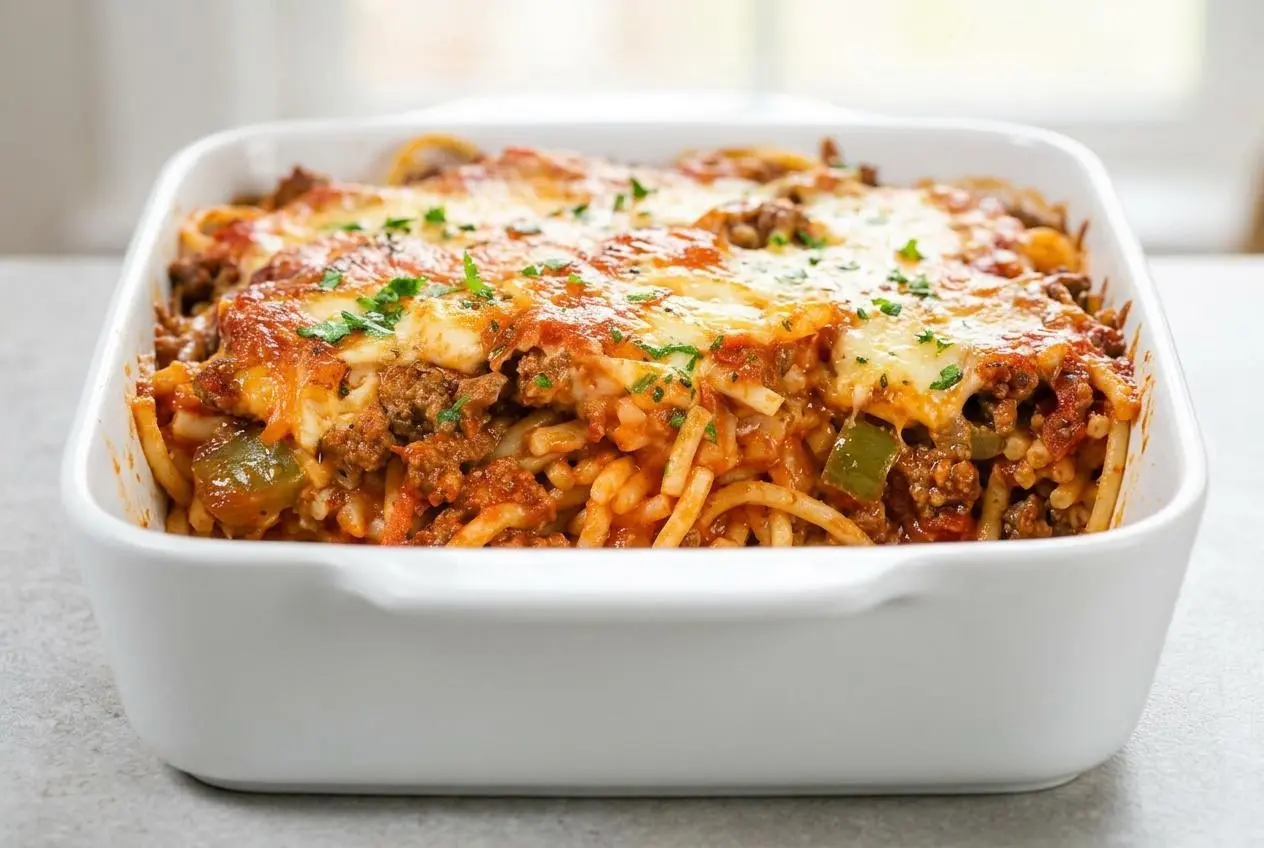
Baked Spaghetti Casserole turns spaghetti, meat sauce, and cheese into a bubbly, sliceable dinner that’s easy to make, easy to customize, and much easier to serve than a slippery pile of noodles.
Baked Spaghetti Casserole is classic comfort food with weeknight practicality. You cook the pasta, thicken a savory meat sauce, bake it with cheese, and end up with neat squares instead of twirly chaos.
It’s hearty, cheesy, and flexible enough for ground beef, Italian sausage, or a creamy middle layer if that’s your thing. The best part is how forgiving it feels once you know the key texture tricks. Here’s where it clicks.
Set the baking dish on a sheet pan before it goes into the oven so any bubbly overflow lands there instead of on your oven floor.
Key Ingredients and Their Roles
This casserole works because each part pulls its weight. A few smart choices make the difference between a firm, saucy bake and a pan of soggy noodles.
Start with spaghetti cooked to al dente. That means the pasta should still have a little bite, even a tiny pale dot in the center if you break a strand and taste it. Since it keeps cooking in the oven, fully cooked spaghetti will soften too much and lose structure.
The meat shapes the flavor of the whole pan. Ground beef gives you a classic, mellow, family-style casserole. Italian sausage brings more seasoning and a deeper savory edge, especially if you like a little fennel, pepper, or heat without extra work.
Sauce thickness matters more than people expect. If the sauce looks loose in the skillet, it will likely stay loose in the casserole. Let it simmer until it coats the back of a spoon instead of running off right away. That one step helps keep the finished dish sliceable instead of watery.
The cheeses do different jobs. Mozzarella gives you that stretchy, melty top layer everyone wants. Parmesan adds a saltier, nuttier hit that keeps the whole casserole from tasting flat. Together, they make the top golden, bubbly, and far more interesting than mozzarella alone.
Ingredients
Each ingredient adds something important here, from sauce body and pasta structure to fresh herb brightness and the browned, cheesy top that makes the casserole feel complete.
- 16 ounces spaghetti
- ¼ cup chopped fresh parsley or 2 tablespoons dried
- 1½ cups shredded mozzarella cheese
- ⅓ cup shredded Parmesan cheese
Sauce
- 1 pound lean ground beef or Italian sausage
- 1 green bell pepper diced
- 1 small onion diced
- 2 cloves garlic minced
- ½ teaspoon salt or to taste
- 32 ounces pasta sauce or marinara sauce
- 1 (14.5 ounces) can diced tomatoes with juices
- 1½ teaspoons Italian seasoning
I always prefer freshly shredded mozzarella here because it melts more smoothly and gives the top a nicer browned finish.
How to Make Baked Spaghetti Casserole
- Heat the oven to 375°F and grease a 9×13-inch baking dish.
The dish should be fully coated so the cheesy edges release easily after baking. - Boil the spaghetti in salted water until al dente, then drain it.
The noodles should still feel slightly firm since they will finish cooking in the casserole. - Cook the ground beef, green pepper, onion, garlic, and salt in a large skillet over medium-high heat, breaking up the meat as it browns, then drain off excess fat if needed.
The vegetables should soften and the meat should lose its pink color before you move on. - Stir in the pasta sauce, diced tomatoes with their juices, and Italian seasoning, then simmer uncovered for 5 to 10 minutes until the sauce thickens.
Look for a sauce that bubbles gently and clings to the spoon instead of looking watery. - Mix the cooked spaghetti and parsley into the sauce, then spread everything into the prepared dish and top with mozzarella and Parmesan.
The noodles should look evenly coated so every square bakes up saucy and cheesy. - Bake for 25 to 30 minutes until the casserole is hot and bubbly and the cheese is browned on top.
Let it rest briefly, then cut into squares once it has settled enough to hold its shape.
Tips for Perfect Baked Spaghetti
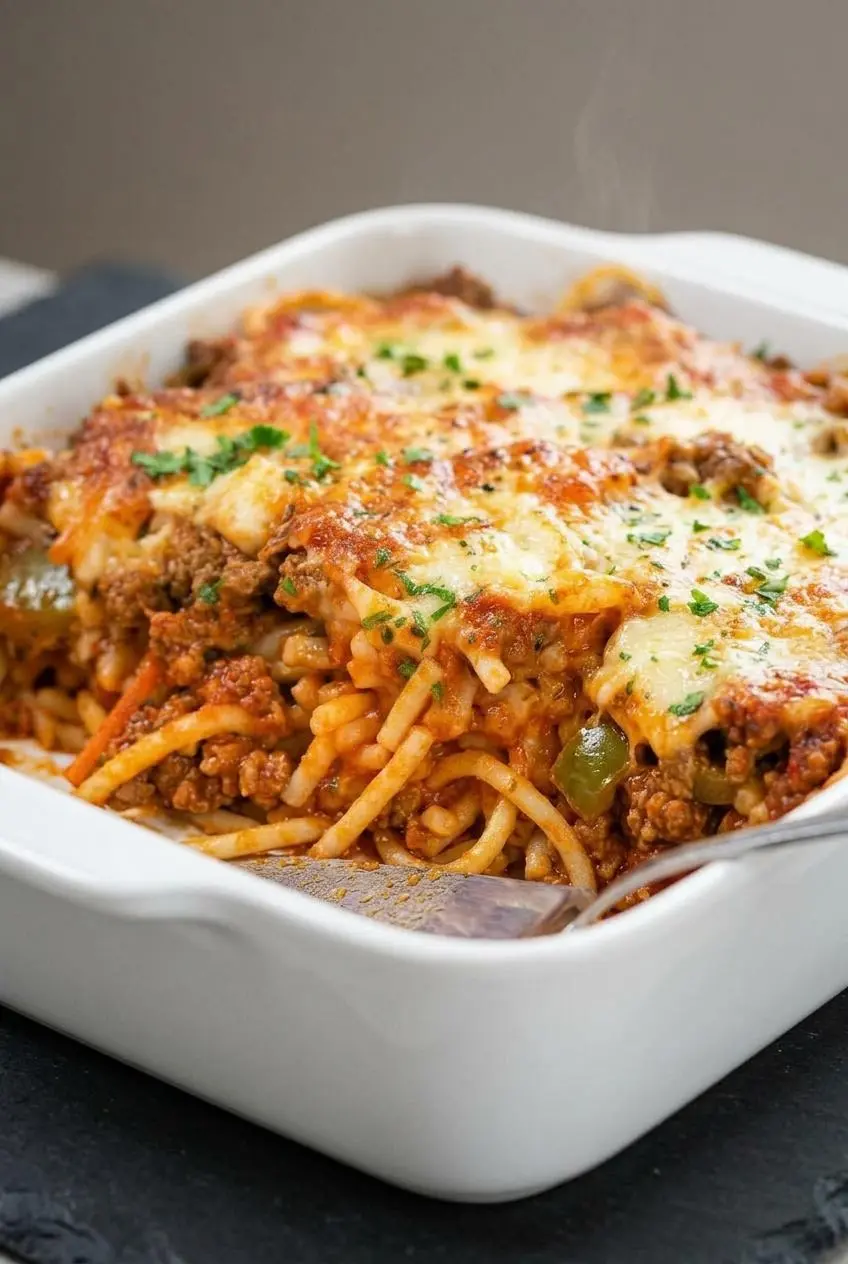
A lot of home cooks ask the same thing: how do you get a casserole that’s rich and saucy without turning mushy or greasy? These small moves do the heavy lifting.
- Cook the spaghetti only to al dente so it keeps its shape in the oven.
- Simmer the sauce until it thickens before combining it with the pasta.
- Drain excess fat from the meat so the sauce stays rich instead of oily.
- Let the casserole rest for 5 to 10 minutes before slicing so it sets up cleanly.
- Place the baking dish on a baking sheet to catch any bubbling drips.
- For extra flavor, let the Italian seasoning bloom in the hot meat fat for about 30 seconds before adding the sauce.
- If your oven browns quickly, loosely tent the dish with foil for part of the bake and uncover near the end.
Popular Baked Spaghetti Variations
The classic version is the one to learn first, but this casserole is also a great jumping-off point. You can make it richer, thriftier, meatless, or a little bolder without changing the core method.
The ‘Million Dollar’ Cream Cheese Variation
This is the creamy, extra-rich version people usually mean when they talk about “Million Dollar” spaghetti. Instead of mixing everything together, spread half the spaghetti mixture in the dish, add a soft middle layer made from cream cheese with a little sour cream and seasoning, then finish with the remaining spaghetti and the cheeses on top.
The result is softer, richer, and more decadent than the classic casserole. If you already love the creamy baked-casserole style of Million Dollar Chicken Casserole, this variation lands in that same comfort-food zone.
The Budget-Friendly Cottage Cheese Method
Cottage cheese gives you a creamy layer with a lighter feel and a lower cost than cream cheese. Use small-curd cottage cheese if you like a bit of texture, or blend it first for a smoother layer that feels closer to ricotta.
Layer it in the middle the same way you would a cream cheese mixture. It bakes up tender and creamy without making the casserole heavy.
How to Make It Vegetarian
Skip the meat and build the sauce with sautéed vegetables instead. Mushrooms are especially good because they add savory depth, while spinach and diced zucchini make the casserole feel hearty enough for dinner, not just a side dish.
Cook the vegetables long enough to release and cook off extra moisture before adding the sauce. That keeps the casserole from getting loose.
Using Italian Sausage for Extra Flavor
Swap the ground beef for the same amount of Italian sausage, with the casing removed if needed. Mild sausage gives you a rounder, more seasoned flavor, while hot sausage adds a little kick without changing anything else in the method.
Choosing Your Creamy Layer: A Comparison
| Option | Flavor Profile | Baked Texture | Cost | Best For |
|---|---|---|---|---|
| Cream cheese | Rich, tangy, indulgent | Smooth and dense | Higher | A true “Million Dollar” style casserole |
| Cottage cheese | Mild and slightly tangy | Soft and creamy | Lower | A budget-friendly creamy layer |
| Ricotta | Clean, milky, delicate | Fluffy and light | Middle | A lasagna-like feel |
If you like baked spaghetti in other sliceable forms too, Classic Spaghetti Pie is another fun way to turn noodles and sauce into neat wedges.
What to Serve with Baked Spaghetti
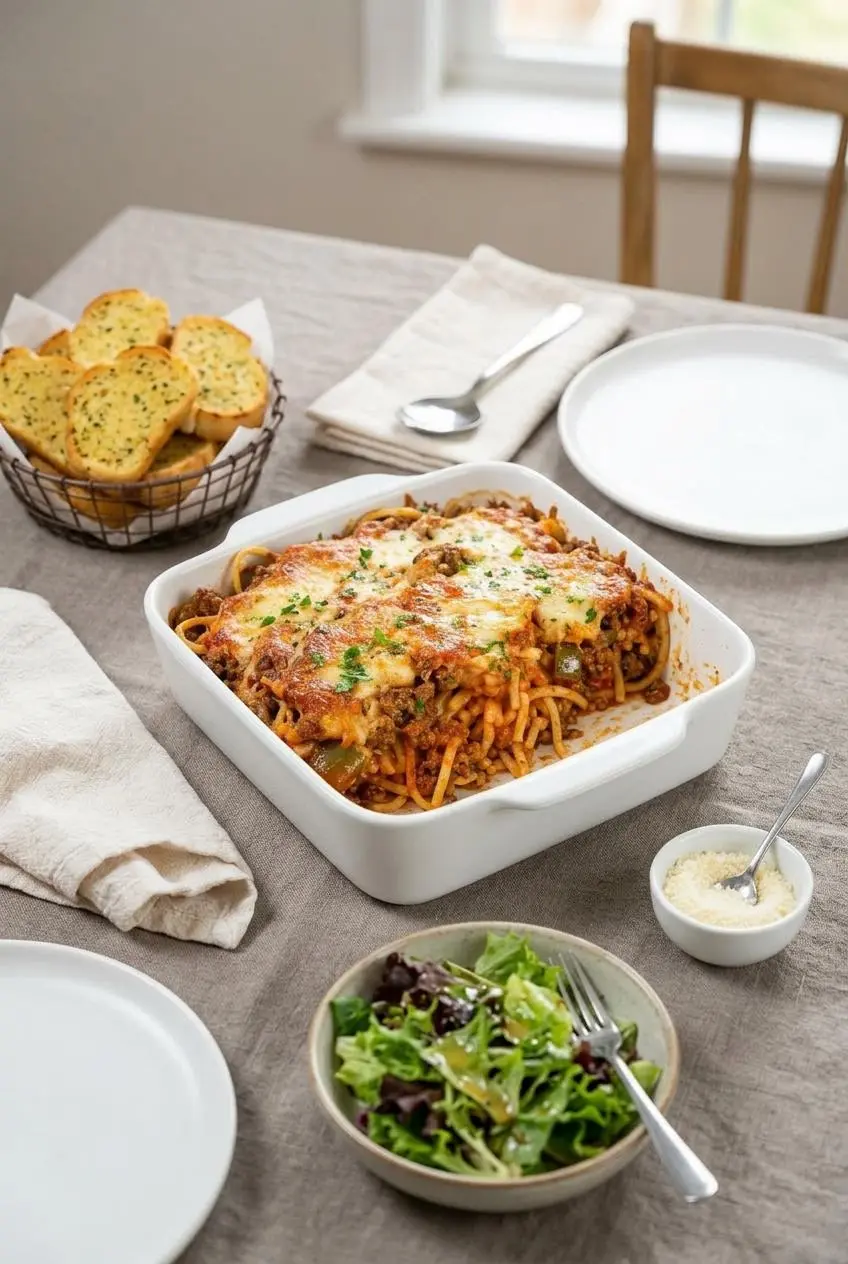
This casserole is rich and saucy, so it really shines with something crisp, green, or garlicky on the side.
- Garlic bread for scooping up extra sauce
- A simple green salad with a sharp vinaigrette
- Caesar salad if you want a more classic pasta-night pairing
- Roasted broccoli for a slightly charred, savory vegetable side
- Green beans or sautéed zucchini when you want something lighter
- Extra grated Parmesan at the table for anyone who likes a salty finish
If you’re planning a few easy family dinners for the week, Ground Beef Tater Tot Casserole fits that same hearty, crowd-friendly lane.
Make-Ahead, Storage, and Freezing Instructions
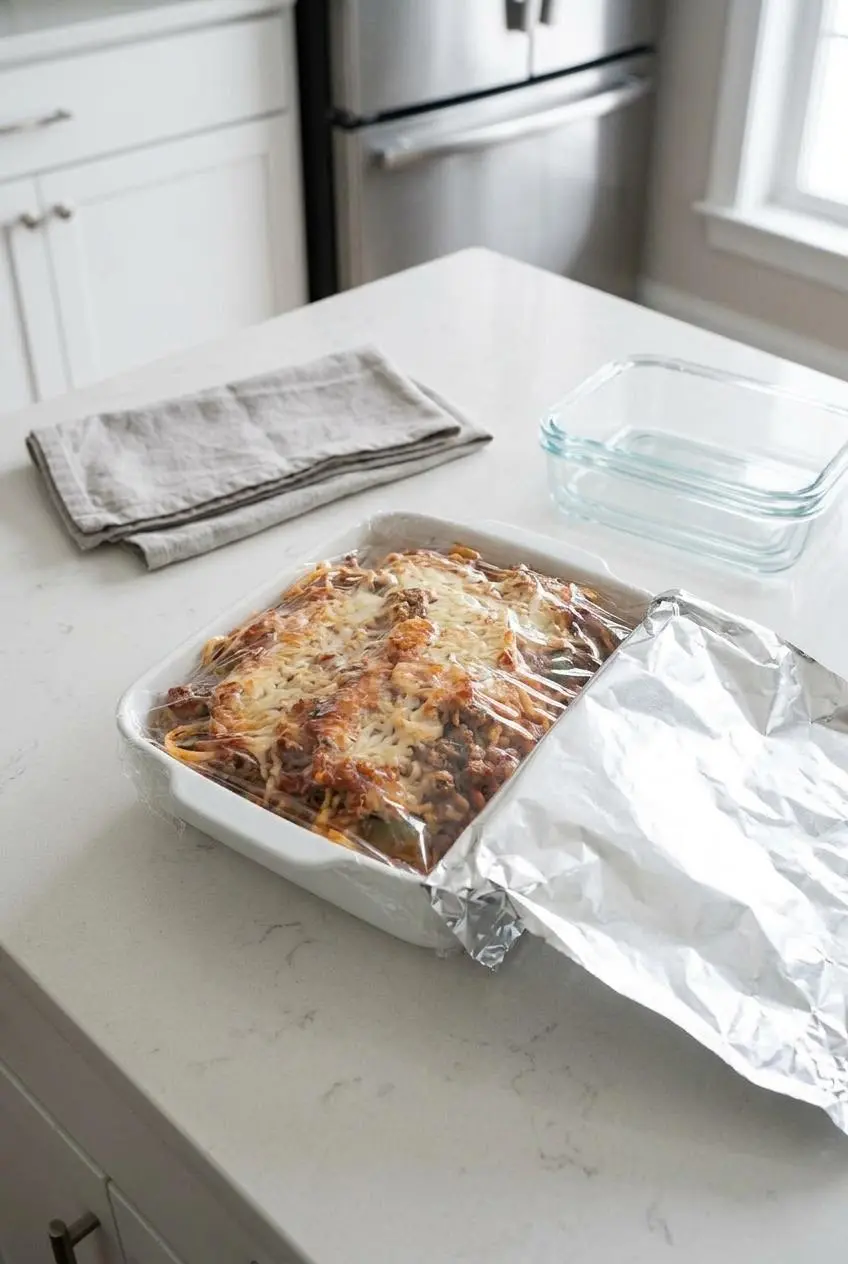
This is a very make-ahead-friendly casserole, which is one reason it earns a permanent spot in so many dinner rotations. The trick is protecting texture while keeping handling practical.
Assembling Ahead of Time
Yes, you can assemble the casserole the day before. Build it in the baking dish, cover it tightly, and refrigerate it for up to 24 hours. Since it will be going into the oven cold, plan on adding 10 to 15 minutes to the baking time.
How to Freeze an Unbaked Casserole
For the best texture, freeze the casserole before baking. Assemble it in a freezer-safe dish, press a layer of plastic wrap directly over the surface, cover the whole dish with foil, and freeze for up to 3 months.
When you’re ready to bake it, thaw it in the refrigerator overnight first. That approach lines up well with official guidance for handling dishes made with ground beef.
Freezing Leftovers
You can also freeze baked leftovers in portions or as a larger remaining piece. Let the casserole cool, wrap it well or transfer it to airtight freezer-safe containers, and protect the surface as much as possible so it doesn’t dry out.
Leftovers made with ground beef keep best in the refrigerator for up to 4 days when covered and chilled properly, as outlined in ground beef storage guidance.
The Best Way to Reheat
For refrigerated casserole, the oven gives you the best texture. Cover the dish loosely with foil and warm it until the center is hot and the edges start bubbling again. For a single serving, the microwave is perfectly fine, though the top will be softer.
For frozen casserole, thaw it in the refrigerator overnight before reheating for more even results. If you want the cheese top to perk back up, uncover it for the last part of reheating.
Troubleshooting Common Problems
If your casserole has ever come out watery, dry, or oddly greasy, you’re not alone. Most problems trace back to pasta texture, sauce consistency, or how the dish was assembled.
| Problem | Likely Cause | How to Fix or Prevent |
|---|---|---|
| Watery casserole | Sauce was too thin or the vegetables released extra liquid | Simmer the sauce until thick before adding pasta, and cook off moisture from vegetables before combining everything. |
| Dry casserole | Not enough sauce or too much uncovered baking | Make sure the spaghetti is fully coated before baking, and loosely cover the dish for part of the bake if your oven runs hot. |
| Greasy sauce | Fat from the meat was not drained | Use lean ground beef if you like, and drain excess fat after browning the meat before adding the sauce ingredients. |
| Mushy pasta | Spaghetti was overcooked before baking | Boil the pasta only to al dente so it can finish in the oven without turning soft. |
| Cheese not browning | Oven heat is mild or the casserole was covered too long | Bake uncovered near the end so the top can color, and move the dish higher in the oven if needed. |
One more thing people ask about a lot: mixed versus layered assembly. Mixing the pasta right into the sauce gives you a more even, classic casserole. Layering creates more distinct bites and works especially well when you add a creamy middle layer.
If you’re using ground beef, cook it through before building the casserole. The meat itself should reach 160°F, and the finished casserole should be hot and bubbly all the way through, about 165°F in the center, following safe temperature guidance.
Conclusion
This casserole is reliable because the method is straightforward and the texture cues are easy to spot. Keep the pasta al dente, simmer the sauce until thick, and you’re already most of the way there.
It’s also one of those dinners that welcomes tweaks without losing its comfort-food charm. Classic, creamy, meaty, or meatless, it’s a good one to keep in your regular rotation.
Frequently Asked Questions
How Do I Prevent My Baked Spaghetti Casserole from Being Watery?
Use a thick sauce, not a loose one. Cook the spaghetti only to al dente so it can absorb some moisture in the oven, and make sure watery vegetables have cooked down before they go into the sauce. Those three steps solve most soggy-casserole problems.
Can I Assemble Baked Spaghetti the Day Before?
Yes. Assemble it, cover it tightly, and refrigerate it for up to 24 hours. Since the casserole starts cold, expect to add 10 to 15 minutes to the baking time.
What’s the Best Way to Freeze Spaghetti Casserole?
Freezing it unbaked usually gives the best texture later. Wrap it tightly, freeze it for up to 3 months, and thaw it in the refrigerator overnight before baking or reheating.
What Is ‘Million Dollar’ Spaghetti?
“Million Dollar” spaghetti is a richer version of baked spaghetti with a creamy middle layer, usually made with cream cheese, cottage cheese, or ricotta. It tastes more decadent and bakes up with a soft, layered center.
Can I Use a Different Pasta Besides Spaghetti?
Yes. Linguine and fettuccine work well if you want to keep the long-noodle feel, while penne, rigatoni, or ziti make the casserole easier to scoop and slightly sturdier in texture.
What’s the Difference Between Baked Spaghetti and Baked Ziti?
The main difference is the pasta shape. Baked spaghetti uses long noodles that tangle into slices, while baked ziti uses short tubes that create a chunkier, more separated texture even when the sauce and cheese are similar.
Baked Spaghetti Casserole

Equipment
- Skillet
- 9 x 13 inch casserole dish
Ingredients
- 16 ounces spaghetti
- ¼ cup chopped fresh parsley or 2 tablespoons dried
- 1½ cups shredded mozzarella cheese
- ⅓ cup shredded Parmesan cheese
Sauce
- 1 pound lean ground beef or Italian sausage
- 1 green bell pepper diced
- 1 small onion diced
- 2 cloves garlic minced
- ½ teaspoon salt or to taste
- 32 ounces pasta sauce or marinara sauce
- 1 (14.5 ounces) can diced tomatoes with juices
- 1½ teaspoons Italian seasoning
Instructions
- Heat the oven to 375°F and grease a 9×13-inch baking dish. The dish should be fully coated so the cheesy edges release easily after baking.
- Boil the spaghetti in salted water until al dente, then drain it. The noodles should still feel slightly firm since they will finish cooking in the casserole.
- Cook the ground beef, green pepper, onion, garlic, and salt in a large skillet over medium-high heat, breaking up the meat as it browns, then drain off excess fat if needed. The vegetables should soften and the meat should lose its pink color before you move on.
- Stir in the pasta sauce, diced tomatoes with their juices, and Italian seasoning, then simmer uncovered for 5 to 10 minutes until the sauce thickens. Look for a sauce that bubbles gently and clings to the spoon instead of looking watery.
- Mix the cooked spaghetti and parsley into the sauce, then spread everything into the prepared dish and top with mozzarella and Parmesan. The noodles should look evenly coated so every square bakes up saucy and cheesy.
- Bake for 25 to 30 minutes until the casserole is hot and bubbly and the cheese is browned on top. Let it rest briefly, then cut into squares once it has settled enough to hold its shape.