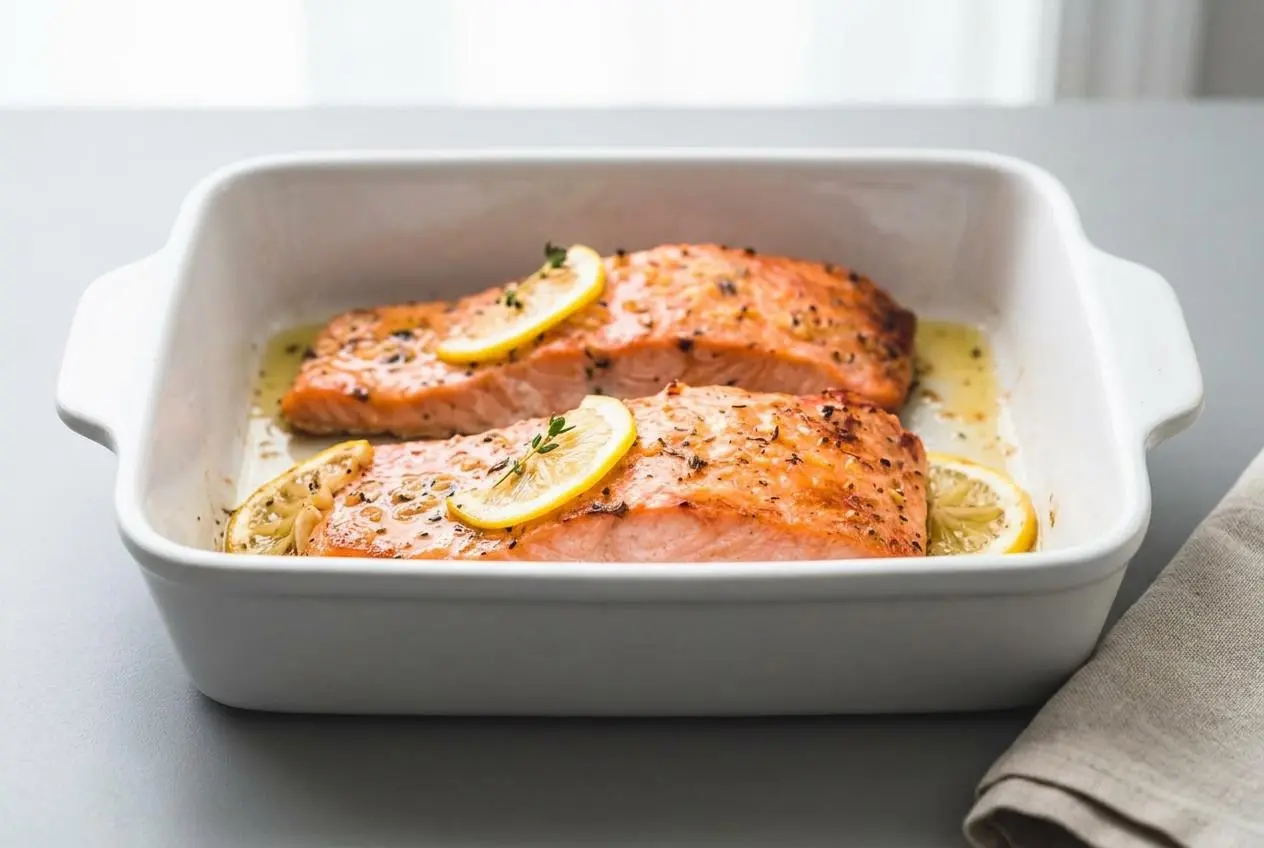
Bake salmon fillets at 400°F for 12 to 15 minutes, until opaque and gently flaky, with a center temperature of 125°F to 135°F for a tender result.
This baked salmon recipe coats fillets in bright lemon, garlic, olive oil, and herbs before a fast oven roast. The edges turn lightly golden while the center stays savory and moist.
Minimal prep and one pan keep dinner moving, and the scent of sizzling garlic with citrus makes the kitchen smell especially inviting. The resting step is the little detail that matters.
For more even cooking, set chilled fillets on the counter while the oven heats, then pat them dry before seasoning.
Key Ingredients for Juicy Baked Salmon
Every ingredient supports the finished fish: salmon provides richness, olive oil helps the seasoning cling, garlic and herbs build aroma, and lemon adds freshness that balances the savory flesh.
- 4 salmon fillets (about 6 ounces each)
- 2 tablespoons olive oil
- ½ teaspoon salt (or to taste)
- ¼ teaspoon cracked black pepper (just a pinch if using finely ground black pepper)
- 2 teaspoons minced garlic
- 1 teaspoon Italian herb seasoning blend (OR herbs de provence, or ¼ teaspoon each dried thyme, parsley, oregano, and basil)
- 1 medium lemon
Choose skin-on salmon when possible. The skin acts as a buffer between the delicate flesh and hot pan, while the olive oil carries garlic and herbs across the surface. Lemon juice cuts through the fish’s natural richness, and a lemon slice on top perfumes each fillet as it roasts.
I look for fillets with a clean ocean scent and firm, glossy flesh, then try to buy pieces of similar thickness so they finish together.
Choosing the Best Salmon at the Market
Evenly sized fillets make timing much easier. Look for firm flesh that springs back lightly, vibrant color, and a fresh smell rather than a strong fishy odor. Avoid pieces with dull patches, excessive liquid in the package, or flesh that looks mushy around the edges.
Atlantic salmon is generally richer and fattier, so it stays forgiving in a hot oven. Wild salmon such as sockeye or coho is leaner, often thinner, and may reach the same doneness sooner. Start checking lean wild fillets toward the early end of the baking window.
Flash-frozen salmon can be an excellent choice because it is commonly frozen close to harvest. For this method, use fillets that are fully defrosted and patted dry so the lemon-garlic coating adheres instead of sliding away.
How to Bake Salmon in the Oven Step by Step
This hot, uncovered roast gives individual fillets color quickly without requiring a heavy sauce. Use a large baking pan so the pieces have space around them and heat can circulate.
Prepping the Fillets and Seasoning
Drying the salmon first helps the seasoned oil coat it evenly. Stirring the olive oil, garlic, herbs, and lemon juice creates a loose, fragrant mixture that reaches the sides as well as the tops, so no bite tastes bare.
- Heat the oven to 400°F and grease a large baking pan, then place the salmon fillets on the pan and season them with salt and pepper.
Arrange the fillets skin-side down if they have skin, keeping a little room between them for even roasting. - Mix the olive oil, minced garlic, herb seasoning, and juice from half the lemon, then rub the mixture over the tops and sides of the fillets.
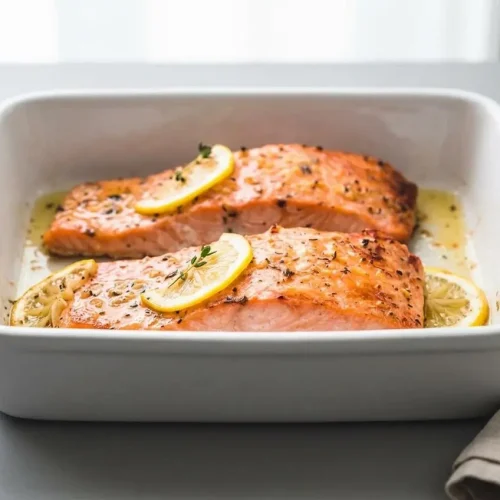
Slice the remaining lemon half thinly and place a slice over each piece; the coating should look glossy and evenly distributed. - Roast for 12 to 15 minutes, checking the thickest portion near the end of the cooking time.
The salmon is ready when it is opaque and separates into soft layers with light fork pressure. - Broil for the final 1 to 2 minutes if desired, then garnish with fresh thyme or parsley if desired before serving.
Watch closely under the broiler because the garlic can darken quickly once the edges begin to turn golden.
Oven Roasting and the Optional Broil Finish
At 400°F, standard fillets usually cook in the stated 12 to 15 minutes, but thickness matters more than weight alone. As a working guide, allow roughly 4 to 6 minutes for every half-inch of thickness. Thick Atlantic pieces may need the longer end, while thinner wild salmon can be ready sooner.
The optional broil adds a little color and a deeper roasted aroma. Keep the pan in view during that brief finish. Garlic should smell toasty and fragrant, never acrid or scorched.
How to Tell When Baked Salmon Is Perfectly Done
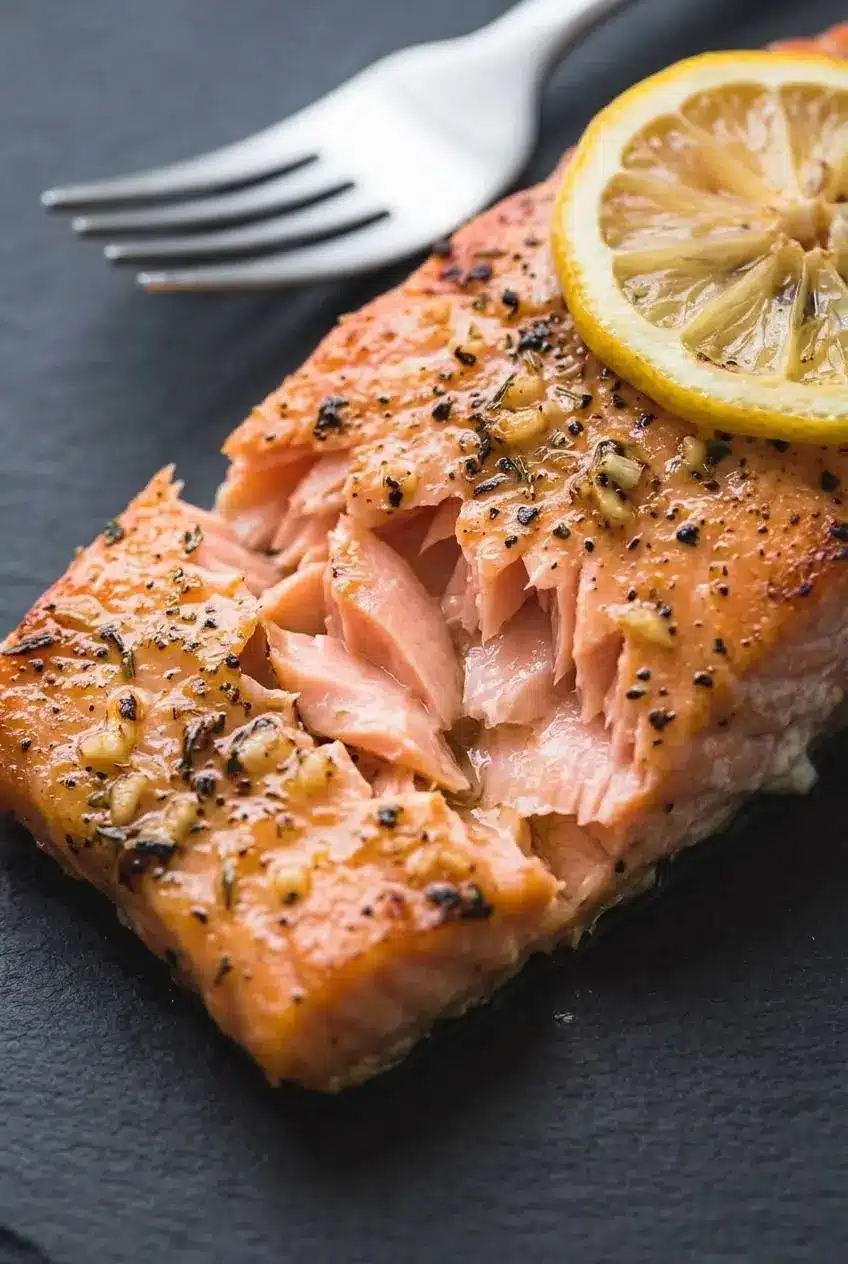
The best check combines a thermometer with a look at the flakes. Slide an instant-read thermometer into the thickest part, away from the pan. A center temperature of 125°F to 130°F gives a very tender, medium-style texture; around 135°F is firmer and more opaque; 140°F produces a noticeably firmer fillet.
For a higher safety target, cook fish to a 145°F minimum internal temperature for fish. At that point, the flesh should be opaque and separate easily with a fork.
Without a thermometer, press a fork gently into the thickest section and twist slightly. The layers should loosen with gentle resistance, while the very center can still look softly moist rather than dry or chalky. Rest the fillets for 3 to 5 minutes before serving. Carryover heat finishes the center while the juices settle back into the flesh.
Expert Tips for Moist and Flaky Salmon
A few small habits prevent the usual dry edges, stuck skin, and white protein streaks.
- Let the chill come off briefly: Allowing fillets to sit out for 10 to 15 minutes while the oven heats helps the center and thinner edges cook more evenly.
- Use parchment paper: Line the greased pan with parchment if you want the skin to release more easily and cleanup to stay quick. It also gently insulates the underside of the fish.
- Watch for albumin: The white substance that appears on salmon is albumin, a natural protein that firms and pushes out as the fish cooks. A little is normal, but heavy albumin usually means the fish cooked too long or too aggressively.
- Protect the finish: Pull salmon as soon as it flakes softly. Waiting for the fish to look dry throughout usually means it will eat dry, too.
- Use foil only when you want steam: Uncovered parchment roasting gives a lightly roasted top, while loosely wrapped foil creates a softer, more steamed texture.
Flavor Variations and Seasoning Swaps
Keep the lemon-garlic version as written when you want a clean, herb-forward dinner. These are optional ways to change the flavor without altering the main method.
Garlic Butter and Fresh Dill Salmon
Replace the olive oil with melted unsalted butter, then use fresh dill and lemon zest for a richer, buttery finish. Dill brings a soft grassy flavor that works especially well with salmon’s richness.
Sweet Paprika and Brown Sugar Rub
For warmer, lightly caramelized edges, use sweet smoked paprika, a pinch of garlic powder, and brown sugar as an optional coating. The sugar browns quickly, so skip the broil or watch it especially closely.
Additional Flavor and Cooking Options
- Dijon lemon coating: Stir Dijon mustard into the lemon-garlic oil for gentle tang and a clingier surface coating.
- Foil packet salmon: Loosely wrap seasoned fillets with lemon slices in foil when you prefer a moist, steamed texture and an easy-to-contain pan.
- Sweet-savory glaze: For a bolder change of pace, try honey garlic glazed salmon with its glossy sweet and savory finish.
Serving Ideas and Side Dish Pairings
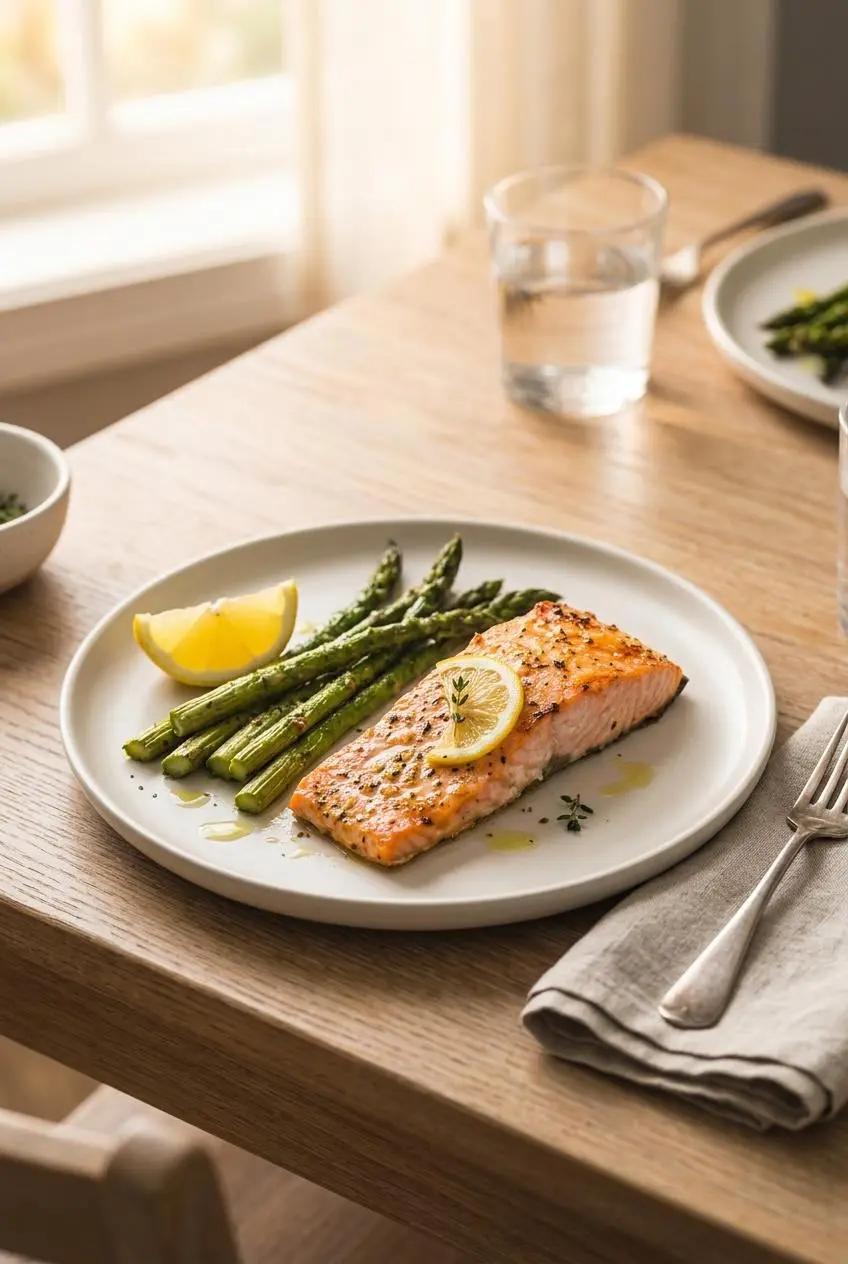
Salmon likes sides that bring either freshness or something creamy to the plate. Roast asparagus or green beans with olive oil until tender, serve the fish over seasoned rice, or add creamy garlic mashed potatoes for a more comforting dinner.
- Pair it with a crisp cucumber dill salad to brighten the rich fish.
- Flake cooled salmon over grain bowls with greens and a lemony dressing.
- Use extra salmon in warm tortillas with crunchy slaw for fresh salmon tacos.
Storing and Reheating Leftover Salmon
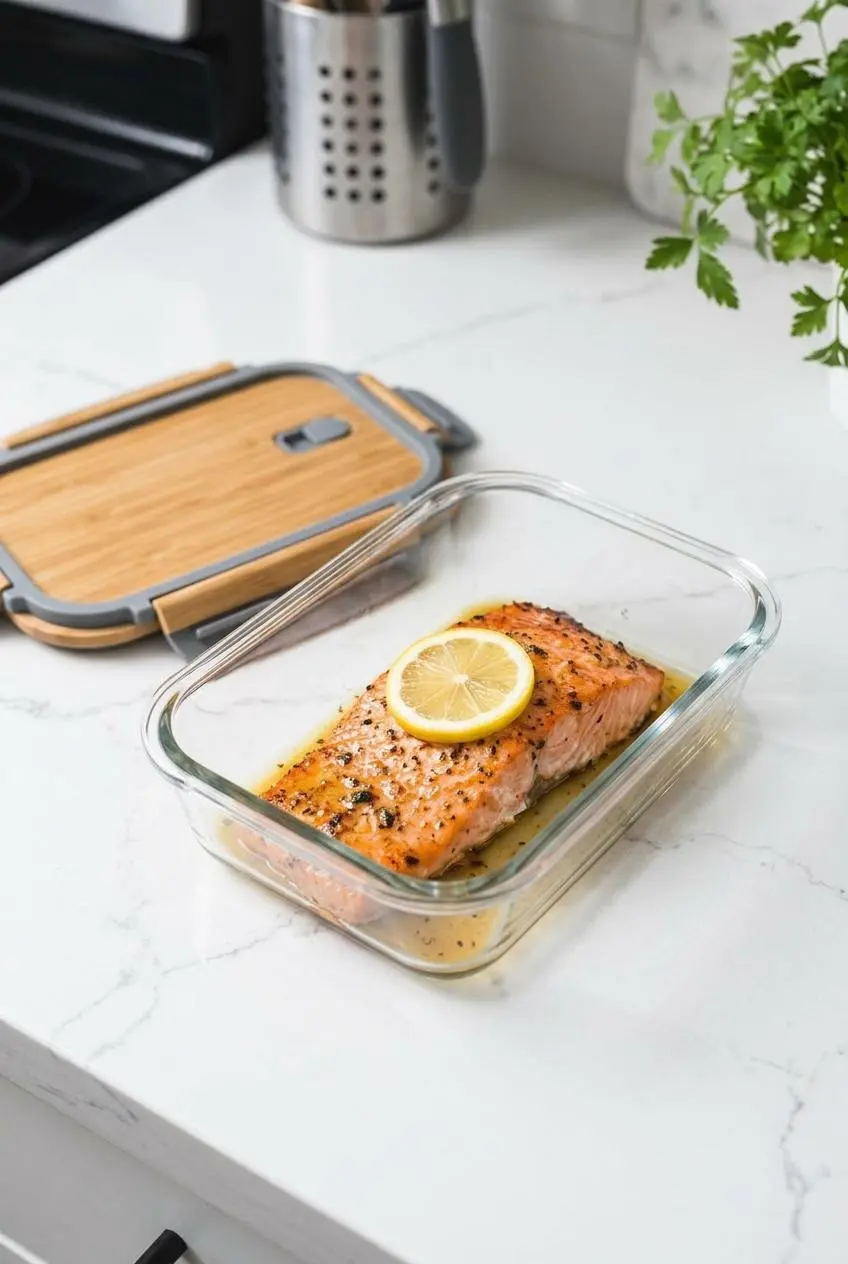
Cool leftover salmon, place it in an airtight container, and keep it chilled. For the best texture, enjoy it while the fish still tastes fresh and the lemon-herb flavor remains bright. Chilled flakes are especially good in green salads or grain bowls.
To warm salmon, use a low oven with a little moisture, such as a lemon slice over the fillet, and cover it loosely with foil. Heat just until warmed through. High microwave heat can tighten the proteins quickly, leaving the fish rubbery and making its aroma more pronounced.
For a make-ahead meal, prepare the lemon-garlic mixture close to cooking time and keep it separate from the raw fillets until you are ready to season them. This preserves the clean citrus flavor and prevents the fish from sitting in acid.
Conclusion
Fast roasting, a fragrant lemon-garlic coating, and a close eye on doneness turn salmon into a satisfying weeknight dinner with tender flakes and lightly golden edges.
Give the fillets a brief rest before serving, then bring them to the table while the citrus aroma is still bright. That first juicy forkful is worth the pause.
Frequently Asked Questions
What Is the Best Oven Temperature for Baking Salmon?
For individual fillets, 400°F is a useful sweet spot. It roasts the exterior quickly while keeping the center tender, and most standard portions finish within the 12 to 15 minute window. A lower 375°F oven works too, but it cooks more gradually and may not give the same lightly roasted edges. Use the thermometer and fork test rather than relying on the clock alone.
How Long Should Salmon Bake in the Oven?
At 400°F, standard 6-ounce fillets generally need 12 to 15 minutes. Thickness is the better guide: plan on about 4 to 6 minutes per half-inch. Start checking thinner wild salmon earlier. Thicker Atlantic fillets often need the longer end of the range, especially through the center.
Should You Bake Salmon With the Skin On or Off?
Bake salmon skin-side down when the skin is intact. It creates a natural heat buffer between the flesh and pan and helps keep the underside from overcooking. After baking, the cooked flesh usually lifts away from the skin easily with a spatula. Skinless fillets work as well, but parchment becomes especially helpful for preventing sticking.
What Is the White Substance That Appears on Baked Salmon?
It is albumin, a natural protein that becomes visible as salmon cooks. It is more noticeable when the fish cooks past its ideal texture or heats too rapidly. To keep it minimal, avoid overbaking, let the fish warm briefly before it goes into the oven, and skip a long broil. A small amount does not mean the salmon is ruined.
Can You Bake Frozen Salmon Fillets Directly From the Freezer?
This method is designed for fully defrosted fillets, which cook more evenly and hold the lemon-garlic coating better. Frozen fish can release extra moisture, making it harder to judge doneness and browning. If using frozen fillets, follow the package-specific cooking directions rather than relying on the timing in this method. Season once the surface is no longer icy and can hold the oil and herbs.
Baked Salmon Recipe

Equipment
- Large baking pan
Ingredients
- 4 salmon fillets (about 6 ounces each)
- 2 tablespoons olive oil
- ½ teaspoon salt (or to taste)
- ¼ teaspoon cracked black pepper (just a pinch if using finely ground black pepper)
- 2 teaspoons minced garlic
- 1 teaspoon Italian herb seasoning blend (OR herbs de provence, or ¼ teaspoon each dried thyme, parsley, oregano, and basil)
- 1 medium lemon
Instructions
- Heat the oven to 400°F and grease a large baking pan, then place the salmon fillets on the pan and season them with salt and pepper. Arrange the fillets skin-side down if they have skin, keeping a little room between them for even roasting.
- Mix the olive oil, minced garlic, herb seasoning, and juice from half the lemon, then rub the mixture over the tops and sides of the fillets. Slice the remaining lemon half thinly and place a slice over each piece; the coating should look glossy and evenly distributed.
- Roast for 12 to 15 minutes, checking the thickest portion near the end of the cooking time. The salmon is ready when it is opaque and separates into soft layers with light fork pressure.
- Broil for the final 1 to 2 minutes if desired, then garnish with fresh thyme or parsley if desired before serving. Watch closely under the broiler because the garlic can darken quickly once the edges begin to turn golden.